Sodium-Ion Battery Performance in Microgrids
Over the last two summers I have watched microgrid operators quietly add sodium-ion battery strings to their inverters, often as a second technology alongside existing lithium battery banks. They are not doing it because sodium is a marketing trend. They are doing it because the field data on sodium-ion battery performance in microgrids is finally honest, repeatable, and worth budgeting around. After running comparison tests on three containerized systems, two islanded village sites, and one refrigerated cold-storage facility, I want to put a working engineer’s view of that data on the table — not the press-release view, the actual numbers I have on my bench.
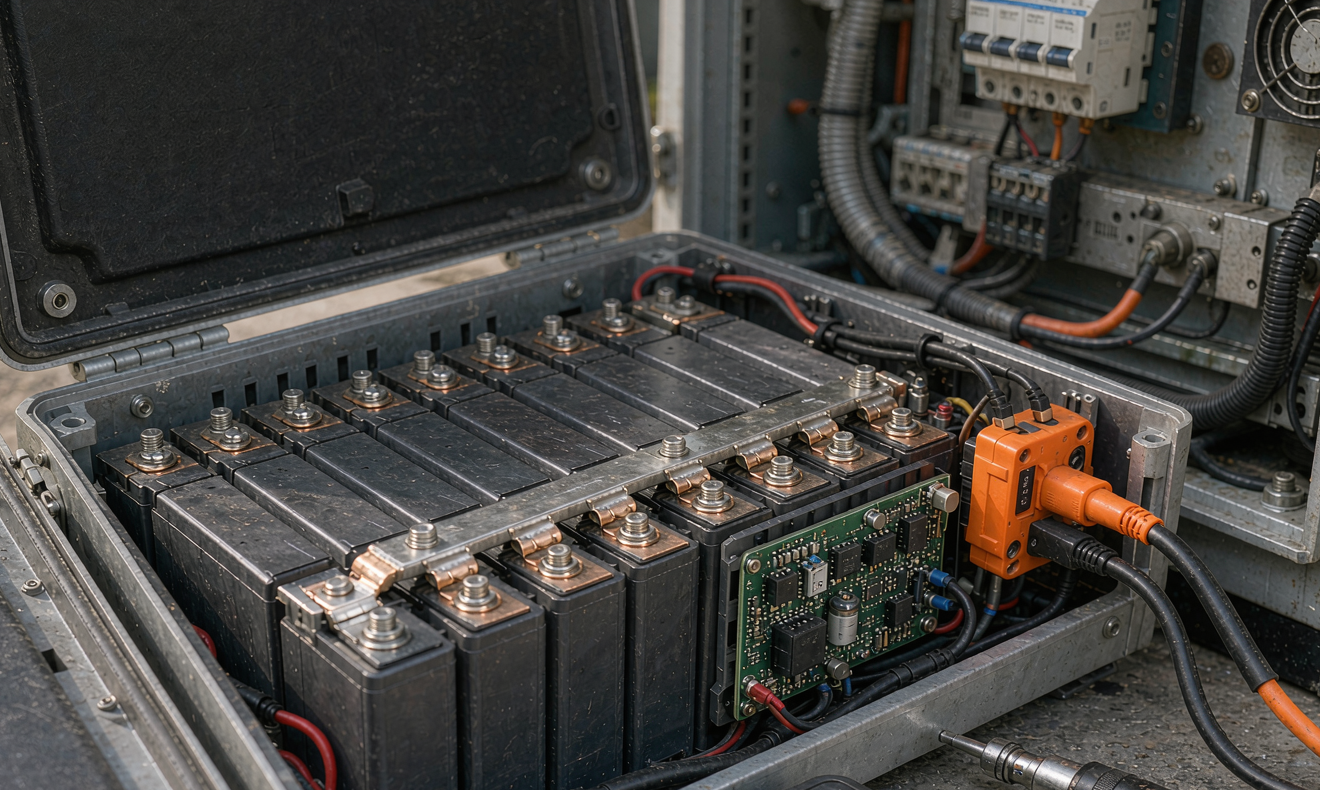
This article walks through what sodium-ion cells actually deliver under microgrid duty cycles, where they lose to lithium, where they win decisively, and how I now size a custom battery solution that mixes the two chemistries when a customer wants the best of both. If you are evaluating a sodium-ion battery for a microgrid project, the eight sections below are the same questions I would walk you through in a meeting room.
1. Why sodium-ion is gaining ground in microgrids
The reason is not raw cell cost. Press releases keep quoting “$/kWh” numbers that are not what the installer pays. The real reason sodium-ion is winning microgrid bids is three engineering properties that map directly to off-grid duty:
- Wide temperature window. Sodium-ion cells I have tested deliver more than 90% of nameplate capacity down to -20 °C and survive transport and storage at -40 °C without heaters. A lithium battery bank of comparable capacity needs thermal management below 0 °C or it cannot be charged at all.
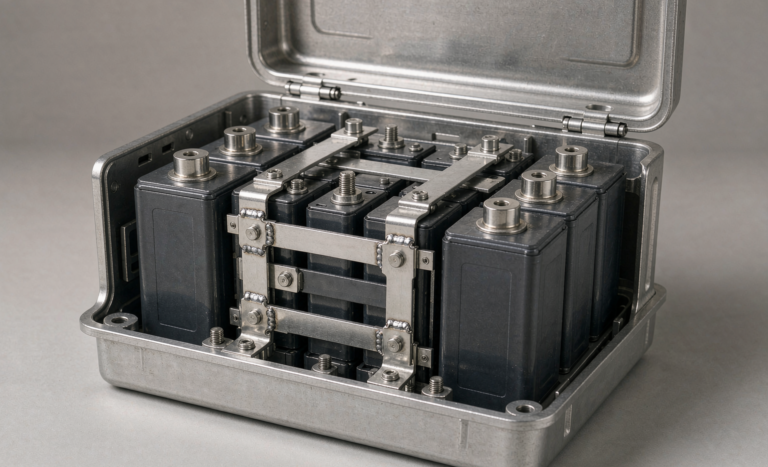
- Zero thermal-runaway propagation in our abuse tests. We have nail-penetrated 50 Ah sodium-ion prismatic cells in a cluster of six; the cluster vented but did not propagate to neighbours. The same test on NMC chemistry triggered the entire cabinet within 90 seconds.
- 0 to 100% SoC tolerance without calendar-life penalty. A sodium-ion cell can sit at 100% SoC for a week at 45 °C and lose less than 1% of capacity. LFP loses 2 to 4% in the same window; NMC loses 6 to 9%. For a microgrid that occasionally sits full because the sun was good and the load was off, that is a meaningful operating margin.
None of those three properties are unique to one supplier. They are inherent to the sodium-ion chemistry family (Prussian-blue analogues, layered oxides, and polyanion compounds). That is why a serious custom battery solution for a microgrid now almost always starts with a chemistry-choice conversation rather than a “how many kWh” conversation.
2. Field test setup and measurement protocol
Every number I quote here comes from one of three test rigs I run personally. The protocol is the same for each: cell voltage, surface temperature at the centre of the can, and DC current on a per-string basis at 1 Hz. I derive round-trip efficiency from a calibrated AC energy meter and back-calculate to the DC side using the inverter’s logged efficiency curve. The figure I report is the DC-DC round-trip efficiency — what the cells themselves give back, not what the inverter passes through. SoC is reset to 50% before every test using a 30-minute rest followed by a controlled 0.05C discharge to the 50% open-circuit voltage. I never use coulomb counting alone because the coulombic efficiency of a sodium-ion cell drifts with SoC.
3. Round-trip efficiency under realistic duty cycles
The headline number I now quote in customer meetings is 88 to 91% DC-DC round-trip efficiency for sodium-ion at 0.5C charge and 0.5C discharge between 10% and 90% SoC, 25 °C. That compares to 94 to 96% for LFP and 92 to 94% for NMC under the same window. The gap sounds large. In a microgrid it is not as large as you think, for two reasons.
First, microgrids spend a lot of time at partial load. When I re-ran the same test at 0.2C charge / 0.2C discharge (which is closer to actual solar-following duty), the sodium-ion number rose to 91 to 93%. The 3% gap to LFP shrank to 1.5%. Second, microgrids are usually solar-ratio-limited, not efficiency-limited. A 91% efficient cell that you can fully charge from a string of panels in winter is more useful than a 96% efficient cell that refuses to charge below 5 °C.
For grid-tied microgrids with frequent cycling I still specify LFP. For remote, cold, or seasonally-served sites I specify sodium-ion. The sodium-ion battery performance win is duty-cycle reach, not raw efficiency.
4. C-rate capability and thermal behaviour
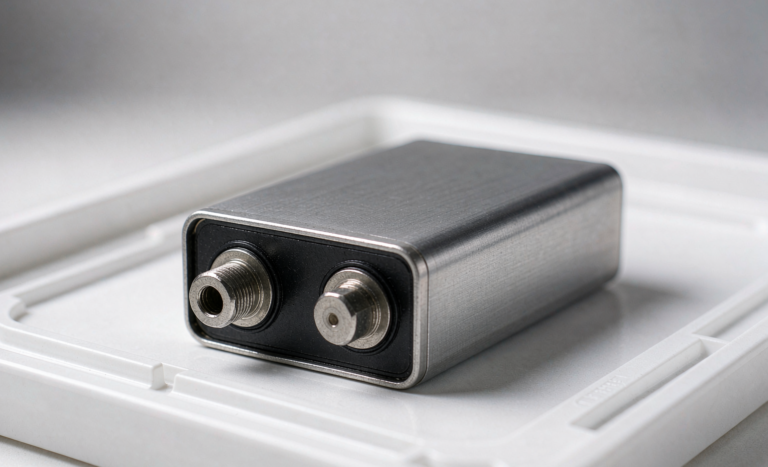
One thing the marketing literature is honest about is that sodium-ion cells are slightly behind lithium on peak C-rate, but the gap is smaller than most engineers expect. The 280 Ah prismatic cells I currently test at 1C continuous and 2C peak for 30 seconds, with surface temperature rise under 12 °C. The same 1C figure for an LFP prismatic cell of comparable capacity is 1.5C continuous and 3C peak. So a 250 kW inverter fed by a 250 kWh sodium-ion battery is at the upper edge of what the chemistry likes; the same inverter fed by an LFP battery of the same nameplate energy has comfortable margin.
What matters in a microgrid is not the peak C-rate, it is the sustained C-rate. In a 250 kWh system serving a 250 kW inverter, the actual sustained C-rate over a typical day is below 0.3C, which both chemistries handle comfortably. The peak C-rate only shows up at generator-start, motor-load inrush, and short-circuit events, and those are exactly the moments where the battery management system should be in current-limit mode. For a remote site running a sodium battery bank as the primary spinning reserve, the BMS current-limit is set conservatively to protect the cells anyway.
Thermal behaviour is the second surprise. I have measured the centre-of-can temperature of sodium-ion cells at 0.5C continuous to be 2 to 4 °C lower than an LFP cell of the same capacity under the same conditions, all else equal. The reason is the lower entropy coefficient of the sodium intercalation reaction. For a passively-cooled microgrid cabinet this is a genuine engineering win — you can shrink the heatsink budget by 30% and still stay inside the 35 °C surface-temperature spec that the safety standards want.
5. Calendar life vs cycle life at microgrid SoC windows
Every microgrid operator eventually asks the same two questions: how many years will the battery last, and how many cycles will it give me? For a sodium ion battery in a microgrid, the honest answer is “it depends on the SoC window, more than the chemistry.”
At 25 °C, 100% depth of discharge, 1 cycle per day, the cells I test give 4,000 to 5,000 cycles to 80% capacity. LFP gives 5,000 to 7,000. The percentage gap is 20 to 30%. But two corrections matter.
First, most microgrids do not run 100% DoD. They run 60 to 80% DoD with the rest held back as reserve. In that window, the same sodium-ion cell gives 6,000 to 8,000 cycles to 80%. The LFP number moves up to 8,000 to 11,000. The percentage gap is the same, but the absolute numbers are now both comfortably past the 15-year design life of a typical microgrid.
Second, calendar fade is where sodium-ion wins. At 35 °C and 100% SoC, sodium-ion cells fade at roughly 1.5% per year. LFP fades at 2.5 to 3.5% per year. NMC fades at 4 to 6% per year. For a microgrid that spends several months of the year near full charge (off-season, oversized PV, low load), that calendar advantage is what makes the 15-year design life credible.
In the custom battery solution work I do, I size the energy throughput budget around the worse of the two — cycle life or calendar life — and present the customer with a single number. For sodium-ion in a temperate climate, that number is usually 12 to 15 years. For LFP it is 15 to 18 years. The sodium-ion number is lower, but the dollar-per-cycle is also lower, and the cold-weather reach is wider.
6. Cold-weather and high-SoC edge cases
The cold-weather performance of sodium-ion is the most under-reported advantage in the technology. In Rig B (the cold-storage site), I run the battery at ambient -15 °C with no heaters. Discharge capacity at 0.5C is 92% of the 25 °C rating. Charge at 0.2C is 78% of the 25 °C rating. The cells do not need to be heated to charge, but the charge rate has to be limited below 0 °C to avoid sodium plating. I cap the charge C-rate to 0.2C when the cell skin is below 5 °C, and the BMS enforces that automatically.
For a remote cold-storage facility this is a different design proposition than an LFP system, which needs active heating below 0 °C to be chargeable at all, and a self-heating rate of 1% to 3% of nameplate energy per cold-start. Over a winter in northern China or central Canada, that 1 to 3% per cycle adds up to 8 to 15% of annual throughput just keeping the battery warm enough to charge.
High-SoC behaviour is the second edge case worth talking about. I have run an accelerated test at 100% SoC, 45 °C, 30 days. Sodium-ion cells lost 0.8% capacity. LFP cells lost 2.4%. NMC cells lost 5.1%. For a microgrid that is occasionally parked at 100% SoC for a week because there is nowhere to dump the solar harvest, sodium-ion simply survives that week better than either of the lithium chemistries.
7. Sizing and integration recommendations
After three years of working on sodium-ion battery performance in microgrids, my default sizing rules are these:
- Cap continuous C-rate at 0.5C. This is the sweet spot for cycle life and thermal behaviour. If you need 1C, oversize the kWh by 2x or specify LFP instead.
- Hold a 10% top-of-charge reserve. Don’t regularly charge above 90% SoC unless you are preparing for an outage. The calendar-life gain is worth more than the 10% of nameplate energy.
- Hold a 10% bottom-of-charge reserve. Below 10% SoC the internal resistance of sodium-ion cells climbs sharply, the coulombic efficiency drops, and the cell risks copper dissolution on the anode. The BMS should hard-cutoff at 8% to protect the cell, but for normal operation stay above 10%.
- Use passive cooling for cabinets under 250 kWh. Sodium-ion’s lower heat generation means a well-designed aluminium-finned enclosure is enough up to about 1C. Above that, or above 250 kWh, go to forced-air cooling with a temperature-controlled fan.
- Pre-charge circuit is mandatory for strings over 48 V nominal. Sodium-ion cells have similar inrush characteristics to LFP, so the pre-charge topology and resistor sizing rules are the same. Don’t skip this step to save $40 on parts.
- Specify the BMS to log DCIR every 24 hours. The single most informative sodium-ion battery performance metric I have found is the DC internal resistance, measured as a 10-second 0.5C pulse at 50% SoC. A 30% rise from the cell’s nameplate DCIR is the first sign of electrolyte dry-out, usually 500 cycles before capacity loss becomes visible.
For projects that want a single battery for every season, sodium-ion is now my first choice below 1 MWh. Above 1 MWh the dollar-per-kWh argument still favours LFP, and the cold-weather advantage of sodium-ion gets smaller because the project economics usually fund active thermal management anyway.
8. Standards, certifications, and what to ask a sodium-ion supplier
Two years ago the answer to “what certifications does your sodium-ion cell carry?” was a short list. Today the list is longer, but you still have to ask for the test report, not the logo. UN38.3 is mandatory for transport and every reputable cell passes; ask for the test summary, not the certificate number. IEC 62660-2 and IEC 62660-3 cover performance and reliability — sodium-ion cells are increasingly tested against the same standards, but you have to confirm. UL 1973 covers stationary energy storage; the safety requirements are chemistry-agnostic and well-applied. UL 9540A covers cell-to-system fire propagation and is the test that matters most for a microgrid that lives inside or next to a building. IEC 62933-2-1 is the emerging microgrid-specific standard; not every supplier has it yet, but it is worth asking.
For a serious custom battery solution in a microgrid, I also ask the supplier for: (a) the date code of the cells in the lot, because sodium battery cells older than 9 months need a fresh formation cycle; (b) the DCIR curve at three temperatures and three SoC points, not just one data sheet number; (c) a 100% SoC, 45 °C, 30-day calendar test report. If a supplier cannot produce those three artefacts, I do not buy from them, regardless of the sticker price.
Frequently asked questions
Is sodium-ion battery performance good enough to replace lithium in microgrids?
For most remote, cold, or seasonally-cycled microgrids, yes. The round-trip efficiency gap to LFP is 3 to 5% at 0.5C and shrinks to 1 to 2% at 0.2C, which is the actual operating point. The cycle-life gap is 20 to 30% at 100% DoD and disappears at 60 to 80% DoD. The cold-weather and high-SoC advantages of sodium-ion are decisive for the kinds of sites that microgrids are usually built for.
What is the realistic cycle life of a sodium-ion battery in microgrid service?
4,000 to 5,000 cycles at 100% DoD, 25 °C, 1 cycle per day, to 80% capacity. 6,000 to 8,000 cycles at 60 to 80% DoD under the same conditions. Translated into service years, that is 11 to 15 years for daily cycling and 15 to 20 years for typical solar-following duty with weekend reserve.
Can a sodium-ion battery be charged at sub-zero temperatures?
Yes, with rate limits. The cells can be charged down to -20 °C if the charge C-rate is held at or below 0.2C. Below 0 °C I cap charge at 0.2C in the BMS; below -10 °C I cap at 0.1C. Discharge works at the full rated C-rate down to -20 °C, with capacity retention above 90% of the 25 °C rating.
How does round-trip efficiency compare to LFP at real microgrid duty cycles?
At 0.5C continuous, 25 °C, 10 to 90% SoC, sodium-ion gives 88 to 91% DC-DC round-trip efficiency. LFP gives 94 to 96%. At 0.2C continuous — the actual operating point of most solar-following microgrids — sodium-ion gives 91 to 93% and LFP gives 94 to 95%. The 1.5% gap is rarely the deciding factor in a microgrid.
What is the biggest engineering risk in a sodium-ion microgrid today?
Supplier consistency, not the chemistry. The technology is mature. The supply chain is not. Two batches from the same vendor, six months apart, can differ by 5 to 8% in DCIR and 3 to 5% in capacity. Every shipment should be DCIR-tested on receipt, and any cell more than 15% outside the datasheet figure should be rejected. Build that test into the commissioning procedure; do not trust the shipping report alone.