Sodium-Ion Battery Cell Qualification Under IEC 62619
When a buyer asks whether a sodium-ion cell is “qualified”, the word hides more than it reveals. At Horizon Power we see datasheets that quote 4,000 cycles and 90 percent retention, yet the cell behind the number has never been put through a recognized safety and performance protocol. Qualification is not a single test. It is a defined sequence of abuse, electrical, and endurance tests that proves the cell behaves predictably under fault and under normal use. For industrial sodium-ion cells, the reference most procurement teams should ask for is IEC 62619. In this article I walk through what that standard actually requires, how we run qualification in our lab, where sodium-ion fails differently from lithium, and how to read a qualification dossier before you sign a supply contract.
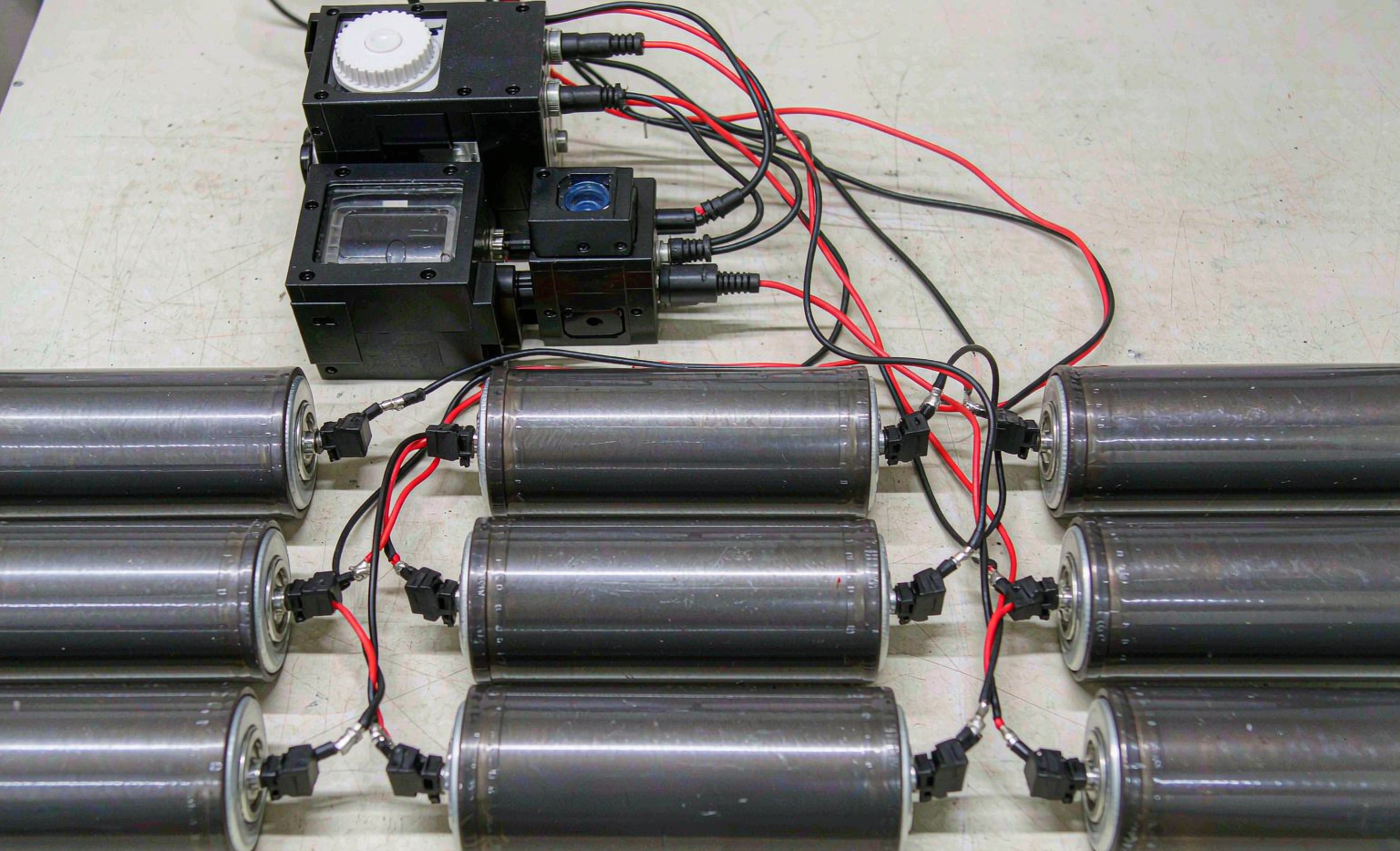
What IEC 62619 Actually Requires for Sodium-Ion Cells
IEC 62619 sets the safety requirements for secondary cells and batteries with alkaline or other non-acid electrolytes used in industrial applications. Sodium-ion falls inside this scope, and the current edition explicitly covers sodium chemistry alongside lithium. The standard is about safety under abuse, not about how many cycles a cell delivers in a gentle lab routine. That distinction matters because a cell can pass a benign cycle test and still fail catastrophically when a fault occurs in the field.
The core safety tests in IEC 62619 for a cell include external short circuit, impact, drop, thermal abuse, overcharge, and forced discharge. Each test defines a starting condition, a stimulus, and an observation window. The acceptance bar is strict: no fire, no explosion, and no rupture that releases hazardous material. For an industrial battery manufacturer the goal is not merely to pass once on a golden sample, but to hold the pass across the production tolerance band.
It is worth separating IEC 62619 from its performance counterpart. IEC 61960 is the familiar performance standard for portable lithium cells, while IEC 62620 covers the performance of industrial cells used in energy storage and motive duty. When qualified together, IEC 62619 proves the cell is safe under fault and IEC 62620 proves it meets the capacity, storage, and cycle-life claims. A sodium-ion cell qualification that only quotes one of the two leaves a gap the buyer should close before volume commitment.
The Qualification Test Sequence We Run
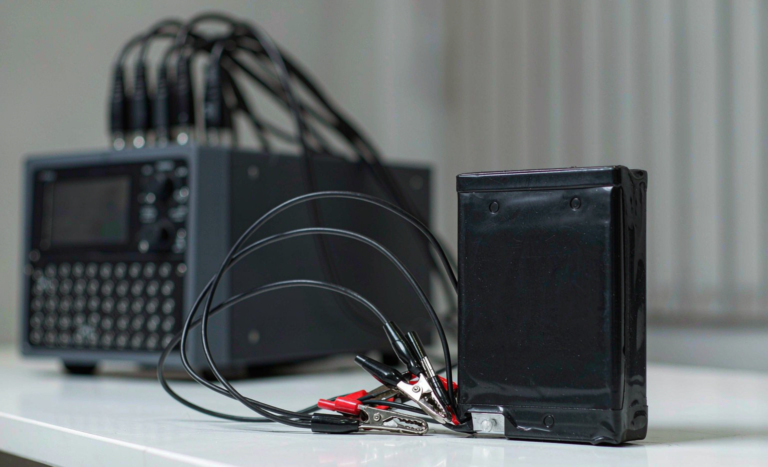
In our lab the qualification of a sodium-ion cell follows a fixed order, because earlier steps condition the cell for later ones. We begin with characterization at 25 degrees Celsius: capacity at 0.2C, internal resistance at 1 kHz, and the open-circuit voltage curve. These baseline numbers are the reference against which every later result is judged.
Next come the electrical endurance tests drawn from IEC 62620. A standard cycle-life qualification runs at 1C charge and 1C discharge across the full stated depth of discharge, at 25 degrees Celsius, until the cell reaches 80 percent of its initial capacity. We log capacity, resistance, and temperature every 50 cycles. For stationary storage we also run a calendar-aging track where cells sit at high state of charge at elevated temperature, because real deployments rarely cycle daily.
The abuse battery of tests is run on separate samples. External short circuit uses a low-resistance link across the terminals and monitors surface temperature. Thermal abuse heats the cell at a controlled rate to the specified temperature and holds it, watching for venting. Overcharge pushes the cell well beyond its upper voltage limit. Because sodium-ion anodes do not plate metallic sodium under normal conditions, we typically see a gentler thermal response than lithium cells, but that does not remove the requirement to prove it on test data rather than on chemistry theory.
How Sodium-Ion Failure Modes Differ From Lithium
Understanding qualification results starts with understanding what actually degrades. A lithium-ion cell in abuse can enter lithium plating and dendritic growth, a failure path that sodium-ion largely avoids because the hard-carbon anode never hosts metallic sodium under normal operation. That is one reason sodium-ion attracts safety-focused buyers. But sodium-ion has its own degradation physics that a qualification program must capture.
The dominant loss channel is sodium inventory loss at the cathode and the solid-electrolyte interphase. Layered oxide cathodes such as O3 and P2 types can undergo phase transitions under deep charge, and some transition-metal dissolution accelerates at high temperature. Polyanion cathodes are structurally tougher but show higher resistance. The hard-carbon anode can lose accessible pores over long cycling, which shows up first as a rise in internal resistance rather than a sharp capacity cliff. A qualification report that only tracks capacity misses the early-warning signal we rely on most.
Swelling is another difference. Sodium-ion cells tend to swell less violently than high-nickel lithium cells under thermal abuse, yet sustained gas generation during calendar aging still changes the mechanical fit inside a module. We measure thickness change at every checkpoint so the pack mechanical design can accommodate the worst qualified case rather than the best-case sample.
Reading a Qualification Report: Acceptance Criteria
A qualification dossier is only useful if you know which numbers are binding. The first figure to check is the end-of-life definition. Most industrial sodium-ion qualifications define failure as capacity falling below 80 percent of the rated value, measured at the reference temperature and rate. If a report quotes “4,000 cycles” without stating the retention threshold and test rate, treat the number as marketing, not qualification.
The second figure is internal resistance growth. We set an internal acceptance limit, often a doubling of the initial resistance or a vendor-agreed absolute milliohm ceiling, because resistance growth drives both runtime loss and thermal stress in the field. The third set of numbers is the abuse-test outcome: pass or fail with the peak temperature and any venting event recorded. A qualification that reports “no fire” but omits peak temperature tells you less than one that reports the full thermal trace.
Finally, confirm the sample size and batch. A single cell passing IEC 62619 proves the design can pass. A statistically meaningful sample across production lots proves the process can pass. For procurement at scale, ask for the lot size, the number of cells tested per abuse category, and the date of the qualifying batch so you can match it to the cells you will actually receive.
Why Buyers Should Ask for the Qualification Dossier
In my experience the cheapest place to catch a bad sodium-ion cell is on the supplier’s qualification table, not in your own field returns. Before a volume order, request the IEC 62619 certificate, the IEC 62620 performance data, and the UN38.3 transport test summary. These three documents together answer the questions that matter: is it safe under fault, does it deliver the claimed performance, and can it be shipped legally.
A qualified cell also simplifies your own product certification. When your battery pack inherits a cell-level IEC 62619 pass, your system-level safety case rests on integration testing rather than re-proving the chemistry from zero. That shortens time to market and reduces the engineering risk your team carries. For a custom battery solution, we routinely share the qualification dossier during design review so the pack architecture is built on verified cell behavior instead of datasheet optimism.
What is the difference between IEC 62619 and IEC 61960 for sodium-ion?
IEC 62619 is the safety standard for industrial secondary cells and covers sodium-ion abuse testing such as short circuit, thermal abuse, overcharge, and forced discharge. IEC 61960 is the performance standard historically written for portable lithium cells, while IEC 62620 is the industrial performance companion that defines capacity, storage, and cycle-life acceptance. For a sodium-ion cell in stationary or motive duty, the meaningful pair is IEC 62619 plus IEC 62620.
How long does sodium-ion cell qualification take?
A full qualification with cycle-life endurance typically runs several months because the cycle track must reach the defined end-of-life, often 80 percent retention, at a fixed rate and temperature. The abuse and safety tests themselves finish in days, but the endurance and calendar-aging tracks dominate the schedule. We plan qualification as a parallel track alongside product design so it does not become the critical path to shipment.
Does IEC 62619 cover module and pack level too?
Yes. IEC 62619 applies to cells, modules, and battery packs used in industrial applications, with test severity scaled to the level under test. Cell-level qualification proves the chemistry, while module and pack qualification proves the integration, protection, and thermal management. A complete dossier covers all three levels relevant to the deployed product.
Can a sodium-ion cell pass UN38.3 but fail IEC 62619?
Yes, and this surprises buyers. UN38.3 is a transport safety test that proves the cell can survive shipment hazards such as altitude, vibration, shock, and short circuit. It does not assess long-term cycle life, calendar aging, or performance under deep overcharge. A cell can be shippable yet unsafe or short-lived in an industrial duty cycle, which is exactly why IEC 62619 qualification matters after transport clearance.
What capacity retention defines a passed qualification?
Most industrial sodium-ion qualifications define end-of-life at 80 percent of rated capacity, measured at the reference temperature and discharge rate stated in the test plan. Some buyers negotiate a higher threshold, such as 70 percent at a higher temperature, depending on the duty cycle. The binding number is the one written in the acceptance criteria, not the headline cycle count in a brochure.
How often must qualification be re-run after a design change?
Any change that affects chemistry, separator, electrode loading, or enclosure can shift qualification results, so the affected tests should be re-run rather than assumed. We trigger a partial re-qualification for material or process changes and a full re-qualification for chemistry or format changes. The dated batch reference in the dossier lets a buyer confirm the cells shipped match the cells tested.
Further Reading
References