Home Energy Storage Reliability for Cabins: An Engineer’s
Why Cabin Reliability Is a Different Problem From Grid-Tied Homes
Grid-tied residential battery systems live a gentle life: the grid covers everything during a brownout, the inverter rarely cycles deep, and a service truck can be at the house in two hours. A cabin home energy storage bank has none of that cushion. It has to perform three jobs at once — daily cycling, occasional deep discharge, and emergency stand-by — and it has to do it with no human able to look at it for months. That changes every reliability decision.
For one, I never spec a cabin bank at nameplate. A 10 kWh nameplate rack delivering 5 kWh usable capacity does not give a winter weekend cabin any margin if the propane generator fails on Friday night. I size for one cloudy week plus one propane outage. In practical terms, that is 1.6 to 2.0 times the worst measured daily load. Yes, the price goes up. The number of service calls goes down much further.
For two, off-grid sites use a hybrid inverter with a generator input and a transfer switch. The generator is the back-up for the battery, not the other way around, and the battery still has to be sized for the worst generator outage. I have walked into too many cabins where the battery was sized to the inverter, the inverter was sized to the solar array, and the solar array was sized for July, leaving nothing for January. Reliability means sizing bottom-up from worst-day load, then verifying the bank can carry that load with one weak cell string.
For three, cabins run unattended. Every alarm that a grid-tied home pushes to a phone app becomes a critical alarm for a cabin: cell module failure, BMS isolation fault, insulation monitor warning, low SoC shutdown. I spec a cellular telemetry unit (LTE-M or NB-IoT) with an external antenna, and I tie it into the BMS event log plus the inverter log. If the cabin owner does not get a text message within ninety seconds of a fault, the system is not reliable, no matter what the lithium battery spec sheet says.
Reliability Risks Unique to Off-Grid Use
Off-grid cabins face six reliability risks that grid-tied homes rarely see.
1. Long idle at high state of charge. Many cabins sit at 100% SoC for weeks between visits. LFP cells in calendar storage at 100% SoC and 35 °C lose 2.5 to 3.5 percent capacity per year; the same cells at 50% SoC and 20 °C lose 1 to 1.5 percent. If the cabin owner leaves in September with a fully charged bank and does not return until May, the bank is cooking through a winter at the worst possible conditions. The fix is a programmable SoC ceiling — I set 70% for occupied weekends, 90% for shoulder-season week-long stays, and 50% for long storage.
2. Charge-into-cold damage. Lithium battery cells do not safely accept charge below 0 °C without a heater. If the cabin PV array pushes current into a 0 °C pack while the BMS is off (a common default install mistake), you get irreversible lithium plating on the anode. Plating reduces capacity by 5 to 15% and can quietly trip a cell to internal short-circuit failure two to six months later. The fix is a BMS low-temperature charge lockout with hysteresis, plus a self-heating pad option for sites that average below freezing.
3. Dirty generator power. A propane back-up generator does not produce clean sine wave power. Cheap inverter generators are fine. Contractor-grade open-frame generators are not — they push voltage spikes, frequency drift, and DC offset into the battery via the inverter’s charger. I always spec an inverter-grade generator with THD below 5% and I verify the charger’s AC input range covers the generator’s actual measured output under load.
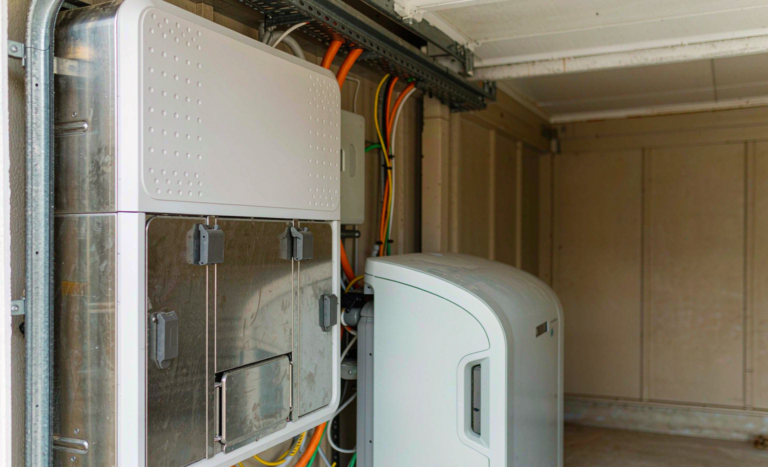
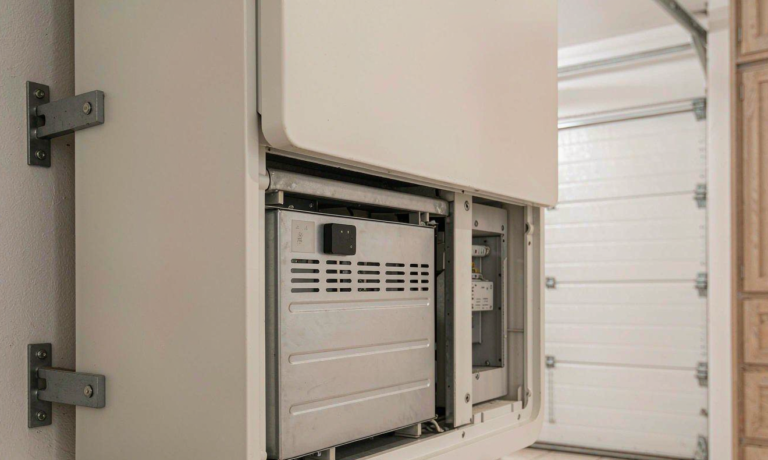
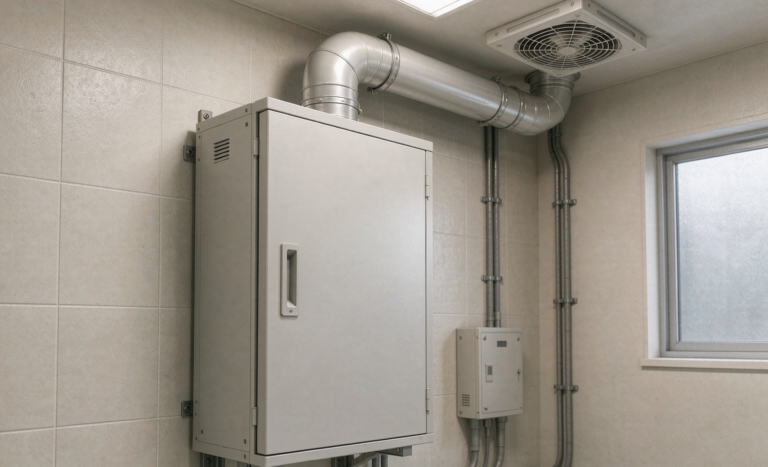
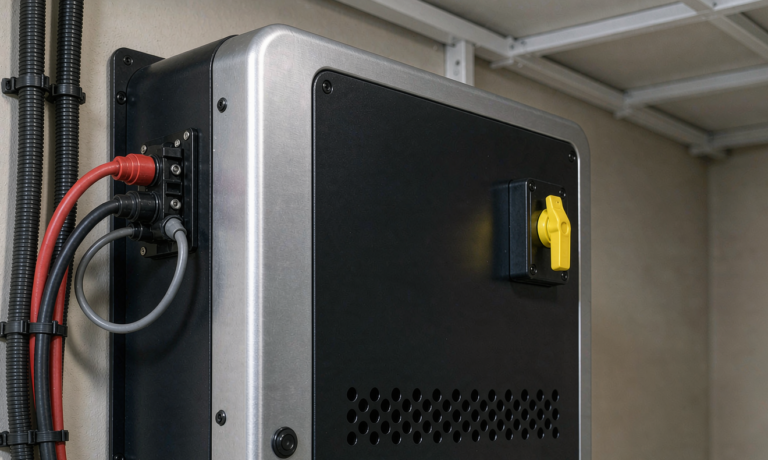
4. Convection cooling failure. A residential battery in a conditioned basement runs cool. A cabin battery in an unconditioned utility room can see 5 °C to 45 °C over a year. Every 10 °C rise halves the calendar life of LFP cells. The fix is to mount the cabinet on the north wall, keep it out of direct sun, add 100 mm rear clearance, and either passive vents with filtered intake for cold climates or a thermostatically controlled 80 mm fan for warm climates.
5. Rodent and insect intrusion. Field mice love the warmth of a battery cabinet in winter. They chew BMS wiring harnesses, nest in air filters, and urinate on busbars, which causes copper corrosion and intermittent ground faults. The fix is to seal every cable entry with stainless-steel mesh and silicone, and to inspect the cabinet interior during the spring visit.
6. Snow and ice on PV array. A residential rooftop array is rarely covered with snow. A cabin ground-mount can lose 100% of its production for days after a storm. The bank has to ride through, which brings us back to sizing.
Sizing for Reliability, Not Just Daily kWh
The reliability sizing rule I use for cabins is simple: pick the worst-week load, multiply by 1.6, then verify that the bank can deliver that energy with one weak cell string offline. A weak string is a 5 to 8% capacity deficit, which is well within the manufacturing tolerance of LFP cells but which you absolutely have to design around.
For example, a small hunting cabin with a fridge (1.2 kWh/day), lights (0.6 kWh/day), well pump (0.8 kWh/day for 15 minutes of run time), and a phone-charging station (0.2 kWh/day) draws about 3 kWh/day in shoulder season. In winter, the fridge and pump run longer and the lights run earlier, so realistic winter load is closer to 4 to 5 kWh/day. Sizing for a 1.6 multiplier gives a 7.2 to 8 kWh nameplate bank. I usually round up to a 10 kWh nameplate rack, which gives 5 kWh usable capacity and a real two-day autonomy in cloudy weather. A 5 kWh rack looks cheaper but it forces the owner to start the generator every other day, which kills the whole point of having a home energy storage bank.
Cold-Weather Survival
The single biggest reliability lever in a cold climate is low-temperature charge management. Lithium cells can be discharged to −20 °C without damage, but they should not be charged below 0 °C unless the cell manufacturer has documented low-temperature charge capability. Almost no residential-grade LFP cell is rated for charge below 0 °C without a heating circuit.
There are three approaches I have used successfully.
Approach one, no charge in winter. Set the inverter to discharge-only when ambient drops below 5 °C, accept that the bank will run down to its SoC floor, and rely on the generator for winter charging. This works for cabins that are not occupied for more than a weekend in January.
Approach two, self-heating pad. Install an insulated cabinet with a silicone heating pad on the bottom plate, thermostatically controlled to keep the cells above 5 °C. The pad draws 30 to 60 W continuously when active, which the solar array can supply during daylight and the generator covers overnight. This is the most reliable approach for a fully off-grid cabin that needs year-round charging capability.
Approach three, accept reduced winter autonomy. Run the bank from 100% SoC at the start of a weekend to 20% SoC at the end, then start the generator to top up. The math here is that the cost of a self-heating pad and the BMS low-temperature lockout is much less than a custom battery solution service call to replace a damaged pack.
For all three approaches, the cabin battery cabinet should also have a clear visible SoC gauge and a generator auto-start threshold set at 30% SoC. The owner should never have to wonder if the bank will last the night.
Monthly & Seasonal Maintenance That Actually Catches Failures
A grid-tied home can survive a skipped maintenance visit. A cabin cannot. I write the maintenance plan into the owner’s binder and I review it during the spring commissioning visit. The plan has four tiers.
Monthly during occupied season — fifteen minutes total. Walk up to the inverter, read the SoC, the daily energy in and out, and the BMS event log. Look for cell voltage imbalance greater than 30 mV at 50% SoC (yellow), 50 mV (red). Look for cell temperature gradient greater than 6 °C (yellow), 10 °C (red). Listen for fan noise. Look at the air filter, hold it up to a flashlight, replace if light transmission drops below 60%. Look at the cabinet interior for mouse droppings, cobwebs, condensation.
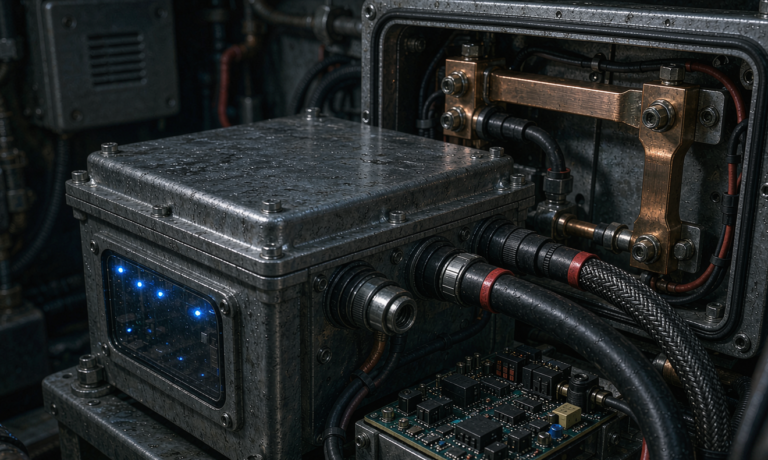
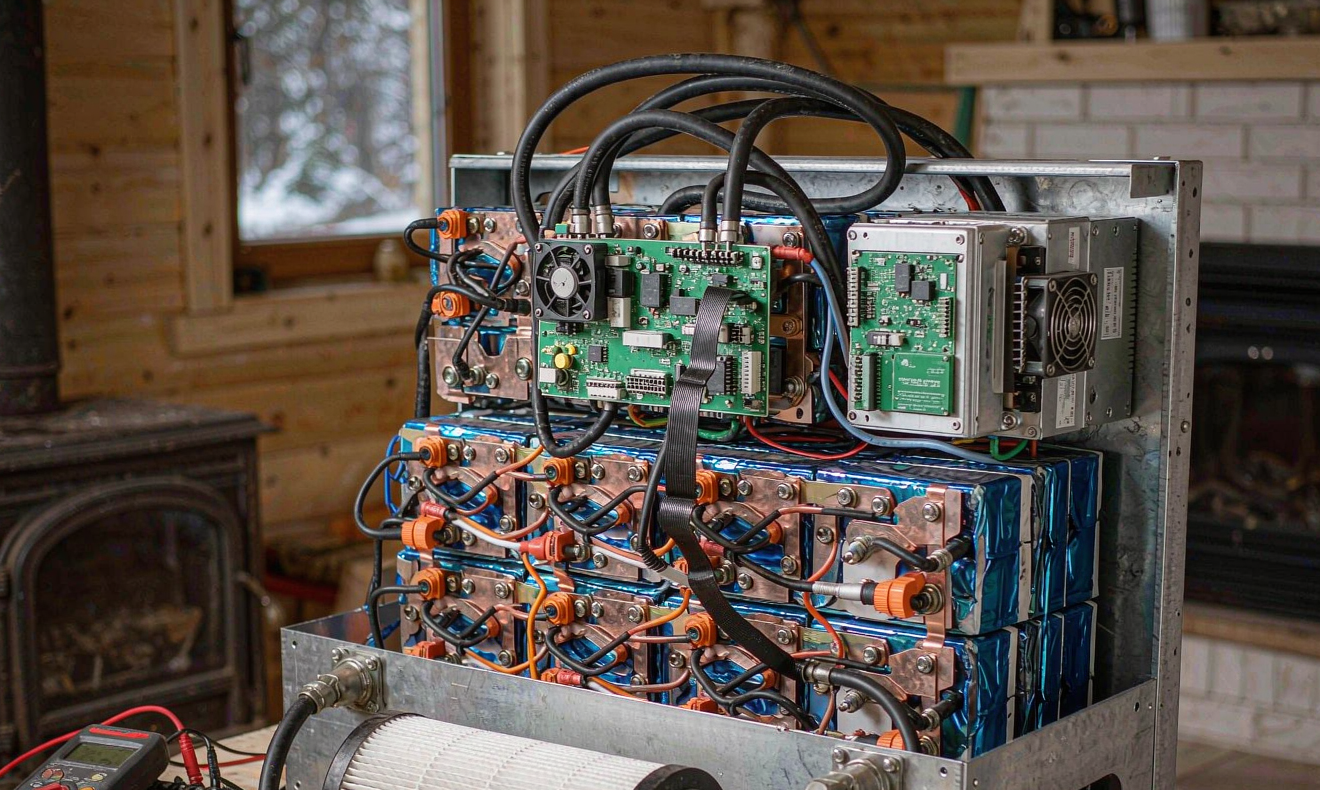
Quarterly — forty-five minutes. Open the cabinet, torque-check the M6 busbar bolts to 8 to 10 N·m, the M5 PCB-mounting bolts to 4 to 6 N·m, and the M8 cabinet-mount bolts to 12 to 14 N·m. Mark each bolt with a yellow paint pen after torquing; the next quarter, if the mark has rotated, you know the bolt moved. Run a DCIR check at 0.5C for ten seconds and log the result; drift greater than +30% from baseline is yellow, +50% is red. Re-grease any connector showing oxidation with dielectric grease. Pull the air filter and inspect for rodent intrusion. Verify the generator’s THD with a plug-in meter.
Annually — half a day. Run a 0.2C capacity test from 100% to 20% SoC, log the result; capacity below 95% of nameplate is yellow, below 90% is red. Pull the cabinet, inspect busbars for green oxidation at the contact surface, clean and re-grease. Re-torque every fastener with a fresh paint mark. Update the BMS firmware if the manufacturer has released a stability patch. Run a 500 V megohmmeter test between the positive bus and chassis ground; insulation resistance above 1 MΩ is green, below 500 kΩ is red. Replace the air filter. Refresh the maintenance log in the owner’s binder and back it up to the cloud.
Five-year — full deep inspection. Remove each cell string, weigh it, compare to the original shipping weight; mass loss above 1% indicates electrolyte leakage. Run a full DCIR sweep at three temperatures (0 °C, 25 °C, 45 °C) and three SoC levels (20%, 50%, 90%); cells that deviate more than 15% from the pack average are flagged. Re-grease every connector. Replace any connector that shows pitting or thermal discoloration. Replace the cabinet fans. Re-paste any thermal pads.
The Reliability Test Plan I Run Before Calling a Cabin Bankable
Before I sign off on a cabin bank, I run the same five tests I would run on a residential solar-plus-storage system, but with longer durations and tighter tolerances.
Test one — round-trip efficiency. Charge to 100%, rest one hour, discharge to 20% at 0.2C, rest one hour. Measure AC in versus AC out. Anything below 88% on a brand-new system means parasitic losses (idle inverter draw, BMS draw, telemetry draw) are too high. On a cabin site, parasitic losses of 50 to 80 W idle will eat 1.2 to 1.9 kWh per day, which is 25 to 40% of a small bank’s daily throughput. I have seen this single number be the difference between a comfortable cabin and a frustrated one.
Test two — cold-charge verification. Drop the cabinet to 5 °C ambient, attempt a 0.2C charge from 30% SoC. Verify the BMS rejects the charge until cells are above 5 °C with hysteresis to below 2 °C. If the BMS accepts the charge at 0 °C without heating, the install is not safe for winter occupancy.
Test three — generator handoff test. Start the propane generator, verify the inverter accepts the AC input, verify the charger limits to the generator’s continuous rating, verify the AC frequency stays within the inverter’s tolerance. If the inverter throws a generator error every third cold start, the install is not reliable.
Test four — week-long unattended test. Set the bank to its normal operating SoC window, leave the site for seven days, return and verify the bank has cycled within its expected range and that no fault codes have been logged. If anything in the BMS event log looks unusual, fix it before signing off.
Test five — extreme weather test. If possible, run the test during a real cold snap or a real heat wave. Verify the cabinet ventilation keeps cells inside the manufacturer’s temperature window. Verify the self-heating pad (if installed) keeps cells above 5 °C during a −20 °C night.
Frequently Asked Questions
How long should a cabin battery bank actually last?
LFP banks that are properly sized, properly torqued, and properly maintained last 12 to 18 years in cabin service. The bank will outlast the inverter and the charge controller. The actual replacement trigger is usually a single-cell failure that pulls the pack string outside the BMS balancing window, not a wholesale capacity fade.
Do I need a self-heating battery for a cold-climate cabin?
If the cabin is occupied in winter and you want the solar array to charge the bank, yes. A self-heating pad drawing 30 to 60 W continuously during cold weather is much cheaper than a service call to replace a damaged pack. If the cabin is unoccupied in winter and only sees summer visits, set the inverter to discharge-only mode and accept that the bank will sit idle in January.
What size generator do I need as a backup?
The generator should match the inverter’s continuous AC input rating, with 20% headroom for inrush. For a 5 kW hybrid inverter, that is a 6 kW inverter-grade generator. A contractor-grade open-frame generator is not acceptable because its voltage THD and frequency stability will trip the inverter’s charger fault every few hours.
Should I keep the battery at 100% state of charge between visits?
No. Calendar storage at 100% SoC and warm temperatures accelerates capacity fade. Set the SoC ceiling to 70% for occupied weekends, 90% for shoulder-season week-long visits, and 50% for long storage. The owner should be able to change this from the phone app.
What certifications should the battery bank carry?
At minimum UN38.3 for transport, IEC 62619 for industrial lithium cells, and IEC 62133-2 for cell safety. For North American sites, add UL 1973 and verify the inverter carries UL 9540. For a site with more than 20 kWh of storage in an attached structure, NFPA 855 applies.
What is the single most common failure mode on a cabin bank?
Torque creep on busbar bolts. Heat cycling and cold cycling loosen M6 bolts by 10 to 20% within the first six months. A loose bolt adds resistance, generates heat, and eventually trips a cell imbalance fault. The fix is a torque check at the one-month visit and a paint mark on every bolt.
A Final Word on Reliability
Off-grid cabin battery reliability is not about buying the most expensive cell. It is about installing the system like a piece of critical infrastructure and then verifying it on every visit. The torque spec, the air filter, the BMS low-temperature lockout, the self-heating pad, the telemetry push notification — every one of these is a small thing. They only matter when they all work, every month, for fifteen years. That is what makes a cabin bank reliable, and that is what I am building when I commission a custom battery solution for a remote site like this.