Lithium Battery for Golf Carts and Resort Fleets
I have spent the better part of fourteen years specifying traction packs for everything from airport ground support equipment to agricultural utility vehicles, and golf carts remain one of the most misunderstood applications I get asked about. The engineering looks trivial on paper — a 48 V nominal bus, a few kilowatt-hours, a modest peak current — and yet I have watched resort fleets burn through lead-acid banks in eighteen months while an identically sized lithium installation on the neighbouring course is still delivering 92% of its original capacity in year seven. The difference is almost never chemistry luck. It is sizing discipline, charge control, and a battery management system that was configured for the actual duty cycle rather than copied from a datasheet.
This guide is written for fleet managers, resort maintenance directors and procurement engineers who are evaluating a lithium battery for golf carts and resort shuttle fleets. It covers pack sizing from real route energy data, the 36 V / 48 V / 72 V architecture decision, chemistry selection between LFP and NMC, BMS requirements specific to fleet duty, charging infrastructure design, and the eight-year total cost of ownership model I use during customer consultations. Every number below comes from bench testing or field telemetry we have collected since 2019.
Why Resort Fleets Are Moving Away from Flooded Lead-Acid
A typical resort fleet cart runs 25 to 45 km per day on flat paved cart paths, with four to eight start-stop cycles per hour and a seasonal profile that can swing from 200 carts a day in peak season to 20 in the off-season. Flooded lead-acid (FLA) batteries tolerate this pattern badly for three physical reasons.
First, usable depth of discharge. A 48 V FLA bank rated at 200 Ah contains roughly 9.6 kWh of nameplate energy, but discharging below 50% state of charge accelerates positive grid corrosion and active material shedding to the point where cycle life collapses. In practice the usable window is 4.8 kWh. A lithium pack of the same nameplate capacity is routinely specified at 80% depth of discharge, delivering 7.7 kWh — about 60% more usable energy from a similar footprint.
Second, charge acceptance. FLA banks need 8 to 10 hours for a full recharge and, critically, an absorption phase that is difficult to complete during a shift change. Partial state of charge operation is what kills them. Lithium cells accept 0.5C to 1C continuously, so a 100 Ah pack can take 50 to 100 A and reach 80% in roughly 45 to 70 minutes without any absorption plateau.
Third, maintenance burden. Every flooded cell in a 48 V bank needs monthly watering, terminal cleaning and specific gravity logging. On a 60-cart fleet that is roughly 240 cells per month of technician time, plus the corrosion damage and acid spill containment that follows when it slips. Lithium packs are sealed and require nothing beyond a quarterly terminal inspection and a monthly state-of-health download.
Pack Sizing: Converting Route Energy Into Usable Kilowatt-Hours
The sizing exercise I run with every fleet starts with measured energy, not with the capacity of the battery being replaced. On a standard four-seat cart with a 3 to 4 kW AC or DC traction motor, kerb weight around 480 kg and two passengers, real-world consumption on flat paved paths lands between 55 and 75 Wh per kilometre. On hilly resort terrain with soft turf sections, that figure rises to 90 to 130 Wh/km. I always add a 15% margin for accessory loads — headlights, a sound system, a GPS fleet tracker and, increasingly, a 12 V cooler or a beverage cart compressor drawing 40 to 80 W continuously.
Worked example. A resort runs 40 carts on a hilly course averaging 38 km per day at 105 Wh/km, including accessories:
- Daily traction energy: 38 km × 105 Wh/km = 3,990 Wh, call it 4.0 kWh
- Usable depth of discharge: 80%
- Aging reserve at end of life (80% capacity retention): divide by 0.80
- Cold-weather derating at 5°C: divide by 0.90
- Required nameplate capacity: 4.0 ÷ (0.80 × 0.80 × 0.90) = 6.9 kWh
A 48 V architecture at 6.9 kWh means 144 Ah, so the standard 48 V 150 Ah LFP pack — 7.2 kWh nameplate, 5.76 kWh usable — is the right commercial choice. Specifying the common 48 V 100 Ah (4.8 kWh) unit would have looked fine on a flat demonstration loop and would have stranded carts on the back nine by month three.
For fleet engineers who need a non-standard enclosure, a non-standard terminal layout or a specific CAN profile, this is exactly the case where a custom battery solution is cheaper than adapting the vehicle. We routinely build drop-in trays that reuse the original hold-down brackets and the original charger connector, which removes the vehicle modification cost from the business case entirely.
Voltage Architecture: 36 V, 48 V, 72 V and the Current Trade-Off
Most legacy fleet carts are 36 V (three 12 V or six 6 V FLA blocks), while newer utility and shuttle platforms are 48 V, and six- to eight-passenger shuttle vehicles have pushed toward 72 V. The conversion decision is driven by current, not by voltage fashion.
At a 4 kW motor draw, a 36 V pack delivers about 111 A, a 48 V pack about 83 A, and a 72 V pack about 56 A. Resistive losses scale with the square of current, so moving from 36 V to 48 V at the same conductor cross-section cuts I²R heating in the cables, contactor and cell interconnects by roughly 44%. That is why 48 V has become the de facto standard: it stays below the 60 V DC threshold that most safety standards treat as the boundary for extra-low-voltage protection requirements, while keeping continuous current in the 80 to 120 A band that standard 25 to 35 mm² automotive cable and a 200 A contactor can handle comfortably.
On 72 V shuttle platforms, the pack crosses into the voltage range where creepage and clearance distances, insulated tool requirements and service disconnect interlocks become mandatory design elements rather than good practice. It is entirely manageable, but it changes the service model, and I always flag it to the maintenance team before the purchase order.
Chemistry Selection: LiFePO4 Versus NMC for Fleet Duty
For golf carts and resort shuttles I specify lithium iron phosphate (LFP) in roughly 95% of cases, and the reasoning is straightforward.
LFP cells deliver 3.2 V nominal, a flat 3.2 to 3.3 V plateau across 90% of the discharge curve, specific energy of 90 to 160 Wh/kg at cell level and 65 to 110 Wh/kg at pack level after enclosure, BMS and thermal hardware. Cycle life under an 80% depth of discharge regime is 3,000 to 6,000 cycles to 80% capacity retention at 25°C and 0.5C, which on a 300-cycle-per-year resort profile is 10 to 20 years. Thermal runaway onset for LFP sits around 270°C versus 150 to 210°C for NMC, and the oxygen released from the phosphate lattice during decomposition is far lower, which is why LFP packs pass UN38.3 and IEC 62133-2 abuse testing with much wider margins.
NMC offers 150 to 220 Wh/kg at cell level — roughly 1.4 to 1.6 times the volumetric and gravimetric energy of LFP — and I do specify it where the vehicle has a hard volume constraint, such as a low-profile cart with a 90 mm tray height, or a shuttle that must carry eight passengers up a sustained 12% grade. The trade is 1,500 to 2,500 cycles to the same 80% retention threshold and a stricter thermal management requirement. For a fleet buying 40 packs, the cycle life difference usually outweighs the packaging benefit.
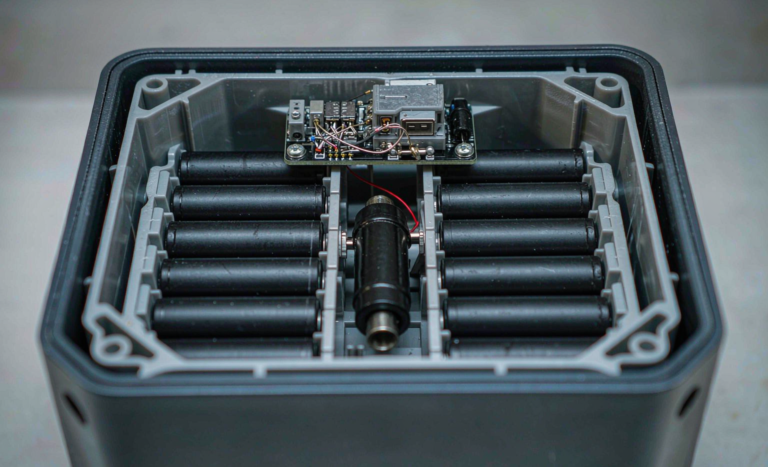
One thing to check on any lithium battery pack quote: cell matching. Cells should be sorted to within 20 mV open-circuit voltage and 3% capacity at the time of pack assembly, with DC internal resistance spread below 10% across the string. A pack built from unmatched cells will drift out of balance within a few hundred cycles, and no passive balancing resistor of 30 to 100 mA can recover it.
Battery Management System Requirements for Fleet Duty Cycles
Fleet duty is electrically boring and thermally demanding, which means the BMS has to get three things right rather than being feature-rich.
State of charge estimation. LFP’s flat voltage plateau — about 3 mV per percent SoC between 20% and 90% — makes voltage-based SoC unusable on its own. The BMS must run coulomb counting as the primary estimator with open-circuit voltage anchoring during rest periods, and it should re-anchor at full charge at least once every 7 to 14 days. Well-implemented systems hold 3% to 5% error over a full season; systems that skip OCV anchoring drift 10% to 15% and generate the classic “cart died at 20% indicated” complaint.
Current limits as a function of temperature. A 48 V 150 Ah LFP pack will typically support 150 A continuous and 300 A for 10 seconds at 25°C. At −5°C the continuous figure should be derated to 0.3C or less, and charging below 0°C must be inhibited entirely. Every LFP pack we ship for resort use carries an internal heater of 60 to 150 W with a control law that brings the cells to 5°C before closing the charge contactor. Skipping this is the single most common cause of lithium plating and premature capacity loss in four-season resorts.
Fleet telemetry. This is where a modern lithium battery earns its money beyond energy density. A CAN 2.0B or RS-485 port exporting pack voltage, current, SoC, SoH, cell voltage minimum and maximum, and the three hottest thermistor readings lets the maintenance team move from reactive to predictive replacement. In practice, packs that show a growing cell delta — more than 80 mV at end of charge by year four — can be pulled for service during the off-season instead of failing during a tournament weekend.
Charging Infrastructure and Opportunity Charging
Charging design is where most fleet conversions lose money. The instinct is to keep the existing lead-acid chargers, and that is a mistake in both directions: FLA charge profiles include an equalisation stage at 2.4 to 2.6 V per cell, roughly 60 to 64 V on a 48 V pack, which sits above the LFP absorption limit of 3.65 V per cell (58.4 V for a 16S pack) and will trip the BMS overvoltage protection or, worse, degrade the cells.
For a 48 V LFP pack the profile I specify is constant current at 0.3C to 0.5C (45 to 75 A for a 150 Ah pack) up to 54.4 to 58.4 V, then constant voltage until current tapers to 0.05C, then terminate. There is no float stage. Holding an LFP pack at 100% SoC and elevated voltage during storage accelerates calendar aging; for off-season storage I recommend 50% SoC at 10 to 20°C, which gives roughly 0.3% to 0.5% capacity loss per year.
Opportunity charging is the operational advantage that changes resort logistics. Because LFP accepts 0.5C without meaningful degradation, a 20-minute top-up during a lunch break at 75 A puts about 25 Ah — roughly 17% SoC, or 6 to 8 km of range — back into a 150 Ah pack. Over a 12-hour operating day, two or three short top-ups eliminate the overnight charging bottleneck entirely, and in several resorts we have reduced the charger-to-cart ratio from 1:1 to 1:2.5 by installing charge points at the halfway house and the maintenance yard.
On the electrical infrastructure side, a single-phase 230 V / 32 A circuit supports roughly 7 kW, enough for three 2 kW onboard chargers or one 7 kW offboard unit with sequencing. For fleets above 30 carts I almost always recommend a centralised charging bank with load management rather than 40 individual chargers, because the diversity factor on resort charging is typically 0.4 to 0.6 and the capital saving is significant.
Eight-Year Total Cost of Ownership
The business case for a golf cart lithium battery is not that it is cheaper to buy — it is not — but that it is dramatically cheaper to own over the vehicle’s life. Using a 40-cart fleet and eight-year horizon:
- Lead-acid path: 48 V 200 Ah bank at roughly $1,100 to $1,600 per cart, replaced 2.5 times over eight years at 1,200 to 1,500 cycles each, plus watering labour of about 1.5 hours per cart per year, plus watering system hardware, acid spill consumables and roughly 3% energy waste from lower charge efficiency (75% to 85% Wh efficiency versus 95% to 98% for lithium). Eight-year cost lands near $3,400 to $4,200 per cart before downtime.
- Lithium path: 48 V 150 Ah LFP pack at roughly $2,600 to $3,800 per cart with a 5 to 8 year warranty, no scheduled replacement inside the eight-year window, quarterly inspection instead of monthly watering, and higher charge efficiency. Eight-year cost lands near $2,900 to $4,000 per cart including one mid-life BMS or harness service.
The lithium path wins on cost in most cases, and it wins decisively on two factors that do not appear in the spreadsheet: vehicle availability and labour reallocation. A cart that never spends a morning on charge is a cart that generates revenue, and the technician who was watering 960 cells a month is now doing brake and steering work that actually affects guest safety.
Compliance, Transport and Storage Safety
Any pack installed in a commercial fleet vehicle must carry certification evidence, and I ask for the full test reports rather than a certificate number. The relevant set for this application:
- UN38.3 (T1 through T8) — mandatory for air, sea, road and rail transport of lithium cells and batteries; the altitude simulation, thermal cycling, vibration, shock, external short, impact, overcharge and forced discharge tests
- IEC 62133-2 — safety requirements for sealed portable secondary lithium cells and batteries; covers the cell-level and pack-level abuse cases that matter most in service
- IEC 62619 — safety for secondary lithium cells and batteries used in industrial applications, including the thermal propagation and overcharge behaviour expected of a traction pack
- UL 1973 — the North American standard for batteries for use in stationary, vehicle auxiliary power and light electric rail applications; commonly requested by resort insurers
- UL 2271 — specifically for batteries in light electric vehicles, and the one underwriters increasingly ask for on golf carts and low-speed vehicles
- IEC 60529 / IP rating — IP65 minimum for the pack enclosure on a cart that gets washed weekly; I specify IP67 where carts are pressure-washed
For winter storage, state of charge matters more than temperature. Store at 40% to 60% SoC in a dry space between −10°C and 35°C, disconnect the service plug or open the maintenance disconnect, and verify the pack once every 90 days. A pack left at 100% SoC through a 35°C summer will lose 3% to 6% capacity per year; the same pack at 50% SoC and 20°C loses under 1%.
Commissioning and Acceptance Testing Protocol
Before a fleet goes into service I run a five-step acceptance protocol. It takes about 90 minutes per cart on the first unit of a batch and about 25 minutes thereafter.
- Insulation resistance: 500 V megohmmeter between the pack positive terminal and the vehicle chassis, and between the negative terminal and chassis. Accept above 1 MΩ; I reject anything below 10 MΩ because it almost always indicates a harness chafe or moisture ingress that will become a fault within a season.
- Cell balance verification: charge to 100% SoC, rest two hours, read cell voltages. Maximum delta should be under 30 mV on a new pack and under 50 mV on a pack in service. A pack that arrives at 120 mV delta should not be signed for.
- Capacity confirmation: discharge at 0.2C to the BMS cut-off and measure delivered ampere-hours. Accept at 95% or better of nameplate at 25°C. Repeat at 0°C and 40°C for the first pack of a batch to establish the seasonal envelope.
- Peak current sag: apply the maximum motor draw the controller allows for 10 seconds on a dyno or on a known grade, and log bus voltage sag. On a 48 V pack with a healthy 18 to 25 mΩ DC internal resistance, sag should stay within 3% to 5%. Repeat at −5°C after the heater cycle and confirm no contactor drop-out.
- Protection verification: confirm the BMS trips on overvoltage, undervoltage, overcurrent, short circuit, and on charge inhibit below 0°C. Never take a vendor’s word for this — drive the pack into each limit on the bench once, and log the trip point and reset behaviour.
Frequently Asked Questions
Can I use my existing lead-acid golf cart charger with a lithium battery?
Almost never. Flooded lead-acid chargers apply an equalisation voltage around 64 V on a 48 V system and hold a float stage indefinitely, both of which exceed LFP limits and will either trip the BMS or accelerate capacity loss. Budget for a LiFePO4-profile charger with CC-CV termination and no float stage; for a 150 Ah pack, a 25 to 40 A unit is adequate for overnight charging.
How long will a lithium golf cart battery last in resort service?
An LFP pack cycled at 80% depth of discharge at 25°C delivers 3,000 to 6,000 cycles to 80% capacity retention. A resort cart running 300 full-equivalent cycles per year reaches that threshold in 10 to 20 years, which means most packs retire with the vehicle rather than being replaced mid-life. Realistic field expectation with hot-climate operation and imperfect charging is 8 to 12 years.
Is 48 V better than 36 V for a converted fleet cart?
If you are replacing the motor controller at the same time, 48 V is generally the better choice: at the same 4 kW power draw it cuts current by about 25% versus 36 V, which reduces resistive heating in cables, contactors and interconnects by roughly 44% and lets you use standard 200 A contactors. If the controller stays 36 V, a 36 V lithium drop-in is the lower-risk and lower-cost path.
Do lithium golf cart batteries need watering or equalising?
No. LFP cells are sealed and there is no electrolyte to top up and no equalisation charge to apply. The maintenance requirement reduces to a quarterly visual and torque check on terminals, an annual insulation resistance test, and a monthly state-of-health download if the pack has a telemetry port.
Can the pack charge in freezing temperatures?
Charging below 0°C must be inhibited by the BMS, because lithium plates onto the anode surface rather than intercalating, causing permanent capacity loss and a potential internal short. Packs intended for four-season resorts should include a 60 to 150 W internal heater that brings cells to 5°C before the charge contactor closes; expect roughly 20 to 40 minutes of preheat from −10°C.
What size lithium battery do I need for a hilly resort course?
Measure or estimate Wh per kilometre first — flat paths run 55 to 75 Wh/km, hilly or turf terrain runs 90 to 130 Wh/km. Multiply by daily distance, then divide by the usable depth of discharge (0.80), the end-of-life retention factor (0.80) and the cold-weather factor (0.90 for 5°C operation). A 38 km day at 105 Wh/km needs about 6.9 kWh nameplate, so a 48 V 150 Ah pack is the right fit.
Are lithium golf cart batteries safe to store indoors over winter?
Yes, provided they are stored at 40% to 60% state of charge with the service disconnect open, in a dry area between −10°C and 35°C, away from combustible material. Packs certified to UL 1973 or UL 2271 with IEC 62619 thermal propagation testing satisfy most resort insurance requirements; keep the test reports on file and check state of charge every 90 days.