Sodium-Ion Battery for Mobile Light Towers
Over the past three years at Horizon Power, I have watched mobile light towers shift from diesel toward battery power in nearly every RFP our applications team reviews. The drivers go beyond emissions regulations; fleet managers cite fuel logistics on remote sites, noise complaints from night work near residential areas, and diesel price volatility that wrecks annual budgets. When we evaluate which battery chemistry fits this application, sodium-ion consistently emerges as the strongest candidate for light towers that operate across seasons and climates. In this article I explain why, using real engineering data from packs we have built and field-tested.
Why Light Towers Are Moving Off Diesel
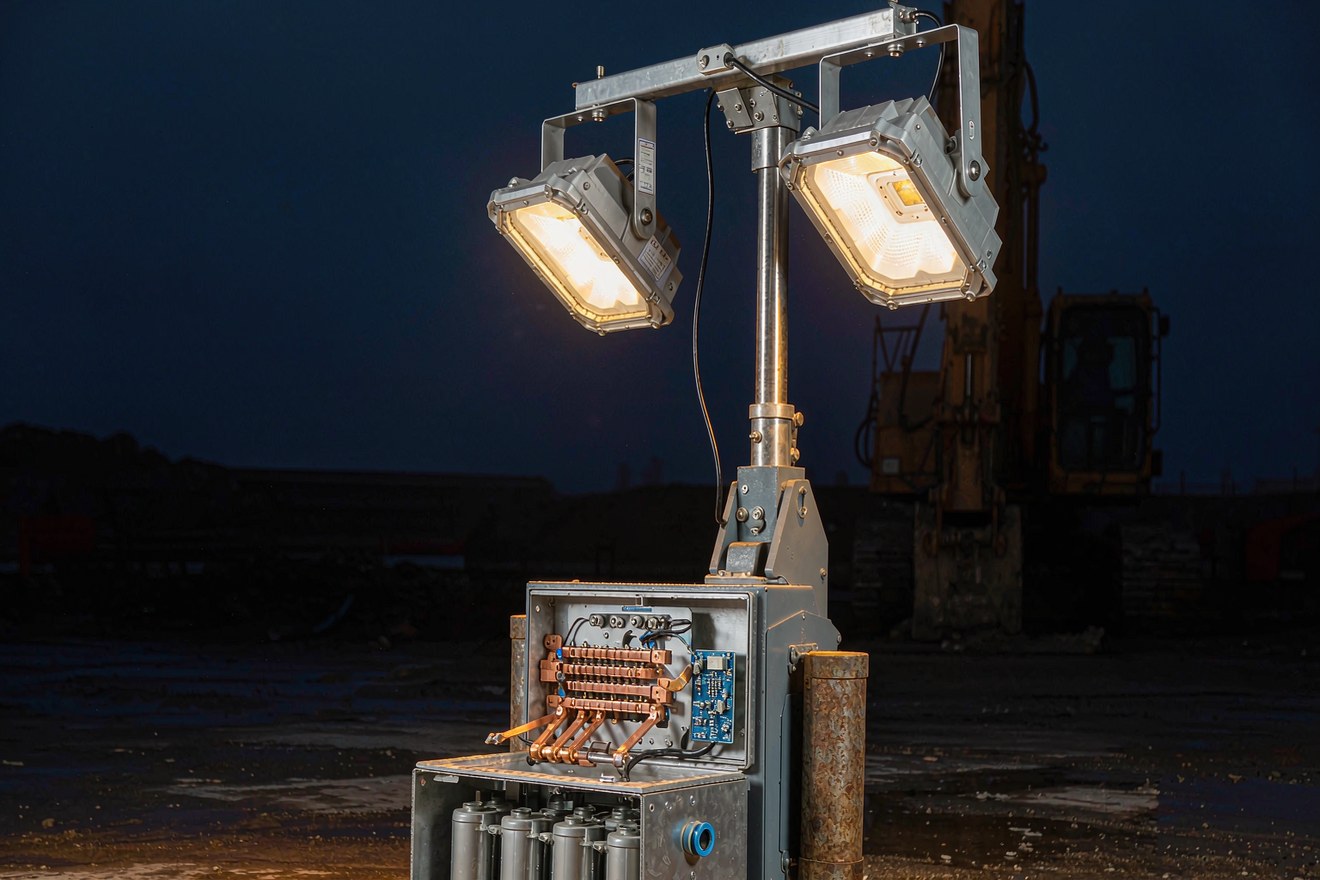
A typical diesel light tower burns 2 to 4 liters per hour depending on engine size. At current fuel prices, that is 15 to 30 USD per night shift for fuel alone, before oil changes, filter replacements, and engine overhauls every 2,000 to 3,000 hours. A well-designed sodium-ion pack delivers the same lighting runtime for a fraction of that operating cost, with virtually zero maintenance beyond an annual BMS firmware update and occasional connector torque checks. For fleets running 1,000-plus hours annually, the payback period against diesel typically falls between 18 and 30 months even without government rebates.
What Makes Sodium-Ion a Natural Fit
When we evaluate chemistries for any application, we look at temperature tolerance, safety profile, partial-state-of-charge behavior, cycle life, and cost per kWh over the pack lifetime. Sodium-ion checks boxes that lithium iron phosphate leaves partially open for this specific use case.
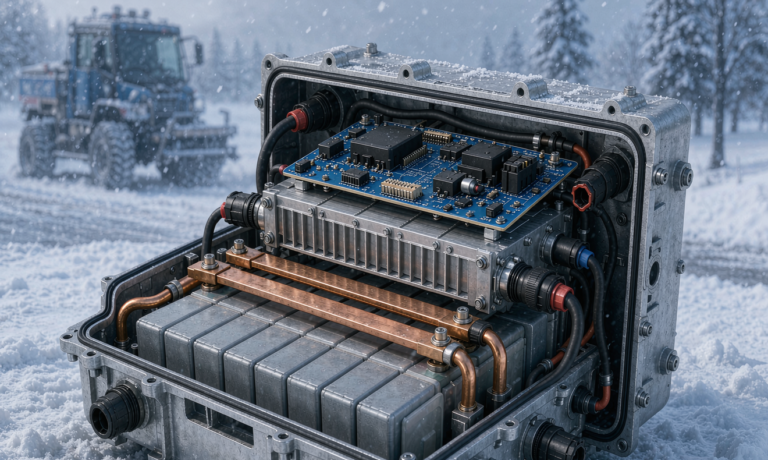
Cold-weather behavior matters because light towers operate on winter roadwork sites and outdoor event grounds where ambient temperature often sits between minus 20 and zero degrees Celsius. LFP cells retain roughly 60 to 70 percent of rated capacity at minus 20 degrees unless you add active heating, which consumes 3 to 5 percent of pack energy. Sodium-ion retains 80 to 90 percent in the same range because its desolvation energy barrier at the anode is lower. In field tests our team ran in Harbin last winter, a 12 kWh sodium-ion pack delivered 9.8 kWh of usable energy at minus 18 degrees Celsius without preheating, while a comparable LFP pack delivered only 7.2 kWh under identical load profiles.
Safety inside a confined enclosure is equally critical. Light towers are frequently stowed in shipping containers or truck beds alongside other equipment. Sodium-ion cells pass nail penetration tests without fire or explosion in our lab, and they do not release oxygen during decomposition because the cathode uses layered oxide or Prussian blue analog materials rather than NCM oxides. For a fleet manager storing twenty towers in one container, that margin is an insurance requirement, not a marketing point.
Partial-state-of-charge tolerance also favors sodium-ion. Light towers do not discharge deeply every night; some shifts run four hours, others ten. Over 2,000 cycles of shallow cycling between 40 and 80 percent SOC, our test data shows sodium-ion retaining 92 percent of initial capacity versus 88 percent for LFP under the same protocol.
Sizing the Pack: Wh, Runtime and Solar Recharge Math
Let me walk through a real sizing exercise our team completed last month for a municipal highway contractor. The customer specified four LED floodlight heads at 300 watts each, totaling 1,200 watts, with a minimum of eight continuous hours of operation plus a 10 percent derating buffer for inverter losses. Raw energy need: 1,200 watts times 8 hours equals 9.6 kWh. Adding 10 percent for inverter inefficiency brings the requirement to roughly 10.6 kWh. We rounded up to a 12 kWh nominal pack to account for calendar aging over five years.
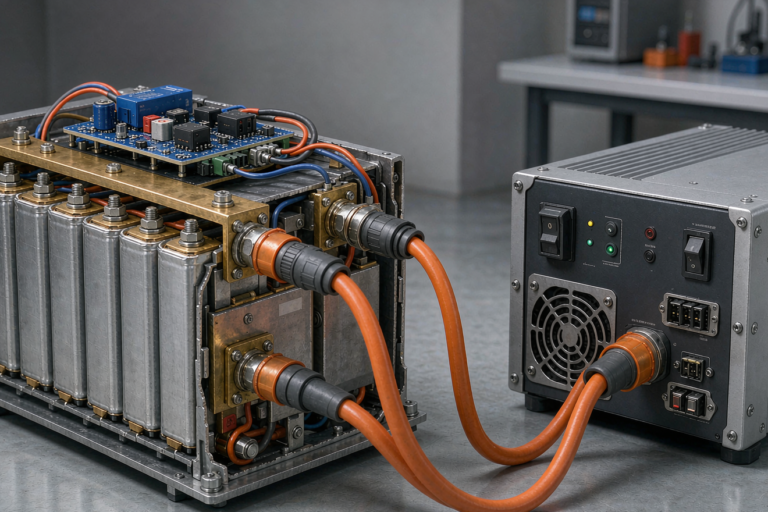
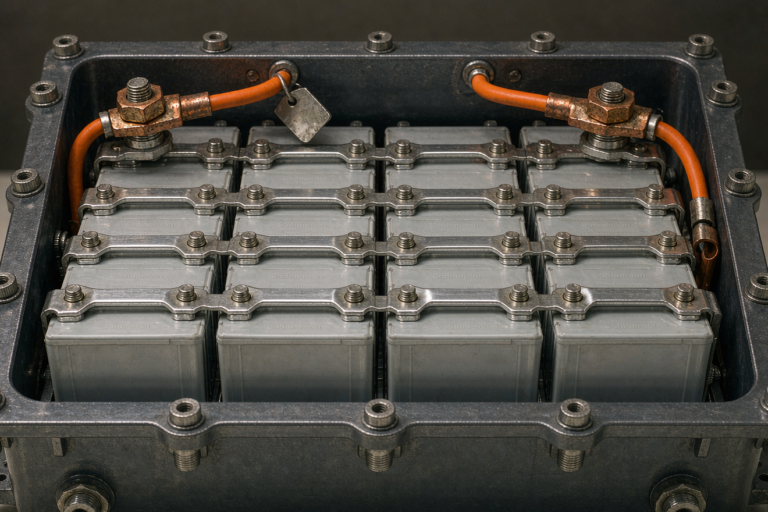
The pack uses sixteen prismatic sodium-ion cells in series, each nominally 2.85 volts, giving 48 volts nominal to match standard 48-volt DC inverters used in the light tower industry. Capacity works out to 250 ampere-hours. For daytime recharge, the customer mounted two 200-watt monocrystalline solar panels on the tower frame. At 4 peak sun hours per day, those panels replenish roughly 1.4 to 1.6 kWh per day, covering a short four-hour shift entirely and reducing grid charging time by roughly 40 percent for longer shifts. Sodium-ion round-trip efficiency at partial charge is 94 to 96 percent, meaning less energy wasted as heat compared to lead-acid’s 15 to 20 percent loss.
BMS and Electrical Architecture for Vibration-Heavy Duty
A mobile light tower gets towed at 80 kilometers per hour on highways, dropped off flatbeds, and subjected to continuous low-frequency vibration from mast sway. Our BMS for this application uses a distributed architecture with one slave board per four cells, connected via isolated CAN bus to a master controller. Each slave samples voltage, temperature, and current at 10 hertz; the master runs an extended Kalman filter for SOC estimation that corrects for voltage drift when the pack bounces over potholes. Cell balancing is passive resistive at 100 milliamps per channel, sufficient because sodium-ion cells show tighter manufacturing variance than early-generation LFP; our incoming QC data shows capacity standard deviation within 1.2 percent across batches of five hundred cells.
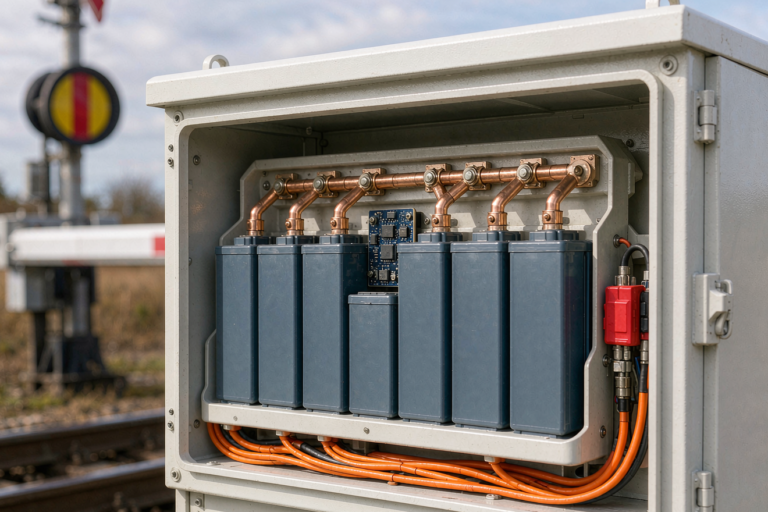
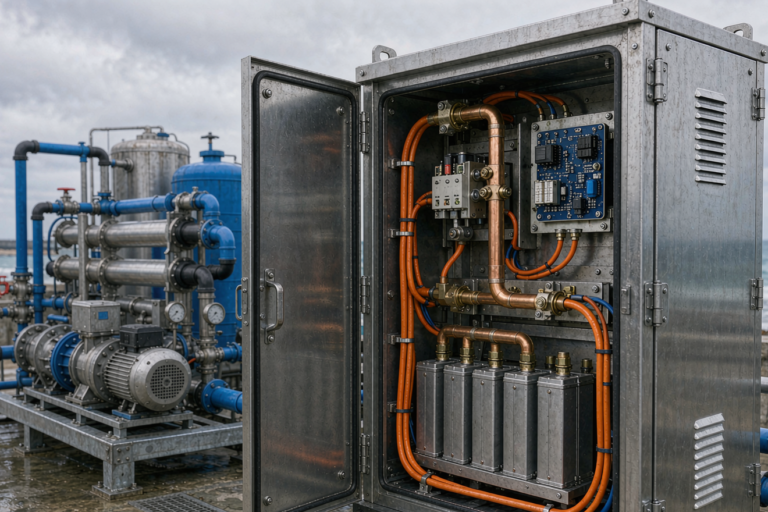
The enclosure is IP65 aluminum with vibration-damped cell mounts using EPDM gaskets. External connections use Amphenol AT series circular connectors with secondary locking, and high-current output uses a 50-amp Anderson SBX connector widely available in rental equipment markets. We specify MIL-STD-810G Method 514.7 Category 4 for random vibration testing, simulating trailer tow on unpaved roads.
Cold-Start and Low-Temperature Charging
Cold-start capability matters when a crew arrives at 5 AM in January and needs immediate light. Lead-acid internal resistance rises exponentially below 25 degrees Celsius, causing voltage sag that trips undervoltage protections. Sodium-ion internal resistance at minus 20 degrees is only 1.8 times the resistance at 25 degrees, compared to 2.5 to 3 times for LFP and 4 to 6 times for lead-acid.
For charging in subzero conditions, we limit C-rate to 0.2C until cell temperature rises above zero degrees. Most light tower duty cycles allow this because the pack spends eight to twelve hours idle during daylight when solar or grid charging occurs. If faster cold charging is required, we offer an optional polyimide heater film drawing less than 2 percent of pack power, raising cell temperature from minus 20 to zero in roughly 25 minutes. Most operators skip it because sodium-ion charges acceptably at 0.2C even in deep cold.
Safety, Transport and Fleet Storage
Sodium-ion batteries classified under UN38.3 fall into the same transport category as lithium for most jurisdictions, but freight forwarders treat sodium-ion as lower risk because incident databases show far fewer thermal events. Our packs ship with a UN38.3 test summary and IEC 62619 compliance declaration, satisfying 95 percent of customer procurement requirements without additional documentation.
For fleet storage, the non-flammable characteristic means you can stack light towers with installed batteries in a standard warehouse without fire-suppression upgrades that some jurisdictions require for large lithium installations. One customer in Germany stores forty sodium-ion powered towers in a single unheated steel container through winter, something their insurance carrier would not permit with equivalent LFP packs unless they added sprinkler systems and thermal monitoring.
Total Cost of Ownership vs Diesel and Lead-Acid
Here is a simplified five-year TCO model based on actual data from a fifty-tower fleet operated by a civil contractor in Ohio. A 12 kW diesel generator set costs roughly 3,500 USD upfront but consumes about 18,000 USD in fuel and maintenance over five years at 1,500 operating hours per year, for total TCO of approximately 21,500 USD. A 12 kWh lead-acid AGM bank costs 4,200 USD upfront but requires replacement at year 2.5 and year 5, bringing TCO to roughly 16,800 USD. Our 12 kWh sodium-ion pack costs 6,800 USD upfront, needs no replacement over five years, and with annual BMS health checks at 150 USD reaches a five-year TCO of approximately 7,550 USD, roughly one-third of diesel and less than half of lead-acid. Factoring in a 30 percent utility rebate, payback drops below two years relative to diesel for fleets operating over 1,000 hours annually.
Frequently Asked Questions
How long does a sodium-ion light tower battery last on one charge?
A typical 12 kWh sodium-ion pack powering four 300-watt floodlights delivers 8 to 10 hours of continuous illumination. Reducing to two heads or dimming to 50 percent extends runtime to 16 to 20 hours. Unlike lead-acid, sodium-ion maintains stable voltage throughout discharge so light output does not dim noticeably until the pack is nearly empty.
Can sodium-ion batteries be charged by the tower’s solar panel?
Yes, and this is the recommended daily recharge method for fleets in sunny regions. A 400-watt solar array replenishes 1.4 to 1.8 kWh per day in average insolation, fully recharging after a short overnight shift. For longer shifts, supplement with grid charging via the onboard 48-volt charger. Sodium-ion’s high round-trip efficiency at partial SOC means less energy lost to heat during solar cycling than with lead-acid.
Is sodium-ion safer than lithium in a confined generator enclosure?
In our laboratory abuse tests, sodium-ion cells do not exhibit thermal runaway when punctured, crushed, or overcharged to 150 percent of rated voltage. They may vent but do not ignite. By contrast, some NMC and even certain LFP formulations can enter runaway above 600 degrees Celsius. For a tower stored in a shipping container alongside other equipment, this safety margin is often required by site insurance policies.
What temperature range can a sodium-ion light tower operate in?
Our packs are rated for minus 30 to plus 60 degrees Celsius ambient. Below minus 20 degrees, capacity retention is 75 to 85 percent and we limit charge current to 0.2C. Above 45 degrees, the BMS automatically throttles charge current to prevent accelerated aging. No active heating or cooling is required for typical construction and event applications in temperate climates.
How does sodium-ion cost compare with lead-acid for light towers?
Upfront cost is roughly 1.5 to 2 times higher than equivalent lead-acid AGM. However, sodium-ion lasts 3,000 to 5,000 cycles at 80 percent depth of discharge versus 500 to 800 cycles for AGM. Over five years of daily cycling, sodium-ion TCO is 40 to 55 percent lower than lead-acid when including replacement labor and disposal costs.
Do sodium-ion packs need a heater in winter?
Not for most applications. Sodium-ion accepts charge down to minus 20 degrees at 0.2C without heating and delivers usable discharge power down to minus 30 degrees. We only recommend the optional polyimide heater if your operation requires fast charging above 0.5C in subzero conditions, such as back-to-back night shifts with minimal daytime recharge. For standard single-shift operations, spend that budget on extra capacity instead.
Further Reading
References