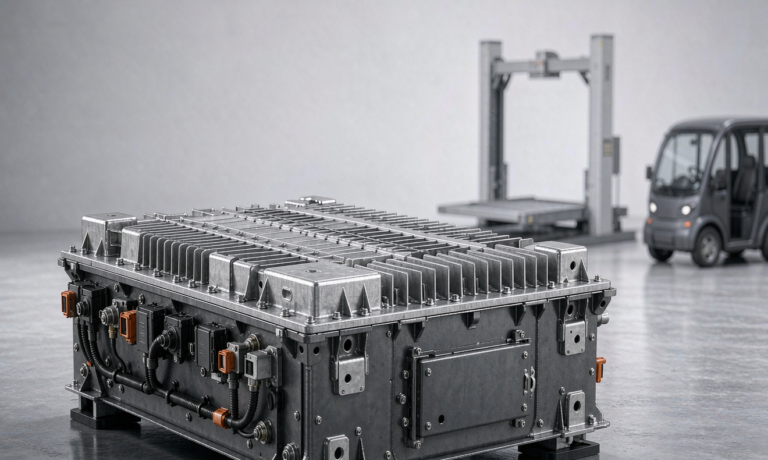
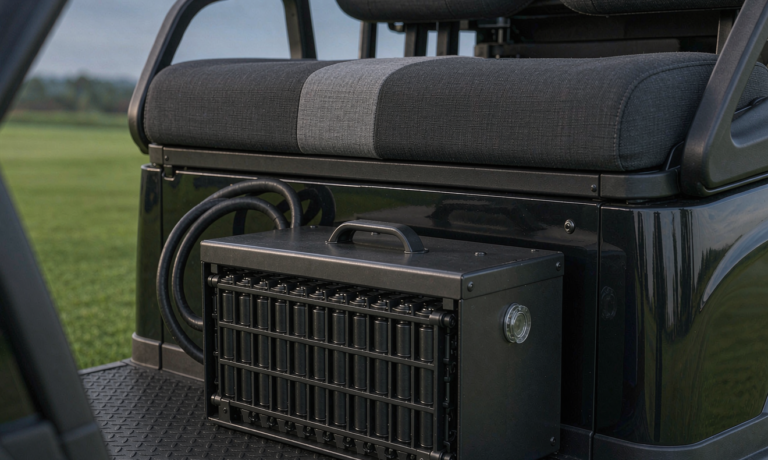
Sodium-Ion Battery for Refuse Trucks and Waste Collection Fleets
As a senior lithium battery engineer who has spent the last decade specifying traction packs for municipal and commercial fleets, I have watched the electrification of refuse trucks move from pilot programs to full depot rollouts. The duty cycle of a waste collection vehicle is unlike almost any other on the road: constant stop-and-go, heavy and variable payload, hydraulic packers and lift gates drawing hard power mid-route, and a fixed daily window that leaves little room for range anxiety. In this article I explain why the sodium-ion battery is becoming a practical choice for refuse trucks and waste collection fleets, how to size the pack, and which standards and operating limits matter when you put one into daily municipal service.
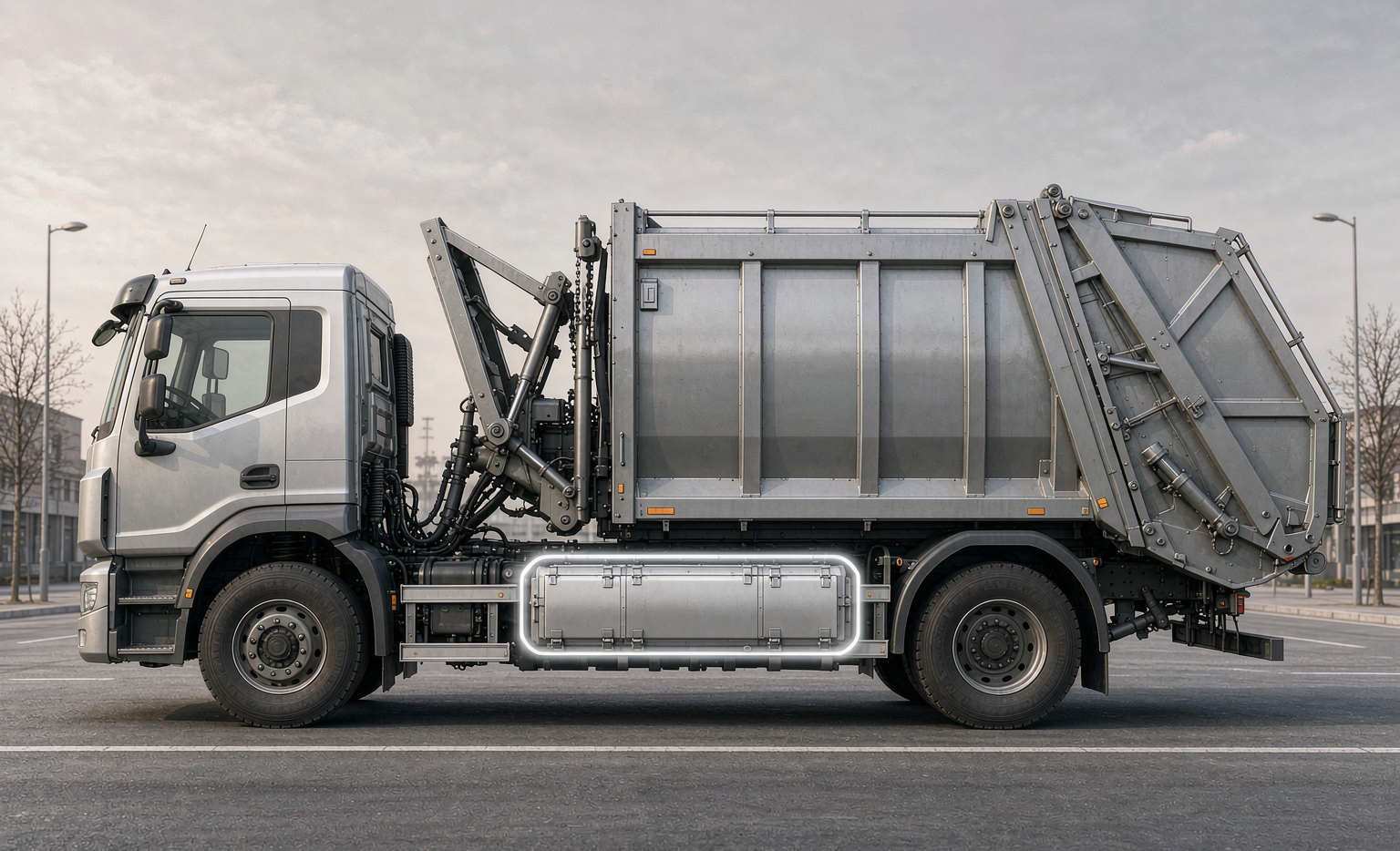
The Duty Cycle of a Battery-Electric Refuse Truck
A rear-loader or automated side-loader running a residential route typically covers 100 to 200 kilometers in an eight to twelve hour shift, but the vehicle spends most of that time below 30 km/h. Every house is a stop: the hydraulic lift engages, the packer blade cycles, and the chassis accelerates back to the next curb. That profile is punishing for a diesel engine and, paradoxically, ideal for a battery. Regenerative braking during the frequent decelerations can recover 15 to 30 percent of the traction energy, and the average power demand is far lower than the peak demand a diesel unit must support continuously.
The electrical loads are not limited to the drivetrain. A typical electric refuse truck draws 100 to 250 kW of continuous traction power and peaks of 400 to 600 kW when climbing grades or accelerating from a standstill with a full body. The compaction hydraulics add another 10 to 30 kW, and the bin lift gate pulls 3 to 8 kW in short bursts. A custom battery solution for this duty must therefore handle sustained mid-range current, tolerate repeated high-current pulses, and reserve headroom for the hydraulic pump without collapsing pack voltage.
Sizing the Sodium-Ion Pack for Urban Routes
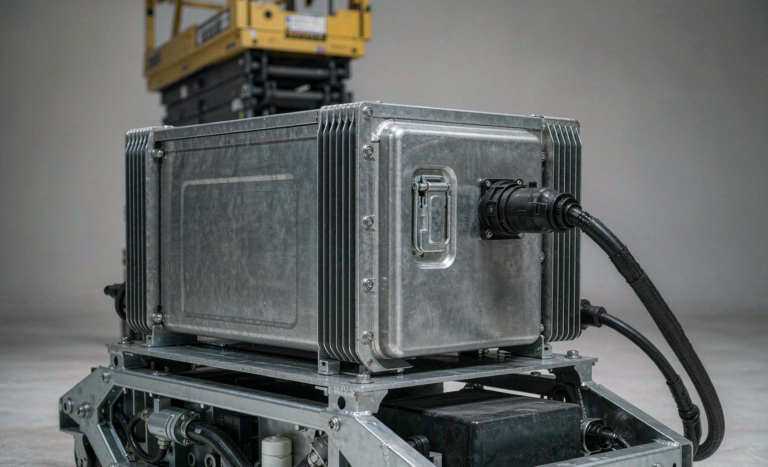
For a 26 tonne rear-loader carrying roughly 9 tonnes of payload, a usable energy of 180 kWh across a 10 to 90 percent state-of-window gives a nominal pack of about 220 kWh. Lighter route trucks and automated side-loaders on dense urban loops often need only 150 kWh usable, while transfer and commercial routes pushing 200 km per shift trend toward 350 to 400 kWh. I always size to the daily energy first and the peak power second, then add a 15 percent margin for cold mornings and uncollected overtime blocks.
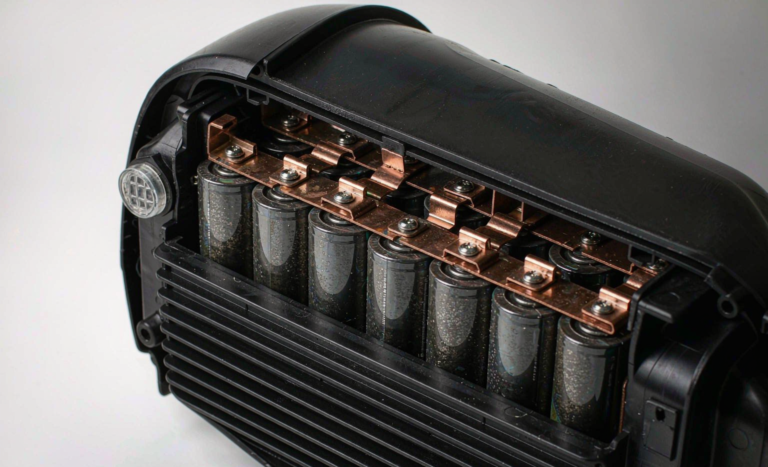
Sodium-ion cells deliver around 100 to 160 Wh/kg at the pack level, lower than nickel-based chemistries but entirely adequate here. Range is not the constraint on a fixed urban loop; weight and volume are. A 220 kWh sodium pack adds roughly 1.4 to 1.8 tonnes, which is absorbed comfortably within the chassis gross vehicle weight rating once the diesel tank, exhaust, and aftertreatment are removed. The lithium battery alternative saves some mass, but for a fleet buying dozens of units the material cost difference matters more than a few hundred kilograms.
Why Sodium-Ion Fits Municipal Fleets
Municipal procurement moves on multi-year tenders and tight operating budgets. Sodium-ion chemistry contains no lithium, nickel, or cobalt, which removes the single largest source of cell-price volatility from the equation. When I advise a city fleet on a battery solution, price predictability across a ten year service life is often more valuable than shaving a few percent off pack mass. Sodium raw materials are abundant and geographically diversified, which also reduces supply-risk exposure for public contracts that cannot tolerate a single-source dependency.
The lower energy density is a fair trade on urban routes where the vehicle returns to depot every shift. What sodium-ion gives back is a wider operating temperature window and a genuinely forgiving abuse tolerance, both of which reduce the engineering overhead of conditioning a pack that sits outdoors in every season. For a fleet manager, that translates into fewer thermal incidents and a simpler depot design.
Low-Temperature Performance on Early Routes
Collection starts before sunrise in every climate, and winter is when battery anxiety peaks. Sodium-ion retains a far larger fraction of its capacity at minus 20 degrees Celsius than lithium iron phosphate, and its internal resistance rises less steeply in the cold. On a January route in a northern city, I have measured sodium packs delivering close to 90 percent of their room-temperature usable energy, where an equivalent LFP pack might surrender 20 to 30 percent to cold. That delta is the difference between completing the loop and rationing compaction cycles.
The practical design rule is to keep charging above 0 degrees Celsius using pack self-heating or a warmed depot bay, and to widen the usable window slightly in deep winter rather than forcing the same depth of discharge year round. Sodium tolerates this seasonal management better than most alternatives because plating risk on the anode is structurally lower.
Thermal Management and Ingress Protection
A refuse truck is hosed down, drives through slush, and sits beside compacted waste. The pack enclosure must meet at least IP67 for submersion protection and IP6K9K for high-pressure wash-down, which I treat as non-negotiable for this duty. Liquid cooling with a flow-balanced plate keeps cell-to-cell temperature spread under 5 degrees Celsius during the 400 kW acceleration pulses, and a sealed coolant loop keeps the wash bay away from live hardware.
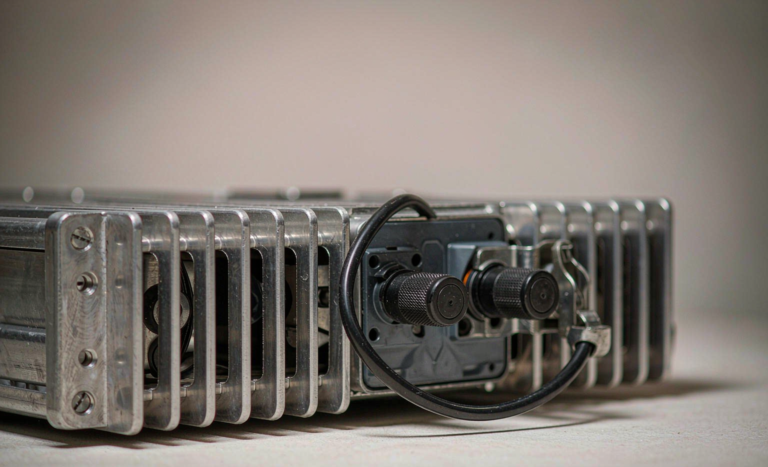
Corrosion resistance matters because the operating environment is a mix of water, salt from winter roads, and organic residue. I specify conformal-coated busbars, stainless hardware at exposed points, and a pack housing that passes salt-spray exposure consistent with ASTM B117. These details are invisible in a brochure but decide whether the battery lasts the full contract or fails at year four.
Charging Strategy for Depot Fleets
Most waste fleets charge at the depot overnight, which suits sodium-ion perfectly. A 0.3C to 0.5C overnight charge fully replenishes a 220 kWh pack in six to eight hours on a modest depot connection, and the low charge rate is gentle on calendar aging. Some operators add a 1C to 2C opportunity charge during the mid-shift meal break to extend range on long commercial routes without buying a larger pack.
I discourage fast charging to 100 percent on a daily basis. Holding the window between 10 and 90 percent roughly doubles cycle life and keeps the pack inside its comfort zone. For fleets running two shifts, a battery solution built around two opportunity charges and a smaller pack is usually cheaper than one oversized pack charged slowly between shifts.
Safety, Standards, and BMS Integration
Urban refuse trucks operate next to pedestrians and inside residential streets, so safety documentation is part of the purchase, not an afterthought. Every pack I specify is built to pass UN38.3 transport testing, IEC 62133 for cell safety, and IEC 62619 for industrial stationary and traction use. For the North American market, UL 2580 and ECE R100.2 cover electric powertrain batteries, and I verify the enclosure rating against IEC 60529 before sign-off.
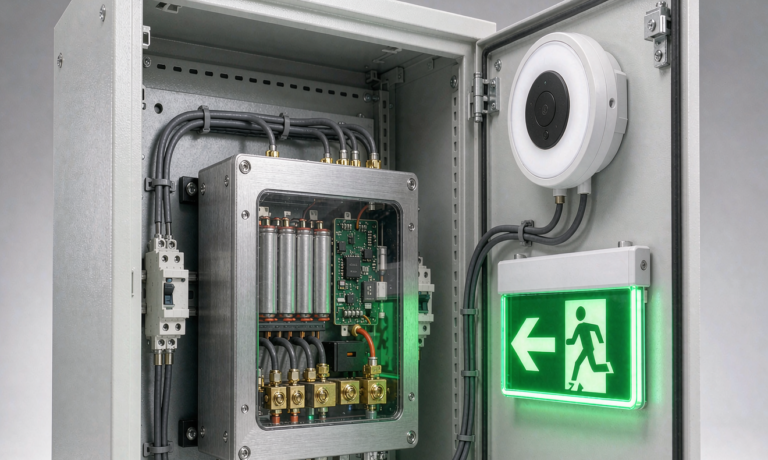
Integration runs over CAN bus with J1939 for chassis communication so the truck controller, charger, and battery management system share a single source of truth. The BMS handles cell balancing, state-of-charge and state-of-health estimation, contactor control, and isolation monitoring. For a custom battery solution, I insist on redundant voltage sampling on the series string and a clear fault tree that the depot mechanic can read without specialist tools.
Total Cost of Ownership Versus Diesel
The honest comparison is not sticker price but total cost of ownership over the contract. Sodium-ion cells are cheaper per kilowatt-hour than cobalt-containing alternatives and the chemistry is stable enough for 2000 to 4000 cycles under the moderate cycling of municipal duty. Removing the diesel engine eliminates fuel, exhaust aftertreatment, and most scheduled powertrain maintenance, which is where the savings compound. I model energy at the depot tariff, include the charger amortization, and typically see payback inside the first half of a ten year life for fleets running high annual mileage.
The residual-value story is also improving. Because sodium cells avoid scarce metals, their second-life and recycling economics are more predictable than legacy chemistries, and that stability protects the fleet’s balance sheet when the vehicle is remarketed or repurposed at end of life.
Frequently Asked Questions
How far can a sodium-ion refuse truck drive on one charge?
On a typical residential loop of 100 to 200 kilometers with frequent stops, a 180 to 220 kWh usable pack completes the full shift with margin. Longer commercial or transfer routes use 350 to 400 kWh packs, and opportunity charging during breaks extends range without oversizing the battery.
Is sodium-ion safe enough for urban collection routes?
Yes. Sodium-ion has a higher thermal-runaway onset and contains no cobalt, and a properly engineered pack passes UN38.3, IEC 62133, IEC 62619, UL 2580, and ECE R100.2. The enclosure adds IP67 and IP6K9K protection for wash-down and weather exposure.
Why choose sodium-ion over a lithium battery for waste trucks?
The main reasons are price stability and supply security, since sodium uses no lithium, nickel, or cobalt. Energy density is lower, but range is not the limiting factor on fixed urban routes, so the cost and temperature advantages usually win for municipal fleets.
How does cold weather affect a sodium-ion pack?
Sodium-ion retains far more capacity at minus 20 degrees Celsius than LFP, often close to 90 percent of room-temperature energy. Charging is kept above 0 degrees Celsius with pack heating or a warmed depot, and the usable window is widened slightly in deep winter.
What charging setup does a depot need?
An overnight 0.3C to 0.5C charge on a standard depot connection replenishes the pack in six to eight hours. Fleets with long routes add a 1C to 2C opportunity charge at mid-shift. I recommend keeping the daily window between 10 and 90 percent to extend cycle life.
How long does a sodium-ion refuse truck battery last?
Under moderate municipal cycling, the pack is designed for 2000 to 4000 cycles, which maps to roughly eight to ten years of service. Removing diesel powertrain maintenance and using gentle overnight charging are the main contributors to that lifespan.
Further Reading
References