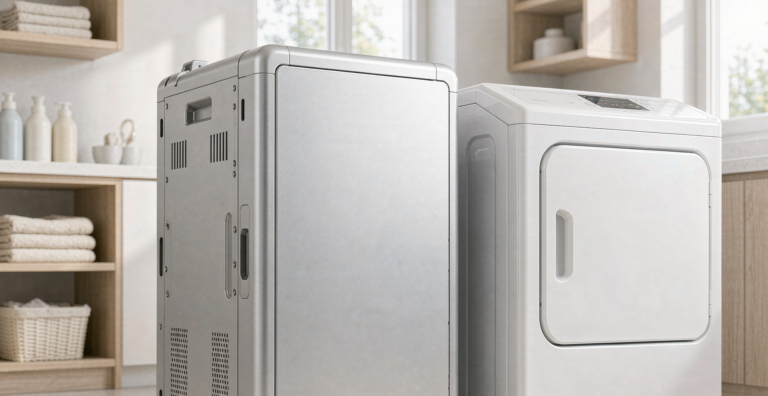
Home Energy Storage for Homelabs and Media Servers
I have commissioned a few hundred residential storage systems, and the ones that generate the most support calls are rarely the large whole-house jobs. They are the small, flat, unglamorous loads: a network cabinet in the spare room, a media server in the cupboard, a dozen power over Ethernet cameras outside, a router that has not been rebooted since installation day. Most engineers size those systems around the air conditioner and then wonder why the rack drops off during a summer evening. A homelab is a strange load for a home battery. It is small, it is flat, and it runs twenty four hours a day, three hundred and sixty five days a year. Treated properly it is one of the friendliest applications that a lithium iron phosphate pack will ever see.
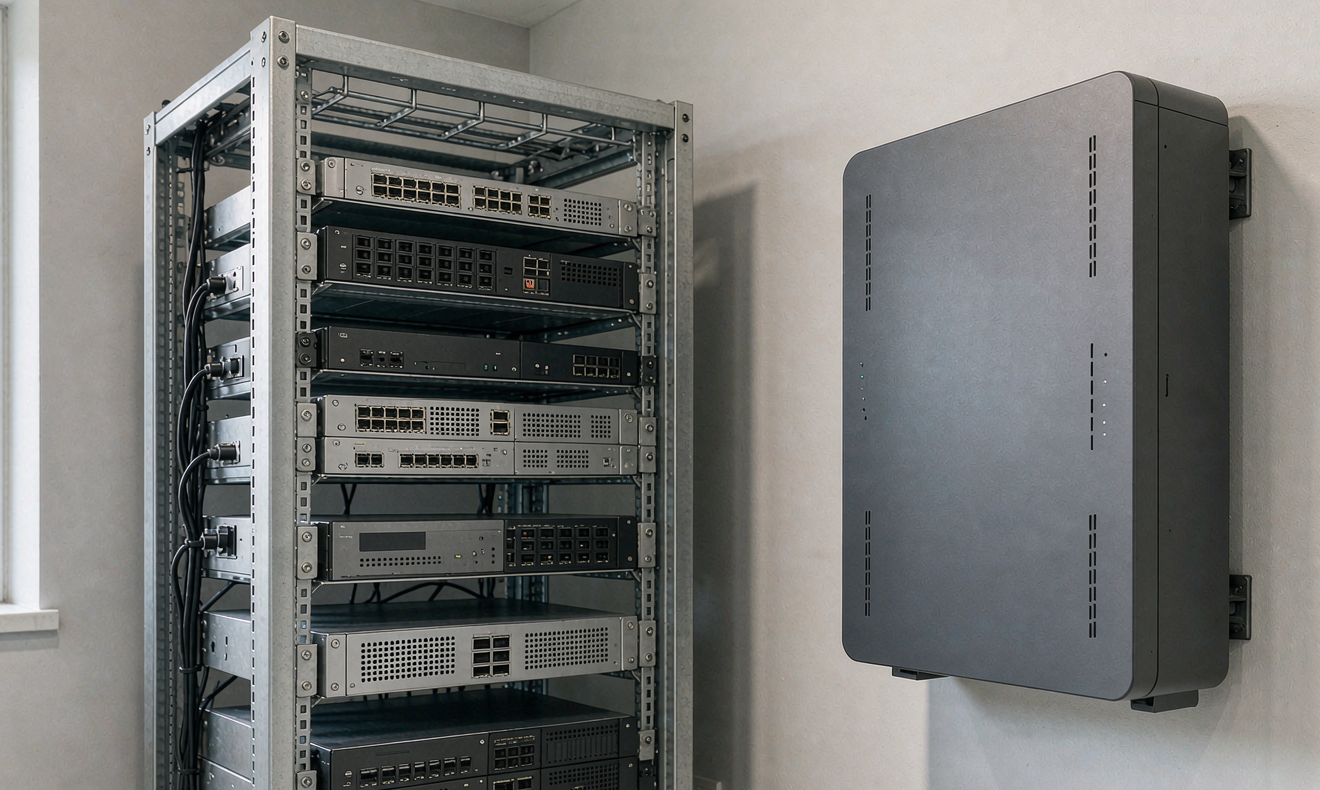
What a Homelab Actually Draws from the Grid
The first thing I do on any of these projects is log the load for seven days before I quote anything. A typical enthusiast cabinet is far smaller than people expect. A six drive network attached storage unit idles at roughly twenty five to forty five watts, a small desktop class server used for virtualization sits between fifteen and forty watts, an eight port PoE switch feeding cameras adds another thirty to sixty watts, and the consumer router and access points are another eight to fifteen watts. Add the network attached storage, the switch, the servers, the passive network devices and the standby draw of the existing power supplies, and you land between eighty and one hundred and eighty watts continuously.
That is the number that matters. Eighty to one hundred and eighty watts times twenty four hours is between two and four kilowatt hours per day, which becomes roughly seventy to one hundred and twenty kilowatt hours a month. On a domestic meter with a large standby or always on component that can be five to ten percent of the whole household consumption, which surprises clients badly when they see the bill next to the main panel.
The transient side of the load
Continuous wattage is only half the story. Mechanical drives and cooling fans create short transients. A spinning disk draws two to three times its steady current during spin up, and a server with twelve fans in a hot cabinet can momentarily pull four times its idle power when the controller ramps them all up. Those spikes last a hundred milliseconds or less, but the inverter has to absorb them without dropping the rail, or the drives never spin up at all.
Sizing Storage Around a Flat Baseline
Because the load is known and constant, sizing is straightforward arithmetic. Take the hundred and twenty watt audit figure and assume two hundred watts with growth headroom. Two hundred watts for twenty four hours is four point eight kilowatt hours a day, and at a realistic round trip efficiency of eighty eight to ninety two percent you need about five point five kilowatt hours of usable capacity for every full day of autonomy.
- Five kilowatt hour pack: roughly twenty to twenty four hours of covered load before the grid takes over.
- Ten kilowatt hour pack: roughly two days, which covers a short outage with nothing else running.
- Twenty kilowatt hour pack: four days, but you are paying for capacity you will rarely use on this load profile.
My recommendation for most clients is the ten kilowatt hour class. It covers a full day at two hundred watts with half the pack still in reserve, it will run the router, the network attached storage and the surveillance cameras for two days if the street power goes out in a storm, and it still has enough spare amp hours to carry a space heater or a bedside fan if someone gets cold at three in the morning.
Why a Storage Battery Beats a Big UPS Here
Owners almost always start with a tower or rack unit uninterruptible power supply. Those units are built for a two to five minute ride through, and they defend a NAS adequately on their own. The problem is that a two kilovolt ampere unit with four batteries costs as much as a five kilowatt hour storage system, weighs more, and offers no solar integration, no overnight buffering and no way to shift the baseline load off the evening peak.
A home energy storage cabinet does the same job for the transition, and it keeps doing it for hours. In an inverter based system the battery sits permanently on the DC bus, so switching from grid to island is a change of reference rather than a make before break transfer. Changeover is instantaneous, which matters to a RAID array: a hard transfer can drop the controller mid write and force a resync that takes the volume offline for a day.
Power quality for network and audio gear
Network attached storage, media players and audio interfaces are sensitive to two things. The first is waveform quality. A pure sine inverter at full load should hold total harmonic distortion below two percent, and anything above five percent will start to show as heat in transformers and buzz in high sensitivity speaker systems. The second is grounding. An inverter with a transformer isolated output decouples the equipment ground from the mains neutral, which removes the earth loop that causes hum on balanced signal runs. If you run a media server near an amplified monitor chain, put the cabinet on its own isolated branch and check the earth with a low impedance tester before closing the panel.
LFP Chemistry and the Cycle Life That Goes With It
Every system I ship for this duty is lithium iron phosphate. The chemistry suits this load in a way that high energy cells do not: the load is shallow, so the pack never sees the deep discharge abuse that ruins them. At a hundred and twenty watts on a ten kilowatt hour pack the daily depth of discharge is under two percent. That is so shallow that cycle life stops being the limiting factor and calendar aging takes over.
Practically that means you should design around calendar fade, not cycle count. LFP loses roughly two to three percent of capacity a year at twenty five degrees Celsius and mid state of charge, so a pack that leaves the factory at a hundred percent is typically at eighty to eighty five percent after ten years of this service. Hold the operating window between ten and ninety percent state of charge and keep the pack out of full charge for long stretches, and it stays inside specification for the whole warranty term.
Installation Details That Decide Reliability
Three installation decisions cause almost every field failure I have been called out to fix on these systems.
- The critical loads panel. Feed the rack, the network gear and the server from a small subpanel tied to the storage inverter rather than from the main panel. The rest of the house can whatever it does.
- Branch sizing. Run the rack on its own two gauge or thinner branch on a twenty amp breaker at most, keep it separate from the kitchen and the garage, and never share a neutral with a motor load.
- Listing and certification. The cabinet should carry a residential storage certification under the relevant safety standard, and the pack should hold transport and cell level tests under UN38.3 and IEC 62133-2. If it is grid tied, interconnection follows the utility rule that most jurisdictions implement through IEEE 1547.
Thermal envelope and placement
Cells want a narrow band. Keep the cabinet between fifteen and thirty degrees Celsius in the room it lives in, away from the radiator, the dryer vent and the outside wall. Below freezing, charging must stop: LFP cannot accept current at zero degrees Celsius without plating, so an unheated garage or a crawlspace is the wrong location in anything like a cold winter. For a house that is empty in winter, either keep the cabinet in conditioned space or make sure a heated trace circuit is wired to the same critical loads panel.
Service Life, Monitoring and Second Life
Plan on a service visit every eighteen months: check the DC terminal torque, confirm the cell balance spread is inside thirty millivolts, keep the rack intake clear, and read the state of health from the battery management system rather than trusting a phone app. Firmware on the inverter and the rack management controller should be updated from the vendor channel only, never from a third party mirror.
Which brings me to the point I make at the end of every homelab install: the pack will outlive the hardware it protects. When the tenth year arrives and the array is being replaced anyway, a pack that still holds seventy percent of its original capacity is not waste. It drops straight into a second life role as a day buffer for the workshop or a cold weather backup for the rental unit, where two thirds of the original energy is more than enough.
How big a battery do you need for a homelab?
For a typical hundred to two hundred watt always on load, a ten kilowatt hour pack is the sensible starting point. It gives you a full day of covered load with reserve, and it will carry the network cabinet through a two day outage with nothing else in the house running.
Can a home battery keep a NAS and network cabinet running during a power cut?
Yes, if the rack is wired to a critical loads subpanel fed by the storage inverter. The key requirement is a zero or near zero transfer time so the array controller never sees a brownout mid write.
Does an always on load wear out an LFP battery faster?
No, provided the depth of charge stays shallow. A hundred and twenty watt load on a ten kilowatt hour pack is under two percent cycling per day, so calendar aging dominates. The real wear comes from heat and from sitting at full charge for months, not from the cycles.
What is the difference between a storage battery and a UPS for a media server?
A uninterruptible power supply gives you two to five minutes and a clean transfer. A home energy storage cabinet rides through hours, integrates with solar, and shifts the flat baseline load away from the evening peak. The storage unit costs more and does much more.
Where should the battery cabinet sit in a house with a server rack?
In conditioned space, on a solid floor or a stud mounted bracket, within cable reach of the rack it serves. Avoid garages, crawlspaces and unheated closets. Aim for fifteen to thirty degrees Celsius around the cells and keep the intake clear on all four sides.
How long do these systems last, and what happens at end of life?
The cells typically reach eight to twelve years, and the pack is usually still above seventy percent capacity when the electronics around it are replaced. That is a good second life candidate for workshop damping or rental unit backup, because two thirds of the original capacity covers a flat low power load perfectly well.
Further Reading
References