Battery Solution for Livestock Watering and Fencing
As a senior lithium battery engineer at Horizon Power, I have spent the last nine years specifying off-grid battery systems for farms that sit well beyond the nearest power line. Two loads come up on almost every remote livestock property: the stock watering pump that keeps troughs full, and the electric fence that holds cattle or sheep in the right paddock. Both are deceptively simple, and both punish a poorly designed battery pack. This is the engineering I use when a rancher asks for a battery solution for livestock watering and fencing, and the numbers I hold myself to.
Why off-grid livestock sites break diesel and lead-acid
A windmill or a small diesel set has been the traditional answer for stock water. The windmill stops on still days when the animals are most thirsty, and the diesel set needs fuel hauled in, a starter that survives cold, and a tank that does not grow algae. Lead-acid batteries were the backup, but a flooded bank at a remote site sulfates within a season if it is not topped up and equalised, and a sealed AGM bank cooked by summer heat loses half its capacity in two years.
A lithium battery changes the economics because it tolerates partial state of charge and deep discharge without the same damage, and it needs no maintenance visit. On the properties I have measured, a lithium battery for livestock watering and fencing removes the single largest source of animal welfare risk on the place: an empty trough on a 40 degrees Celsius afternoon.
Sizing the battery for a stock watering pump
Start with the pump. A typical stock watering system moves 2,000 to 8,000 litres a day through a bore or a creek lift, and the pump motor draws 400 W to 1,500 W depending on head and flow. The mistake most buyers make is sizing the battery for the pump nameplate rather than the duty cycle. A 750 W submersible that runs 20 minutes every three hours draws only about 6 Ah per day at 24 V, but the battery has to deliver the inrush current, not the average.
For a 24 V system I size the pack at a minimum of 200 Ah, which is roughly 5 kWh, so a run of cloudy days never empties it below 20 percent state of charge. For larger herds with a 1,500 W pump running 60 minutes a day, I move to a 48 V bus and a 300 Ah to 400 Ah pack. The key is the C-rate: a lithium battery for livestock watering should be rated for at least 1C continuous so the pump inrush never trips the BMS.
I also add a 30 percent capacity buffer for summer, because cell temperature in a hot enclosure pushes the usable window down. A pack that is right-sized at 25 degrees Celsius becomes undersized at 45 degrees Celsius, and the trough runs dry exactly when demand is highest.
Powering electric fencing without a grid connection
Electric fencing looks trivial but is the harder load to design for. A fence energiser draws almost nothing on average, often 2 W to 10 W, but it fires a high-voltage pulse several times a second, and a weed touching the wire or a fault to earth slams the energiser into a high-current pulse train that can flatten a small battery overnight.
The battery solution for livestock watering fencing therefore has to serve two very different load shapes from one pack. I split them with a DC-DC converter and a separate fused branch for the energiser, so a fence fault never drags the water pump down. The energiser branch carries a resettable breaker and a short-circuit alarm, because a flat fence in a storm is how livestock end up on the road.
For the energiser itself I spec a 12 V or 24 V unit drawing from the same bank, sized so the fence pulse load is under 5 percent of the pack capacity per week. A 200 Ah pack will run a 6 W energiser for more than a month without sun, which is the margin a remote property actually needs.
Pack architecture and cell selection for farm duty
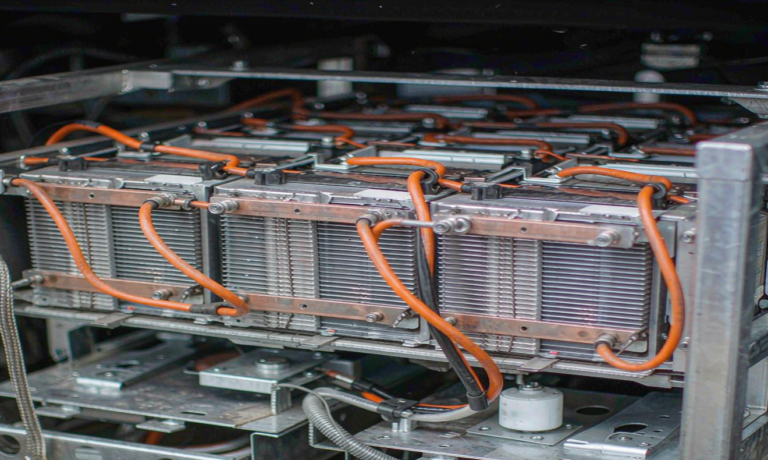
Dust, vibration, rodents and temperature swing are the enemies on a farm, not the load itself. For these systems I build around prismatic LFP cells in the 100 Ah to 280 Ah range. LFP is the only chemistry I trust outdoors: it does not go into thermal runaway the way nickel or cobalt cells can, it holds 80 percent capacity past 4,000 cycles, and it shrugs off the partial state of charge that a solar-charged farm bank lives in.
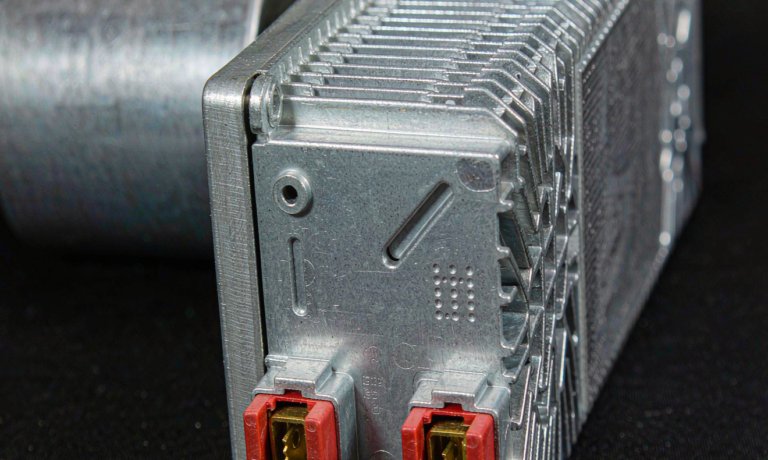
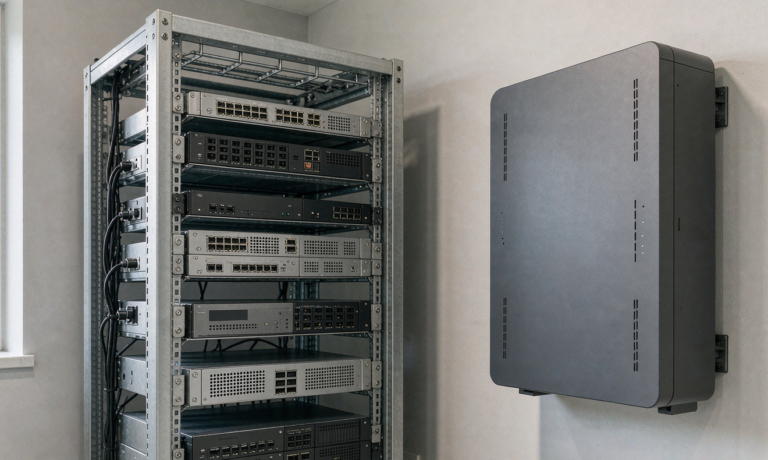
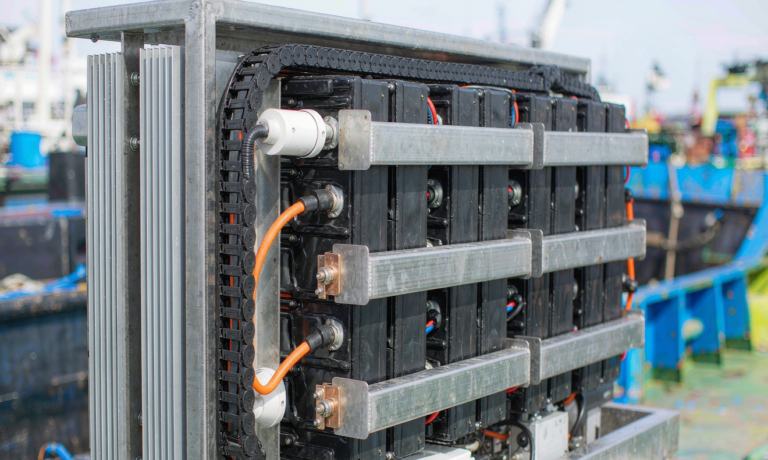
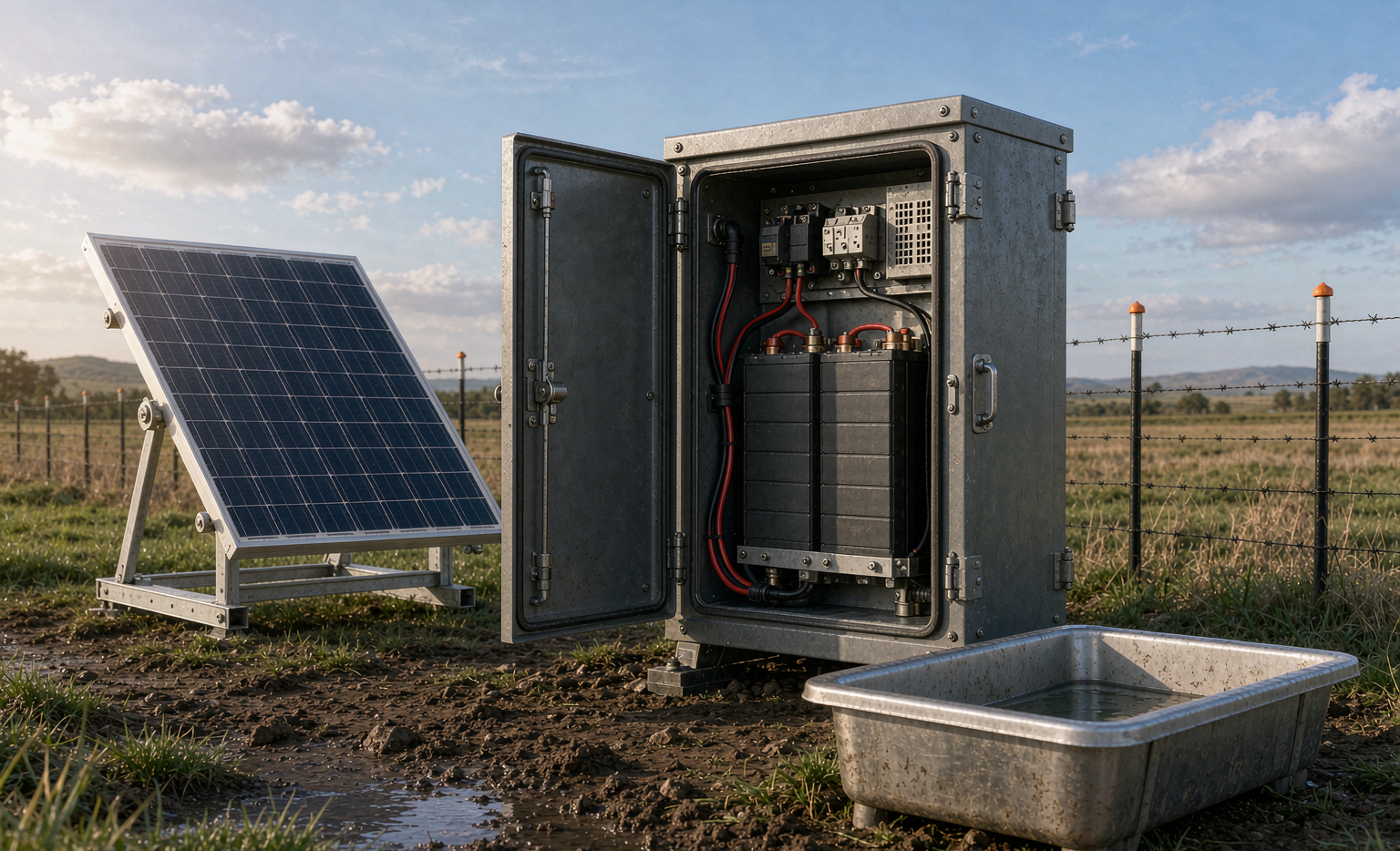
The enclosure is where the real engineering sits. I use an IP65 polyester or powder-coated steel cabinet with a louvered but screened vent, a drain at the base, and a gasket that survives a hot summer and a frozen winter. Cable entries are sealed glands, not glands with a hole, because a mouse will find the hole. Inside, the cells sit on a bolted frame, not on foam, because a bull rubbing the post or a tractor bumping the cabinet sends a shock through the pack.
Battery management is not optional. The BMS must report state of charge and cell balance over a wired link the owner can read without an app, because the owner is in a paddock, not at a desk. I set the low-temperature charge cutoff at 0 degrees Celsius and the high-temperature discharge limit at 60 degrees Celsius, and I log both.
Charging from solar and keeping the pack alive in winter
Nearly every livestock battery I deliver charges from a solar array, because the watering and fencing loads are daytime loads and the sun is free. A 300 W to 600 W panel set restores a 5 kWh pack in a full day of sun and keeps it above 80 percent state of charge through summer. I size the array for the worst month, not the best, so June in the southern hemisphere or December in the north still closes the loop.
Winter is the real test. Below 0 degrees Celsius a lithium battery will not accept a charge without damage, so the BMS opens the charge path and the pack coasts on stored energy. I spec enough capacity that the pack rides through two to three weeks of short days and snow cover on the panels, and I fit a small wind or generator backup only where the sun reliably fails for longer. A pack held between 20 percent and 90 percent through winter will still show 80 percent capacity after eight years.
Maintenance is deliberately boring. Torque the busbars each season, wash dust off the panels, and read the state of charge monthly. The cheapest thing a rancher can do is keep the pack inside its window instead of flattening it.
Standards, safety and what a buyer should ask
A battery solution for livestock watering and fencing is an industrial product, not a consumer gadget, and it has to carry the same proof as any pack we ship. Every cell and module is tested to UN38.3 for transport safety and to IEC 62133-2 for the cells and IEC 62619 for the industrial system with a DC output. The enclosure carries an IP65 rating verified against the standard, and the BMS is documented for over-current, over-temperature and short-circuit response.
When a buyer calls me, I ask four questions before I quote: how many litres a day does the trough need, what head does the pump lift, how long is the fence and what grows against it, and what is the worst-case sunless stretch on the property. Those four numbers tell me the pack size, the bus voltage, the energiser branch rating and the solar array, in that order. A custom battery solution is only as good as the load profile behind it.
The lesson I leave every rancher with is simple. Buy the pack for the worst week of the year, not the best day, and the animals will never go thirsty and the fence will never go flat. That is the whole job of a battery for livestock watering and fencing.
FAQ
How big a battery do I need for a livestock watering pump?
For a 750 W submersible running 20 minutes every three hours, a 24 V 200 Ah LFP pack, about 5 kWh, is the floor I recommend, with a 30 percent summer buffer. Larger herds with a 1,500 W pump move to a 48 V bus and a 300 Ah to 400 Ah pack. Size for the inrush current and the worst week, not the nameplate.
Can a single battery run both the water pump and the electric fence?
Yes, but split the loads. I run the fence energiser on a separate fused branch through a DC-DC converter so a fence fault or weed short never drags the pump down. The energiser draws under 5 percent of pack capacity per week, so a 200 Ah bank will hold a 6 W energiser for well over a month without sun.
How long will a livestock battery last in heat and dust?
Built on LFP in an IP65 enclosure with sealed cable glands, the pack holds 80 percent capacity past 4,000 cycles, which is roughly eight to ten years of farm duty. Dust and heat kill the enclosure, not the cells, so I use a louvered screened vent, a bolted cell frame and a gasket rated for the temperature swing.
Do livestock battery systems need UN38.3 and IEC certification?
They should. Every cell and module we ship is tested to UN38.3 for transport and to IEC 62133-2 for the cells and IEC 62619 for the industrial system. The enclosure carries a verified IP65 rating and the BMS is documented for over-current, over-temperature and short-circuit protection. Ask for the test reports before you buy.
How do I keep a stock watering battery working in freezing weather?
Below 0 degrees Celsius the BMS opens the charge path to protect the cells, so the pack coasts on stored energy. Spec enough capacity to ride two to three weeks of sunless winter days, keep the pack between 20 percent and 90 percent state of charge, and add a small wind or generator backup only where the sun fails for longer.
Further Reading
References