Telehandler Battery Pack: Sizing and Duty Cycle Guide
Why Telehandlers Are a Different Battery Problem
As a senior lithium battery engineer, I have spent the last decade moving diesel and lead-acid machines onto lithium platforms. The telehandler is one of the harder conversions because it asks the battery to do two unrelated jobs at once: lift a heavy load and drive across broken ground. A standard forklift mostly does one or the other. That dual demand changes how you size the pack, how you cool it, and which certifications the end customer will insist on. In this guide I walk through the load profile, the energy and peak-power math, the voltage architecture, and the charging model we use for telehandlers running on construction and agriculture sites. My goal is to give you a practical framework you can take to a battery supplier, not a sales pitch.
How a Telehandler Load Profile Differs From a Forklift
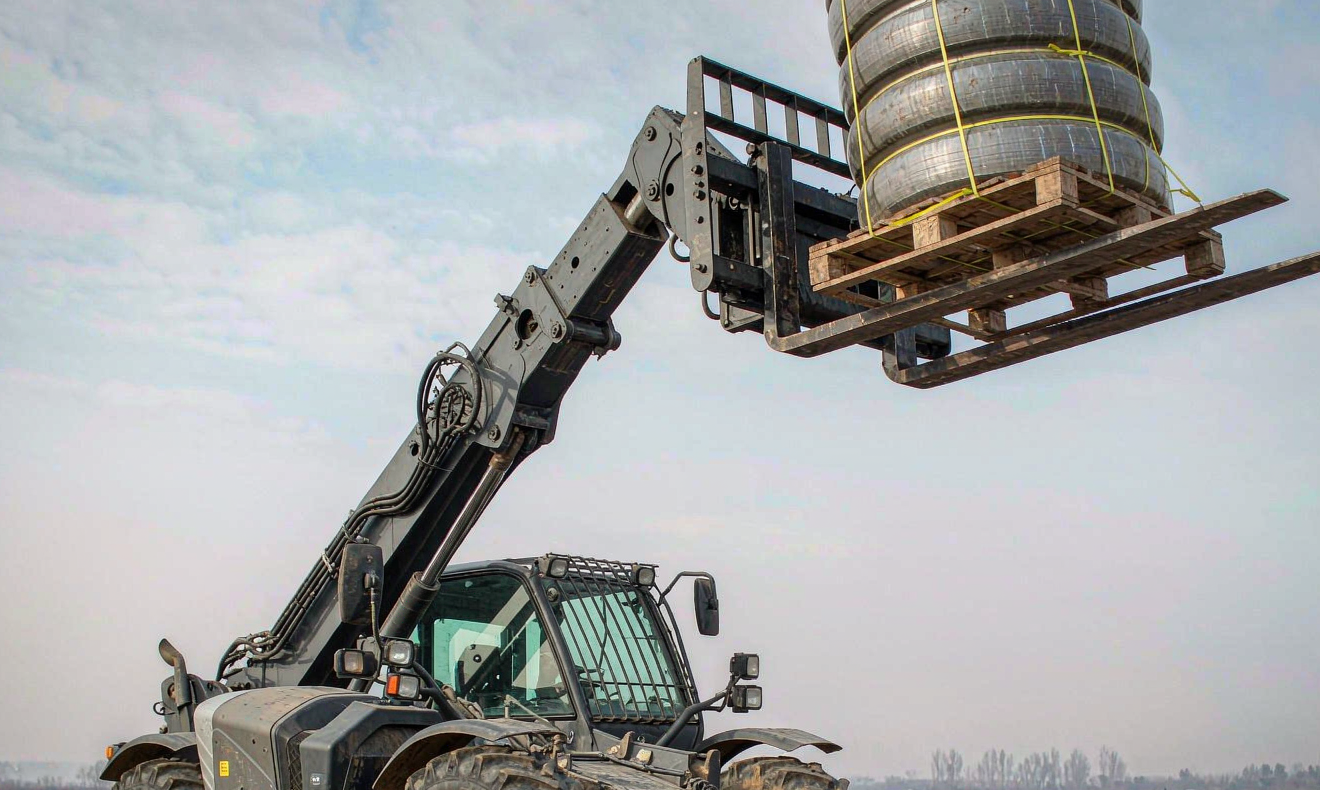
The first mistake I see in spec sheets is treating a telehandler like a large forklift. A forklift lifts, then travels short distances. A telehandler lifts while extended, often at a boom angle that puts the load far from the chassis, and it travels across rutted yards and muddy fields. The combined duty cycle is harder on the pack than either task alone.
I classify the load into three buckets. Boom and lift hydraulics draw a steady mid-range current, typically 0.3C to 0.6C, for extended periods. Traction draws bursts of 1C to 2C during acceleration or climbing a grade. The hardest event is simultaneous lift and drive, where peak demand can reach 2.5C to 3C for a few seconds. Your custom battery solution has to survive that peak without the bus voltage collapsing, because a voltage sag trips the controller and stops the machine mid-cycle.
Cycle shape matters as much as total energy. On a busy site a telehandler may see 30 to 60 partial cycles per shift rather than one deep discharge. That is a high-throughput duty profile, and it favors cells with strong cycle life at partial state of charge rather than maximum capacity.
Sizing the Pack by Energy and Peak Power
I size telehandler packs in two independent steps. Energy comes first. A mid-size machine with a 3 tonne lift capacity typically burns 8 to 14 kWh per 8 hour shift under mixed use. A large 5 to 7 tonne unit on heavy lifting can reach 20 to 28 kWh. I add a 20 percent reserve so the operator never hits a hard cutoff, then round to a pack that fits the available battery bay.
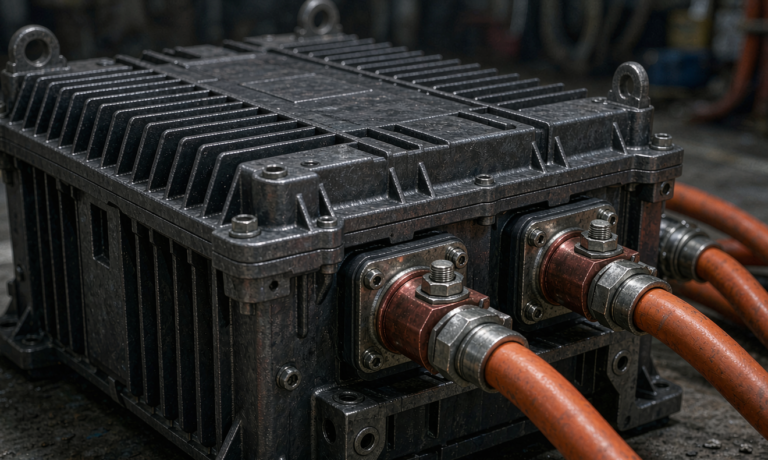
Peak power is the second constraint and it is the one that catches people out. If the hydraulics need 40 kW and traction needs another 35 kW, your pack and inverter must deliver 75 kW continuously for short bursts. At a nominal 80V pack that is roughly 940 A, which dictates busbar size, contactor rating, and cell discharge capability. I always verify the cell can hold 3C for 10 seconds at 50 percent state of charge before I commit to a design.
The rule I teach junior engineers is simple: energy sets the pack capacity, but power sets the cell chemistry and the bus. A telehandler is usually power-limited, not energy-limited, once you move past the smallest machines.
Voltage Architecture: 48V, 80V and Beyond
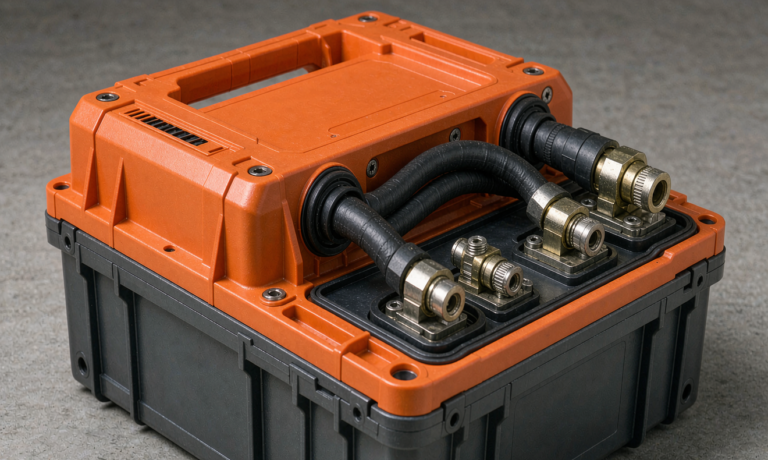
Most new telehandler electrification programs land on either a 48V or an 80V nominal architecture. The 48V system is cheaper and simpler, with smaller contactors and easier component sourcing, but at 75 kW it pulls close to 1600 A, which demands very heavy cabling and careful fusing. The 80V system halves the current and reduces resistive losses, which helps on a machine that runs long shifts in hot conditions.
For the largest units I have seen 96V and even 120V architectures proposed, and they make sense where traction power exceeds 100 kW. The trade-off is component cost and the need for isolation monitoring that meets IEC 63056, which governs voltage limits for stationary and industrial battery systems above 60V. I recommend 80V as the default sweet spot for machines in the 4 to 7 tonne class.
Whatever voltage you choose, keep the high-voltage interlock loop (HVIL) intact. A telehandler gets serviced in the field by mechanics who may not be battery-trained, and the HVIL plus service disconnect is what keeps a broken connector from becoming a serious injury.
Charging Strategy for Multi-Shift Sites
Telehandlers on construction sites rarely sit still long enough for an 8 hour slow charge. The model that works best is opportunity charging: a 1C to 1.5C charger at the depot that tops the pack during breaks and shift changes. A pack sized for 20 kWh refills in roughly 90 minutes at 1C, which fits inside a meal break if the operator plugs in.
I avoid fast charging above 1.5C on these packs because the boom and lift motors already heat the enclosure during the day, and extra charge heat pushes cell temperatures past the comfortable 45 degrees Celsius ceiling. If a site runs two or three shifts, I spec a second charger at the far end of the yard so the machine never travels dead. For fleets, a simple charge scheduler that holds the pack at 80 percent overnight and tops to 100 percent before the first shift extends calendar life.
Thermal and Enclosure Demands on Rough Terrain
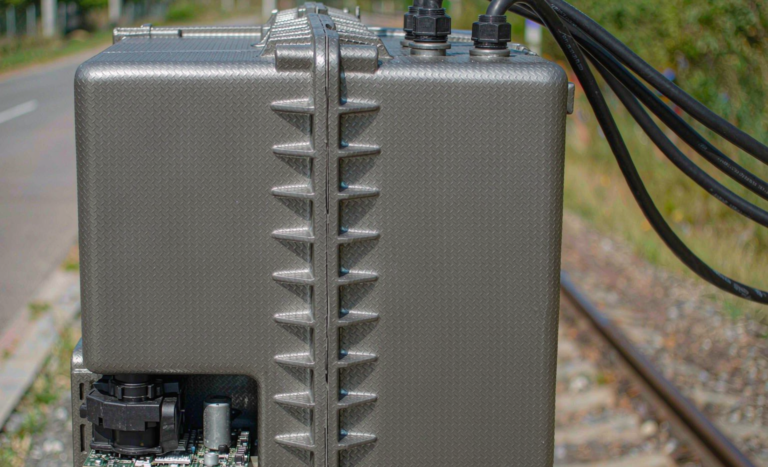
A telehandler battery lives in a hostile place. It is bolted to a chassis that vibrates, gets sprayed with mud and dust, and operates from minus 20 degrees Celsius in winter yards to over 40 degrees Celsius in summer. The enclosure rating should be at least IP65 to keep dust and water jets out, and I prefer IP67 for machines that ford shallow puddles or get power-washed daily.
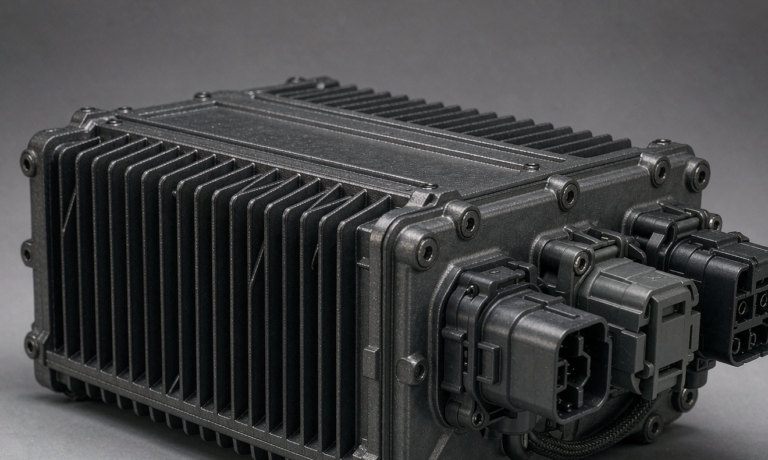
Thermal management depends on climate. In temperate sites passive cooling with extruded aluminum heat sinks is enough. In hot regions I add a controlled forced-air loop that only runs above 35 degrees Celsius, because a fan that runs constantly just wastes energy and pulls in dust. Cold climates need a low-power pad heater or self-heating cells so the pack can accept charge without plating lithium, which permanently damages capacity.
Safety Certification and BMS Requirements
Industrial lithium packs for this class must clear UN38.3 for transport and IEC 62619 for the industrial cell and pack safety requirements. If the machine ships by air or sea, the UN38.3 test summary is non-negotiable paperwork. I also expect the battery management system to monitor every parallel group, balance cells, and open the contactors on over-temperature, over-current, or isolation fault.
On a telehandler the BMS should speak the same language as the machine controller, usually CAN bus with a SAE J1939 or ISO 11898 profile, so the dashboard can show state of charge and fault codes the operator already understands. I insist on dual independent over-current protection: the BMS plus a properly sized fuse, never one alone. The enclosure also needs venting or pressure relief sized for the cell count, because a single cell failure should fail safe, not rupture neighbors.
What to Specify When You Request a Quote
When you approach a battery supplier, hand them numbers, not adjectives. I send a one-page duty profile: lift capacity, typical shift energy in kWh, measured peak power in kW, available battery bay dimensions, target voltage, and the ambient temperature range. Ask for the cell type, the cycle life at 80 percent depth of discharge, the continuous and peak discharge ratings, and the certifications already held.
A good supplier will return a pack drawing, a thermal model, and a cycle-life estimate rather than a single price. For telehandlers I also ask whether they have field data on a similar duty cycle, because simulation only gets you so far. The right custom battery solution is the one proven on a machine that works as hard as yours, not the one with the biggest brochure.
What voltage is best for a telehandler battery?
For machines in the 4 to 7 tonne class I recommend an 80V nominal architecture as the default. It halves the current compared with 48V at the same power, reduces cabling weight and resistive losses, and keeps component temperatures manageable on long shifts. Smaller units below 3 tonnes can work well on 48V.
How many kWh does a telehandler battery need?
A mid-size 3 tonne telehandler typically uses 8 to 14 kWh per 8 hour shift, while a large 5 to 7 tonne unit on heavy lifting can reach 20 to 28 kWh. I add a 20 percent reserve and size the pack to fit the battery bay, then verify the peak power requirement separately.
Can a telehandler battery be opportunity charged?
Yes. A 1C to 1.5C charger at the depot can refill a 20 kWh pack in about 90 minutes, which fits a meal break. I keep fast charging at or below 1.5C to avoid adding heat on top of the heat the lift and drive motors already generate during the working day.
Which certifications does a telehandler lithium pack require?
At minimum you need UN38.3 for transport and IEC 62619 for industrial cell and pack safety. For packs above 60V, isolation monitoring should meet IEC 63056. Always confirm the supplier holds the test summaries before you place an order.
How should the battery enclosure be rated?
Use at least IP65 to keep dust and water jets out, and prefer IP67 for machines washed daily or driven through puddles. Add passive or controlled forced-air cooling depending on climate, and a low-power heater or self-heating cells for sites that drop below freezing.
Further Reading
References