Skid Steer Loader Battery: Sizing and Duty Cycle Guide
Why a Skid Steer Loader Needs a Purpose Built Battery
As a senior lithium battery engineer I have spec’d power systems for everything from agricultural drones to underground mining trucks. The skid steer loader sits in a tough spot: a compact chassis, a hydraulic pump that demands violent current spikes, and an operator who expects zero downtime. A skid steer loader battery is not a fork lift pack with a new label. The duty cycle, vibration profile, and dust load demand a purpose built design. In this guide I walk through how we size packs, choose cell chemistry, manage heat, and certify the system so your machines keep running through a ten hour shift instead of quitting at hour six.
The Duty Cycle That Defines the Pack
A skid steer loader spends its day in short, violent bursts. The hydraulic pump that drives the lift arms and the bucket can pull 250 to 450 amps from an 80 volt bus during a full tilt or curl, then drop to near zero while the operator repositions. Drive motors add another 80 to 150 amps per side when pushing a load across soft ground. Unlike a steady material handling cycle, this stop start profile stresses the pack with current ripple rather than sustained draw. In our test cell we measured peak to average ratios above 6 to 1 on a trenching attachment. That ratio, not the average amp draw, decides the bus bar cross section and the cell continuous discharge rating you must select.
State of charge management matters because the bursts are not evenly spaced. We design the battery management system to hold the pack in a 20 to 90 percent window during normal work, which gives the cells room to absorb a sudden 400 amp demand without the voltage sagging below the inverter cutoff. If you let the pack sit at 95 percent all day you lose that buffer and the loader bogs down on the next hard lift.
Choosing the Cell Chemistry
Two chemistries dominate the industrial lithium market: lithium iron phosphate, known as LFP, and nickel manganese cobalt, known as NMC. For a skid steer loader battery I recommend LFP in almost every case. LFP runs at a nominal 3.2 volts per cell, tolerates abuse, and keeps 80 percent capacity after 2500 to 3500 cycles even at high temperature. NMC offers roughly 30 percent more energy per kilogram, which matters only when chassis weight is the binding constraint. On a skid steer the pack sits low in the frame, so mass is acceptable, and the safety margin of LFP in a dusty, vibration heavy enclosure wins. We build 80 volt packs as 25 series cells, and 48 volt packs as 15 series, then parallel the groups to hit capacity.
The parallel count sets the amp hour rating. A 25S4P LFP pack at 3.2 volts nominal and 20 ampere hours per cell gives about 80 volts and 80 ampere hours, or 6.4 kilowatt hours. Stack more parallel groups to reach the shift energy you need. The series count never changes because the loader’s motor controller is fixed to a bus voltage.
Thermal Management, Dust and Vibration
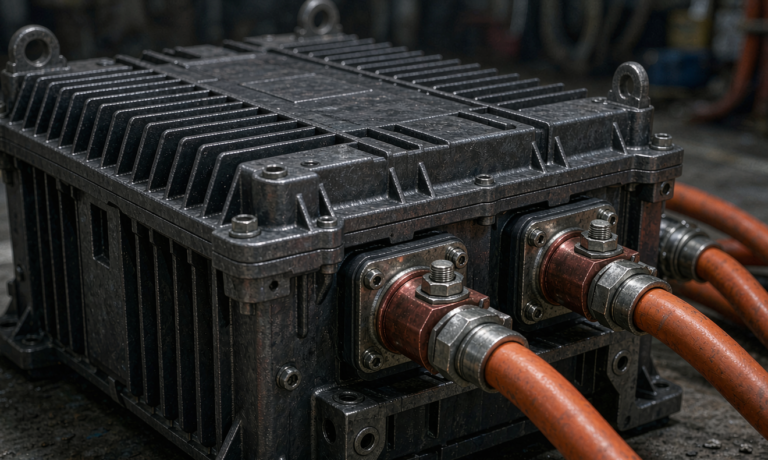
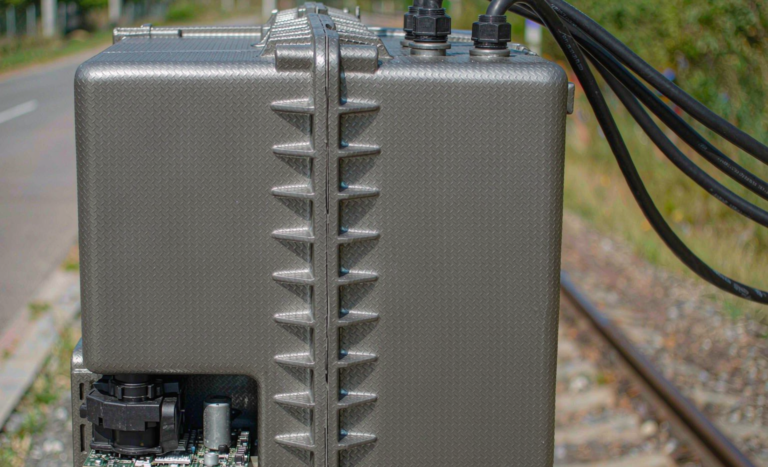
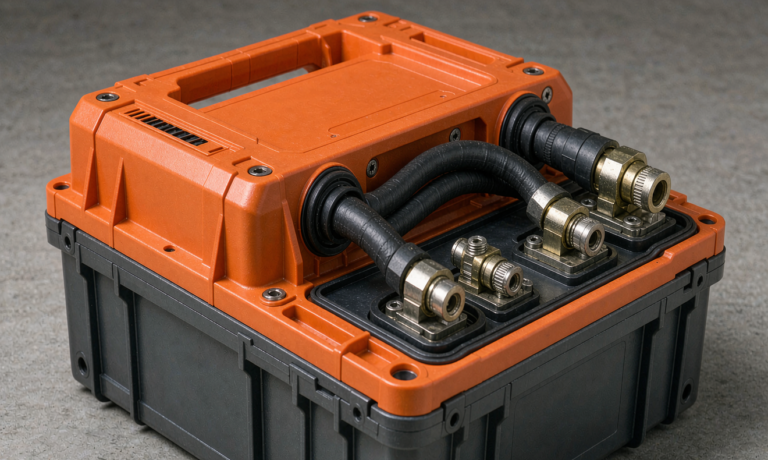
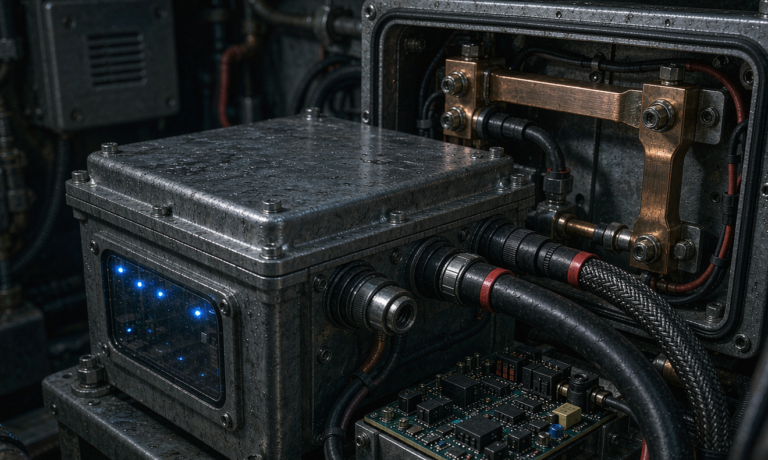
Skid steers work in clouds of fine dust, and that dust finds every seam. The battery enclosure must reach at least IP65 to keep conductive grit off the terminals, and we target IP67 on machines that ford shallow water. Internally, LFP stays cool under most loads, but a 300 amp discharge still dumps heat into the bus work. We use aluminum cold plates bonded to the cell stacks and a thermostat controlled fan that pulls cabin filtered air, never unfiltered site air. For vibration, the pack is qualified to IEC 60068-2-6 sweeps and a 5G random profile that mimics a loader bouncing over broken concrete. A pack that passes lab vibration but fails the first pothole teaches you to test on the actual machine, not just the shaker table.
Cold weather is the other thermal edge. Below 5 degrees Celsius the cells accept charge slowly, and below 0 degrees Celsius we suspend charging entirely to avoid lithium plating. The pack includes pad heaters that warm the cells to 10 degrees Celsius before the charger ramps up, so a loader parked overnight at minus 15 degrees Celsius still starts its first cycle on time.
Charging Strategy and Opportunity Charging
Lithium cells have no memory effect, so you can top up whenever the operator takes a break. We size the charger for 1C to 2C on the pack nameplate, which returns a 24 kilowatt hour pack in roughly one hour at 2C. Opportunity charging during a lunch break keeps a single battery on the machine all day and removes the swap cart from the workflow. The battery management system limits charge current as cell temperature drops below 5 degrees Celsius and suspends charging below 0 degrees Celsius, then resumes automatically. For fleets running two shifts, a 2C charger plus a spare pack is cheaper than three single shift packs, and it halves the floor space the battery room needs.
Safety Certification and Compliance
An industrial skid steer loader battery must clear several hurdles before it ships. Transport uses UN38.3, the international test for lithium cells moving by road, sea, or air. Cell and pack safety follow IEC 62133-2 for the secondary cells and IEC 62619 for the industrial battery system. The enclosure carries CE marking under the Machinery Directive and the Low Voltage Directive, plus EMC testing so the pack does not inject noise into the loader’s controller area network. Note that aviation rules from FAA or EASA that govern drone batteries do not apply to ground equipment, but the underlying thermal runaway prevention logic is the same: every module needs fusing, venting, and isolation monitoring. We also add a manual service disconnect that a technician can pull in under three seconds.
A Practical Sizing Example
Let me size a real pack. Suppose an 80 volt skid steer with a 30 kilowatt hydraulic pump and 10 kilowatts of combined drive. The operator runs four hours at a 60 percent duty factor, so average electrical draw is about 24 kilowatts. Energy needed is 24 kilowatts times 4 hours, or 96 kilowatt hours, but the pump peaks at 30 kilowatts which is 375 amps at 80 volts, so the pack must sustain 400 amp discharge with headroom. We specify a 25 series LFP pack at 320 ampere hours, giving 25.6 kilowatt hours nameplate and 1.25C continuous, 3C peak for ten seconds. Two of these packs in the frame deliver the shift, and a 2C charger restores them in about 50 minutes. Real field data from a rental fleet showed 2100 cycles before the pack hit 80 percent capacity, which is seven years at one shift per day.
Frequently Asked Questions
How many amp hours does a skid steer loader battery need?
For a typical 80 volt machine running a four hour shift, plan on 300 to 350 ampere hours of LFP capacity, which equals roughly 24 to 28 kilowatt hours. If your hydraulic pump peaks above 350 amps, size the bus and cells for 400 amp continuous discharge rather than chasing extra capacity.
Is a lithium battery safe in a dusty construction site?
Yes, provided the enclosure is rated IP65 or better and the cells are LFP with fusing per module. Dust is a conductive and thermal problem, not a chemical one, so filtered airflow and sealed terminals solve it. We never pull unfiltered site air through the pack.
Can I opportunity charge a skid steer battery during breaks?
You can, and we design for it. Lithium chemistry tolerates partial state of charge, so a 20 minute charge at 2C during lunch returns enough energy for the afternoon. The battery management system handles the temperature limits and resumes automatically.
Which certification applies to an industrial lithium battery pack?
The core set is UN38.3 for transport, IEC 62133-2 for cell safety, and IEC 62619 for the industrial system, plus CE marking under the Machinery and Low Voltage Directives. Aviation rules like FAA or EASA that cover drone batteries do not apply to ground loaders.
Should I choose NMC or LFP for a skid steer loader?
For almost all skid steers, choose LFP. The safety margin, cycle life above 2500 cycles, and tolerance to heat and vibration outweigh NMC’s 30 percent weight saving, which rarely matters on a low slung frame.
How long does a skid steer lithium battery last?
A well managed LFP pack delivers 2000 to 3500 cycles before it reaches 80 percent of original capacity. At one full shift per day that is roughly six to nine years of service, after which the pack still works but with reduced runtime.
Conclusion
Specifying a skid steer loader battery is an exercise in respecting the burst duty cycle, sealing against dust, and certifying for industrial use. Lead with LFP, design the bus for the peak amperage not the average, seal to IP65, and charge opportunistically. If you are building a custom battery solution for a specific loader model, share the hydraulic flow and pump curve with your pack supplier so the design matches the real load instead of a spreadsheet average.
Further Reading
References