Lithium Battery RC Hobby Pack Selection and Care Guide
Over the years I have specified packs for everything from small park flyers to racing quads, and the single biggest mistake I see is treating a hobby pack like any other lithium battery. An RC model is not a phone or a solar lamp. It asks for a short, brutal burst of current at low weight, then sits idle for weeks. That combination punishes a cell in ways a datasheet rarely warns you about. In this guide I will share how I read a pack label, choose the right chemistry, and keep a lithium battery RC hobby pack safe through its service life. The numbers below come from bench tests and the failure cases I have had to investigate, not from marketing copy.
Why RC Packs Are a Different Engineering Problem
A model aircraft or car asks a battery to deliver most of its energy in minutes, sometimes seconds. A 4S pack pulling 60 amps from 1200 mAh is a 50C event. Few consumer cells are built for that. The design priorities are high discharge rate, low internal resistance, and the lightest possible enclosure, in that order. Energy density matters far less than it does in an e-bike, because the flight or run is short and the pack is a large share of the total mass.
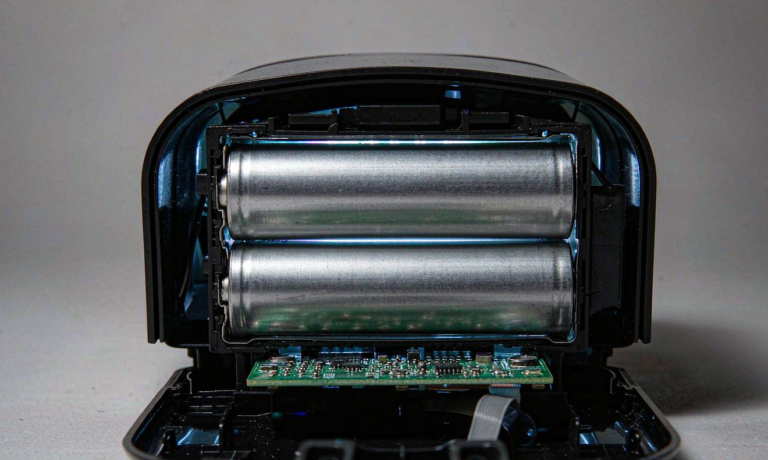
This changes how I judge a cell. I look at the milliohm reading across the main leads before I look at capacity, because a pack with rising internal resistance will sag under throttle and heat itself even if it still holds charge on a bench tester. I also plan for vibration and repeated plug cycles, which are the two things a hobby pack sees far more of than a stationary pack. A lithium battery RC hobby application is a mechanical problem as much as an electrical one.
LiPo, Li-ion, or LiFePO4: Picking the Chemistry
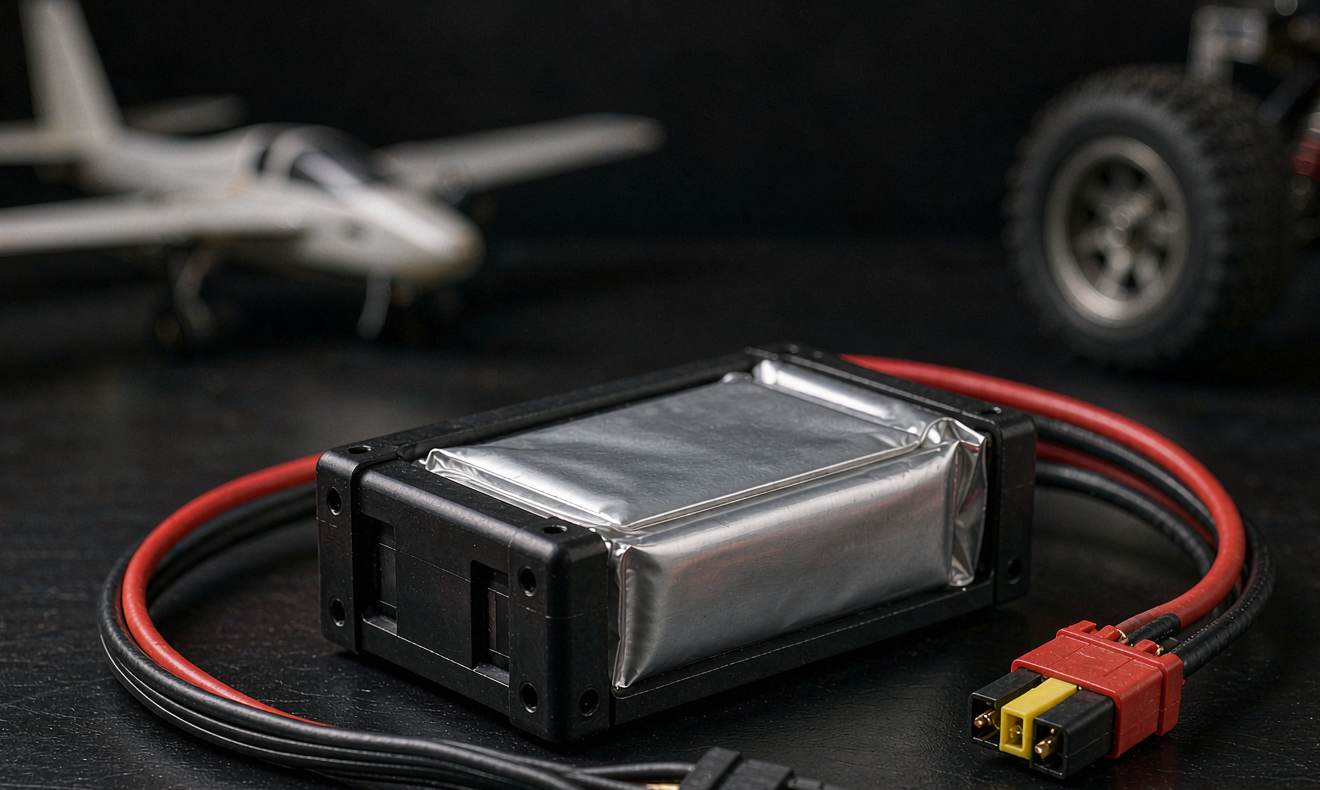
Most hobby flyers still reach for lithium polymer, and for good reason. A LiPo pouch cell offers the best combination of discharge rate and weight, typically 3.7 volts nominal and 4.2 volts fully charged per cell. It also demands respect: a punctured or overcharged pouch can vent and burn. I only recommend LiPo where the model needs the power and the operator will follow a disciplined charge and storage routine.
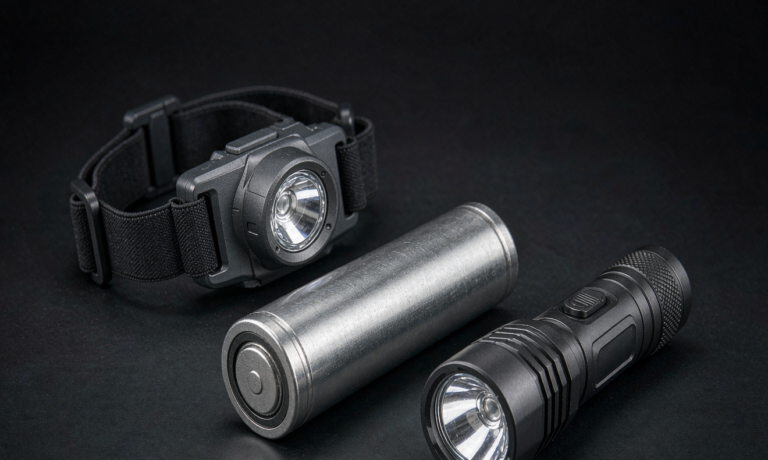
Li-ion cells in 18650 or 21700 format trade some rate capability for ruggedness and cycle life. I have used them in trainers and long-endurance airframes where weight is less critical and the pack must survive hundreds of cycles. LiFePO4 is heavier and has a lower 3.2 volt nominal voltage, but it is the safest of the three and tolerates deep cycling well. For a ground vehicle or a slow, heavy platform where safety outweighs launch weight, it can be the right call. There is no universally best chemistry here, only the best fit for a duty cycle.
Reading the Label: S-Count, Capacity, and C-Rate
The letter S on a pack tells you how many cells are in series, and that sets the voltage. A 3S pack is 11.1 volts nominal, a 4S pack 14.8 volts, and a 6S pack 22.2 volts. Capacity in milliamp-hours tells you how long it can run in calm conditions, but it is the C-rate that decides whether the pack can survive your throttle hand. A 2200 mAh pack rated 30C can theoretically deliver 66 amps continuous, while a 60C burst rating is only safe for a few seconds.
I treat burst ratings as a ceiling, not a target. In my own builds I size the pack so that normal flight stays under half the continuous rating, which leaves headroom for a hard correction or a gust. I also check that the pack can physically fit and that its centre of gravity lands where the airframe expects it. A slightly smaller, lighter pack that balances well will fly better than a large one that forces you to add ballast.
Connectors, Balance Leads, and Polarity
The main connector is where many preventable failures start. XT60 is the de facto standard on many 3S to 6S packs because it handles high current with low resistance and a secure friction fit. Deans and EC5 are also common. Whatever you choose, I insist that the connector on the pack, the esc, and the charger all match, and that no adapter is used as a permanent fix. Every extra contact is another milliohm and another failure point.
The thin balance lead is not optional. It lets the charger watch each cell and bring them back to the same voltage, which is the single most effective way to extend pack life. I have seen packs ruined simply because a flyer always charged through the main leads and skipped balancing. Polarity mistakes are just as damaging: reversing a connector can destroy an esc in a fraction of a second, so I colour-code and physically key every lead in my own builds.
Charging, Storage, and Transport Rules
Charge a LiPo only on a purpose-built balance charger, at a rate the cell maker approves, and never unattended. I set storage voltage at about 3.8 volts per cell, which is roughly 40 to 60 percent state of charge, whenever a pack will be idle for more than a few days. Storing a pack fully charged for weeks accelerates capacity loss and raises internal resistance. For long-term storage I keep packs in a cool, dry place, away from direct sun and flammable material.
Transport is where hobbyists often run into rules they did not expect. Lithium packs shipped commercially must pass the UN38.3 test suite, and reputable suppliers will provide the test summary and safety documentation. Cells and packs also fall under IEC 62133 for safety in many markets. When flying, be aware that airline rules follow FAA and EASA guidance: spare lithium batteries generally travel in carry-on baggage, not checked bags, and packs above 100 watt-hours may need airline approval. A typical hobby pack is well under that limit, but it pays to check before a trip.
When a Custom Battery Solution Makes Sense
Off-the-shelf packs cover most models, but I am regularly asked to build a custom battery solution when a platform has an unusual shape, voltage, or current profile. A racing frame with a narrow bay may need a bespoke pouch stack; a survey airframe may need a pack with an integrated temperature sensor and a specific balance tap. In those cases I start from the current draw of the motor and the physical envelope, then work backward to cell count and capacity.
A good custom build also documents its limits clearly. I provide the continuous and burst current, the recommended charge rate, the storage voltage, and the retirement criterion, because a pack that is treated well will last far longer than one that is guessed at. If you are unsure whether a standard pack or a tailored one fits your model, that is the conversation I most want to have before anyone commits to a design.
Frequently Asked Questions
How long does a LiPo hobby pack last?
Most high-rate LiPo packs deliver roughly 150 to 300 cycles before their internal resistance climbs enough to matter. Care dominates that number. Balanced charging, moderate charge rates, and storing at about 3.8 volts per cell can push a pack toward the upper end, while heat and full-charge storage shorten it sharply.
Can I leave my pack fully charged between flying days?
It is better not to. A full charge held for more than a few days stresses the cells and speeds capacity loss. If you know you will fly again within a day or two it is acceptable, but for longer gaps I always return the pack to storage voltage. The habit costs a few minutes and adds many cycles.
What C-rate do I need for a racing drone?
For most racing quads I specify a pack with a continuous rating of at least 30C and headroom above the peak current the motors can draw. Burst numbers look impressive but only apply for seconds. Size for the continuous figure, keep the pack light, and you will get both better handling and longer life.
Is Li-ion safer than LiPo for a model?
Li-ion cells in a rigid cylindrical case are generally more tolerant of minor abuse and do not swell as dramatically as pouches, but they cannot match LiPo discharge rates. For a high-power airframe, LiPo remains the practical choice. For a slow trainer or ground vehicle, Li-ion is a durable, lower-risk option.
Why must lithium packs pass UN38.3?
UN38.3 is the transport test standard that covers altitude, thermal, vibration, shock, and short-circuit behaviour. Carriers and customs authorities use it to decide whether a battery is safe to ship. Buying from a supplier who can show the test summary is a simple way to avoid both a safety risk and a logistics headache.
Can I repair or rebuild a damaged hobby pack?
I do not recommend rebuilding a pack that has been punctured, swollen, or overheated. Cell matching and welding quality are hard to reproduce outside a controlled process, and a single weak cell can fail under load. Retire a damaged pack safely and replace it rather than trying to salvage it.
Further Reading
References