Home Battery Wall Mount Install vs Floor-Stand Guide
Ask ten homeowners what separates a wall-mounted home battery from a floor-standing one and you will get ten answers about appearance. In eight years designing and commissioning residential storage packs at Horizon Power, I have learned the decision is far more practical than cosmetic. Mounting style determines where the unit can physically sit, how much energy you can install, how heat escapes the enclosure, and how easily a technician can service it five years later. This guide walks through the real engineering differences between a wall-mount and a floor-stand home battery so you can match the format to your site, not the other way around.
What Wall-Mount and Floor-Stand Actually Mean
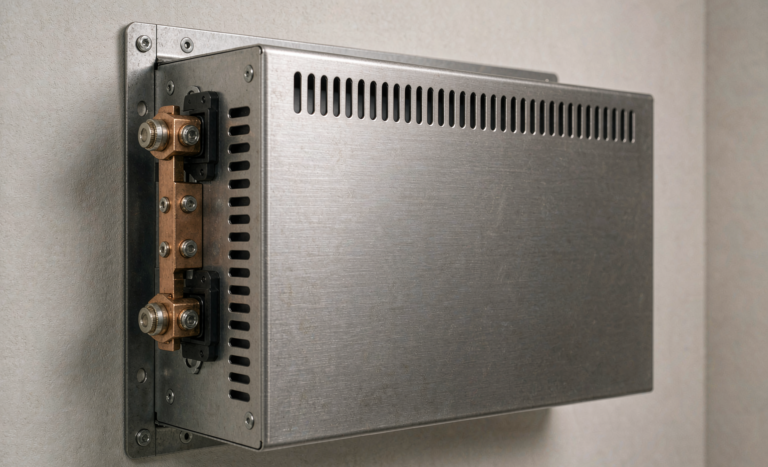
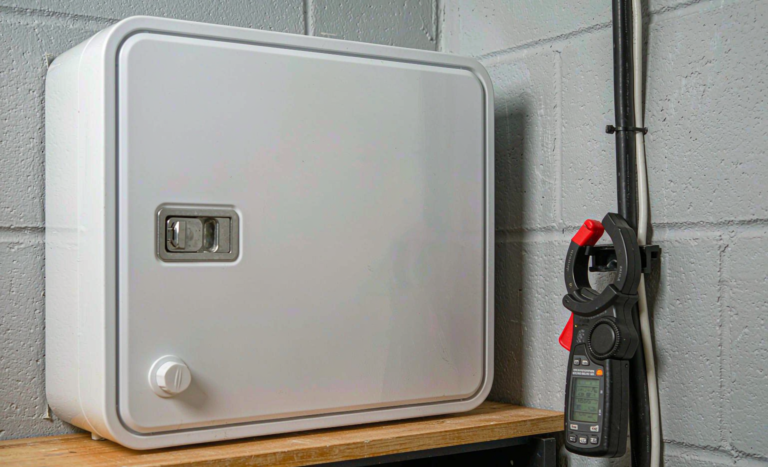
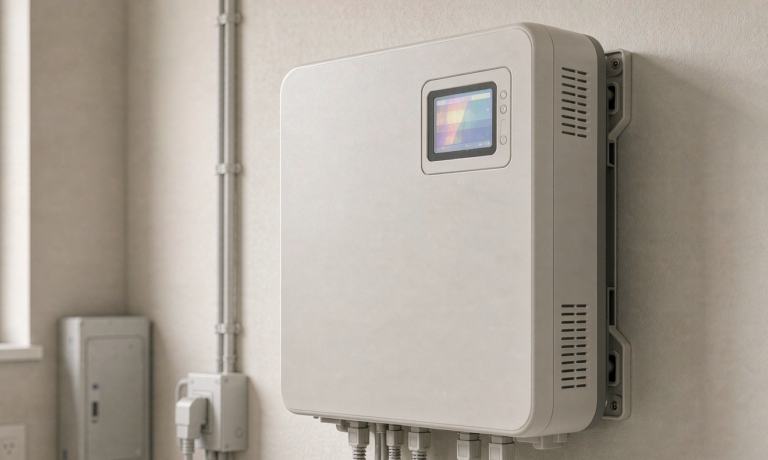
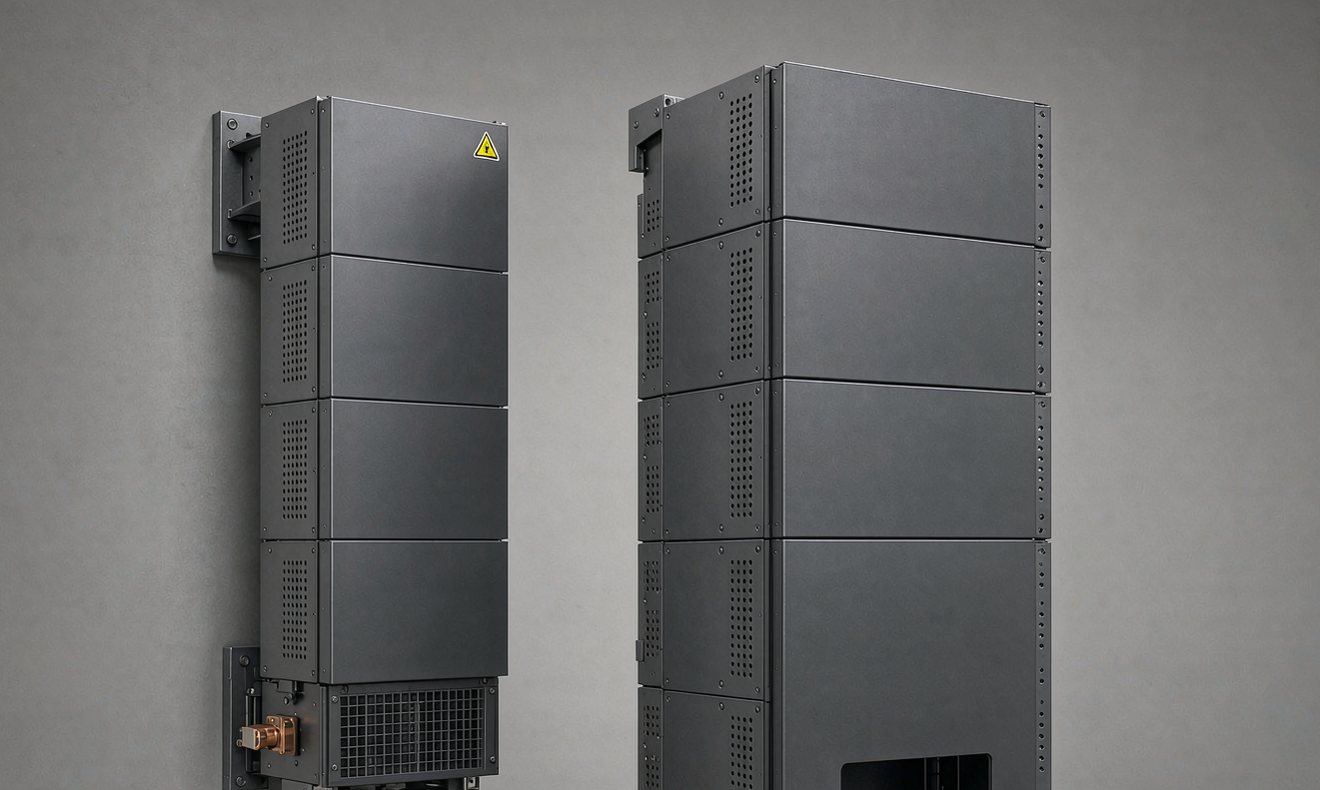
A wall-mount home battery is a slim, vertically oriented enclosure hung on a structural wall, usually in a garage, utility room, or on an exterior wall rated for outdoor use. Units in this class typically run from 5 to 15 kilowatt-hours and weigh roughly 45 to 90 kilograms. A floor-stand system, sometimes called a tower or cabinet, rests on the slab and stacks one or more battery modules inside a tall frame. Residential floor-standing cabinets commonly start around 10 kilowatt-hours and scale to 30 kilowatt-hours or more as modules are added.
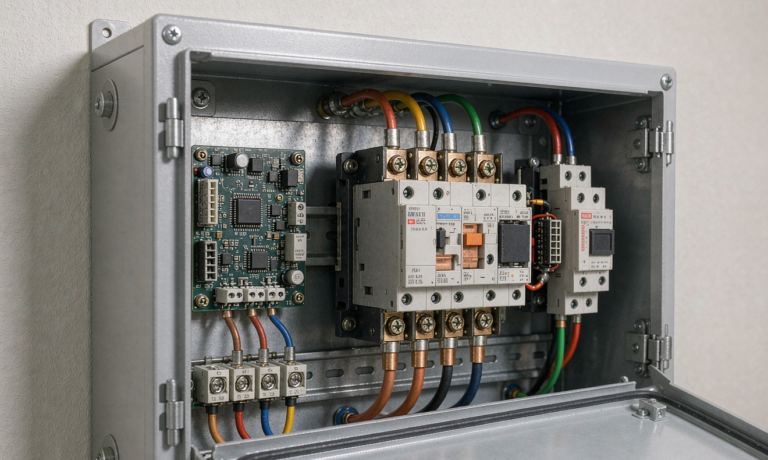
The distinction is more than orientation. Wall-mount products integrate the cells, the battery management system, and often the inverter interface into one shallow housing, typically 180 to 300 millimeters deep. Floor-stand cabinets keep modules, a central controller, and a separate hybrid inverter inside a deeper 500 to 600 millimeter footprint. That added depth is why floor-stand units need more clearance, but also why they can hold larger cells and more robust cooling hardware.
Space, Structure, and Siting Constraints
The first filter I apply on any site visit is structural. A wall-mount battery transfers its full weight into the wall through a rail or bracket, so the mounting surface must be load-bearing. On masonry or concrete block this is straightforward with chemical anchors. On timber stud walls I look for blocking or a dedicated noggin between studs, and I calculate the point load against the wall assembly rather than assuming drywall can carry it. An 80-kilowatt-hour wall unit on the wrong fasteners is a genuine fall hazard.
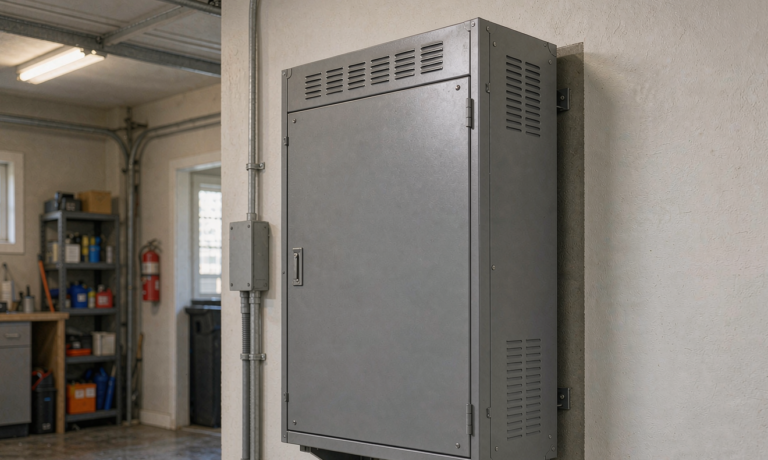
Floor-stand systems spread their weight across a base plate, so structural capacity is rarely the constraint. The trade-off is floor area and access clearance. Most manufacturers and local electrical codes want front working space in front of the service disconnect, often 900 millimeters or more, plus side clearance for airflow. In a tight urban utility cupboard a floor-stand cabinet simply will not fit, while a wall-mount unit tucked high on a garage wall stays out of the traffic path. Where flood risk exists, mounting height matters: raising a wall unit above a known flood line can be far easier than elevating a floor cabinet on a plinth.
Capacity, Modularity, and Future Expansion
Wall-mount batteries win on simplicity but usually cap out at a single fixed block. Some brands let you bolt a second matched unit beside the first, but you are still buying discrete 10 or 15 kilowatt-hour increments, and the inverter may need to be upsized to accept the extra DC input. If your household load profile is modest, say a daily consumption of 12 to 20 kilowatt-hours with a modest overnight backup target, a single wall unit covers the job cleanly.
Floor-stand cabinets are built around expansion. A base tower may ship with two or three modules and leave internal bays empty, letting an owner add capacity later without replacing the frame or the controller. For households planning an electric vehicle charger, a heat pump, or a future workshop, that headroom is valuable. The engineers rule of thumb I use is to size the physical enclosure for the load you expect in ten years, then populate only the modules you need today. A floor-stand cabinet gives you that option; a wall-mount generally does not.
Thermal Behavior and Placement
Lithium iron phosphate cells tolerate a wide range but still derate when hot. Most residential packs are specified to charge between 0 and 45 degrees Celsius, with power reduction above roughly 40 degrees Celsius and a hard charge inhibit near freezing unless the pack has internal heating. Placement therefore drives usable performance. A wall-mount unit on a west-facing exterior wall in a hot climate can sit in direct afternoon sun, pushing the enclosure temperature up and forcing the system to throttle precisely when evening air conditioning demand peaks. I always specify shade or a weather-rated sun shield for that case.
Floor-stand cabinets usually have more internal volume for heat spreaders, larger aluminum heat-spreading surfaces, and in some models forced-air cooling with filtered intakes. They also sit in the cooler lower layer of a room where temperature stratification helps. The penalty is that active cooling adds a fan that can be heard, which matters in a utility room adjoining living space. Wall-mount units are more often passively cooled and silent, but that means their continuous power rating is usually lower. If you plan to run a large air conditioner or a well pump from backup, check the sustained discharge rating, not just the peak number on the brochure.
Electrical, Code, and Safety Considerations
Whatever the format, the battery must be listed to the right standard. For stationary and residential storage I look for IEC 62619 certification on the cells and system, and UL 9540 with UL 9540A test data where the North American market applies. Do not let a supplier quote IEC 62133, which covers portable batteries, as proof of compliance for a fixed home installation. The cells should also ship with UN 38.3 test summaries, because transport regulation applies to every shipment regardless of mounting style.
Fire code treatment can differ by placement. Many jurisdictions treat a battery in a habitable space more strictly than one in a garage or on an exterior wall, and several codes now require dedicated clearance, non-combustible backing, or separation from egress routes. An outdoor-rated wall-mount enclosure typically carries an IP55 or IP65 rating and an operating temperature range that justifies exterior mounting, which can satisfy these rules without consuming indoor floor area. A floor cabinet indoors may need a sprinkler or thermal runaway venting provision that a wall unit on an exterior wall avoids. Always confirm the authority having jurisdiction before finalizing the layout.
Cost, Installation Labor, and Long-Term Service
On hardware alone, a wall-mount system often carries a higher cost per kilowatt-hour because the integrated housing and cooling are engineered into a compact package. Installation labor, however, is usually lower: one bracket, a short conduit run, and no plinth or seismic anchoring. A floor-stand cabinet reverses that balance. The modules are cheaper per kilowatt-hour at scale, but you pay for a larger footprint, a concrete pad or anchors, and longer cable runs, and the electrician spends more time on site.
Serviceability is the number I ask clients to weigh most heavily. Wall-mount units are compact, which means a failed module often means swapping the entire enclosure, and that can require unbolting the unit from the wall. A floor-stand cabinet lets a technician slide out a single battery module in minutes while the rest of the system stays live. Over a ten to fifteen year service life, that difference shows up as lower downtime and cheaper repairs. If the installation is remote or technician access is limited, the modular advantage is worth a premium up front.
How to Choose for Your Site
I reduce the decision to four questions. How much energy do you need to back up, and how much might you need in ten years? Is there a structural wall with the right rating and shade, or only floor space? What does your local code require for placement and fire separation? And how important is modular service access to you? A compact apartment or a retrofit with limited floor space almost always points to wall-mount. A new build, a large family home with an EV charger, or a site planning staged expansion points to floor-stand. At Horizon Power we build both formats on the same LFP cell platform, so the chemistry and safety case stay constant and the choice comes down to the building, not the battery.
Can a wall-mount home battery be installed outdoors?
Yes, provided the enclosure carries a suitable ingress rating such as IP55 or IP65 and an outdoor operating temperature range. Check the manufacturer’s spec sheet for sun exposure limits, and add shade if the wall receives direct afternoon sun. An indoor-only unit must never be mounted outside.
How much weight can a wall-mount battery add to a wall?
Typical units weigh 45 to 90 kilograms. On masonry, chemical anchors into solid substrate are usually adequate. On timber stud construction you need blocking between studs and fasteners rated for the point load. When in doubt, have a structural contractor verify the wall assembly before installation.
Is a floor-stand battery easier to expand later?
Generally yes. Floor-stand cabinets are designed with spare module bays and a controller that accepts added capacity, so you can add modules without replacing the frame. Wall-mount units are usually fixed capacity, though some brands allow a second matched unit alongside the first.
Do floor-stand batteries need more clearance?
Yes. Plan for front working space at the disconnect, often around 900 millimeters, plus side and rear airflow clearance. Check both the manufacturer’s installation manual and local electrical code, since requirements vary by jurisdiction.
Which format lasts longer?
Cycle life depends on cell chemistry, depth of discharge, and temperature, not on mounting style. The same LFP cells in a wall-mount or floor-stand enclosure will age similarly if kept in the same temperature range and operated at the same depth of discharge.
Can I use a floor-stand battery as a whole-home backup?
That depends on sustained power output and total energy, not the format alone. A large floor-stand cabinet often has the headroom for whole-home backup, but you must size it against your peak load and confirm the inverter and transfer switch are rated for the job.
Further Reading
References