Home Battery Backup Runtime Estimation: A Practical Method
Every homeowner who buys a home battery asks the same question eventually, usually during the first outage: how long will this thing actually run my house? The honest answer is that runtime is not a single number on a spec sheet. It is a calculation you can do in about five minutes with three inputs – usable capacity, your real load profile, and how deep you are willing to cycle the battery. I work with these calculations constantly on the engineering side, and in this article I will walk through the method, the realistic numbers for common appliances, and the sizing mistakes I see most often in home energy storage installations.
The core formula, without the marketing math
Backup runtime comes down to one equation: runtime in hours equals usable capacity in watt-hours, divided by average load in watts. That is it. Everything else – depth of discharge, inverter efficiency, temperature derating – just adjusts the two numbers you feed in.
Take a typical 10 kWh home battery. Its nominal capacity is 10,000 watt-hours, but no system lets you use all of it. Most lithium iron phosphate home batteries are configured to discharge to about 90 percent depth of discharge, and the inverter conversion loses another 5 to 8 percent. That leaves roughly 8,300 to 8,600 watt-hours of genuinely deliverable energy. Divide by your actual load and the picture becomes concrete: at an average draw of 500 watts, you get about 17 hours. At 1,000 watts, about 8.5 hours. At 2,000 watts, roughly 4 hours and 15 minutes.
The single most common error I see is people dividing the nameplate 10,000 watt-hours by their peak load instead of their average load. Your air conditioner may spike to 2,500 watts at compressor start, but over an hour it averages maybe 1,200 watts with cycling. Runtime estimation is an average-power game, not a peak-power game.
What typical appliances actually draw
Realistic average draws, based on metered data rather than nameplate ratings, are the second input. Here are the numbers I use when estimating for customers, measured as hourly averages during normal operation:
- LED lighting, a whole house: 50 to 150 watts depending on how many rooms are lit
- Refrigerator, modern energy-efficient unit: 100 to 200 watts averaged over its duty cycle, with startup spikes of 800 to 1,200 watts
- Furnace blower fan (gas heat): 300 to 500 watts while running
- Window or mini-split air conditioner, one room: 500 to 1,200 watts averaged
- Central air conditioning: 2,000 to 3,500 watts while the compressor runs, cycling down in mild weather
- Wi-Fi router, phones and laptop charging: 50 to 100 watts combined
- Television: 80 to 200 watts depending on size
- Electric water heater: 4,000 to 5,500 watts when actively heating, and this is the runtime killer
- Electric oven or cooktop: 2,000 to 4,000 watts per burner or element in use
- Well pump or sump pump: 750 to 1,500 watts running, higher at startup
- Medical devices such as CPAP machines: 30 to 60 watts, which is why they are so easy to back up
Notice the pattern. A house in “survival mode” – lights, refrigerator, router, a few phone charges, maybe a furnace fan – averages 300 to 600 watts. A 10 kWh battery in that scenario runs 15 to 28 hours. Add a mini-split in summer or an electric water heater and the same battery drops to 4 to 6 hours. The battery did not change; the load did.
Step-by-step: estimate your own runtime in five minutes
You do not need special equipment. Here is the estimation method I recommend, in order:
Step 1: decide what must run. Write down the devices you actually need during an outage. For most families that list is refrigeration, lighting, internet, phones, and either heating controls or a cooling unit. Everything else is a choice, not a requirement.
Step 2: find each device’s real draw. Check the appliance label for watts, or look up measured averages. A 25 USD plug-in power meter gives you exact numbers if you want precision, and for a decision this expensive, it is worth a weekend of measuring the three or four biggest loads.
Step 3: multiply by expected runtime hours per day. A refrigerator does not run 24 hours at nameplate wattage; it cycles. Use the averaged figure and multiply by 24 for a continuous load, or by realistic hours for intermittent ones.
Step 4: divide your usable capacity by the daily watt-hours. If your critical loads add up to 6 kWh per day and you have 8.5 kWh usable, your battery alone carries you about 34 hours. If your loads total 14 kWh per day, that same battery lasts about 14 hours. Now the purchase decision becomes arithmetic instead of guesswork.
Step 5: add the solar multiplier if you have panels. During a daytime outage, a 5 kW solar array generating even 2 kW of average power cuts your net battery drain dramatically. A home battery that alone would last 10 hours can effectively run indefinitely through a sunny outage day, cycling between generation and discharge. This is why pairing matters for outage-prone regions.
Usable capacity: the number that matters more than nameplate
When comparing batteries, ignore the headline kilowatt-hours until you have checked two specifications. First, depth of discharge: a 10 kWh LFP battery at 90 percent DoD gives you 9 kWh; a nominal 10 kWh NMC pack conservatively managed at 80 percent gives you 8 kWh. Second, round-trip efficiency and standby consumption: a good hybrid inverter runs 94 to 97 percent efficient, while some all-in-one units lose more, and every battery also self-consumes 20 to 60 watts around the clock for its own management systems. That standby draw alone can consume 0.5 to 1.4 kWh per day, which is 5 to 15 percent of a small battery doing nothing at all.
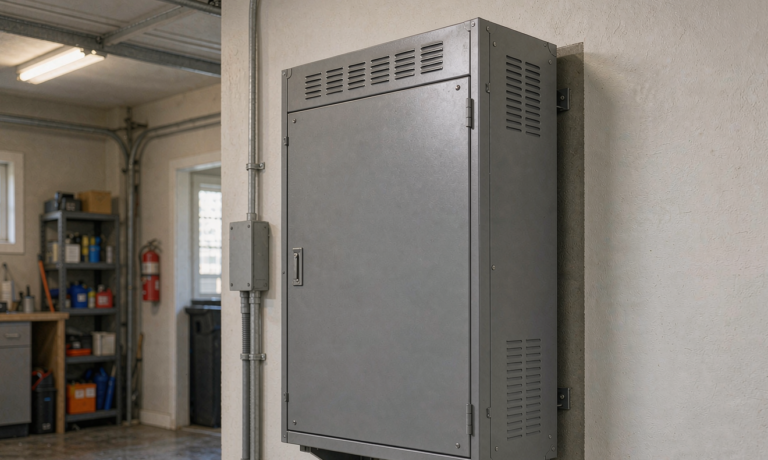
Cold weather is the other derate. LFP chemistry loses usable capacity in subzero conditions and most quality systems refuse to charge below freezing without a heating element. If your battery lives in an unheated garage in a cold climate, budget a further 10 to 20 percent reduction in winter, and make sure the unit you buy has an integrated heater.
Common sizing mistakes I see in the field
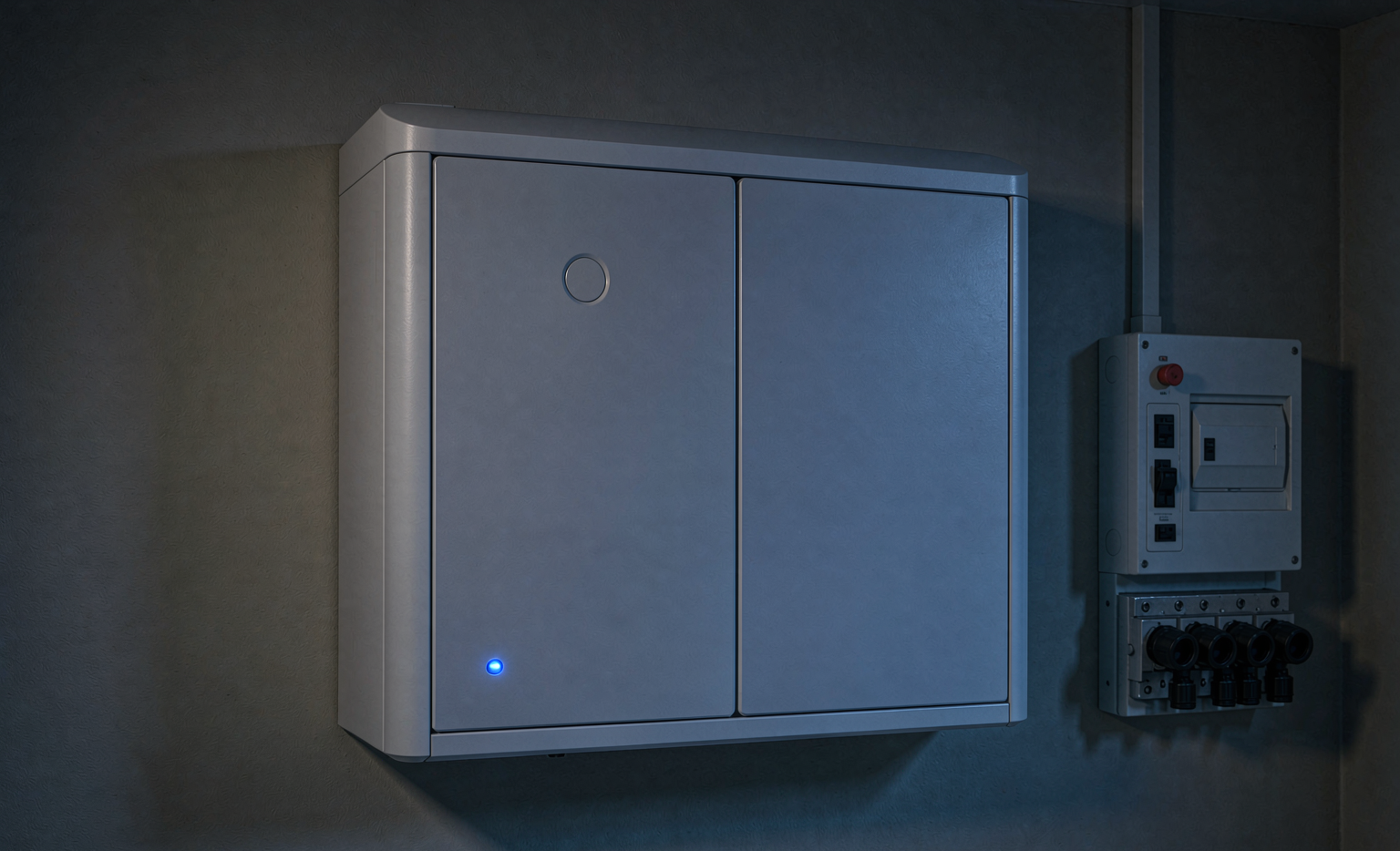
The first mistake is sizing for the whole house instead of the critical loads. Whole-home backup for a typical North American house with electric heating and cooling needs 30 to 60 kWh of storage, which is a 20,000 to 40,000 USD proposition. Backing up the essentials needs 10 kWh and delivers 90 percent of the outage comfort. Smart panels that switch only designated circuits to battery power have made partial-home backup far more practical, and load-shedding logic can stretch a modest battery across a long outage.
The second mistake is ignoring surge requirements. Compressors and pumps draw three to seven times their running power at startup. A battery with a 5 kW continuous rating but only a 7 kW surge rating will trip offline when a large air conditioner kicks in, even though the average load was fine. Check the surge spec before the continuous spec if you plan to run motors.
The third mistake is forgetting the generator handoff. For multi-day outages, the best architecture is a modest battery for instant, silent backup plus a small generator for recharging: a 3 to 5 kW generator refills a 10 kWh battery in 3 to 4 hours, burning a fraction of the fuel it would take to carry the house directly.
A worked example with real numbers
Here is a customer case from last winter, anonymized but typical. A two-story home with gas heat wanted coverage for the furnace, refrigerator, internet, lights, and phone charging. Measured critical loads: furnace blower 400 watts averaging 8 hours per day, refrigerator 150 watts continuous, lighting 100 watts for 6 evening hours, electronics 75 watts continuous – about 4 kWh daily with margins. They installed one 10 kWh LFP battery with 9 kWh usable and 95 percent inverter efficiency, giving 8.55 kWh deliverable, or just over two full days without sun, and effectively unlimited through a sunny winter day with their existing 6 kW array. Their neighbor, who insisted on backing up the electric water heater and dryer too, needed nearly three times the storage for the same comfort level.
What battery management data tells you after installation
Once the system runs, stop estimating and start measuring. Every quality home battery app shows state of charge, instantaneous power flow, and daily energy totals. After your first real outage you will know your actual critical-load profile rather than your estimated one, and most families find their true draw runs 20 to 40 percent lower than feared. Set a low-battery reserve threshold – 20 percent is typical – and revisit it seasonally.
If you are still comparing systems before purchase, bring your load worksheet to the installer and make them show the runtime calculation for your actual numbers. Any installer who resists that arithmetic is selling capacity instead of solutions, and you now know enough to walk away.
How long will a 10 kWh home battery last during a power outage?
A 10 kWh battery with about 8.5 kWh of usable energy runs a typical critical-load profile – refrigerator, lights, internet, phone charging, furnace fan – for roughly 15 to 24 hours. The same battery runs about 8 hours at a steady 1,000 watt load, or around 4 hours if a large air conditioner cycles continuously. Solar input during daytime outages can extend these figures dramatically.
How do I calculate home battery backup runtime?
Divide usable capacity in watt-hours by your average load in watts. Usable capacity equals nameplate kilowatt-hours multiplied by depth of discharge (typically 90 percent for lithium iron phosphate) and inverter efficiency (about 95 percent). For average load, use metered or label wattage of the devices you actually plan to run, not peak startup figures.
What size home battery do I need to back up a refrigerator and lights?
A refrigerator plus essential lighting and electronics averages 300 to 500 watts, or 7 to 12 kWh per day. A 5 kWh battery covers roughly overnight to 24 hours depending on efficiency settings; a 10 kWh battery comfortably covers one to two days. For outages longer than a day, pair the battery with solar input or a small recharge generator.
Why does my home battery not last as long as the spec sheet says?
Spec sheets quote nameplate capacity at ideal conditions. Real runtime shrinks with depth-of-discharge limits, inverter losses, standby consumption of the battery management system (commonly 20 to 60 watts around the clock), cold-weather derating, and higher-than-expected actual loads. Measuring your real consumption with the system app usually explains the gap within the first month.
Does solar charging extend battery backup runtime during an outage?
Yes, substantially. During daylight hours, even modest arrays generate 1 to 3 kW, which can exceed your critical load entirely. A battery that alone runs 10 hours can effectively cycle indefinitely through a sunny outage, discharging at night and refilling by day. Grid-tied systems must be configured with the correct inverter mode to keep panels active during a blackout, so confirm this during commissioning.
Can a home battery run an air conditioner or well pump?
It can, but check two limits: surge rating and average draw. Compressors and pumps draw three to seven times their running wattage at startup, so the battery’s surge capacity must exceed the starting spike. A central AC averaging 2,500 watts will drain a 10 kWh battery in about 3 to 4 hours, while a single-room mini-split averaging 800 watts runs closer to 10 hours.
Karl Huang is a senior lithium battery engineer who advises homeowners and installers on energy storage sizing and reliability. The numbers above reflect metered field data and standard engineering practice as of late 2026.
Further Reading
References