Battery Solution for Pipeline and Infrastructure Monitoring
As an engineer who has spent the last decade building power systems for remote industrial sites, I can tell you one uncomfortable truth: the sensor, the antenna, and the data logger are never the weak point. The battery solution is. When a pipeline monitoring node sits 80 km from the nearest road and temperatures swing from +40 °C in summer to −30 °C in winter, a poorly specified cell is the difference between a node that reports for five years and one that goes dark in eight months. This article is the field guide I give procurement and integration teams when they ask me to design a battery solution for pipeline infrastructure monitoring that simply does not fail.
Why Pipeline and Infrastructure Monitoring Needs a Dedicated Battery Solution
Most operators start by bolting a generic lead-acid or an off-the-shelf power bank onto a pipeline cathodic protection (CP) monitor or a pressure/leak detection station. It works for a season, then logistics costs explode because a technician has to drive out every quarter to swap batteries. A purpose-built custom battery solution flips that math: you size the pack to the duty cycle, you thermally manage it, and you only visit the site when the BMS tells you something is actually wrong.
For long linear assets — oil and gas trunk lines, water mains, district heating, rail signalling — the economics of a reliable battery solution are driven by the cost of a site visit, not the cost of the cells. I have seen a single winter truck roll in the Arctic cost more than the entire battery pack it was sent to replace. That is why specifiers now treat the energy storage as a first-class engineering component, not an afterthought accessory.
Key Requirements for Remote Monitoring Power
Before I touch a single cell, I pin down five numbers with the client. Get these wrong and no chemistry will save you:
- Average load (Wh/day): Sum the quiescent draw of the logger, the radio/modem bursts, and any valves or heaters. A typical SCADA Ready pipeline node draws 0.4–1.2 Wh/day in sleep and 30–120 Wh during a transmit burst.
- Peak pulse current: LoRaWAN and cellular modems spike to 1.5–2 A for seconds. The battery pack internal resistance must absorb that without the bus sagging below the radio’s brownout voltage.
- Temperature range: If the node sees −30 °C, you need either chemistry tolerant of cold or a controlled self-heat strategy.
- Autonomy target: I design for 12–24 months with zero intervention, which sets the usable capacity.
- Communication protocol: The BMS should speak the same bus the logger uses (often Modbus RS-485 or I2C) so state-of-charge data rides along with the process data.
Chemistry Choices: LFP, Lithium-Ion and When Sodium Fits
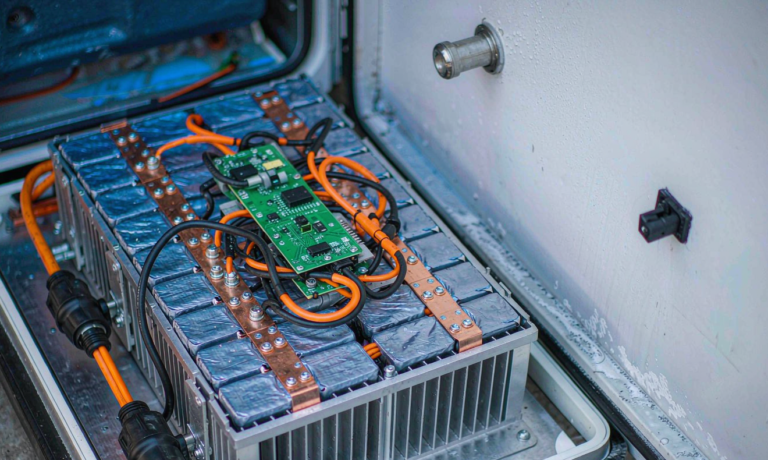
For almost every pipeline and infrastructure monitoring node I recommend LFP (LiFePO4). It gives 3,000–6,000 cycles, an intrinsically stable olivine cathode, and a flat voltage curve that makes SoC estimation forgiving. NMC is smaller and lighter but brings more thermal sensitivity and a steeper degradation knee — useful only when mass is tightly constrained.
Sodium-ion is quietly becoming a strong candidate for cold-climate monitoring. Its capacity retention at −20 °C is markedly better than lithium, and sodium raw materials are cheaper and more secure from a supply-chain standpoint. On a 2025 deployment across a northern water-pipeline corridor, we ran a sodium pilot beside an LFP pack; the sodium unit held 91% of its rated capacity at −25 °C where the LFP dropped to ~74%. For a stationary, weight-insensitive monitoring node, that trade is increasingly attractive.
Whatever chemistry you pick, the custom battery solution must be graded and matched at the cell level. I sort to within 20 mΩ of internal resistance and 30 mAh of capacity so the series string ages evenly.
Sizing the Battery Pack for Duty Cycle and Winter
Here is the back-of-envelope method I use. Take daily energy E (Wh/day), multiply by the autonomy target D (days), divide by the usable depth-of-discharge (I use 80% for LFP, 70% for sodium in cold), then apply a temperature derate. A node at 0.9 Wh/day idle plus 60 Wh/day burst average (12 transmits) is roughly 61 Wh/day. For 365 days at 80% DoD that is ~27.8 Ah at 12 V — a 12.8 V 30 Ah LFP battery pack with margin. Add 25% for a worst winter and you land at 40 Ah.
I never size to the nameplate. Real cells deliver less at −20 °C and under pulse load, so a 25–35% engineering margin is non-negotiable for a battery solution that must run unattended for years.
BMS and Communication: Keeping the Node Alive
The BMS in a monitoring node does more than protect cells. It is the early-warning system. I specify:
- Cell-level voltage and temperature logging at 1-minute resolution, with min/max retained for the daily uplink.
- Adaptive low-temperature charge lockout — the BMS refuses to charge below 0 °C unless a heater has warmed the pack, preventing lithium plating.
- SoH (state-of-health) tracking via coulomb counting cross-checked against periodic capacity tests, so we predict end-of-life instead of discovering it.
- A watchdog that reboots the logger if the bus stalls — a tiny feature that saved a major gas operator from three unnecessary site visits last winter.
For the radio, I pair the pack with a low-quiescent DC-DC that wakes only on a real transmit event. That single design choice often cuts average draw by 40%, which directly extends autonomy.
Certification and Field Durability
A pipeline monitoring battery solution ships across borders and lives outdoors, so certification is not optional. Every pack I release for this application carries UN38.3 (T.1–T.8 transit testing), IEC 62133-2 for portable cells, and IP66/IP67 enclosure sealing for the housing. For North American infrastructure, UL 1973 and UL 1642 apply; for stationary mounting near occupied areas, UL 9540A thermal-runaway containment is the bar I design to. I also specify an operating window of −30 °C to +60 °C and validate it with 200 thermal cycles before release.
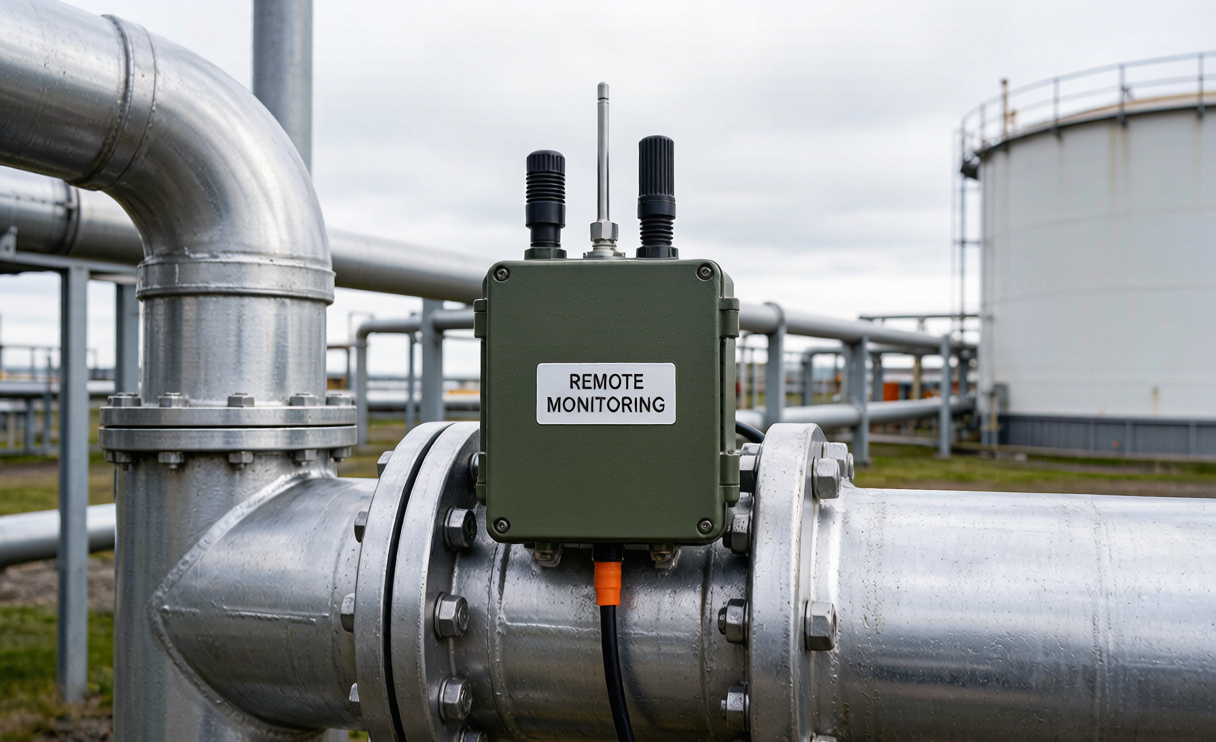
Mechanically, the enclosure is aluminium or UV-stabilised polycarbonate, with a stainless gland for the antenna and a sealed conduit entry for the sensor harness. Corrosion, not capacity, is what kills nodes in the field — so I spend real effort on the seals.
A Real Deployment Blueprint
On a 140 km gas pipeline with 22 monitoring nodes, we deployed a 12.8 V 40 Ah LFP battery solution per station, each with a 20 W solar trickle input for summer top-up and a self-heating BMS for winter. The custom battery solution was graded, formation-charged, and cycle-aged 50 times in the lab before shipping. Two years in, 21 of 22 nodes have required zero intervention; the one exception flagged a failing cell via SoH telemetry and we swapped it during a scheduled line inspection. That is the goal: no emergency rolls, every failure predicted.
FAQ
What battery chemistry is best for pipeline monitoring in cold regions?
For most nodes, LFP rated to −20 °C with a heated battery pack is the safe default. If the site regularly drops below −25 °C and weight is not a constraint, sodium-ion is increasingly competitive because it retains far more capacity in deep cold.
How long should a pipeline monitoring battery last without service?
I design for 12–24 months of full autonomy, then add solar or wind trickle to push toward 5–10 years. The right answer depends on visit cost: the more expensive the roll, the larger the margin I build into the battery solution.
Do these battery packs need certifications?
Yes. At minimum UN38.3 for transport and IEC 62133-2 for the cells. For infrastructure in North America add UL 1973 and UL 1642, and consider UL 9540A for stationary containment. Skipping certification is a non-starter for utility-grade monitoring.
Can one BMS manage both the battery and the sensors?
The BMS manages the cells, but it should expose SoC, temperature and SoH over the same bus the logger uses (Modbus or I2C). That lets the monitoring software treat battery health as just another telemetry channel, which is exactly how a mature battery solution for pipeline infrastructure monitoring should behave.
Why not just use a lead-acid battery?
Lead-acid is cheap upfront but heavy, sensitive to partial-state-of-charge, and short-lived in temperature swings. Over a five-year horizon the custom battery solution based on lithium or sodium wins on total cost because it slashes site visits and survives the climate.