Drone Battery Cost Optimization for Delivery Drones: A (4)
Why Battery Cost Dominates the Total Cost of Ownership for Delivery Drones
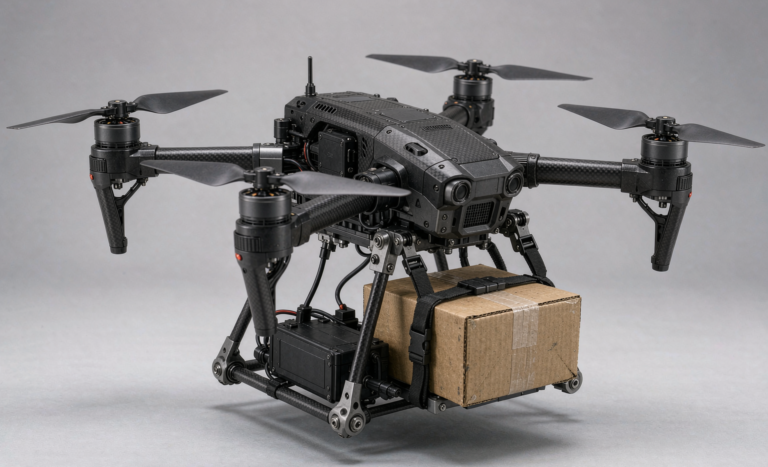
When a logistics operator asks me how to make a delivery drone program profitable, the conversation almost always lands on the same component: the battery. In my twelve years building packs for commercial UAV fleets, I have seen the drone battery account for 25% to 40% of the lifetime operating cost of a delivery route, often more than the airframe itself. Unlike the airframe, which is a one-time capital expense, the battery is a consumable. It degrades, it must be replaced, and it dictates how many revenue flights you get per day.
The math is unforgiving. A typical last-mile delivery drone flies 15 to 30 sorties per day. If your pack lasts 600 full cycles before it drops below 80% state of health, and you swap it twice daily, that pack is effectively spent in roughly twelve to eighteen months. Multiply that by a fleet of fifty or five hundred aircraft, and the annual replacement bill dwarfs the initial hardware purchase. This is why drone battery cost optimization is not a nice-to-have engineering exercise — it is the single biggest lever on fleet profitability.
Cell Chemistry Choices That Move the Cost Needle
The first decision that shapes cost is chemistry. Most delivery drones today run on a lithium battery built from either NMC (nickel-manganese-cobalt) or LFP (lithium-iron-phosphate) cells. From the factory floor I can tell you the trade-off is not subtle.
- NMC (high-nickel) gives you the best energy density — around 200 to 260 Wh/kg. That translates directly into longer range and heavier payloads per flight. The downside is price: cobalt and nickel are volatile commodities, and the cells are thermally more sensitive, demanding more sophisticated battery management.
- LFP trades roughly 20% to 30% lower energy density for dramatically better cycle life (2,000+ cycles is common) and far lower raw-material cost. For short-range urban delivery loops under 8 km, LFP is frequently the cheaper choice over the full ownership period.
In one 2024 fleet deployment I consulted on, switching a 6 km urban route from NMC to LFP cut the three-year battery bill by 31% even after accounting for the extra packs needed to compensate for lower energy density. The drone lithium battery you choose should be matched to route length, not to the highest spec sheet.
Cycle Life and the Real Cost per Flight
Operators obsess over pack price per watt-hour and ignore cost per flight, which is the number that actually matters. Here is the engineering reality from my test lab:
- A premium pack costing $420 with 800 usable cycles delivers a cost of $0.53 per flight.
- A budget pack costing $260 with 350 usable cycles delivers a cost of $0.74 per flight.
The cheaper pack is 38% more expensive in service. This is why I push clients toward longevity testing before procurement. We cycle candidate cells at the actual discharge rate the drone draws — typically 3C to 8C for delivery rotors — because a cell rated at 1C will underperform drastically under real load. When you optimize for cost per flight rather than sticker price, the drone battery selection flips in favor of higher-quality, longer-lived cells more often than buyers expect.
Hot-Swappable Modular Packs vs. Charging Downtime
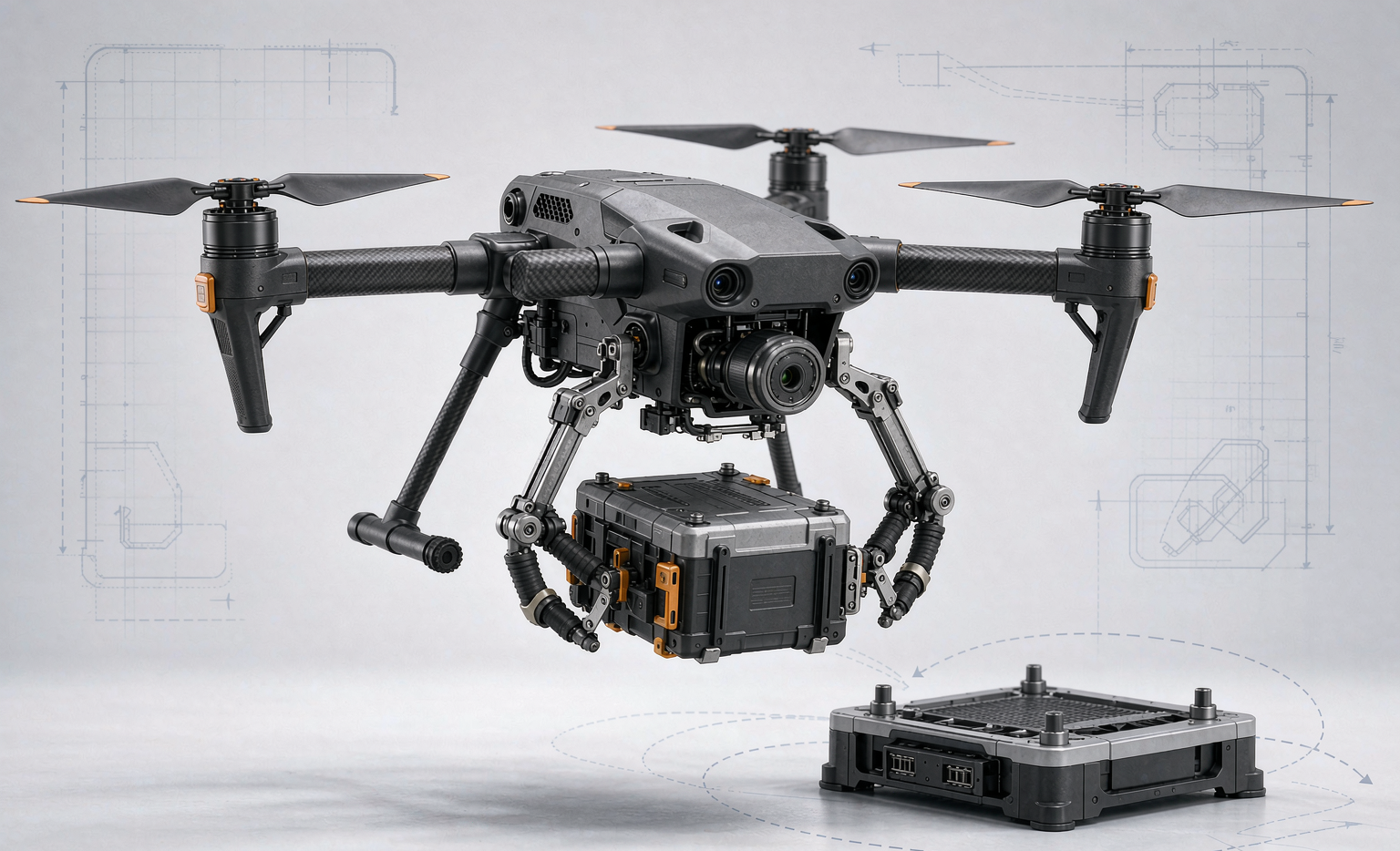
Downtime is a hidden cost that destroys delivery economics. A drone tethered to a charger for 60 to 90 minutes between flights completes maybe six revenue runs per shift. A drone with a custom drone battery designed as a hot-swappable module completes 20+ runs because the swap takes 30 seconds.
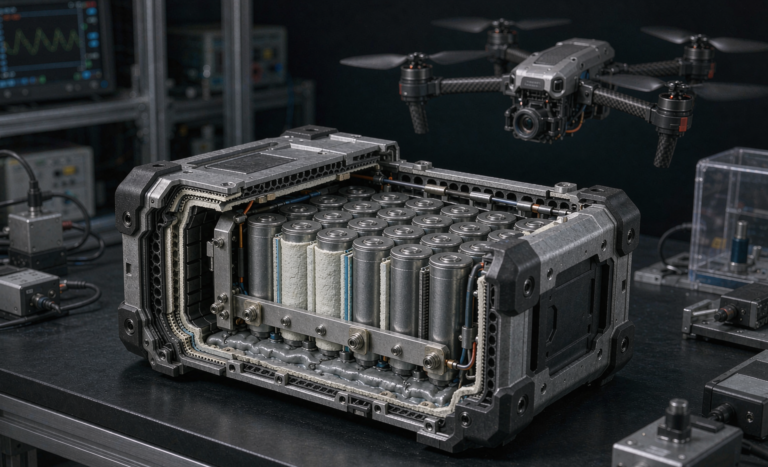
I design modular packs with standardized mechanical interfaces so a single operator can manage a battery pool rather than babysitting individual chargers. The capital cost of extra packs is offset by the revenue from roughly 3x more daily flights. For a delivery operation, throughput almost always beats energy density on the P&L. This is one of the most reliable drone battery cost optimization moves available, and it does not require exotic chemistry.
Sizing the Pack Right: Avoid Over-Capacity Waste
One of the most common mistakes I see is over-specifying capacity. A team will bolt on a 22,000 mAh pack “just in case,” when the route only needs 14,000 mAh with margin. That extra 8,000 mAh is dead weight: it increases airframe stress, reduces payload, and adds $60 to $90 of cell cost that never earns its keep.
My rule of thumb is to size to 115% to 125% of the worst-case mission energy, then validate against wind and payload scenarios. Proper sizing is a core part of any custom drone battery engagement, because off-the-shelf packs are built for generic use and almost always carry surplus capacity you are paying for but not flying. Right-sized packs also charge faster, which compounds the downtime savings from the previous section.
Procurement Strategy: When to Use a Custom Drone Battery
At low volumes, buying standard packs is rational. But once a fleet passes roughly 30 active aircraft, a custom drone battery program typically pays for its engineering within two to four months. The savings come from three places: eliminating distributor markup, tuning the form factor to your airframe (less wasted space and weight), and specifying exactly the cells you need rather than a packaged compromise.
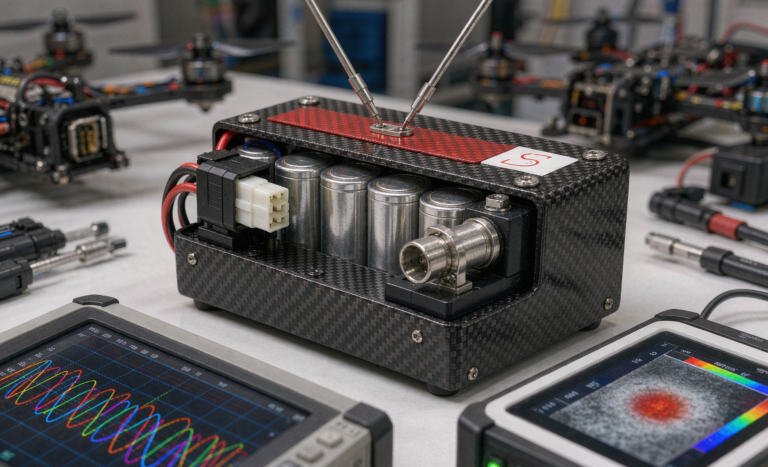
Working directly with a drone battery manufacturer also lets you enforce quality controls — matched internal resistance across cells, verified spot-welds, and UN38.3 and IEC 62133 compliant documentation that airlines and civil aviation authorities (FAA in the US, EASA in Europe) require for commercial carriage. I have watched operators get grounded for weeks because a bargain pack lacked proper transport certification. The “cheap” battery was the most expensive decision they made.
Maintenance, Storage, and End-of-Life Recovery
Cost optimization does not stop at purchase. Storage at 30% to 60% state of charge in a climate-controlled space extends pack life by 15% to 25% in my field data. A simple fleet-management rule — never store at full charge, never deep-discharge below 10% — protects the asset. And as packs retire, a lithium battery takes-back and cell-recovery program recovers cobalt and nickel value, turning a waste cost into a small credit.
Finally, thermal management during fast charging is non-negotiable. I specify packs with temperature sensing and current tapering so operators can safely fast-charge without cooking cells. Every cycle saved is a flight earned, and that is the whole game in delivery economics.
FAQ
What is the single biggest factor in drone battery cost optimization for delivery drones?
Cost per flight, driven by cycle life, matters more than pack purchase price. A longer-lived pack almost always wins over a cheaper one because delivery drones consume batteries through repeated daily cycling. Pair that with hot-swap modularity to eliminate charging downtime, and you capture the two largest levers on fleet profitability.
Is LFP or NMC better for delivery drone batteries?
For short urban loops under 8 km, LFP usually wins on total cost thanks to 2,000+ cycles and lower material cost. For longer range or heavier payloads where energy density is critical, NMC is the better trade. The right drone lithium battery chemistry depends entirely on your specific route profile, not on a generic “best” answer.
When should a delivery operator move to a custom drone battery?
Once you operate roughly 30 or more active aircraft, a custom drone battery program typically pays back its engineering cost in two to four months through removed markup, optimized form factor, and exact cell specification. Below that volume, validated off-the-shelf packs are usually more economical.
Do delivery drone batteries need special certification?
Yes. Commercial packs must meet UN38.3 transport testing and IEC 62133 safety standards, and operators flying under FAA or EASA rules need the associated documentation. A drone battery manufacturer that cannot supply this certification is a regulatory and operational risk, regardless of price.