Sodium-Ion Production Line Compatibility with LFP Lines
I have spent the last four years qualification testing a sodium-ion battery on equipment that was originally purchased to make lithium iron phosphate packs, and the short answer is that the two chemistries share most of a cell factory and fight over the remaining slice. That split decides whether a plant can run a sodium-ion production line without funding a second coating line, and it is the first question every procurement team asks me once they see the raw material cost curve. What follows is the breakdown I give them: where a shared line genuinely works, where it stops, and the numbers I use to size the retrofit.
Why the shared line question keeps coming up
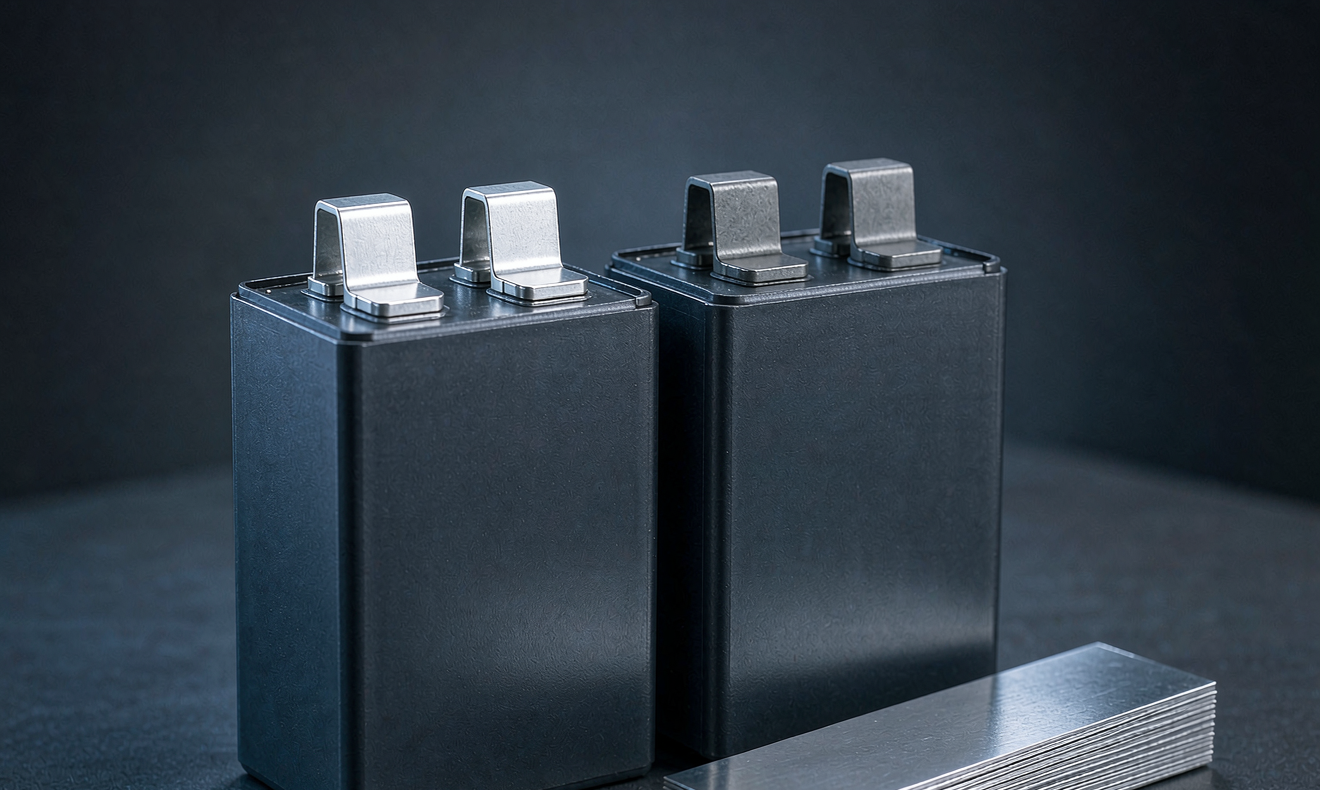
Roughly one in three sodium enquiries I field starts with a plant engineer who already runs LFP. They have a running prismatic line, an approved supplier, and a management target to cut pack cost by 20 percent. Sodium looks like a raw material win because layered oxide cathodes and hard carbon anodes reach around both lithium carbonate and copper, the two inputs with the worst price volatility in a cell bill of materials. Then the engineer asks the honest question: can sodium cells run through the equipment I already own instead of writing another capital request?
The answer depends almost entirely on which station of the line you are standing at. Cell assembly, stacking, tab welding, electrolyte filling, formation and grading are near identical machines. The cathode electrode line is not. Working out why means looking at the four places where sodium chemistry diverges from LFP chemistry inside the cell.
Four places where the chemistry diverges
Cathode binder and coating solvent
This is the hard stop. A conventional LFP cathode is a PVDF binder system dispersed in N-methyl-2-pyrrolidone, and every plant that runs it owns an NMP recovery skid: condensers, activated carbon beds, vapor scrubbing, explosion-proof motors and a bonded solvent store. Sodium layered oxide cathodes are almost always processed water-based, with a polyacrylic acid or CMC binder in deionized water, because the sodium metal oxide surface is not stable through an NMP and PVDF route and water processing is both cheaper and safer. Polyanion sodium cathodes such as sodium iron phosphate are water-processable for the same reason.
The practical consequence is that one electrode line cannot run both slurries any more than a paint shop can run waterborne and solvent paint through the same booth without a flush. A mixed campaign means NMP recovery, solvent make-down, exposure controls around 200 parts per million and a full line changeover between runs. Plants that want to genuinely share a line usually drop NMP entirely by committing to water-based sodium cathodes, rather than trying to keep both solvent regimes alive.
Anode current collector and tab welding
The second divergence is cheaper to absorb, but it still forces a requalification. In an LFP cell the anode runs on copper foil and the cathode on aluminum. In a sodium cell the anode can run on aluminum foil as well, which removes the copper reel from the bill of materials and drops both mass and cost. That single substitution moves the foil handling, the welding recipe and the low-voltage cut-off logic in the pack controller.
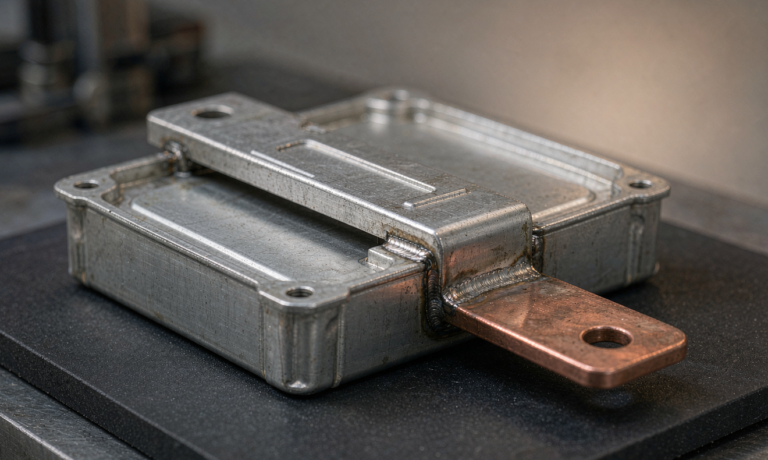
Aluminum is softer and work-hardens differently, so slitting and winding tension windows shift. Aluminum tabs also cannot be resistance welded reliably, because the surface oxide layer interferes with the weld nugget; the accepted method is ultrasonic metal welding, and tab-to-terminal joints usually need a laser or a qualified ultrasonic profile that a copper-qualified line does not already own. On the system side, staying above the sodium and aluminum alloying range means the controller needs a more conservative low-voltage cut-off than an LFP pack will accept, so protection thresholds and coulomb counting constants have to be rewritten before any shared cell reaches a shared product.
Electrolyte and separator
Here the news is good. Sodium electrolyte is a sodium salt, typically NaPF6, in a carbonate blend close enough chemically to an LFP electrolyte that the same filling machines, the same vacuum soaking dwell and the same formation racks can be used. Separators are conventional polyolefin with ceramic coating, so slitting, winding and stacking are interchangeable. What changes is the make-down room: NaPF6 hydrolyzes aggressively if the salt sees moisture, so the mixing area needs the same dew point discipline as a LiPF6 room, and the salt inventory turns over faster because at current volumes it is still dearer than lithium salt.
What a shared cell line keeps for you
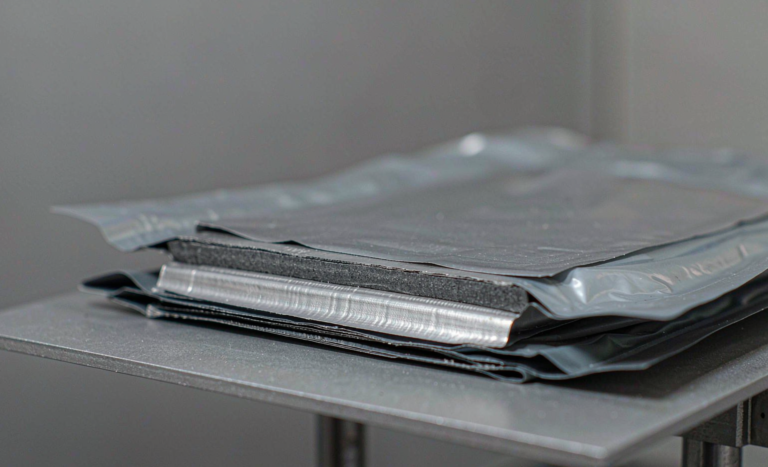
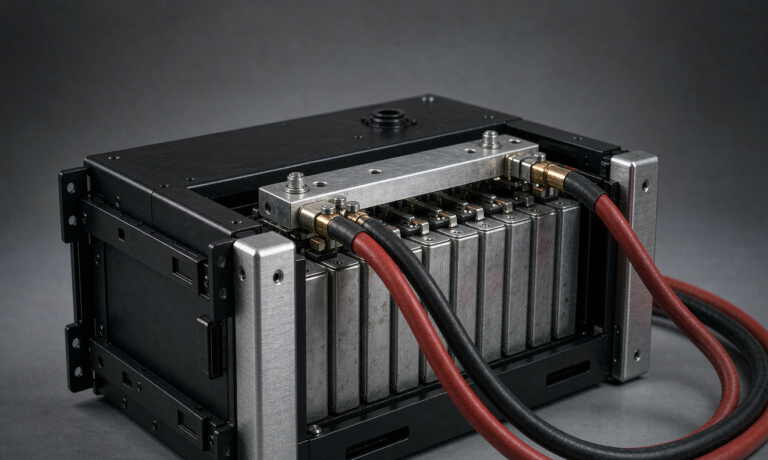
Everything after the cathode coating station is, in my experience, shareable by requalification rather than replacement. Aluminum laminate pouch and prismatic case forming, electrode stacking and lamination, the ultrasonic tab welding head, case laser welding, the degassing and re-sealing station, electrolyte fill, formation and grading racks, and the OCV plus ACIR test gates all accept either chemistry once the recipe parameters change. What costs you calendar time is the process window, not the hardware.
The calibration work is where the schedule risk lives. Calender roll gap and line speed must be re-derived for the sodium cathode compaction window, because layered oxide wants a different porosity target than LFP. Formation also runs longer per cycle since sodium diffusion in the anode is slower early in life, and the voltage plateau sits near 3.0 volts rather than the 3.2 volts a stacker is used to seeing, which slides the whole OCV window and the grading bins. On one pilot I led, end-to-end requalification of an existing LFP prismatic line took eleven weeks, and nine of those weeks went to formation and grading correlation rather than mechanical fitting.
The retrofit numbers I put in the model
If you already own an LFP prismatic line, the sensible target is a shared anode line with a separate cathode route. Two configurations come up repeatedly, and the capital delta between them is larger than most plans assume.
- Config A. Keep LFP as-is and add water-based sodium cathode coating. You reuse the existing anode line after a foil change, add a cathode mixer and coating head, and remove NMP recovery from future depreciation. For a GWh-scale line this lands around one to three million US dollars, and the drying oven is the item that surprises people, because water carries roughly five times the latent heat of NMP.
- Config B. Keep the NMP route and add a second water-based cathode line. Capital runs roughly 1.6 to 2 times Config A if both are built together, and you still carry a recovery system used for one campaign a year.
- Config C. One water-based line for both chemistries. This is what I recommend when the cell format has not frozen. You give up PVDF-bound cathode routes and accept a slower speed on the water side, but you hold one set of utilities, one set of operators and one cleanroom class.
Qualifying a shared line before you commit
Before any capital decision I ask for two things: a sample build on the target format and a written line study. The sample build is 200 to 500 cells run through the real shared stations with the real shared fixtures, then cycled to the standard you actually ship to. On the sodium side that means UN38.3 and IEC 62133-2 for small format cells, IEC 62619 for industrial and stationary formats, and UL 9540A where the assembly sits in a storage cabinet. None of those tests care which chemistry made the cell, but the transport and installation paperwork does care about the electrolyte, so the certification evidence has to follow the sodium cells themselves.
The line study should measure three numbers: coating line speed at an acceptable defect rate, formation hours per cell, and grading yield in the bin you actually sell. Those three move your true cost per cell, and they are the numbers a shared sodium-ion production line changes. If formation stretches to three days instead of two at required yield, that shifts the economics more than any raw material saving does. Get the dry room to a stable 40 degrees Celsius dew point first as well; everything downstream of filling is wasted if the salt sees moisture.
What equipment is truly shared between an LFP line and a sodium-ion line?
Cell assembly, stacking, ultrasonic tab welding, case welding, degassing, electrolyte filling, formation racks and the OCV plus ACIR test gates, once the recipes are requalified. The cathode mixing, coating and drying section is the part that is not shared.
Can a sodium cell run on aluminum foil on both electrodes?
Yes, and it is one of the strongest cost arguments for sodium. Aluminum replaces copper on the anode, which strips a heavy and expensive reel out of the bill of materials, at the price of a conservative low-voltage cut-off and a fresh aluminum welding qualification.
Why can one coating line not run both water-based and NMP slurries?
The binder system, the solvent and the drying load are all different. NMP is a recovery-bound solvent with a bonded store and an exposure regime, while water-based sodium slurry carries roughly five times the latent heat to evaporate, which forces a longer oven and a larger exhaust. Mixing them on a single line means a full flush between campaigns.
How long does line requalification take in practice?
On the pilots I have led, end-to-end requalification of an existing prismatic line ran about eleven weeks, with roughly nine of those weeks spent on formation and grading correlation rather than mechanical fitting. Format changes cost more than chemistry changes.
Which certifications apply to sodium cells made on a shared line?
UN38.3 for transport, IEC 62133-2 for small format cells, IEC 62619 for industrial and stationary cells, and UL 9540A where the assembly sits in a storage cabinet. The test workload matches lithium; the electrolyte documentation is what differs.
Is a single water-based shared line the better long-term choice?
If your cell format is not frozen, yes. One water-based cathode route, one set of utilities and one trained crew is easier to run than two coating lines chasing different binders, and it keeps both polyanion and layered oxide sodium cathodes open on the same equipment.
Further Reading
References