Home Energy Storage Deployment for Farms
I have commissioned home energy storage systems on dairy barns, greenhouse blocks, orchard pump houses and mixed-crop family farms, and I can tell you that a farm is not a house with more square metres. It is a small industrial site that happens to have a kitchen attached. When I plan a home energy storage deployment for farms, I start from motor inrush, milk-cooling duty cycles and irrigation windows — not from the nameplate of the roof array. That single change in starting point is what separates a system that rides through a four-hour outage in February from one that trips on the first compressor start.
What follows is the field procedure I actually use: how I audit the load, how much usable energy I specify, which chemistry survives dust and temperature swings, how I wire the backup, and what documents I insist on before energising.
Why Farm Sites Break Standard Home Energy Storage Assumptions
A suburban home draws a fairly smooth 0.4–1.2 kW baseline with short peaks from a kettle or an air conditioner. A working farm behaves nothing like that. On the last dairy I surveyed, the baseline was 2.1 kW (vacuum pump idling, plate cooler circulation, yard lighting), but the instantaneous peak hit 19 kW for roughly 300 ms every time the 7.5 kW bulk-tank compressor started direct-on-line. Locked-rotor current on that motor was 6.2× full-load amps. Any battery energy storage system sized purely on daily kWh will fail that test.
Four farm-specific stressors drive my design decisions:
- Motor-dominated loads. Pumps, augers, fans, compressors and grain dryers all present inductive inrush. I size the inverter for surge, and the lithium battery pack for the resulting current pulse, not for average power.
- Long, weak feeders. Farm outbuildings are often 80–250 m from the meter. Voltage drop of 4–7% at peak is common, which changes where I place the storage cabinet and whether I go single-point or distributed.
- Aggressive environment. Dust from bedding and feed, ammonia and hydrogen sulphide in livestock buildings, pressure-washing overspray, and rodents that treat cable insulation as a resource. Ambient swings of −20 °C to +45 °C inside an uninsulated shed are normal.
- Failure consequences are biological. Unsaleable milk within 3–4 hours, ventilation loss in a poultry house within 8–15 minutes, frost damage in a propagation greenhouse overnight. Farm storage is life-support engineering for the herd or the crop.
Step One: The Load Audit That Actually Determines Usable kWh
I never size from utility bills alone, because a monthly kWh figure hides the shape of the load and shape is what drains a battery. I log the main distribution board for seven consecutive days at 1 s resolution, repeated in the worst season if the operation is seasonal.
From that log I extract five numbers:
- Critical baseline (kW): what must never stop. On the dairy above: 2.1 kW.
- Critical daily energy (kWh): baseline integrated over the target autonomy window, plus scheduled critical events such as two milkings.
- Worst-case surge (kVA and duration): largest single motor start with the baseline already running.
- Coincidence factor: how often two large loads actually overlap. Measured, not assumed — on that dairy it was 0.61, which saved the client roughly 20% of inverter cost.
- Outage statistics: I ask the distribution operator for the last three years of interruption data. If the 95th percentile outage is 5.5 hours, designing for 4 hours is a false economy.
Then I convert critical energy to installed capacity with three derates stacked in this order: depth of discharge, round-trip efficiency, and end-of-life capacity. For an LFP home energy storage system I use 90% usable DoD, 92% AC round-trip efficiency at typical farm power levels, and 80% remaining capacity at end of warranty. A farm needing 24 kWh delivered at hour 8 of an outage in year 10 therefore needs 24 ÷ (0.90 × 0.92 × 0.80) ≈ 36 kWh installed. Skipping the 0.80 term is the single most common sizing error I correct in other people’s designs — it produces a system that passes acceptance testing and then fails its purpose in year seven.
Chemistry and Cell Selection for Farm Duty
For farm deployments I specify LFP (LiFePO₄) prismatic cells in almost every case, and I am explicit with clients about why. Cycle life of 6,000–8,000 cycles to 80% capacity at 0.5C and 25 °C, a thermal runaway onset around 200 °C versus roughly 150 °C for NMC, and no cobalt in the supply chain. On a site with combustible dust and hay storage nearby, that thermal margin is not a specification detail, it is the reason the insurer signs off.
Where the trade-offs actually bite:
- Energy density. LFP delivers roughly 150–175 Wh/kg at cell level against 200–250 Wh/kg for NMC. On a wall or a slab this rarely matters. I only move to higher-density chemistry when the mounting structure is genuinely constrained.
- Low-temperature charging. This is the real farm constraint. Charging LFP below 0 °C plates lithium metal and permanently reduces capacity, so I mandate either a heated enclosure with a 150–300 W pad drawing from the array, or a BMS that hard-blocks charge below 0 °C and taper-limits to 0.2C between 0 and 10 °C. Discharge down to −20 °C is acceptable at reduced power.
- Semi-solid-state options. Where the cabinet must sit inside an occupied building, semi-solid cells with a gel or composite electrolyte cut free liquid electrolyte and improve puncture tolerance. A 15–25% cost premium, justified only when fire separation cannot be achieved geometrically.
- Sodium-ion for unheated outbuildings. Where a pump house sits at −25 °C for weeks and no heat is available, sodium-ion is worth costing. It holds 85–90% of rated capacity at −20 °C and accepts charge there, which can delete the heater circuit entirely. Its 1.5–3.9 V cell window means the charger and BMS calibration tables are not interchangeable with lithium, so it must be designed in from the start, never retrofitted.
At pack level I insist on grade-A matched cells with capacity spread within 2% and DC internal resistance spread within 5%, laser-welded or bolted busbars with documented torque values, and a BMS with per-cell voltage resolution of at least 5 mV. Mismatched cells in a 16S string will show 80–120 mV divergence within 300 cycles, and the string then delivers the capacity of its weakest member.
Backup Architecture: Critical-Load Panels, Surge and Generators
I have never seen a whole-farm backup make economic sense. Instead I split the site into a critical-load subpanel and everything else. On a typical dairy the critical panel carries the vacuum pump, plate cooler, bulk-tank compressor, well pump, ventilation and a single lighting circuit. Grain dryers, welders, workshop machines and the second irrigation pump stay on the non-backed panel.
Inverter selection then follows three rules I apply without exception:
- Continuous rating ≥ measured coincident peak × 1.25. Headroom for a load the client adds next year, because they always do.
- Surge rating ≥ largest motor LRA for 5 s. I verify against the datasheet’s actual surge curve, not the marketing number. A unit claiming “200% for 10 s” often means 200% at 25 °C and 140% at 45 °C.
- Soft-start where possible. Fitting a soft starter or VFD to the largest motor typically cuts inrush from 6× to 2–2.5× FLA. On several projects this let me specify a 12 kW inverter instead of an 18 kW unit, and the VFD cost less than the difference.
Where a diesel generator already exists, I keep it and change its role. The battery covers 0–6 hours and all short interruptions, which on most farms is 90–95% of annual outage events; the generator handles multi-day storms. This cuts generator run hours from 40–60 per year to under 10, which extends its service life and stops wet-stacking from short low-load runs. The transfer logic must be interlocked so the generator never back-feeds the battery inverter unless the inverter is rated for AC-coupled generator input, and I confirm grid-interaction behaviour against IEEE 1547 or the local equivalent before commissioning.
Enclosure, Thermal Design and Environmental Protection
This is where farm installations most often fail, and the failures are boring rather than dramatic: corrosion, water ingress and dust-blocked cooling paths.
My baseline requirements for a farm site:
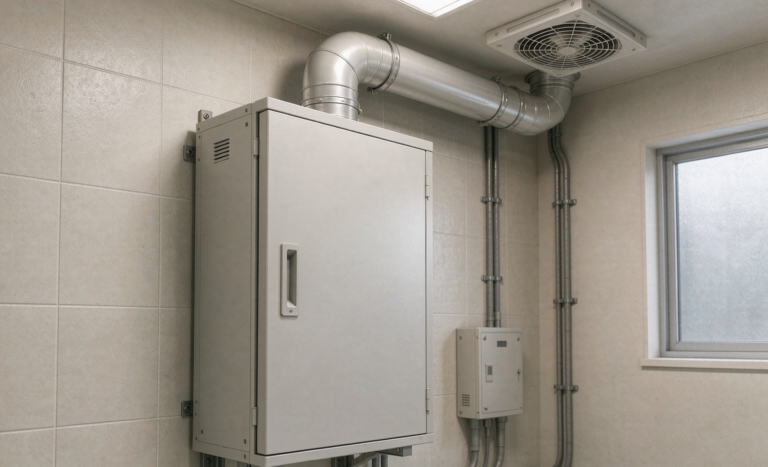
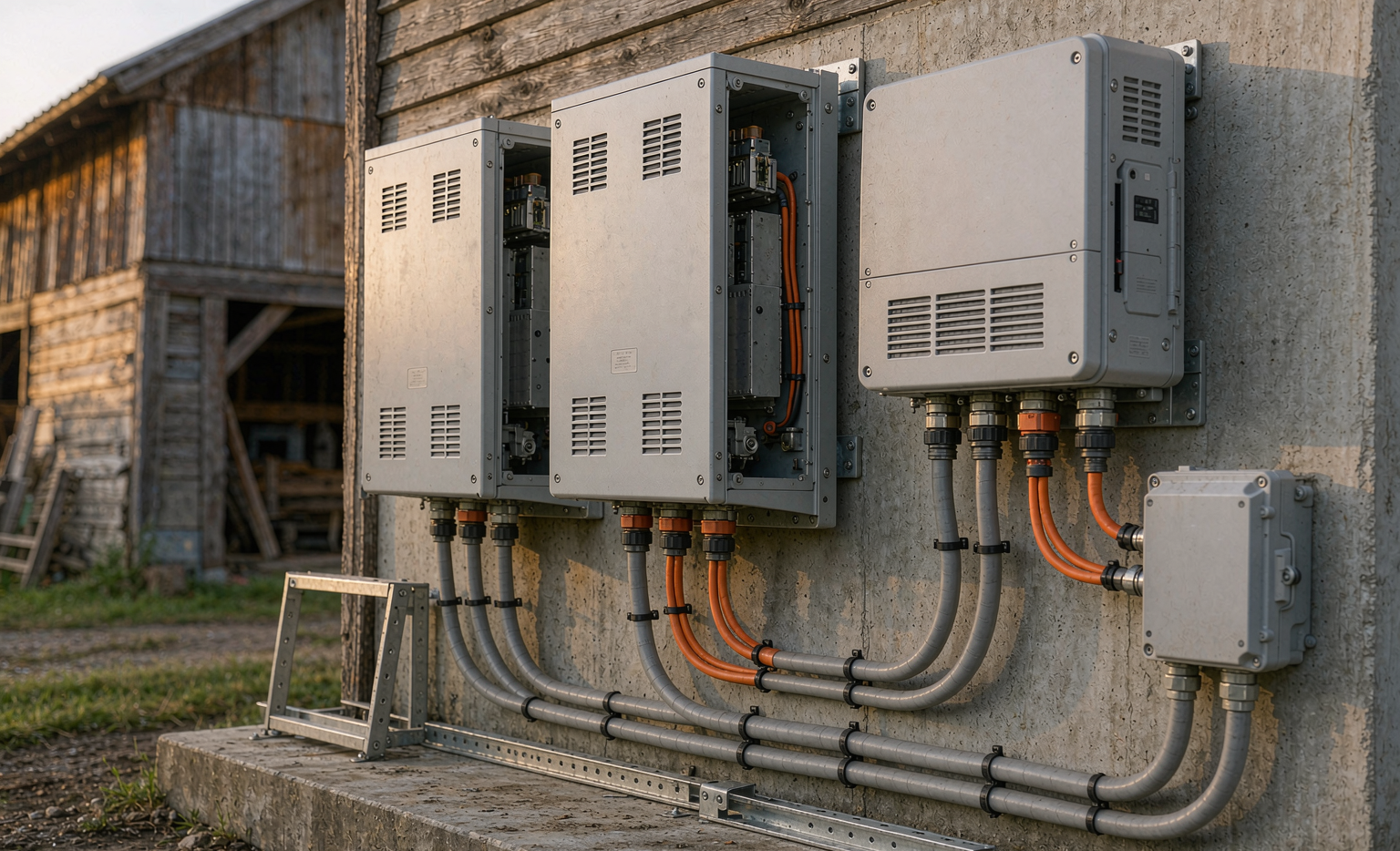
- IP54 minimum indoors, IP65 for anything exposed to washdown or weather. In livestock buildings I go to IP66 because pressure-washing is routine and directed.
- Keep the enclosure out of the animal housing envelope. Ammonia at 10–25 ppm attacks copper and tin-plated terminals — I have opened three-year-old poultry-house boxes and found green corrosion bridging adjacent lugs. Mount on an external wall of a separate service room.
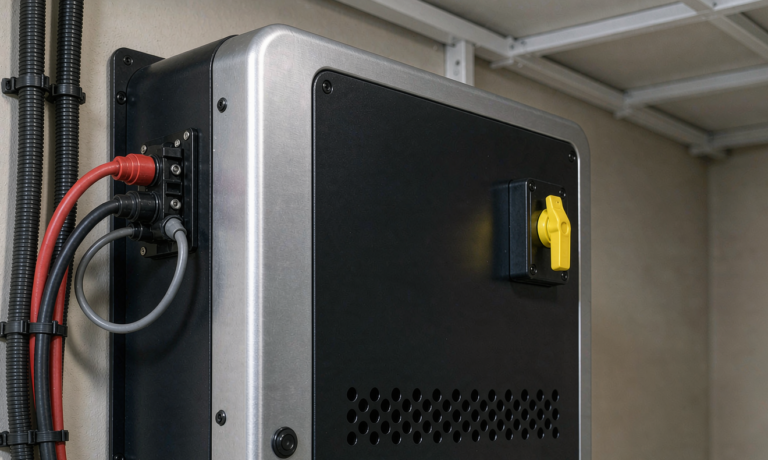
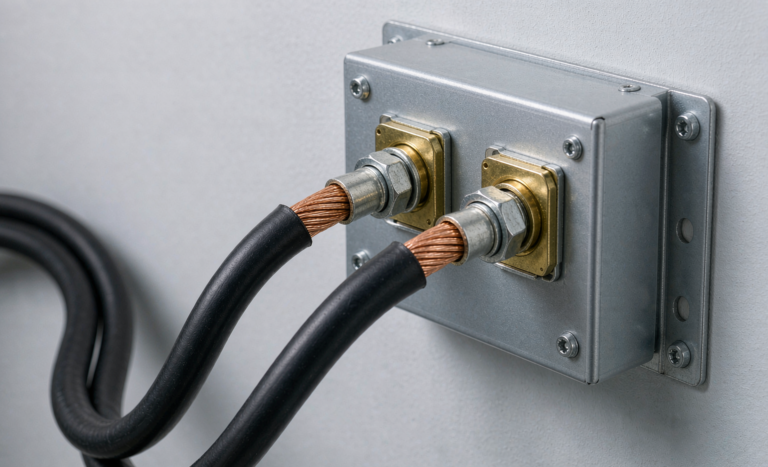
- Cable glands torqued to 1.5–2.5 N·m and rodent-resistant conduit. Steel or armoured, not plain PVC, for the first metre above floor level.
- Operating window designed, not hoped for. I target 15–30 °C cell temperature. Above 35 °C, calendar ageing roughly doubles for every additional 10 °C, so a cabinet on a south-facing metal wall in a hot climate needs shading or it will lose several years of life silently.
- Verified vibration tolerance. Where the cabinet shares structure with grain handling or a compressor slab I require IEC 60068-2-6 and 60068-2-27 evidence, plus anti-vibration mounts.
I also plan the power derating explicitly and put it in the handover document, because clients need to know the system is behaving correctly rather than failing. A typical LFP farm pack delivers 100% of rated continuous power at 25 °C, about 90% at 40 °C, 70–75% at −10 °C and 50–60% at −20 °C, with charging blocked below 0 °C unless heated.
Compliance, Fire Separation and the Documents I Refuse to Skip
Farm projects attract more scrutiny than suburban retrofits, partly because of combustible storage and partly because insurers price agricultural fire risk carefully. I assemble the compliance pack before quoting, not after installing.
- UN 38.3 transport test summary for every battery model on site. Without it the pack legally should not have arrived.
- IEC 62133-2 for cell and small-pack safety, and IEC 62619 for industrial secondary lithium cells and batteries, which is the more appropriate reference for stationary farm-scale systems.
- UL 1973 for stationary storage battery construction, plus UL 9540 system-level listing where the jurisdiction requires it.
- UL 9540A cell, module and unit-level thermal runaway test data, which is what fire officials actually read when setting separation distances.
- NFPA 855 or local equivalent for spacing: 900 mm working clearance minimum, aggregate energy per fire area within listed limits, and 3 m separation from hay, fuel and fertiliser as my internal rule.
- Commissioning record with per-cell voltages at 100% and 50% SoC, pack DC internal resistance baseline, insulation resistance, earth continuity, torque log for every power connection, inverter firmware version and a full functional outage test with the real critical load running.
That commissioning record matters more than any certificate. It is the baseline against which every future measurement is judged. Without a DCIR baseline taken on day one, a reading of 0.42 mΩ in year four tells you nothing.
Maintenance and Monitoring Across a Ten-Year Life
I hand every farm client a three-tier schedule, written for someone who is busy at 5 a.m., not for an engineer.
- Monthly (5 minutes): check the enclosure is dry and vents are clear of dust and cobwebs, confirm no fault LEDs, glance at the monitoring app for maximum cell voltage spread — under 50 mV at rest is healthy.
- Quarterly (30 minutes): clean intake filters, verify a full charge to absorption and log the delivered Ah, check gland tightness, confirm the heater circuit operates if fitted, and export the event log.
- Annually (technician, half a day): re-measure pack DCIR against baseline (a rise above 20–25% triggers investigation), re-torque power connections, thermal-image busbars under load, run a timed capacity test, and review hours spent above 35 °C.
Cell voltage spread above 100 mV at rest, DCIR more than 25% above baseline, or measured capacity below 80% of nameplate are my three replacement triggers. Spare modules stored on site should sit at 30–50% SoC in a dry location, and before insertion I pre-match them to the string within 5–10% SoC and 20–25% DCIR. Dropping a fresh module into an aged string without matching creates a persistent circulating imbalance that the BMS will spend years failing to correct.
What a Realistic Farm Deployment Looks Like
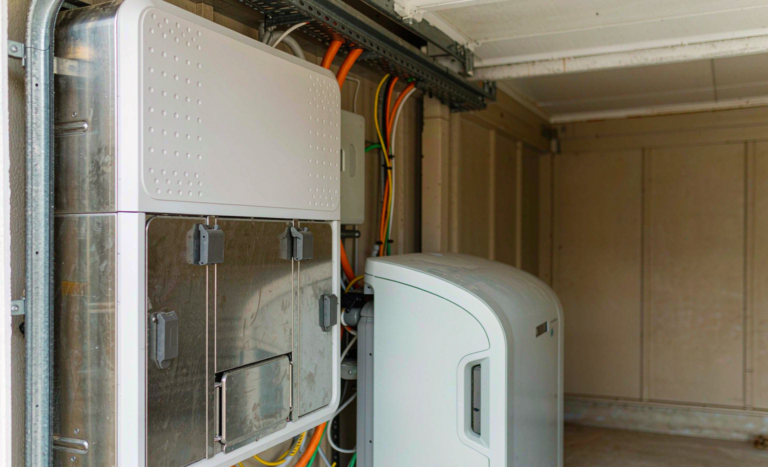
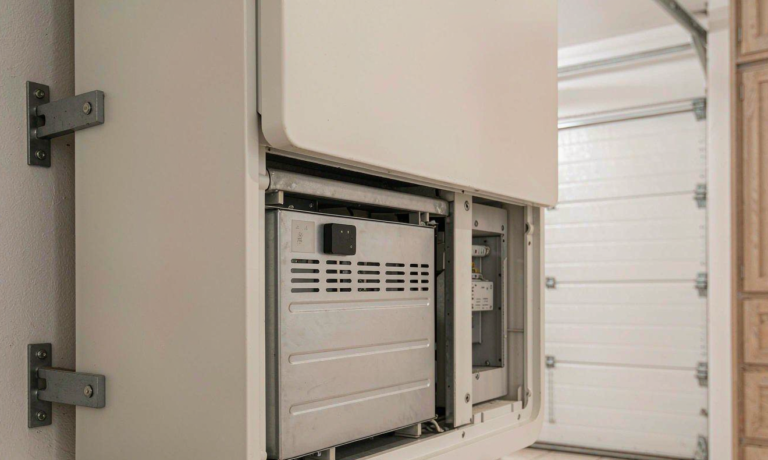
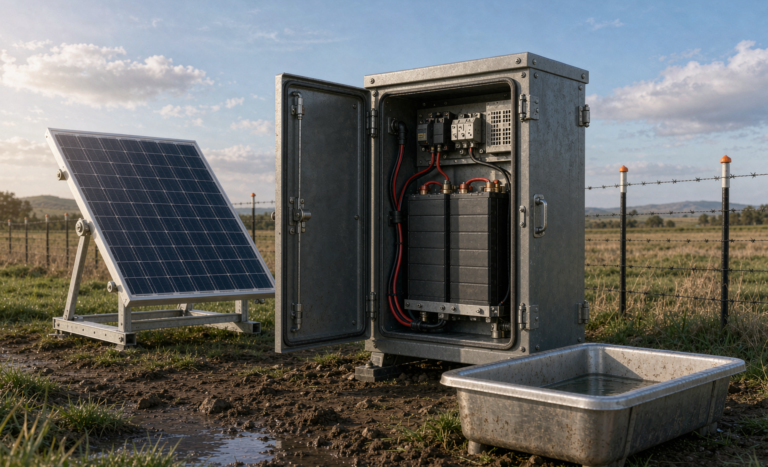
To make this concrete, the dairy I referenced throughout ended up with 38.4 kWh of installed LFP capacity in two outdoor-rated wall cabinets, a 12 kW hybrid inverter with a verified 24 kVA five-second surge, a VFD retrofitted to the bulk-tank compressor, a critical-load subpanel carrying 2.1 kW baseline and 6.8 kW coincident peak, and a 240 W enclosure heater fed from the array. Measured autonomy on the critical panel was 9.5 hours in a January acceptance test at 4 °C ambient, against a 6-hour design target. The generator stayed, and its annual run hours fell from 47 to 6.
That margin was not luck. It came from measuring the load instead of estimating it, stacking the derates honestly, and designing the thermal environment as carefully as the electrical one. If you need a custom battery solution matched to a specific herd size, irrigation schedule or greenhouse block, the load log is the first deliverable — everything else follows from it.
Frequently Asked Questions
How much battery capacity does a typical farm need for backup?
It depends entirely on the critical load, not the farm’s total consumption. A small dairy with a 2 kW critical baseline and a 6-hour target typically lands between 25 and 40 kWh installed once depth of discharge, efficiency and end-of-life derates are applied. A poultry operation whose only truly critical load is ventilation may need 10–15 kWh. Always size from a seven-day one-second load log.
Can a home energy storage system start a large farm motor?
Only if the inverter surge rating covers the locked-rotor current for at least five seconds at the actual site temperature, and the battery can supply that current pulse without hitting a BMS limit. Fitting a soft starter or VFD to the largest motor cuts inrush from about six times full-load amps to two or two-and-a-half times, which usually reduces inverter cost by more than the VFD price.
Will lithium batteries work in an unheated barn in winter?
They will discharge down to −20 °C at reduced power, but they must not be charged below 0 °C or lithium plating causes permanent capacity loss. The two valid solutions are a heated enclosure drawing 150–300 W, or sodium-ion cells, which accept charge at −20 °C while retaining 85–90% of rated capacity. Choose one at design stage; neither is a retrofit.
Is LFP or NMC better for agricultural storage?
LFP for nearly every farm case. Its thermal runaway onset near 200 °C against roughly 150 °C for NMC, plus 6,000–8,000 cycle life, matters far more on a site with combustible dust and hay than the 30–40% energy density advantage of NMC. I only consider NMC when mounting space is genuinely restricted.
What certification should I ask a supplier for?
Insist on the UN 38.3 test summary, IEC 62619 for the industrial cells and pack, UL 1973 for stationary construction, and UL 9540A thermal runaway data at cell, module and unit level. If a supplier can only produce a generic CE declaration, treat that as a disqualifying answer rather than a paperwork gap to be resolved later.