Home Energy Storage for Rural and Farm Properties: How to Build Reliable Off-Grid Power
Specifying a home energy storage system for a rural farm property is, in my experience, one of the toughest jobs in our whole industry. Out on the land the rules are different: the grid is weaker, the loads are nastier, and the environment eats cheap equipment for breakfast. After a decade of fielding battery packs for growers, ranchers, and off-grid homesteads, I have a clear picture of what actually survives and what quietly fails two winters in. This guide walks through how I size, build, and protect a home energy storage system when the customer’s “house” is really a working farm.
Why a Farm Is Not a Suburb With More Land
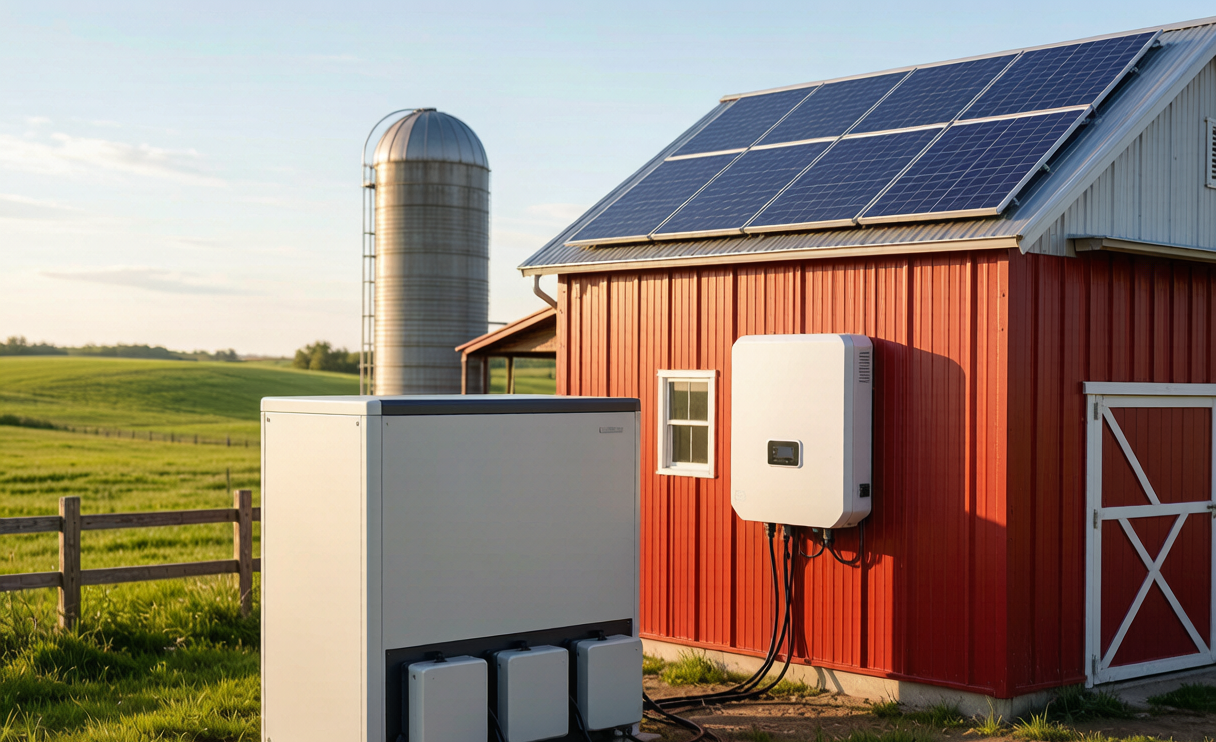
The single biggest mistake I see in rural battery specs is borrowing a residential design and scaling the box up. It does not work. A home energy storage system on a suburban wall sees a clean, predictable load: fridge, HVAC, a few circuits. A farm property throws three-phase motors, welders, dairy compressors, and irrigation pumps at the same battery, often in a building that hits 40°C in summer and -15°C in winter. When I audit a failed agricultural install, the root cause is almost never the cells; it is an undersized inverter and a box that was never rated for dust and condensation.
Think of the load profile first. A 1 HP well pump draws about 0.75 kW running but can pull 2.2 kW at locked-rotor start. A vacuum pump in a milking parlor cycles hard several times an hour. Grain-drying fans run for days straight. None of that resembles a house. If you size only for “average” watts, your home battery backup will trip on the first motor start and the farmer will lose confidence in the whole concept.
Sizing a Home Energy Storage System for Agricultural Loads
Power (kW) and energy (kWh) are different questions. Power is what your inverter can deliver for seconds to minutes; energy is how long it lasts. For a modest mixed farm, a realistic daily draw looks like this: house 12 kWh, barn and shop lighting 3 kWh, milk cooling or refrigeration 15 kWh, water pumping 8 kWh, and small equipment charging 4 kWh. That is roughly 42 kWh per day before you add a heat load.
I normally specify usable capacity for two days of autonomy without sun, because rural grids fail longer than urban ones. So a 42 kWh/day load becomes about 84 kWh of usable storage. At a 90% depth-of-discharge LFP pack, that is roughly a 95 kWh nameplate home energy storage system. On the power side, plan for 5 kW continuous and at least 10 kW of short surge to absorb motor starts. If the property runs genuine three-phase equipment, talk to me about a three-phase inverter or a phase converter before you buy anything.
One more rule from the field: never let the battery sit below 20% state-of-charge in winter. Cold cells deliver less, and a farmer who hits zero in February will not forgive the spec.
Chemistry and Enclosure: What Survives the Barn
For stationary agricultural storage, lithium iron phosphate (LFP) is the only chemistry I recommend in 2026. It tolerates partial state-of-charge, shrugs off thermal stress better than NMC, and carries a long cycle life that matters when the system runs every day for a decade. The cells themselves should meet IEC 62619 for industrial stationary use, and every pack must clear UN38.3 T.1–T.8 transit testing before it ever leaves the factory, because rural deliveries are rough and long.
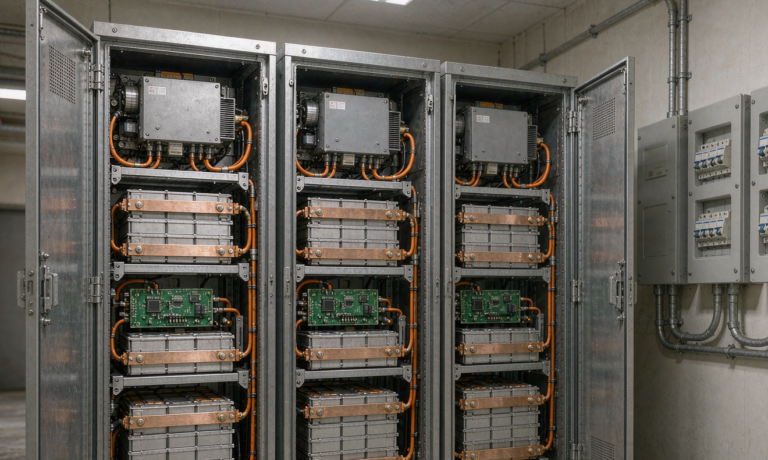
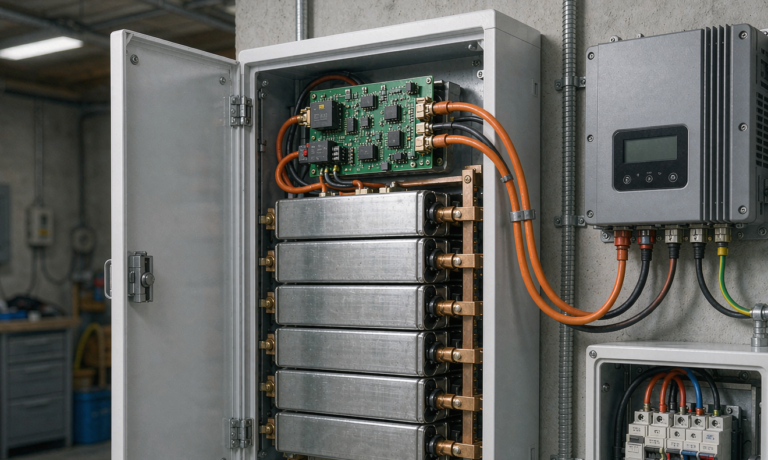
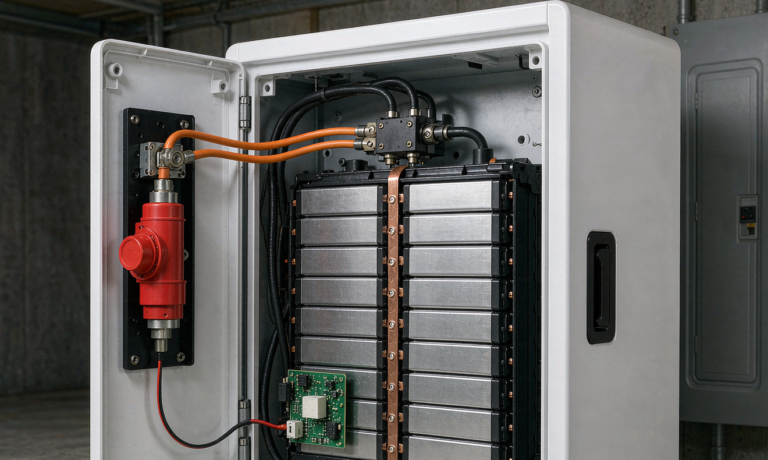
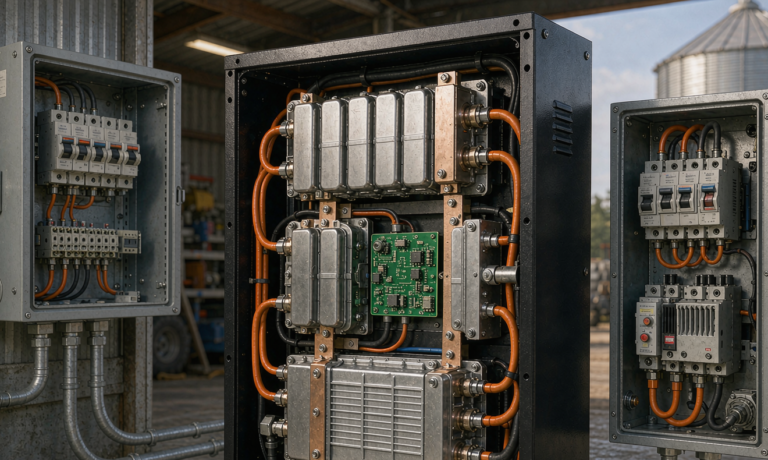
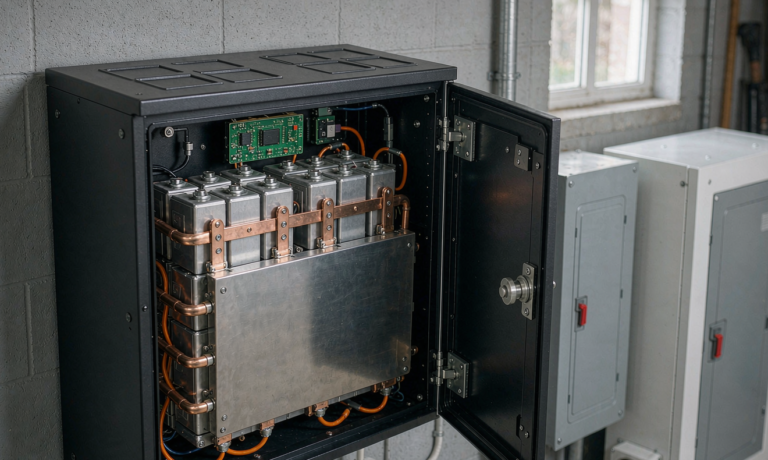
The enclosure matters as much as the chemistry. I specify a minimum IP65 rating so barn dust, spray, and condensation stay out, with a dedicated vent path and a thermal cutoff. Rodents are a real threat; I have seen a pack destroyed by a mouse nest inside an unsealed cabinet. Gland fittings on every cable entry and a metal rather than plastic enclosure solve most of it. This is where a custom battery solution pays for itself: an off-the-shelf residential box rarely has the ingress protection a barn demands.
Inverter and Voltage Architecture for Farm Loads
Most rural residential battery storage deployments run on a 48V or 51.2V DC bus feeding a hybrid inverter that produces split-phase 120/240V for the buildings. The inverter must carry UL 1741 and comply with IEEE 1547-2018 for any grid interconnection, and the installation has to follow NEC Articles 706 and 710 for energy storage. I check those certificates before I quote, not after.
For farms with three-phase wells or grain equipment, you have two paths. The cheaper one is a single-phase inverter plus a rotary or static phase converter for the few three-phase loads. The cleaner one is a true three-phase hybrid inverter, which costs more but eliminates the converter loss and gives balanced voltage. I steer clients toward the three-phase inverter when three-phase loads exceed about 30% of daily energy, because the converter waste adds up fast over a harvest season.
Off-Grid, Hybrid, or Grid-Tied With Backup
Rural properties fall into three buckets, and the home battery backup design changes with each. Fully off-grid sites need the largest bank and a generator handshake so the inverter can command the genset when the battery drops to a set point. Grid-tied-with-backup sites use the battery only during outages and sell or self-consume solar the rest of the time. Hybrid sites do both: they shave peak tariffs, ride through outages, and accept generator support when the sun is weak for days.
My default for a working farm is hybrid. A generator integration through a proper automatic transfer switch means the property never goes fully dark, and the battery still earns its keep every day by time-shifting solar and dodging demand charges. Set the generator start threshold at 25–30% state-of-charge and let the inverter manage the warm-up; do not rely on a human to flip a switch at 2 a.m. during a storm.
Codes, Ventilation, and Maintenance in a Harsh Environment
Safety standards for stationary storage are mature and I treat them as non-negotiable. The system should comply with UL 9540 and UL 9540A for energy storage and fire propagation, and the layout must respect NFPA 855 spacing and ventilation rules. LFP is far safer than legacy chemistries, but a 90 kWh bank is still a serious energy source and deserves a dedicated, ventilated, access-controlled space away from flammable feed and chemicals.
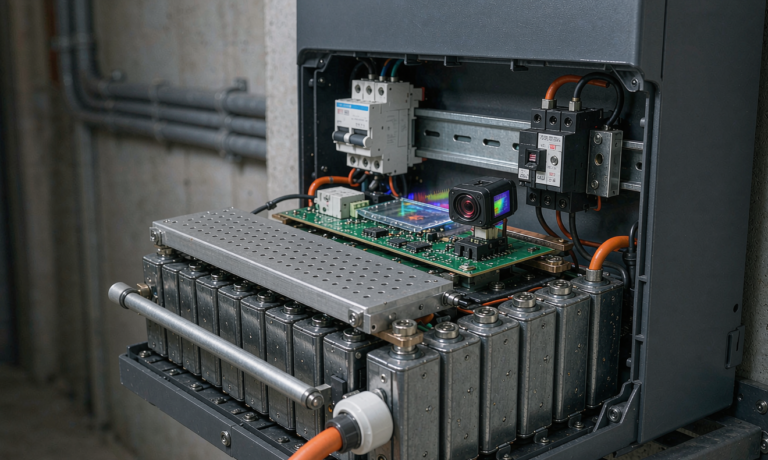
Maintenance on a farm is different from a climate-controlled home. I tell owners to do a monthly visual and a quarterly torque check on terminals, because vibration from equipment loosens connections. Keep the cabinet above the floor on a stand to avoid standing water, and confirm the battery management system reports temperature and state-of-health to a dashboard someone actually watches. A home energy storage system that reports nothing is a liability; one that pages you at 15% in a cold snap is an asset.
Frequently Asked Questions
How many kWh of home energy storage do I need for a small farm?
For a small mixed farm using roughly 40 kWh per day, plan about 80–95 kWh of usable capacity for two days of autonomy without solar or generator support. If a generator is part of the plan, you can drop to one day plus a buffer, around 45–55 kWh, and let the genset cover extended outages.
Can a home battery backup run a well pump or irrigation motor?
Yes, if the inverter is sized for motor surge. A 1 HP pump may need 2 kW or more at start even though it runs near 0.75 kW. Specify an inverter with at least 2x continuous surge rating and confirm locked-rotor amps with the pump nameplate before ordering.
Is residential battery storage safe inside a dusty barn?
It can be, but only in a properly rated enclosure. I require a minimum IP65 cabinet with sealed cable glands, mounted off the floor in a ventilated space away from feed and fuel. Pair that with UL 9540 and NFPA 855 compliance and the risk is well managed.
Will my home energy storage system qualify for rural grid interconnection?
In most regions yes, provided the inverter carries UL 1741 and meets IEEE 1547-2018, and the installer follows NEC Articles 706 and 710. Your utility will want the interconnection paperwork and a labeled equipment list, so keep the certificates on file from day one.
Build It Right the First Time
Rural and farm properties reward good engineering and punish shortcuts. Size for real motor surges, choose LFP in an IP65 enclosure, certify the inverter to UL 1741 and IEEE 1547, and plan your backup mode before the first outage. If you are specifying a home energy storage system for a working farm, bring me the load list and the motor nameplates and we will design a bank that earns its place in the barn.