Lithium Battery for Cordless Pressure Washers
When I started designing lithium packs for outdoor cleaning tools back in 2014, the biggest misconception among buyers was that any 18V drill battery would do. It will not. A cordless pressure washer pulls a very different load profile from a drill or a leaf blower, and the lithium battery that survives one will cook in the other. Over the last decade I have built packs for more than thirty OEM cleaning-tool programs, and the lessons are consistent enough that I want to lay them out plainly. A cordless pressure washer battery must deliver high continuous current, tolerate water exposure, and survive the sharp motor-stall spikes that happen every time a nozzle clogs.
How a Cordless Pressure Washer Draws Power
The motor in a cordless pressure washer is almost always a brushless DC unit coupled to a small axial or triplex pump. Rated pressure typically lands between 100 and 2000 PSI, and flow between 0.5 and 1.5 gallons per minute. Those two numbers decide the electrical demand. A 1800 PSI unit at 1.2 GPM needs roughly 1000 to 1400 watts at the pump shaft, and after motor and controller losses you are pulling 1200 to 1700 watts from the pack.
What makes this hard is not the peak but the shape. A pressure washer runs at near-constant high load for the whole cleaning session, unlike a drill that pulses. On my test bench a 40V 5Ah pack feeding a 1500-watt washer holds 30 to 35 amps continuous for twenty minutes straight. Then the nozzle catches grit. The pump stalls, current spikes to 60 or 80 amps for a few hundred milliseconds, and the battery management system must ride through it without tripping. That stall event is the single most common cause of premature pack failure I see in warranty returns.
The rated PSI and GPM also set the duty cycle. A 2000 PSI unit blasts grime fast but drains the pack in minutes, while a 1000 PSI unit at lower flow stretches runtime but struggles on baked-on mud. In my field logs, homeowners cleaning a car or patio run the trigger maybe 50 percent of the time, which roughly doubles effective pack life per session compared with continuous professional use. That difference is why I always ask a customer how they will actually use the tool before I settle the pack size.
Choosing the Right Cell Chemistry
For a handheld cordless pressure washer battery, I almost always start with NMC 18650 or 21700 cells. They give 180 to 220 watt-hours per kilogram, which keeps a 40V 4Ah pack under 900 grams so the tool stays balanced in one hand. When the tool is a wheeled or backpack unit where weight is less critical, I switch to LFP. LFP trades energy density for 2000 to 4000 cycles and far better abuse tolerance, which matters for rental fleets and professional cleaners who leave packs in hot trucks.
The chemistry choice also drives the discharge window. NMC likes to stay between 20 and 80 percent state of charge for longest life, while an LFP cordless pressure washer battery can comfortably use 10 to 90 percent. For a tool that runs wide open for an hour, that extra usable band is the difference between finishing a deck and stopping halfway through the job.
Battery Pack Architecture and Voltage Platforms
Most consumer cordless pressure washers sit on 18V or 20V platforms, which is a 5-series lithium-ion string at 21 volts nominal. A typical pack is 4 to 6 ampere-hours, or about 80 to 130 watt-hours. Prosumer and commercial units move to 40V, 60V, or 80V platforms built from 10, 15, or 20 series cells, delivering 160 to 400 watt-hours.
When I spec a custom battery solution for a manufacturer, I size by runtime first. A 1500-watt washer on a 160 watt-hour pack runs about six to eight minutes per charge at full load, so a realistic cleaning job needs two or three packs or a fast charger on rotation. Pushing voltage up to 60V cuts the current for the same power almost in half, which reduces I2R heating in the cells and the harness. That is why every commercial cordless pressure washer battery I design now starts at 40V or higher.
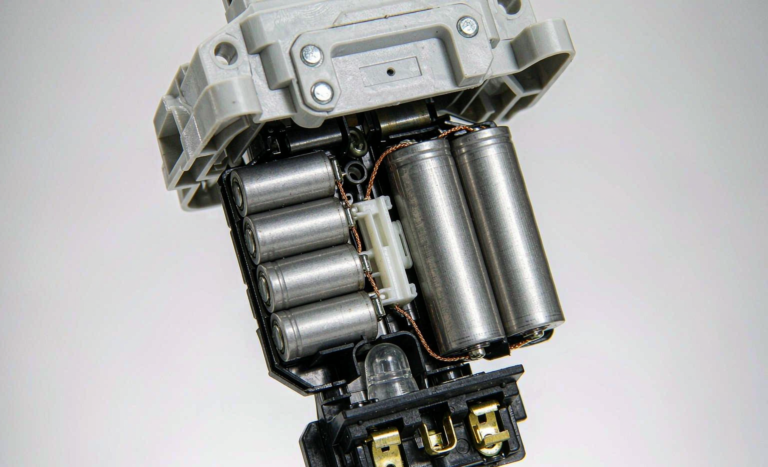
Inside the pack the series-parallel layout is a trade between capacity and current. A 10-series 2-parallel 21700 block gives 40V and about 4Ah; moving to 3-parallel lifts capacity but widens the pack and raises the stall current each parallel group must share. I grade cells to within 20 millivolts and 30 milliohms before welding so the parallel groups age evenly, because one weak cell in a group caps the whole pack. The pack communication, whether SMBus, HDQ, or a vendor proprietary line, has to report state of charge and temperature to the tool so the motor controller can taper output as the pack nears empty.
Protecting the Pack from Water and Vibration
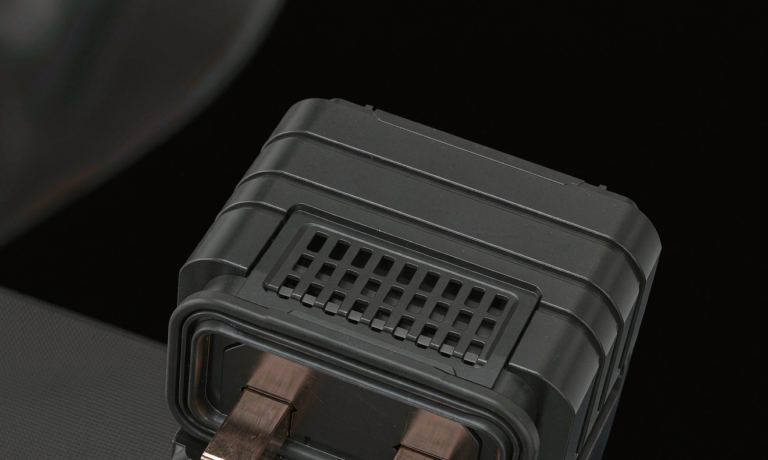
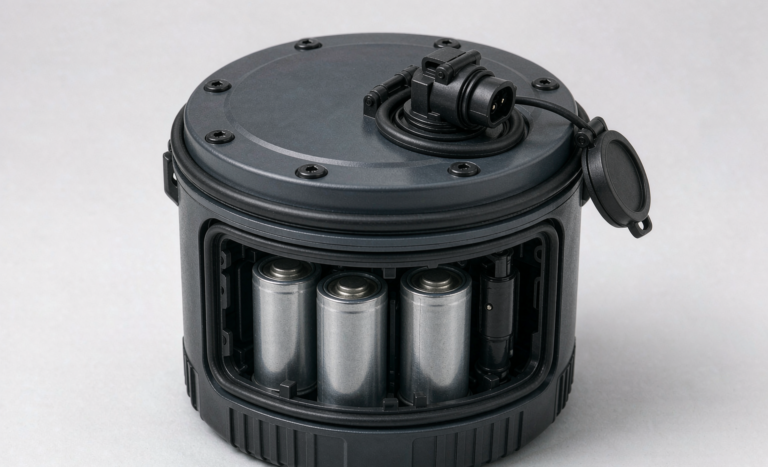
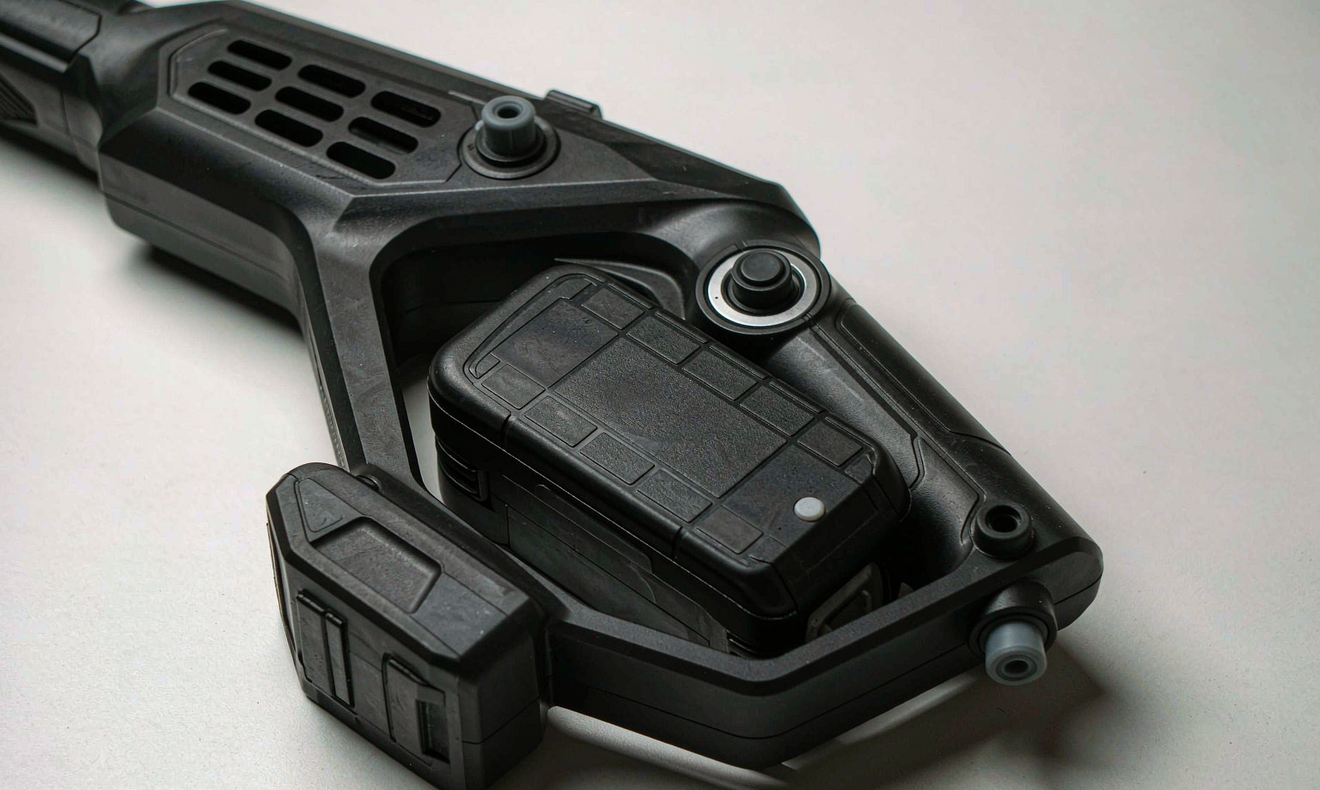
A lithium battery in a pressure washer lives in a hostile place. Spray gets inside the handle, the pump pulses several hertz, and the tool gets dropped on concrete. I specify a minimum of IPX4 for the pack enclosure, with a pressure-balance membrane so the case can breathe without letting water in as temperature swings. The PCB gets conformal coating, and every connector is sealed or potted.
Vibration is the quiet killer. Pump pulsation loosens spot welds over a season of use. I address it with a snug cell cradle, silicone or polyurethane potting around the bus bars, and strain-relieved leads instead of rigid spot welds at the terminal. After a pack passes our drop test of 1.5 meters onto six faces, we re-measure internal resistance and pulse current to confirm nothing shifted.
Smart BMS and Safety Limits
The battery management system is where a cordless pressure washer battery earns its keep. Continuous current rating must sit at least 1.5 times the running load, with a fast over-current cutoff under 200 milliseconds for stall events. I add two independent temperature sensors, one on the cells and one at the connector, with a soft derate at 45 degrees Celsius and a hard cutoff at 60.
Cell balancing and a fuel gauge round out the design. Most of our packs talk over SMBus or HDQ so the tool can show remaining runtime, which stops users from deep-discharging a pack to zero on a job site. Good coulomb counting keeps the gauge within 5 percent across the first 300 cycles, and I tune the empty-voltage knee separately for NMC and LFP because their discharge curves flatten at different points. Every pack we ship meets UN38.3 and IEC 62133, and for household cleaning tools we also validate against IEC 62841 and UL 2595 so the product clears certification in North America and Europe.
Charging, Cold Weather, and Transport Rules
Charging a cordless pressure washer battery looks simple but has traps. A 0.5C charge refills a 160 watt-hour pack in about two hours; a 2C charger does it in thirty minutes but heats the cells. I recommend 0.3 to 0.5C for longest pack life and reserve fast charging for depot rotations.
Cold is the other trap. Below 0 degrees Celsius the lithium plating risk climbs, so the battery management system blocks charge until the pack warms or engages a self-heating film. I have watched otherwise good packs die in one winter because a user charged them in an unheated garage at minus 10 degrees Celsius.
Transport follows the same rules as every lithium battery. Packs at or below 100 watt-hours move as carry-on under FAA and EASA rules without paperwork; between 100 and 160 watt-hours need carrier approval; above that they ship as dangerous goods. We label every custom battery solution accordingly so our customers never get caught at a dock.
Frequently Asked Questions
What size lithium battery do I need for a cordless pressure washer?
For a typical 1500-watt 40V unit, a 4 to 5 ampere-hour pack around 160 to 200 watt-hours gives six to ten minutes of full-load runtime. Most users keep two or three packs and rotate them with a fast charger to cover a full cleaning session.
Can I use my drill battery in a cordless pressure washer?
Only if the tool and battery share the same voltage platform and communication protocol. A pressure washer pulls far higher continuous current than a drill, so an undersized pack will overheat or trip its protector even if the connector physically fits.
Is NMC or LFP better for a cordless pressure washer battery?
NMC wins for lightweight handheld tools because of its higher energy density. LFP wins for heavy-use commercial or rental units because it delivers 2000 to 4000 cycles and tolerates abuse far better than NMC.
How do I charge a lithium battery in cold weather?
Do not charge below 0 degrees Celsius. A good battery management system blocks charge until the pack warms, or uses a self-heating film. Charging a cold pack is the fastest way to cause permanent lithium plating damage.
Are cordless pressure washer batteries safe to fly with?
Packs at or under 100 watt-hours are allowed as carry-on under FAA and EASA rules. Packs between 100 and 160 watt-hours need carrier approval, and larger packs ship as dangerous goods with proper declaration.
How long does a cordless pressure washer battery last?
An NMC pack rated for 500 to 800 cycles gives one to three years of regular home use. An LFP cordless pressure washer battery rated for 2000 to 4000 cycles can last five years or more in a commercial fleet.
Further Reading
References