Battery Solution for Mining Drills and Roof Bolters
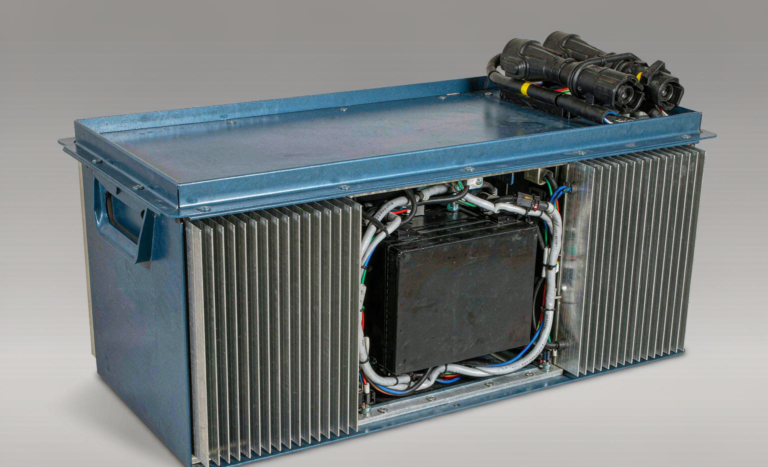
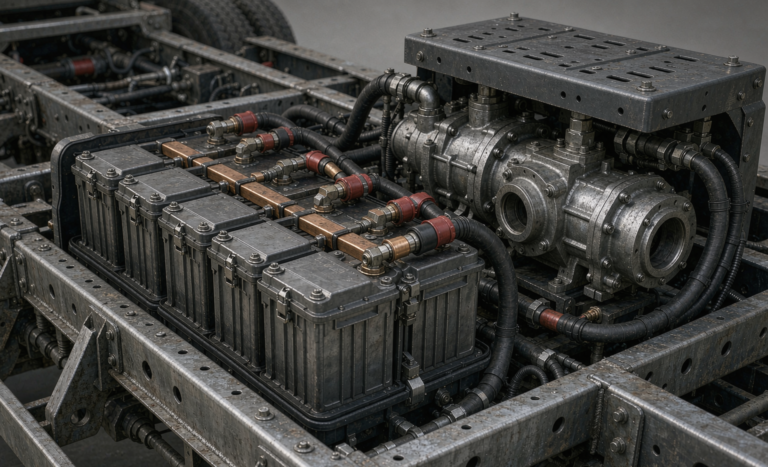
When I first walked a development heading on a hard-rock project, the diesel bolter at the face was pumping exhaust straight into the ventilation stream and the crew was breathing it for the whole cycle. That single visit is why I keep pushing clients toward a battery solution for development drilling and ground support. A mining drill battery solution is not just a cleaner power source. It is a different way to think about ventilation, shift energy and crew safety underground. In this article I will walk through the load profiles, sizing logic, voltage choices and certification path I use when specifying these packs for roof bolters, drifters and jumbo development rigs.
Why underground development needs a purpose-built battery solution
The first reason is air. On most underground mines, ventilation is the single largest electrical load, often 30 to 50 percent of total site energy. Diesel face equipment turns that ventilation requirement into a hard minimum because you must dilute carbon monoxide, nitrogen oxides and diesel particulate to safe limits. Swap the diesel bolter or drifter for a lithium battery pack and that exhaust load disappears. You still ventilate for humans, but you no longer ventilate to clear machine fumes, and in many drives that cuts the required airflow by a meaningful margin.
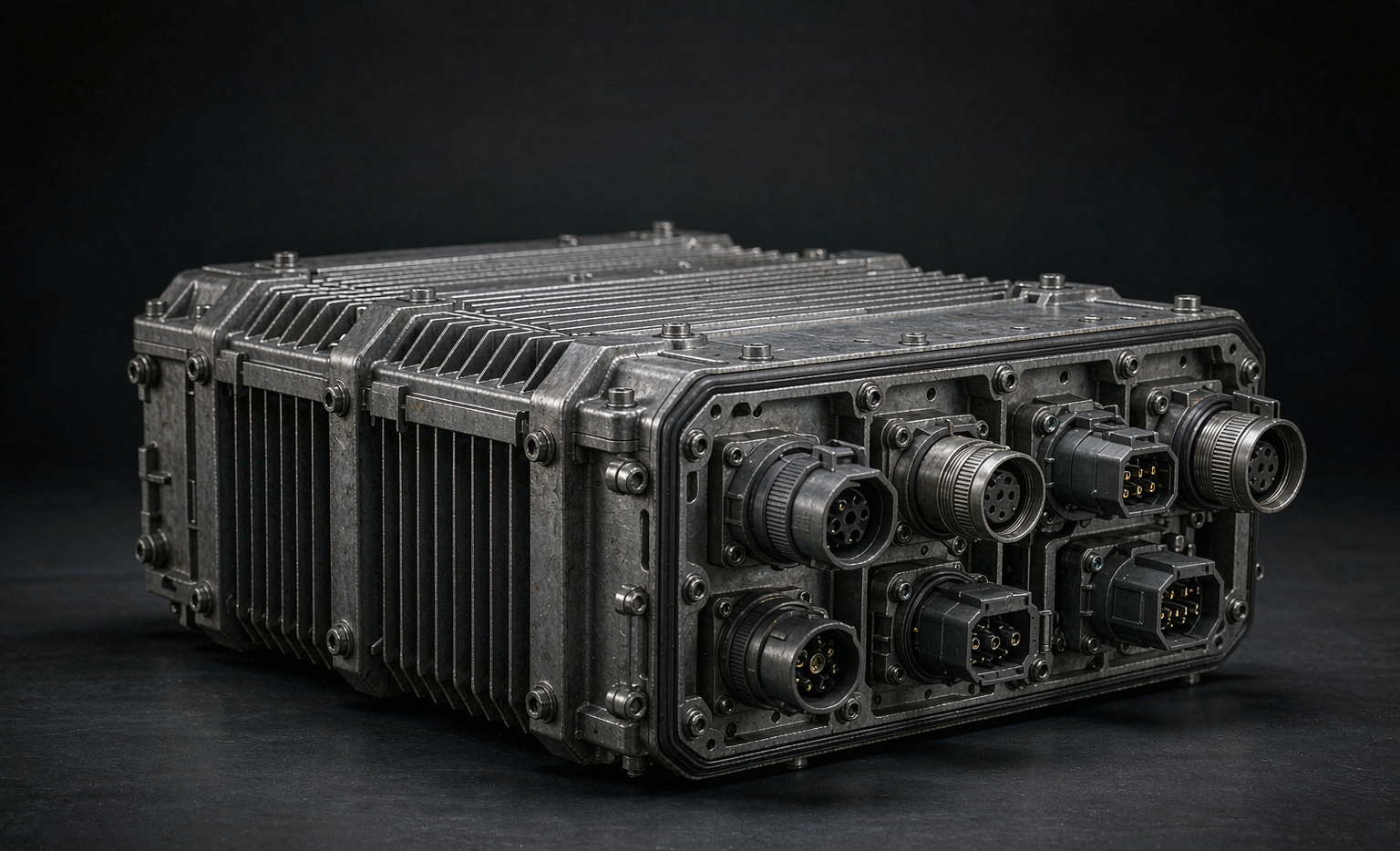
The second reason is the duty environment. A development heading is hot, dusty, wet and often gassy. A generic industrial battery pack will not survive there. You need a sealed enclosure, a thermal path that works at 35 to 40 degrees Celsius ambient, and in coal or methane-prone stone, a certified hazardous-area design. That is where a custom battery solution earns its cost: it is engineered for the heading, not for a warehouse floor.
Load profile of rock drills and roof bolters
Both machines are hydraulic at the business end. The battery pack runs a power unit that drives rotation, thrust and percussion for the drill steel, and rotation plus resin injection for the bolter. A single-boom roof bolter draws roughly 11 to 30 kW from the pack, with torque peaks during bolt tightening. A single drifter on a development rig is similar. A two or three boom jumbo development rig climbs to 45 to 110 kW because every boom runs its own hydraulic pump.
The duty is intermittent, not steady. Drilling a 3 to 4 meter bolt hole takes about 30 to 60 seconds, then the steel retracts, the operator indexes, and the resin and washer go in. A full bolting cycle runs two to four minutes. Across a shift, utilization sits around 30 to 60 percent, which means the pack sees bursty current with quiet gaps between holes. I size for the peak hydraulic demand, not the average, and I let the battery solution absorb the gaps that would stall a diesel compressor.
Sizing capacity for shift cycles and intermittent duty
Energy per shift is the product of duty factor and peak draw. A single-boom bolter burning 15 to 25 kW at 40 percent utilization over an eight hour shift lands near 8 to 20 kWh of usable energy. A development jumbo at 60 to 90 kW peak and 45 percent utilization needs 40 to 90 kWh per shift. I design to a 10 to 90 percent state-of-charge window and add a 15 percent margin for aging, cold starts and the occasional long round, so a quoted 60 kWh pack carries about 75 to 80 kWh nameplate.
Opportunity charging changes the math. If the crew can plug in during a meal break or a tram between drives, a smaller pack covers the shift. I have specified 30 kWh bolter packs that top up at every break and never see a full discharge. The mining drill battery solution should match the mine’s charging culture, not a textbook curve.
Voltage platform and cable losses in confined headings
Cable length underground is the enemy of efficiency. A long trailing cable from a low-voltage pack to a boom wastes energy as I squared R losses, and that heat shows up as voltage sag at the pump motor. For light bolters I use a 96 volt platform, about 28 series lithium cells at 3.7 volts nominal, which keeps current reasonable for 15 to 30 kW. For multi-boom jumbos I move to a 600 to 800 volt bus because at 700 volts a 90 kW draw is only about 130 amps, and the same power at 96 volts would be roughly 940 amps with brutal cable loss.
The trade is isolation and component rating. Higher voltage needs better connector sealing and creepage design, but in a dry, sealed enclosure it is manageable and the efficiency gain in a long drive pays for itself every shift. I treat the voltage choice as a cable-budget decision first and an architecture decision second.
Thermal management and hazardous-area certification
Deep headings run warm. I have measured pack enclosures at 38 degrees Celsius ambient with no air movement, so the cooling path must hold cell temperature inside a safe band without pulling mine air through the pack. For most builds I use liquid cooling with a sealed plate and a dielectric or glycol loop, holding pack-to-pack variation under 5 degrees Celsius. The enclosure is rated IP65 or IP67 against water ingress from drilling and ground support spray.
In coal or methane-prone drives the pack must be certified for Group I hazardous areas under IEC 60079, commonly built to ATEX or IECEx as flameproof, Ex d, or increased safety, Ex eb. That means the enclosure is a pressure-rated chamber, every penetration is certified, and surface temperature stays below the ignition class. In the United States the same equipment answers to MSHA expectations. A mining drill battery solution that skips this step simply will not get underground.
Chemistry choice: NMC versus LFP underground
For heavy development packs I reach for LFP almost every time. Lithium iron phosphate gives 2000 to 4000 cycles, shrugs off abuse, and fails gently rather than violently, which matters when the pack lives two meters from a miner. Its lower energy density is a fair price for the safety margin and the cycle life in shift-after-shift duty.
NMC still earns a place in handheld or light utility units where every kilogram counts, because its 180 to 220 Wh per kg beats LFP on mass. But the moment the pack is fixed to a bolter or a jumbo, weight stops being the constraint and LFP wins on life and tolerance. I tell clients to choose the chemistry by where the pack sits and how hard it is worked, not by the headline energy number.
Compliance, validation and field lessons
The certification stack is non-negotiable. Cells answer to UN38.3 for transport and IEC 62133 for safety. The industrial pack itself answers to IEC 62619 for stationary and industrial use, UL 2580 for traction batteries, and ECE R100 for the vehicle interface where the rig is self-propelled. Ingress is confirmed to IEC 60529. None of these replace the mine’s own hazardous-area rule, but together they form the paper trail an inspector will ask for.
On the controls side I specify a battery management system with cell-level voltage and temperature sensing, passive or active balancing, and current limiting set to about 1.5 times continuous rating with a sub-200 millisecond fault response. Communication rides CAN or J1939 so the rig controller sees state-of-charge and can shed load before a fault. My field lesson is simple: validate the pack on a single boom for two weeks before you commit a three-boom jumbo, because the duty surprises always show up at the face, not on the bench.
Frequently Asked Questions
How much energy does a single-boom roof bolter consume per shift?
A single-boom bolter drawing 11 to 30 kW at 30 to 60 percent utilization over an eight hour shift typically needs 8 to 20 kWh of usable energy, so I quote a 20 to 30 kWh nameplate pack to hold a 10 to 90 percent window with margin.
Can a mining drill battery solution run in gassy or methane-prone headings?
Yes, but only with a certified hazardous-area enclosure built to IEC 60079 and marked Ex d or Ex eb under ATEX or IECEx, with surface temperature held below the ignition class and every penetration sealed.
What voltage platform is typical for underground drill rigs?
Light bolters use a 96 volt platform around 28 series cells, while multi-boom jumbos run a 600 to 800 volt bus so a 90 kW draw stays near 130 amps and cable losses stay low over long trailing cables.
How long does a battery pack last in mining duty?
With LFP chemistry and a 10 to 90 percent window, a well-cooled pack reaches 2000 to 4000 cycles, which in single-shift development duty translates to roughly three to six years before capacity falls to the replacement threshold.
How is a mining battery pack charged between shifts?
I use depot charging at 0.3 to 0.5 C overnight plus opportunity charging at 0.5 to 1 C during meal breaks, and in cold surface storage I pre-warm the pack above 0 degrees Celsius before charging to avoid lithium plating.
Which standards apply to industrial battery packs in mining?
Cells meet UN38.3 and IEC 62133, the pack meets IEC 62619 and UL 2580, vehicle interfaces meet ECE R100, ingress is verified to IEC 60529, and gassy drives add IEC 60079 certification on top of the mine’s own rules.
Further Reading
References