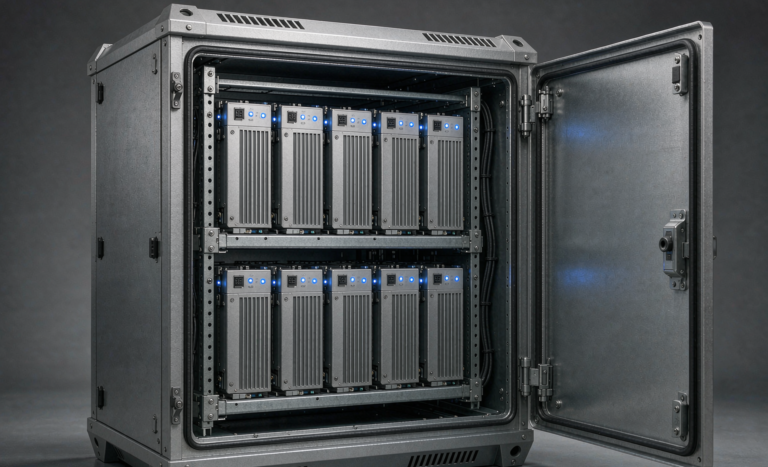
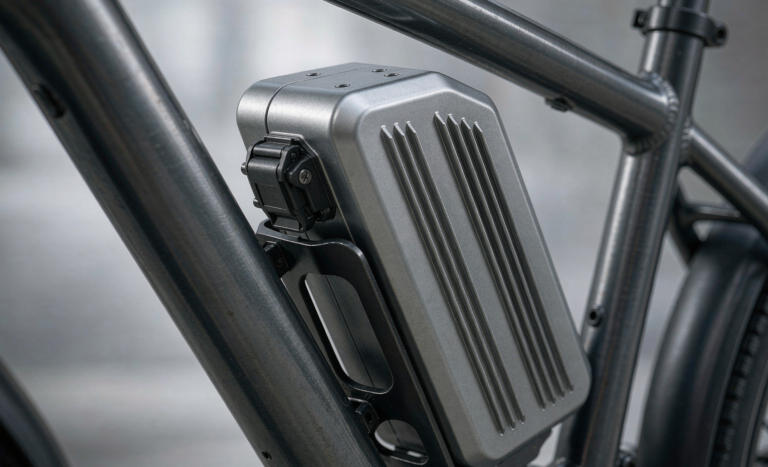
Lithium Battery for Medical Devices
When I started designing lithium battery packs for portable patient monitors fifteen years ago, my mentor opened our first design review with a line I have never forgotten: “In a medical device, the battery is not a component — it is part of the treatment.” A dropped call on a consumer phone is an inconvenience. A dropped cell in an infusion pump or a ventilator is a patient-safety event. That single sentence still frames how I approach every medical program at Horizon Power.
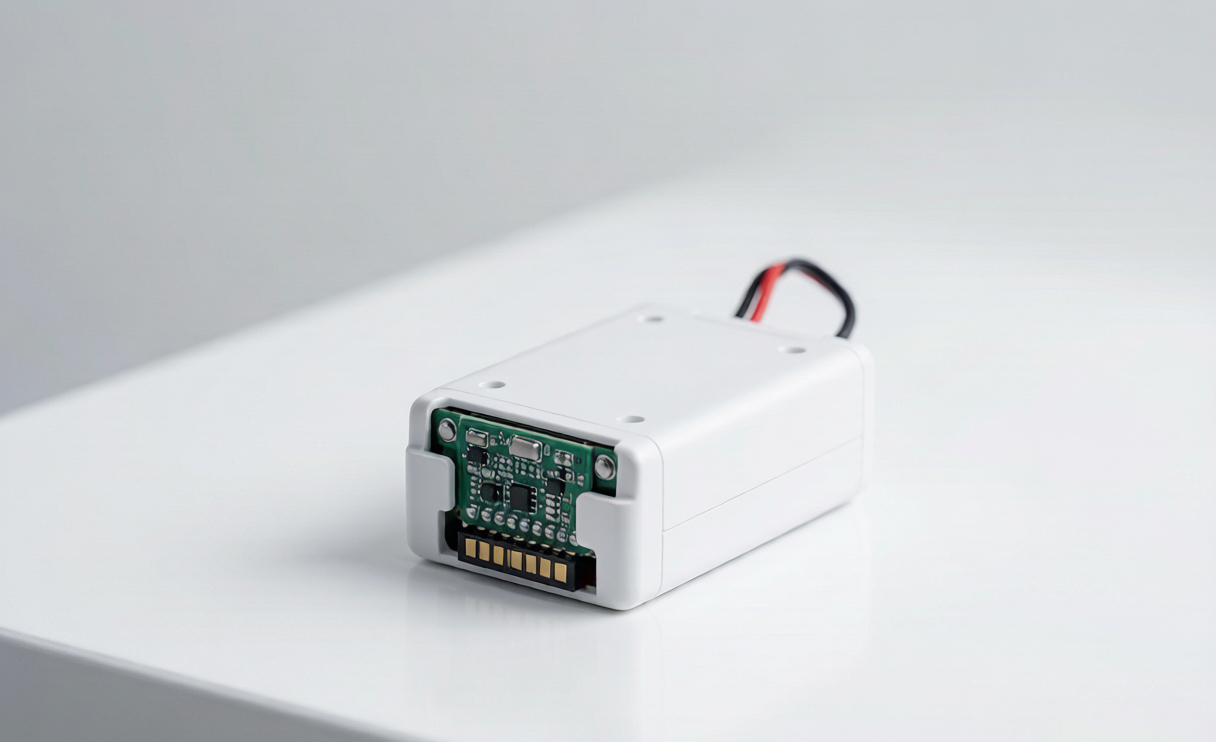
This guide walks through the reliability requirements I specify for lithium battery systems that go inside or alongside medical devices — the standards, the chemistry trade-offs, the BMS architecture, and the validation work that turns a datasheet into a product a clinician can trust. Getting lithium battery medical devices reliability right is the first thing I qualify, not the last, because in this field the power source is part of the therapy.
Why Reliability Is Non-Negotiable in Medical Power
A medical lithium battery lives in a hostile corner of the reliability spectrum. It must perform on the first try, every time, often after months of shelf life, sometimes in an under-powered clinic with no backup and no technician on site. Unlike an e-bike pack that can limp home on a low cell, a defibrillator battery that fails at 2% state of charge during a code is a failure with consequences no engineer should accept.
From my field experience, the three failure modes that actually harm patients are: sudden capacity collapse from cell imbalance, thermal events during charging in uncontrolled environments, and connector fatigue that opens the circuit under repeated mating. Every requirement below is really a guardrail against one of those three. When a procurement team tells me “just give us the cheapest pack,” I show them the failure-tree analysis first — the cost of a single incident dwarfs any saving on the bill of materials.
The other quiet difference is duty profile. A consumer pack is cycled daily and recharged nightly. A medical lithium battery pack may sit idle for weeks, then be called on for a marathon shift. Calendar aging, not cycle aging, becomes the dominant wear mechanism, and that changes how we specify self-discharge, protection quiescent current, and storage SoC.
The Standards That Actually Govern Medical Lithium Cells
Buyers often ask me for “a certified lithium battery.” Certification is not one stamp — it is a stack, and for medical you need most of it. The baseline transport and cell safety standards we build to are UN38.3 (the lithium transport test regime: altitude simulation, thermal, vibration, shock, external short, impact, overcharge, forced discharge) and IEC 62133, which covers secondary lithium cells and batteries for safe operation including internal short-circuit testing. A medical pack that cannot show UN38.3 test reports should never leave the factory.
On top of those, medical electrical equipment falls under IEC 60601-1, and the quality system behind the manufacturer should be ISO 13485. For the North American market, UL 2054 and UL 1642 still dominate procurement checklists, and biocompatibility of any surface a patient might touch is governed by ISO 10993. I also remind OEMs that any medical device flown to a clinic abroad rides under the same air-transport oversight as every other lithium shipment — the aviation authorities (FAA in the US, EASA in Europe) enforce the UN38.3-based rules through their carriers, so your shipping dossier matters as much as your cell choice.
When we deliver a custom battery solution for a medical OEM, the dossier we hand over includes cell-level IEC 62133 reports, pack-level UN38.3, a 60601-1 risk management file, and the bill of materials with full traceability. Skip any one and a notified body will stop your submission cold. In my experience the dossier is what separates a component supplier from a real medical partner.
Cell Chemistry: LFP vs NCM for Patient-Critical Gear
The chemistry decision is where reliability and cost first collide. Lithium Iron Phosphate (LFP) is my default recommendation for stationary or semi-stationary medical equipment — infusion pumps, telemetry carts, dialysis chairs, mobile ultrasound towers. Its thermal stability is intrinsically higher because the phosphate cathode simply does not release oxygen the way layered oxides do, its cycle life often exceeds 2,000 cycles at 80% depth of discharge, and it tolerates abuse far better than nickel-cobalt chemistries. For a lithium battery pack that sits in a ward for five years, LFP is the safe, boring, correct choice.
NCM (nickel-cobalt-manganese) earns its place only when energy density is the binding constraint — a wearable monitor that must disappear under a gown, or a handheld scanner where every gram counts against clinician fatigue. There the higher specific energy of NCM wins, but you pay with a tighter thermal envelope and a BMS that has to work harder. I have shipped both, and the rule I give clients is simple: if you can afford the volume, choose LFP; if you cannot, choose NCM and pay for the protection.
There is a third path emerging for the highest-reliability tier: semi-solid and solid-state cells promise lower flammable-content electrolytes. I am watching the field data closely, but for a product you must certify today, LFP and NCM remain the only chemistries with the mature supply chain and the test history a medical file demands.
BMS Architecture: The Real Reliability Layer
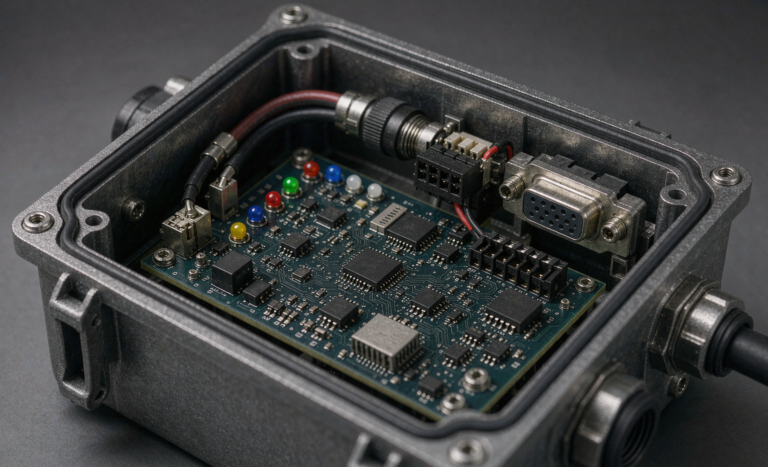
A cell is only as trustworthy as the BMS watching it. In medical designs I treat the BMS solution as the primary reliability layer, not an accessory. At minimum we specify: per-cell voltage monitoring with active or passive balancing, a redundant over-temperature cutoff, coulomb-counting SoC with a hardware-independent watchdog, and a sealed communication channel (SMBus or I2C) so the host device always knows the pack’s true state rather than guessing from voltage.
One detail I insist on for patient-critical gear: a secondary, hardware-only protection path that opens the contactor on over-current even if the main MCU locks up. I have seen firmware hang exactly once in the field, and the hardware cutoff is what kept the pack safe. For any lithium-ion battery going into a life-support-adjacent product, a single point of firmware failure is unacceptable, so we architect two independent trip paths.
We also log. A medical lithium battery pack that records its own cycle history, peak temperature, and fault events gives the clinician and the service team a forensic trail. When a pack comes back for analysis, that log tells us in minutes what used to take a teardown — and it feeds the continuous reliability improvement loop that separates a mature program from a lucky one.
Sizing and Validation: From Datasheet to Clinical Use
Reliability starts with honest sizing. I size a medical lithium battery pack to the 99th-percentile load, not the average — a monitor that draws 8 W on the bench can spike to 22 W during alarm and recording. Build the pack to the spike plus a margin, then validate against it. I have watched teams size to the mean and watch their first field units die two hours before shift end.
Our validation flow runs the pack through temperature cycling (−20 °C to +60 °C), 500 partial cycles on a simulated duty profile, drop and vibration to IEC 60068, and a forced-fault battery of BMS tests that includes deliberately disconnecting cells and forcing over-temperature. Only after the pack passes do we release it. This is slower than shipping a “good enough” pack, but for lithium battery medical devices reliability is the product, not a feature.
The last step is the clinical pilot: a small batch into real wards for ninety days, with clinicians logging anything odd. No lab can fully reproduce a nurse’s pocket, a crash cart, and a power outage in the same afternoon. That pilot has caught two issues in my career that no bench test would have — both minor, both worth finding before volume production.
Transport, Storage and End-of-Life for Medical Packs
Medical batteries travel — to distributors, to clinics, sometimes back to the factory for service. Every pack leaves with UN38.3 documentation and compliant lithium labeling, and we brief OEMs on the FAA/EASA air-transport limits so their logistics teams never get a shipment turned away at a cargo gate. A held shipment is not just a delay; for a recalled or serviced device it can be a clinical gap.
Storage matters too. A lithium battery pack stored at 100% charge in a hot storeroom ages fast; we recommend 30–60% state of charge for shelf stock and a six-month rotation. At end of life, medical packs carry the same recycling duties as any lithium product, and we document a battery passport so the recycler knows exactly what chemistry and what hazard they are handling. That passport also helps the OEM prove its environmental compliance to procurement.
Real-World Failure Analysis: What Returns Taught Us
The most useful reliability lessons came from packs that came back. In one return batch from a tropical clinic, we found connectors corroded after the housing seal was defeated by a repeated drop — the lithium-ion battery itself was fine, the enclosure was not. We moved to a gasketed, clip-free seal and have not seen that failure since. In another, a pack showed sudden capacity loss traced to one cell that had been charged at 0 °C during an unheated winter shipment; we added a charge-temperature interlock to the BMS solution and the problem disappeared.
Each return feeds a living failure-mode library. When a new medical OEM asks us for a custom battery solution, we open that library first — it is cheaper to design out a known failure than to discover it in a ward. That is the unglamorous core of medical reliability: not heroics, but a long memory.
Frequently Asked Questions
What certification does a lithium battery for medical devices need?
At minimum, UN38.3 for transport and IEC 62133 for cell safety. For the complete device, IEC 60601-1 applies to the system, ISO 13485 to the manufacturer’s quality system, and UL 2054/UL 1642 for the North American market. Biocompatibility of patient-contact surfaces follows ISO 10993.
Is LFP or NCM better for medical devices?
For most stationary ward equipment, LFP wins on safety and cycle life. NCM is justified only when energy density or weight is the binding constraint, such as wearables or handheld imaging, where you then invest more in the BMS solution to manage the tighter thermal window.
How do you validate battery reliability before clinical use?
We size to the 99th-percentile load, then run temperature cycling, 500 simulated duty cycles, vibration and drop tests, and a forced-fault BMS test battery. A custom battery solution for medical use does not ship until all of those pass, followed by a ninety-day clinical pilot.
Can a custom battery solution reduce time-to-market for a medical OEM?
Yes. A partner who already holds the cell-level IEC 62133 and UN38.3 dossiers and runs ISO 13485 can hand you a validated lithium battery pack and its compliance file together, collapsing months of in-house qualification into a component purchase.
How should medical batteries be transported and stored?
Ship with UN38.3 documentation and proper lithium labeling, respecting the FAA/EASA air-transport limits. Store at 30–60% state of charge in a cool, dry place on a six-month rotation to protect long-term health and minimize calendar aging.
What is a realistic service life for a medical lithium battery pack?
An LFP lithium-ion battery pack in mild conditions typically delivers 2,000–3,000 cycles or about five years of ward service before it crosses the 80% capacity threshold that triggers replacement under most service contracts.