Lithium Battery for Mining and Heavy Equipment: Why Electrified Haul Fleets Are Switching
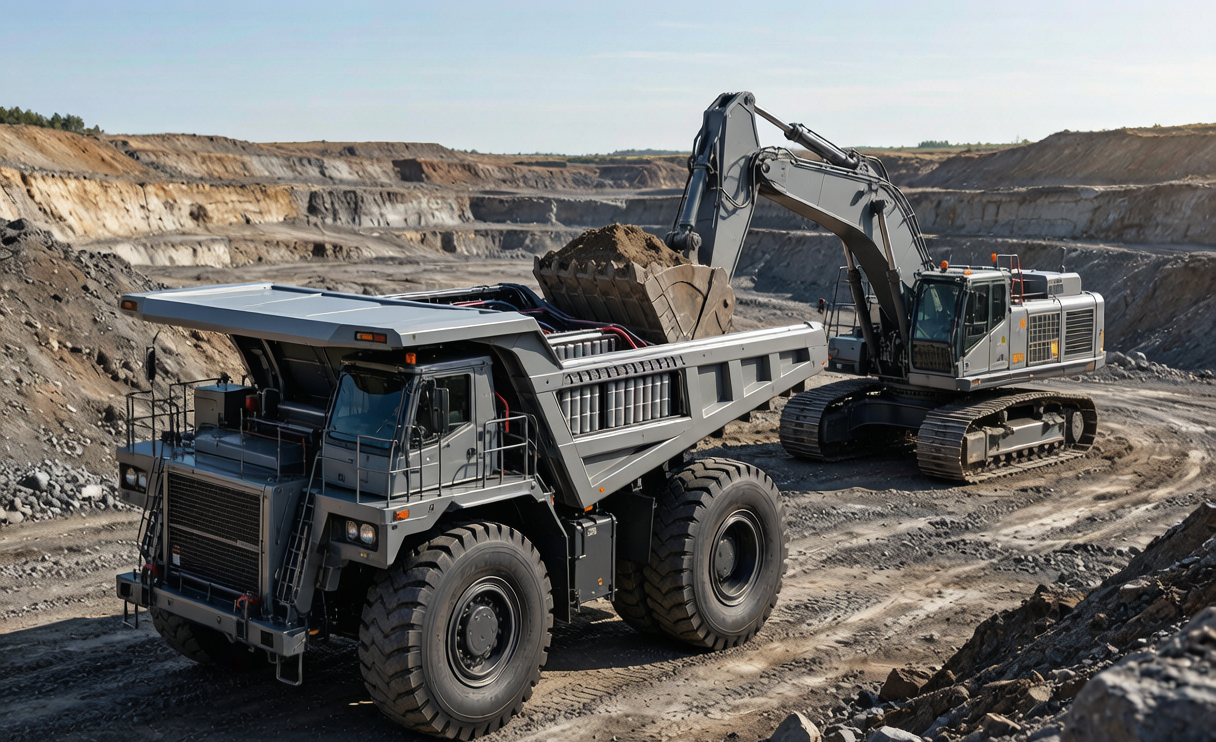
Over the last three years I have spent more time than I ever expected standing at the edge of open-pit haul roads and ducking under low ceilings in underground drifts, watching lithium battery systems replace diesel drivetrains on equipment that was never designed to be quiet. The shift is not a marketing story. As a senior lithium battery engineer I have been on the hook for pack sizing, cell selection, and certification paperwork for exactly this class of machine, and the physics is what drives the decision. A lithium battery for mining heavy equipment has to survive vibration that would shake a laptop apart, deliver full torque from a standstill under a 240-tonne load, and keep working at minus 30 degrees Celsius in a Chilean nitrate pit or 45 degrees Celsius in a WA iron ore operation. This article walks through how we actually engineer those packs, the standards we certify against, and the total-cost math that is convincing mine operators to electrify.
Why Mining Is the Hardest Real-World Test for Any Battery
Mining equipment is brutal on energy storage for four reasons that rarely stack up together anywhere else. First, the duty cycle is asymmetrical and extreme: a haul truck draws several megawatts during acceleration and grade climbing, then regenerates a meaningful fraction on the way back down loaded or empty. Second, the thermal envelope is wide and dirty. Third, the space for a battery pack is what is left over after the structural, hydraulic, and operator envelopes are carved out. Fourth, downtime is measured in lost tonnes per hour, so reliability targets are unforgiving.
When I spec a lithium-ion battery for this environment, I am not optimizing for energy density alone. I am optimizing for cycle life under partial-state-of-charge operation, for thermal headroom, and for serviceability in a remote camp where the nearest cell-swap facility is 1,800 km away. That changes almost every design decision.
What a Mining-Grade lithium battery pack Actually Needs
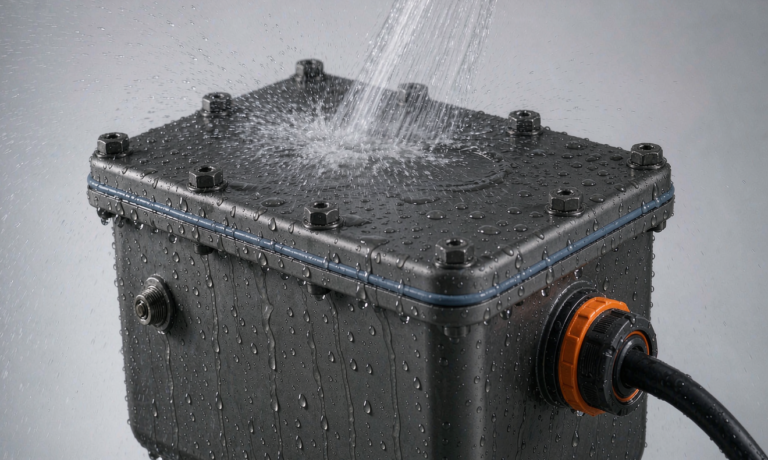
A passenger EV pack and a mining pack share chemistry but very little else. The mining pack lives in an IP67-rated enclosure with internal positive-pressure venting, a stainless steel or anodized aluminium frame, and mounting points rated for sustained 8 g random vibration. Inside, we typically use LFP (lithium iron phosphate) cells for their thermal stability and long cycle life, or NMC for applications where mass and volume are the binding constraint and the thermal management budget allows it.
The battery management system is where most of the real engineering lives. For heavy equipment I insist on a redundant topology: a primary BMS for balancing and protection, plus an independent supervisory controller that can isolate a string on a single faulty cell reading. We log every cycle to an on-board black box so that when a pack comes in for service we already know its history. This is the kind of custom battery solution work that generic off-the-shelf modules simply cannot deliver.
Energy Density vs. Duty Cycle: Sizing the Pack
The naive question is always “how many kilowatt-hours?” The useful question is “what is the deepest state of charge we can safely use, and how fast must we recharge during a shift change?” For a 90-tonne articulated dump truck on a 2.4 km haul loop, we commonly size a battery pack between 350 kWh and 700 kWh depending on grade and payload. We deliberately cap usable depth of discharge at 80 percent to protect cycle life, which is why the nameplate is always larger than the usable figure.
I have learned to resist the temptation to chase maximum energy density. A pack that runs cooler and lasts 4,000 cycles at 80 percent DoD beats a denser pack that degrades to 70 percent capacity after 1,500 cycles. In a mining fleet the replacement cost and the downtime dominate the economics.
Thermal Management Underground and in the Pit
Heat is the enemy, and mining gives you both ends of the spectrum. In underground operations the ambient is cool but airflow is restricted, so we lean on liquid cooling plates bonded directly to the cell modules with thermal interface material rated to 3 W/mK or better. In surface pits the challenge flips to dust ingress and radiant heat, so we add filtered forced-air scavenging on top of the liquid loop.
A detail that surprised a colleague new to the sector: charging strategy matters as much as cooling. We schedule opportunity charging during loader cycles and breaks rather than one deep charge at end of shift, keeping cells in the comfortable 20 to 80 percent band where lithium-ion ages slowest. It is a behavioural change for the crew, but the pack life numbers make the case.
Safety Standards We Engineer Against
Nobody puts a lithium battery underground or next to a 200-tonne machine without a paper trail. The certifications I routinely prepare for mining and heavy-equipment packs include:
- UN38.3 – the transport test sequence (T.1 through T.8) covering altitude simulation, thermal, vibration, shock, external short circuit, impact, overcharge, and forced discharge. This is mandatory before a single cell ships to site.
- IEC 62619 – the industrial secondary-cell safety standard, with specific requirements for thermal runaway propagation resistance that we validate with a single-cell trigger test inside the full enclosure.
- UL 2580 – the electric-vehicle battery standard, increasingly referenced by OEMs for mobile mining equipment.
- IEC 63056 – safety requirements for large secondary lithium cells and batteries, relevant above 60 V systems.
- IP67 / IP6K9K ingress protection for dust and high-pressure washdown.
Thermal-runaway propagation testing is the one customers underestimate. We build a representative pack section, intentionally trigger one cell, and demonstrate that the enclosure contains the event for a defined window so the operator can reach a safe state. That test, more than any brochure, is what gets a fleet safety sign-off.
Total Cost of Ownership: Diesel vs. Lithium
The capital cost of a lithium battery system is higher on day one, and I will not pretend otherwise. The payback comes from three lines that operators care about: fuel, maintenance, and ventilation. A diesel haul truck burns roughly 30 to 50 litres per operating hour; removing that line is the single largest saving. Maintenance drops because there is no diesel engine, no exhaust aftertreatment, and far fewer rotating parts. In underground mines, cutting diesel also cuts the ventilation-air heating load, which is a genuine operating cost in cold-climate operations.
In the fleets I have supported, the crossover point lands between 18 and 36 months depending on utilisation and local energy price, after which the lithium battery keeps delivering at a fraction of the per-hour cost. Cycle life to 80 percent state-of-health around 3,500 to 5,000 cycles means most packs outlast the first ownership period of the machine.
Field Lessons From Real Deployments
A few things only show up in the field. Cold-start torque is fine, but operators initially over-discharge by riding the regen brake less aggressively than the system expects; a small firmware tweak to the energy-recovery curve recovered about 9 percent of daily range. Dust clogging charge-port contacts caused intermittent faults until we specified self-cleaning sealed connectors. And the biggest surprise was operator acceptance: crews preferred the low-noise, low-vibration cabin so strongly that retention improved, which mine managers had not put in the business case at all.
If you are planning electrification, my honest advice is to start with a single high-utilisation loop, instrument everything, and let the data set the fleet rollout pace. A well-executed custom battery solution on one truck teaches you more than a vendor deck ever will.
FAQ
Can a lithium battery really replace diesel on a 240-tonne haul truck?
Yes, but not with a single pack sized like a passenger car. Current pilot and production trucks use multi-hundred-kWh lithium-ion packs, often with overhead catenary or fast opportunity charging at load and dump points. The limiting factor is energy density versus mass budget, not the ability of the cells to deliver torque.
Which lithium chemistry is best for mining equipment?
LFP (lithium iron phosphate) is the default for most heavy and underground equipment because it is thermally stable, long-lived, and tolerant of partial-state-of-charge cycling. NMC is chosen when mass or volume is the hard constraint and the cooling budget supports it. The right call depends on the duty cycle, not on which chemistry is trending.
How do you keep a mining battery safe underground?
Through certified enclosure design (IP67), a redundant BMS, thermal-runaway propagation containment validated per IEC 62619, and ventilation-compatible installation. We also require remote monitoring so a developing fault is flagged before it becomes an event.
How long does a mining lithium battery last?
We design for 3,500 to 5,000 cycles to 80 percent state-of-health at 80 percent depth of discharge. In high-utilisation fleets that is typically four to eight years of service, after which the pack can be repurposed for stationary storage before recycling.
Is charging infrastructure a blocker?
It is the main logistical item, not the battery. We plan for opportunity charging at shift breaks and load points, which avoids a single megawatt-scale charge event and spreads the load across the site power system. A site energy study up front prevents nasty surprises.