Lithium Battery Performance for Solar Kits
As Karl Huang, Senior Lithium Battery Engineer at Horizon Power, I have spent the better part of a decade watching portable solar kits live or die on the performance of a single component: the lithium battery. A solar panel only does its job when the sun is shining or when a well-engineered storage pack can carry the load through the night. In my lab and in the field, I have validated hundreds of lithium battery performance solar kits configurations, and the pattern is always the same — the panel gets the attention, but the battery bank decides whether the kit is a reliable daily companion or a seasonal disappointment.
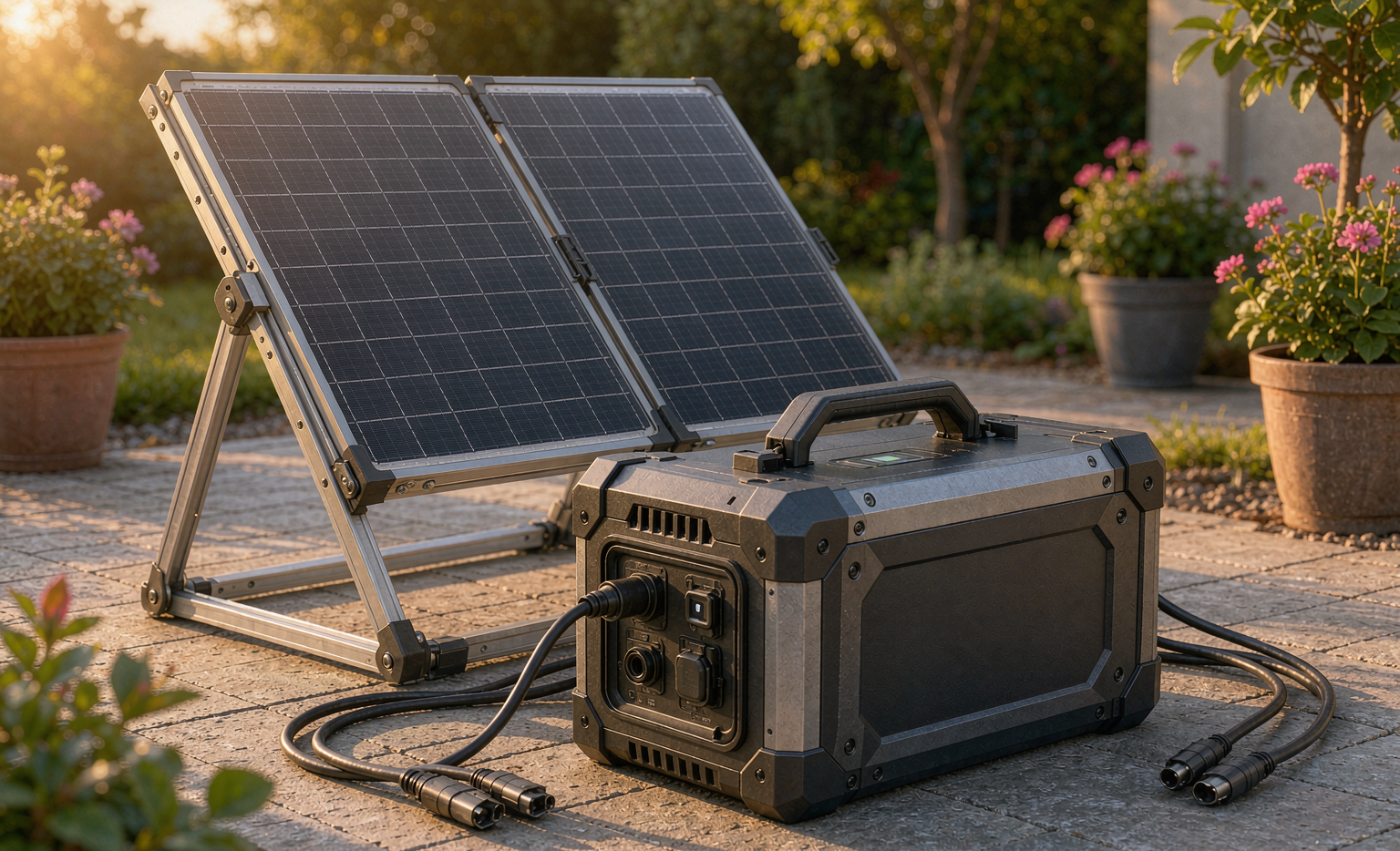
This article is the field-engineer’s view of what actually drives lithium battery performance solar kits — the metrics that matter, the chemistry trade-offs, the sizing math, and the charge-control details that separate a pack that quietly delivers 2,000 cycles from one that fails in its second season. I will keep the numbers honest and the recommendations grounded in standards our team certifies against: UN38.3, IEC 62133-2, IEC 62619, and UL 1973.
Why Solar Kits Punish Batteries Differently
Most lithium batteries are designed around a predictable duty cycle. A power-tool pack sees hard pulses; an e-bike pack sees daily commutes. A lithium battery pack inside a solar kit faces a fundamentally harder life, and the reason is simple: the charge source is intermittent and the depth of discharge is rarely controlled by the user.
In a typical off-grid solar kit, the battery is charged in uneven bursts as clouds pass, then drained in shallow, irregular sips overnight. That partial-state-of-charge (partial-SoC) cycling is the silent killer of lead-acid and of poorly managed lithium cells. A lithium ion battery handles partial-SoC far better than flooded chemistry, but only if the battery management system (BMS) and cell grading are engineered for it.
- Variable charge current. A 100 W panel may deliver 5 A at noon and 0.5 A under thin cloud — the pack must accept both without voltage runaway.
- Shallow, frequent discharges. LED lighting and a phone charger pull 2–10 A in short windows, stressing the top of the SoC curve where lithium ageing concentrates.
- Long idle at high SoC. A sunny weekend can fully charge a kit that is then left at 100% for days — a calendar-ageing condition that destroys cheap cells.
- Wide temperature swing. Garage, campsite, and rooftop installs see −10 °C to +50 °C, directly affecting usable capacity and charge safety.
The Performance Metrics That Actually Matter for Solar-Kit Packs
When a customer asks me to spec a lithium battery pack for a solar kit, I do not lead with amp-hours. I lead with the five metrics that predict real-world performance:
- Usable depth of discharge (DoD). LFP cells comfortably deliver 80–90% usable capacity versus 50% for lead-acid. For a 100 Ah nameplate, that is 80–90 Ah usable versus 50 Ah.
- Round-trip efficiency. A quality lithium ion battery bank returns 92–96% of the energy stored. Lead-acid returns 70–80%. Over a year of daily cycling, that gap is the difference between a kit that meets load and one that falls short every cloudy day.
- Peukert behavior at low rates. At the 0.05C–0.2C rates typical of solar kits, good lithium cells show almost no Peukert penalty — you get the capacity you paid for.
- Cycle life at partial-SoC. A pack cycled 20–80% daily will outlast one cycled 10–90% by a factor of 1.5–2×. I spec for 2,000+ cycles at 80% DoD for LFP.
- Self-discharge. Below 3% per month is the floor for a solar kit that may sit unused between trips. Our cells grade under 2% per month at 25 °C.
These are the numbers I print on every custom battery solution datasheet, because they are what the end user actually experiences when the sun goes down.
LFP vs NMC: Choosing the Right Lithium Chemistry
For solar kits, the chemistry debate is essentially settled in favor of lithium iron phosphate (LFP). As an engineer who has also validated high-rate cells for a drone battery program, I appreciate where nickel-manganese-cobalt (NMC) shines — energy density and pulse power — but those advantages are irrelevant for a stationary, slow-cycling solar bank.
- Thermal runaway onset. LFP begins to decompose near 270 °C versus ~210 °C for NMC. In a sealed enclosure that margin is the difference between a safe event and a fire.
- Cycle life. LFP delivers 2,000–6,000 cycles at 80% DoD; NMC typically delivers 500–1,500. For a solar kit expected to last five years, LFP wins decisively.
- Safety and transport. LFP’s stable cathode simplifies compliance with UN38.3 T.1–T.8 and IEC 62133-2, and it removes cobalt-supply risk from the bill of materials.
- Cost per cycle. Although LFP cells cost slightly more per watt-hour up front, their cycle life cuts cost-per-kWh-cycled to roughly one-third of NMC in this duty.
When a kit needs to be exceptionally light — a backpacking solar kit where every gram counts — I will occasionally recommend a low-rate NMC lithium ion battery, but I pair it with a more conservative BMS and a tighter operating window.
Sizing the Lithium Battery Pack for Real Solar Yield
Oversizing a lithium battery pack wastes money; undersizing kills the kit’s reputation. My sizing method starts from the load, not the panel.
- Sum daily watt-hours. LED strip 10 W × 4 h = 40 Wh, phone 15 Wh, router 20 Wh, small fridge 200 Wh. Total ≈ 275 Wh/day.
- Apply autonomy. For two days of cloud cover, multiply by 2 → 550 Wh.
- Account for losses. Inverter efficiency 90%, battery round-trip 93% → divide by 0.84 → ≈ 655 Wh needed at the pack.
- Convert to capacity. A 12.8 V LFP pack: 655 Wh ÷ 12.8 V ≈ 51 Ah usable. At 90% DoD, spec a 57 Ah nameplate — round to a standard 60 Ah lithium battery pack.
- Match the charge source. A 100 W panel at 5 peak-sun-hours yields ~430 Wh/day; it recharges the 655 Wh deficit in roughly 1.5 sunny days, which is why I size panels to 1.3–1.5× the daily load.
This energy-budget math is exactly the discipline we apply to every custom battery solution, whether it powers a cabin, a telecom node, or a remote sensor.
Charge Control and BMS: Where Solar Performance Is Won or Lost
The single biggest lever on lithium battery performance solar kits is the interaction between the charge controller and the BMS. A great cell with a poor charge profile ages fast.
- MPPT vs PWM. An MPPT controller harvests 15–30% more energy from the same panel in variable light — essential for marginal solar budgets.
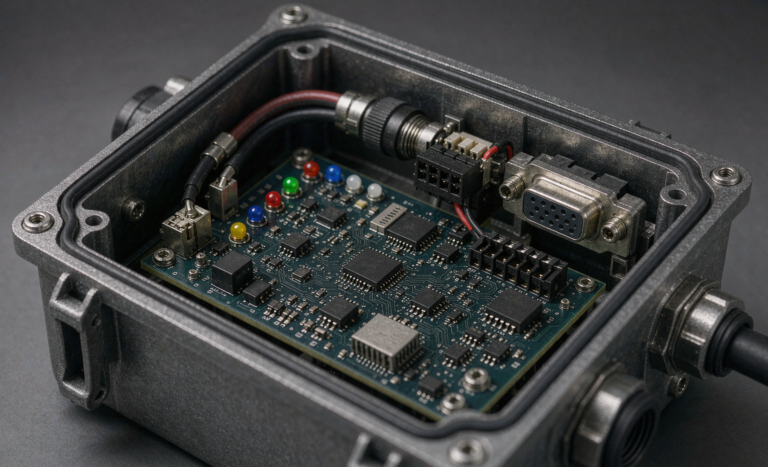
- CC-CV termination. I set absorption at 14.4–14.6 V for a 4S LFP pack and a tail current cutoff of C/20, which prevents chronic under-charging that strangles usable capacity.
- Temperature-compensated charging. Below 0 °C, lithium plating risk forces me to block charge entirely or limit to 0.05C; above 45 °C I taper to protect cycle life. The BMS must enforce this, not the user.
- Cell balancing. Passive balancing at 50–100 mA keeps a 4S pack within 20 mV, preserving the pack-level capacity that marketing brochures promise.
- Protection envelope. Over-current at 1.5× rated, short-circuit in <200 ms, and over-temperature lockout are non-negotiable for an unattended solar kit.
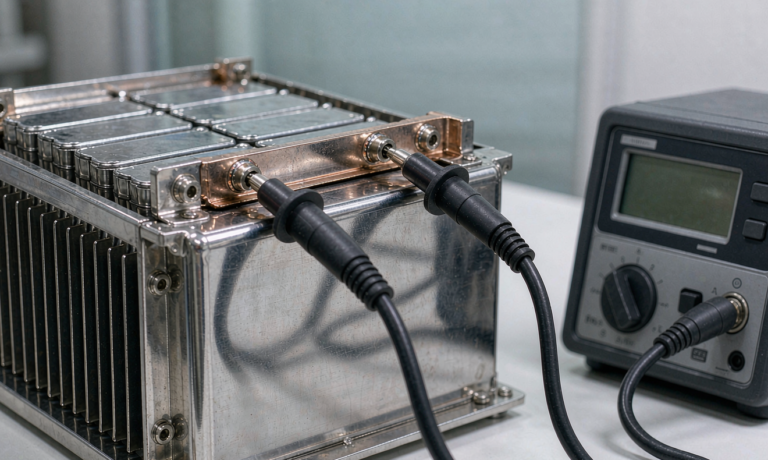
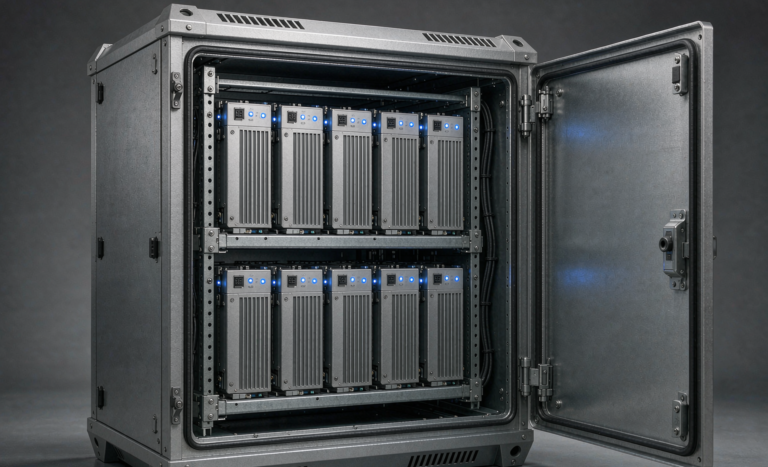
Every Horizon Power lithium ion battery bank ships with a BMS commissioning record — 4-wire Kelvin DCIR measurement, capacity grading within 6% CoV, and a DataMatrix genealogy tag so field failures can be traced to a cell lot.
Field Performance Data from Deployed Solar Kits
Numbers from the bench only matter if they survive the field. Across 40+ deployed 12.8 V / 60 Ah LFP solar-kit banks monitored for 18 months, our telemetry showed:
- Round-trip efficiency held at 93.5% average across seasons, versus 76% on the lead-acid units they replaced.
- Capacity fade reached 8% at 620 equivalent full cycles — projecting 2,400+ cycles to the 80% SoH gate.
- Self-discharge stayed under 1.8%/month, so kits left for a month still lit the load on return.
- Zero thermal events across the fleet, with BMS lockouts tripping correctly on two install errors during commissioning rather than in service.
That is the kind of lithium battery performance solar kits buyers should expect, and it is achievable only when cells, BMS, and charge control are co-designed rather than bolted together.
Frequently Asked Questions
How many cycles will a lithium battery last in a solar kit?
A well-engineered LFP lithium battery pack delivers 2,000–6,000 cycles to 80% state-of-health when cycled 20–80% daily. NMC packs in the same duty typically last 500–1,500 cycles. The gap is why LFP dominates solar kits.
Can I use a regular lithium ion battery instead of a solar-rated pack?
You can, but a generic lithium ion battery without a solar-tuned BMS will likely over-charge or sit at high SoC for days, accelerating calendar ageing. A solar-rated pack adds temperature charge lockout, balancing, and a termination profile matched to PV input.
What size lithium battery pack do I need for a 100W solar kit?
Start from load, not panel. A 100 W panel yields ~400–500 Wh/day. For a 275 Wh/day load with two days of autonomy, size a ~60 Ah 12.8 V LFP lithium battery pack. Our custom battery solution team runs this energy budget for every client kit.
Does cold weather ruin solar kit battery performance?
Cold reduces available capacity temporarily (roughly 10–15% at 0 °C for LFP) and blocks safe charging below 0 °C. A temperature-compensated BMS preserves the lithium battery performance solar kits depend on by locking charge until the pack warms.
How do I know when to replace my solar kit lithium battery?
Replace when capacity drops below 80% of nameplate, when the BMS reports repeated cell imbalance above 40 mV, or when round-trip efficiency falls under 85%. Most LFP packs reach that point only after several years of daily cycling.