Battery Solution Cost Optimization for Vehicles: An
Over the last twelve years I have led more than forty vehicle electrification programs as a senior lithium battery engineer, from low-speed e-mobility and buses to industrial ground vehicles and aerial platforms. If there is one myth I keep correcting, it is that “cost optimization” means “buy cheaper cells.” It does not. A vehicle battery solution lives for eight to fifteen years in the field, and the cell invoice is only a fraction of what the operator actually pays. In this guide I walk through the real cost levers I use on every program, the test and compliance gates that quietly inflate budgets, and a practical playbook for battery solution cost optimization vehicles teams can apply from day one.
Total Cost of Ownership: Why the Cell Price Is Only 30 to 40 Percent
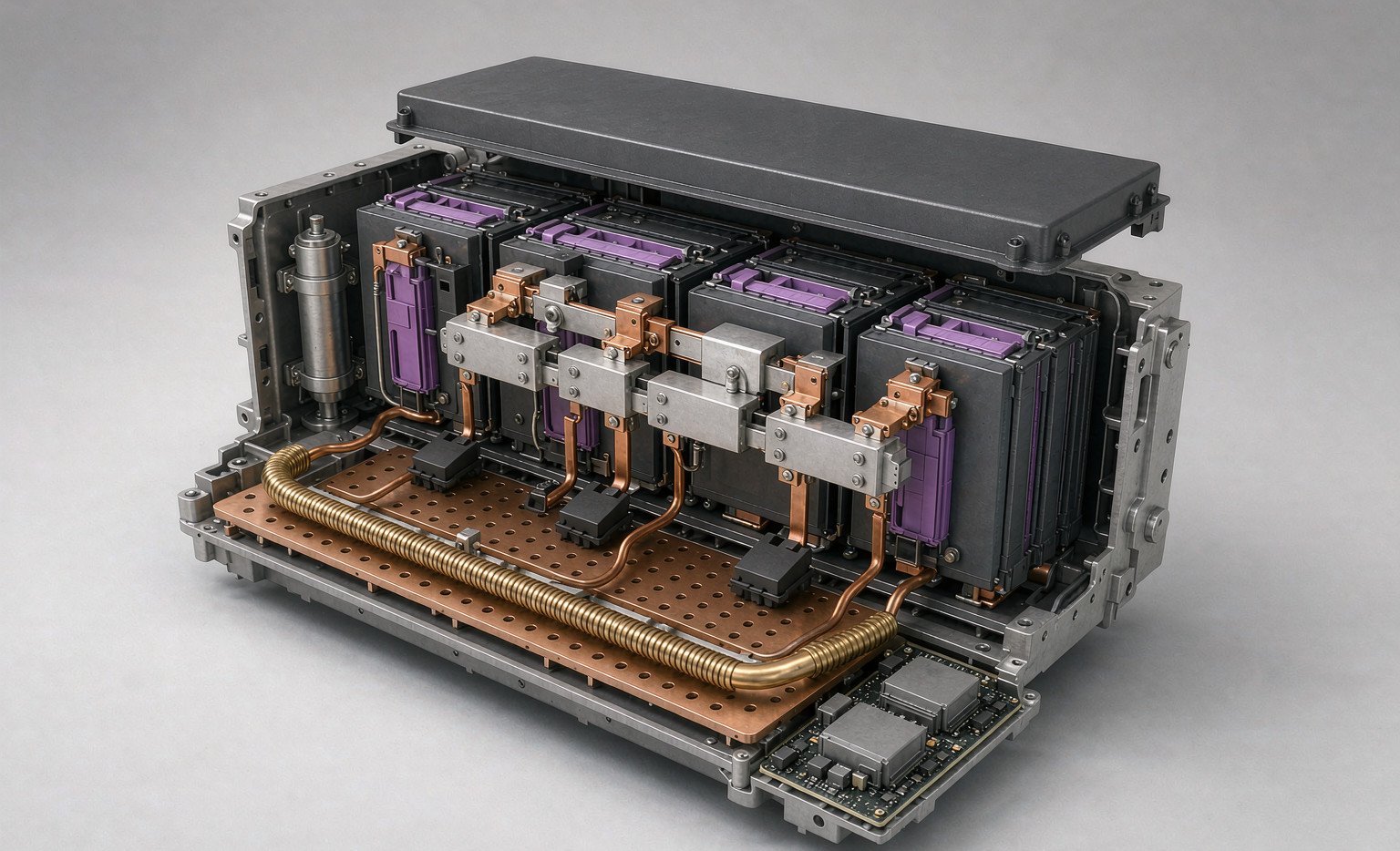
When a procurement team benchmarks a lithium battery pack, they usually fixate on the cell spot price. In my experience the cell itself represents roughly 32 to 40 percent of a finished pack bill of materials. The rest is structure, thermal management, the battery management system, wiring, enclosure, certification, and the warranty reserve that covers degradation over the vehicle’s service life.
On a typical 400 V vehicle pack we see the following split: cells 35 percent, mechanical structure and enclosure 18 to 22 percent, BMS and wiring 10 to 13 percent, thermal system 7 to 10 percent, manufacturing and integration 10 to 14 percent, and certification plus warranty reserve 4 to 8 percent. Optimizing only the cell line therefore leaves 60 to 70 percent of the cost untouched. True battery solution cost optimization vehicles work attacks the whole stack, not a single component.
Two line items are easy to forget and expensive when ignored. The first is the end-of-life reserve: a pack that is designed for second-life use or straightforward recycling recovers 8 to 15 percent of its material value and lowers the effective lifetime cost. The second is the integration labor at the vehicle plant. A pack with a clean mechanical interface and a single sealed connector reduces assembly time on the line, and that labor compounds across every unit built. I have seen integration simplicity save more per vehicle than a cell price negotiation ever did.
Cell Chemistry Trade-offs: LFP Versus NMC
The first and largest decision is chemistry. For cost-sensitive vehicle duty cycles I almost always start with lithium iron phosphate (LFP). A modern prismatic LFP cell delivers 155 to 165 Wh/kg and 300 to 350 Wh/L, costs in the 90 to 120 USD/kWh cell range, and survives 3,000 to 6,000 cycles at 80 percent depth of discharge. It contains no cobalt and no nickel, which removes the single biggest supply-chain price risk in our industry.
Nickel manganese cobalt (NMC, typically NMC 811 or NMC 622) reaches 200 to 250 Wh/kg and 450 to 700 Wh/L, but at a cell cost of roughly 120 to 150 USD/kWh and a cycle life of 800 to 2,000. If a vehicle is weight- or volume-constrained and runs shallow daily cycles, NMC earns its premium. If the vehicle runs deep cycles every day for a decade, LFP wins on total cost almost every time. I have swapped NMC programs to LFP and cut the ten-year cost per delivered kilowatt-hour by more than 30 percent.
Pack Architecture: Cell-to-Pack and Standardization
Once chemistry is fixed, the next lever is architecture. Traditional module-based packs carry 20 to 40 percent overhead in structural parts, busbars, and connectors. Moving to cell-to-pack (CTP) or blade-cell designs removes most of that overhead. On programs I have run, CTP cut part count by 30 to 40 percent and lifted pack volume utilization from 40 to 50 percent up to 60 to 70 percent.
Standardization is the quieter win. Every unique module shape needs its own tooling, fixture, and validation. By reusing one or two standardized battery pack envelopes across a vehicle family, we amortize tooling across volume and shrink non-recurring engineering. For a fleet operator this is often a larger saving than the cell chemistry choice.
Thermal Management Economics
Cooling looks like a pure cost add, but it is really a cycle-life investment. Air cooling is cheap to build yet lets cells drift in temperature, accelerating capacity fade. Liquid cooling with integrated plates costs 7 to 10 percent more up front but typically extends pack life by 20 to 30 percent and tightens cell-to-cell temperature spread to under 5 degrees Celsius.
I model the payback directly: if liquid cooling adds 8 percent to build cost but removes 25 percent of degradation, the effective cost per cycle drops. For vehicles with daily duty cycles, liquid cooling pays back inside the first third of the pack life. For occasional-use vehicles, a well-designed air or phase-change system is the leaner choice.
Cycle Life and Warranty: The Hidden Multiplier
The metric operators should care about is cost per delivered kilowatt-hour over the pack lifetime, not cost per kilowatt-hour of nameplate capacity. An LFP pack at 5,000 cycles and 80 percent depth of discharge delivers roughly four to five times the usable energy of an NMC pack at 1,200 cycles, for only about twice the build cost. The math is decisive for high-utilization vehicles.
This is also where state-of-health prediction matters. A BMS that accurately tracks capacity fade lets us warranty to real behavior instead of a conservative worst case, trimming the warranty reserve that otherwise sits in every quoted price. Honest degradation modeling is a direct cost lever.
A second multiplier hides in replacement logistics. A pack designed with serviceable modules or a hot-swappable architecture can be refurbished in the field for a fraction of a full replacement cost. On a municipal bus program I supported, designing the pack as four independent modules rather than one monolith cut the mean repair cost by roughly 60 percent, because a single failed module no longer scrapped the entire assembly. That kind of design choice never appears on a cell datasheet, yet it dominates the ten-year cost.
Certification and Compliance Cost
Vehicle battery solution programs must clear hard regulatory gates, and these are where budgets quietly blow up if they are treated as an afterthought. The baseline is UN38.3, the transport safety test covering T.1 through T.8: altitude simulation, thermal test, vibration, shock, external short circuit, impact, overcharge, and forced discharge. In the United States, UL 2580 governs EV battery safety; in automotive functional safety, ISO 26262 defines the ASIL requirements for the BMS; on-road systems in many markets also answer to ECE R100.
I design for these standards from the schematic stage, not after the first prototype. A single non-compliant busbar layout can force a tooling re-spin that costs more than the entire certification fee. Building to IEC 62133-2 for the cell level and UL 2580 plus ISO 26262 for the system level up front is the cheapest way to pass. The testing itself typically adds 4 to 8 percent, but a late redesign can add 20 to 40 percent.
A Practical Cost Optimization Playbook
When a team asks me to drive battery solution cost optimization vehicles work, I follow the same sequence:
- Define the duty cycle first. Daily energy throughput, depth of discharge, ambient range, and target life set chemistry and cooling before any sourcing begins.
- Pick chemistry by cost per cycle, not by spec-sheet energy density. LFP for deep daily cycles, NMC only when mass or volume is the binding constraint.
- Standardize the pack envelope across the vehicle family to amortize tooling and validation.
- Integrate thermal management into the structure rather than bolting it on, and right-size it to the duty cycle.
- Design the BMS for the required ASIL and for accurate state-of-health, which shrinks the warranty reserve.
- Validate against UN38.3, IEC 62133-2, UL 2580, and ISO 26262 early, with compliance built into the layout.
The result is a custom battery solution that is not the cheapest on paper but the cheapest across the vehicle’s full service life. That distinction is the entire point of disciplined cost engineering.
Frequently Asked Questions
What is the biggest cost driver in a vehicle battery solution?
The cells are the largest single line at roughly 32 to 40 percent, but structure, thermal management, BMS, integration, and the warranty reserve together make up the majority. Optimizing only cell price leaves most of the cost unaddressed, which is why a system-level view matters more than a cell quote.
Is LFP really cheaper than NMC for vehicles?
For build cost, LFP cells run about 90 to 120 USD/kWh versus 120 to 150 USD/kWh for NMC, and LFP carries no cobalt or nickel risk. More importantly, LFP’s 3,000 to 6,000 cycles versus NMC’s 800 to 2,000 cycles make it decisively cheaper per delivered kilowatt-hour in daily-duty vehicles.
How does cycle life affect total cost?
Cycle life sets how many kilowatt-hours the pack can deliver before replacement. A pack that lasts 5,000 cycles at 80 percent depth of discharge delivers several times the usable energy of one rated for 1,200 cycles, so cost per cycle, not cost per nameplate kilowatt-hour, is what determines the real economics.
Can drone battery technology transfer to vehicles?
Yes, with caveats. High-discharge drone battery and drone lithium battery packs taught the industry a great deal about power density, lightweight structure, and thermal runaway containment. Those lessons feed vehicle packs, though vehicles prioritize energy density and cycle life over the extreme pulse rates a drone battery must sustain.
How much does certification add to the cost?
Properly planned, formal testing adds about 4 to 8 percent through UN38.3, IEC 62133-2, UL 2580, and ISO 26262 fees. The expensive case is a late redesign forced by a non-compliant layout, which can add 20 to 40 percent and months of delay. Designing to the standards from the start is the cheaper path.