Lithium Battery Performance for UPS Systems
When I started specifying backup power fifteen years ago, the default answer for any uninterruptible power supply (UPS) was a sealed lead-acid (VRLA) block. They were cheap, familiar, and forgiving. Over the last six years, almost every lithium battery project I have commissioned for a data center, a factory line, or a telecom site has replaced VRLA with a lithium-ion battery pack — and not for the marketing reasons people assume.
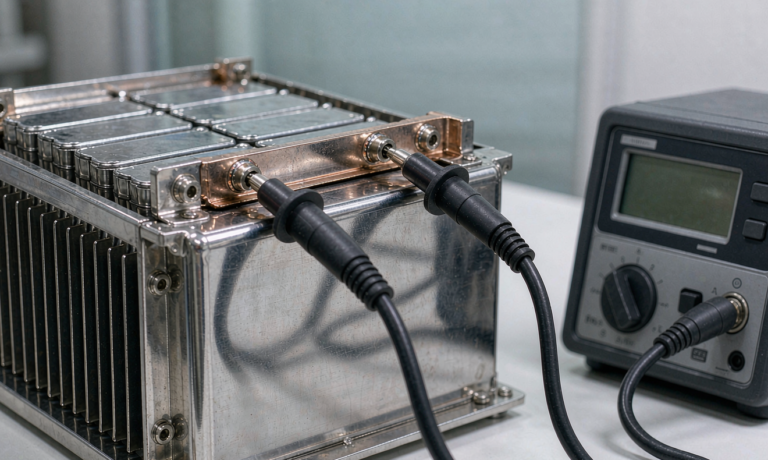
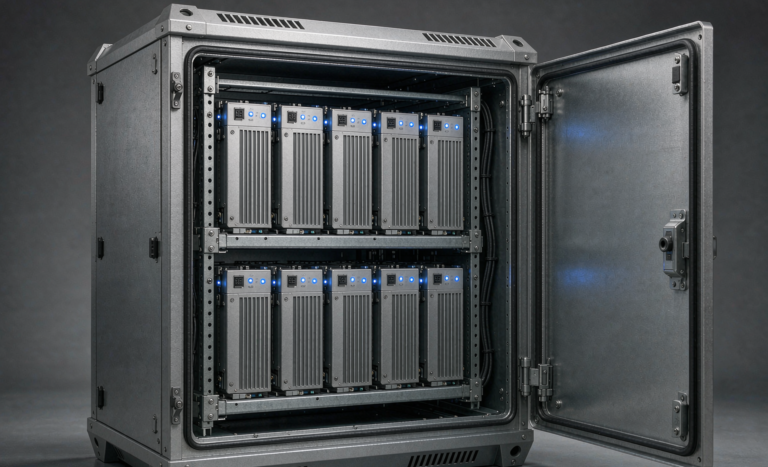
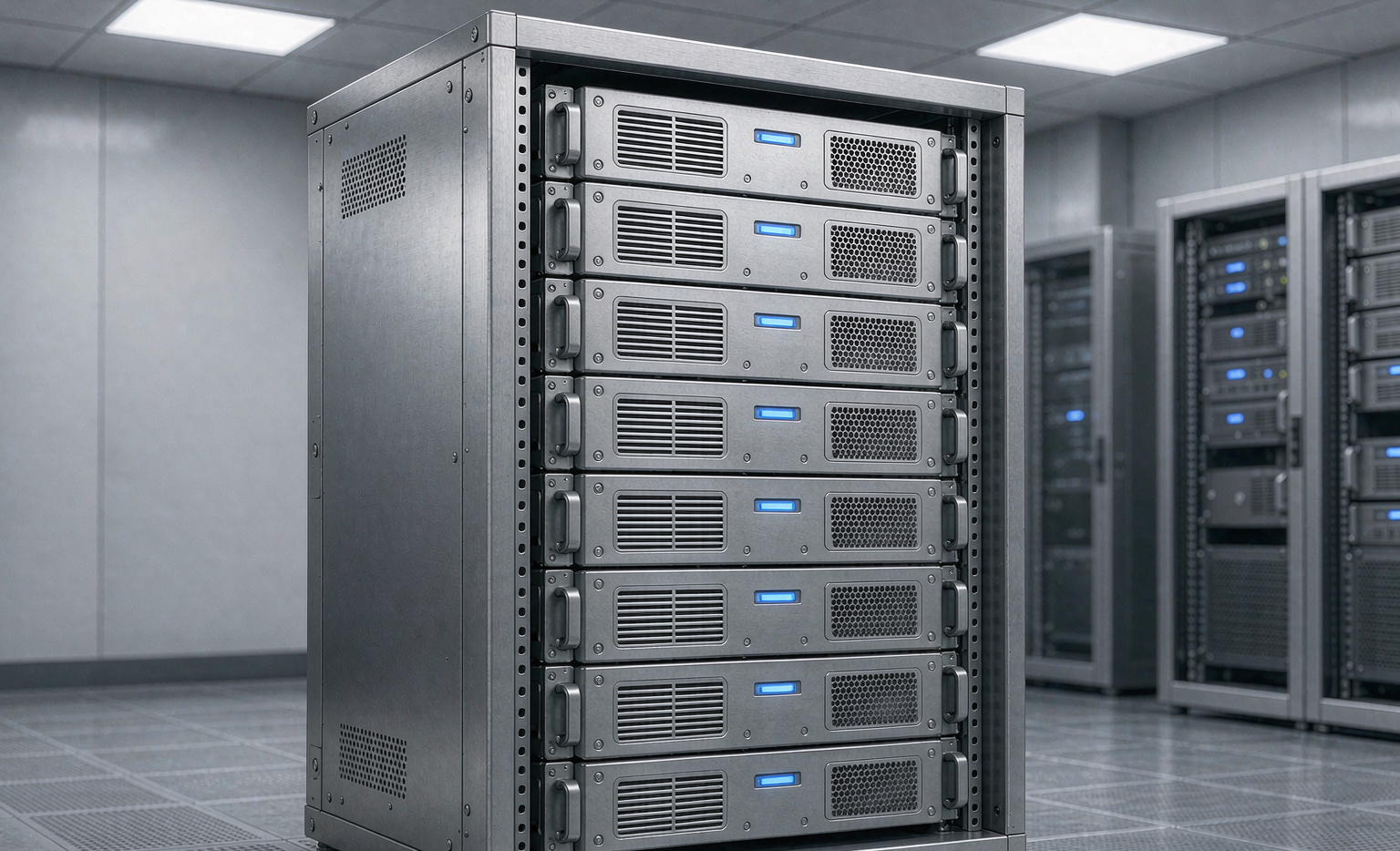
The shift is driven by physics, not fashion. A typical VRLA cell delivers 30–50 Wh/kg. A lithium iron phosphate (LiFePO4) cell we build at Horizon Power lands between 90 and 160 Wh/kg. That single number changes rack footprint, floor loading, and cooling load. In a standard 19-inch rack, a lithium battery bank that delivers the same runtime as VRLA occupies roughly one-third of the volume and about half the weight. For a facilities manager fighting for floor space, that is the whole conversation.
Why UPS Systems Are Moving From VRLA to Lithium
The first time a client asked me to justify the higher upfront cost of a lithium battery UPS, I built a ten-year total-cost model. The result surprised even me. VRLA blocks in a warm equipment room typically deliver 3–5 years of useful life before their internal resistance climbs and their capacity fades below the 80% threshold we specify for critical loads. A properly managed LiFePO4 pack, floated at the correct voltage and watched by a competent battery management system (BMS), routinely exceeds 10 years and 3,000–6,000 cycles.
When you spread the capital cost across that lifespan and add the labor of two or three VRLA change-outs the lithium pack avoids, the lithium-ion battery solution wins on lifecycle cost in most stationary UPS applications. The weight and volume savings are a bonus that simplifies seismic bracing, cable runs, and cooling design.
The Performance Metrics That Actually Matter for UPS
Spec sheets love to headline “high energy density,” but for a UPS what matters is runtime under load, available power during a deep discharge, and how the pack behaves at the end of its life. Here are the numbers I require before I sign off on any lithium battery design for backup power.
Usable Capacity Under Real Discharge Rates
A UPS rarely discharges at the gentle C/20 rate used in textbook capacity figures. During a grid outage the inverter can pull at 1C or higher. LiFePO4 holds its voltage plateau far better than lead-acid under high rate, so the usable capacity at 1C is often 95–98% of the nameplate, versus 50–60% for VRLA. I always validate capacity at the actual application discharge rate, not the manufacturer’s preferred slow rate.
Round-Trip Efficiency
Float charging and infrequent discharges mean efficiency matters less than in cyclic duty, but it is not zero. A well-tuned LiFePO4 system returns 92–96% round-trip, against 80–85% for VRLA. In a facility that ride-throughs frequently, those points compound into real energy savings.
Self-Discharge and Standby Loss
A UPS battery spends 99% of its life idle. LiFePO4 self-discharges at roughly 1–3% per month, far below VRLA’s 4–8%. Lower standby loss means the pack reaches a full float state faster after a test and stays ready longer.
Cycle Life and Calendar Life Under Float Conditions
Stationary UPS duty is unusual: the cells sit at float voltage for years, then take a rare deep discharge during an outage or a capacity test. This is gentle on cycle life but tough on calendar life if the float voltage is wrong. In my experience the single biggest cause of premature lithium battery failure in UPS service is float voltage set too high.
For LiFePO4 we float at 3.40–3.45 V/cell and equalize (if at all) only under controlled BMS supervision. Push to 3.65 V/cell continuously and you accelerate cathode stress and electrolyte consumption. I have pulled packs from sites where an over-eager charger ran them at 3.60 V/cell for two years — capacity had already fallen 18% below nameplate.
Calendar life also depends on temperature. Every 10 °C above 25 °C roughly halves the expected life of a lithium-ion battery cell. That is why I insist UPS battery cabinets have at least passive ventilation and, in hot rooms, active cooling tied to the BMS alarm bus.
Discharge Performance and Power Density
Power density — how much current a pack can deliver relative to its mass — is where lithium leaves lead-acid behind for good. A LiFePO4 cell sustains continuous discharge at 1–3C with modest voltage sag, while VRLA collapses past 0.5C. For a UPS this means a smaller pack can cover the same load, and the inverter sees a steadier bus voltage during the critical first seconds of a transfer.
I design to a maximum continuous discharge of 1C and a short-term peak (transfer inrush, motor loads) of 2–3C for 10–30 seconds. The BMS must enforce these limits with hard contactors, not just a warning flag. On one hospital project, the load included a magnetic contactor inrush that briefly drew 2.4C; we sized the pack and set the BMS trip at 3C so the inverter never saw a sag severe enough to drop the load.
Thermal Behavior and the Safety Standards We Build To
Buyers often ask whether lithium is “safe” for indoor UPS rooms. My answer is that safety is engineered, not inherent, and the standards exist precisely to make it repeatable. Every lithium battery pack Horizon Power ships for stationary power complies with UN38.3 for transport, IEC 62133 for portable cell safety, and the industrial battery safety standard IEC 62619. For the UPS system itself we reference IEC 62040 and IEEE 1188 for stationary battery practices.
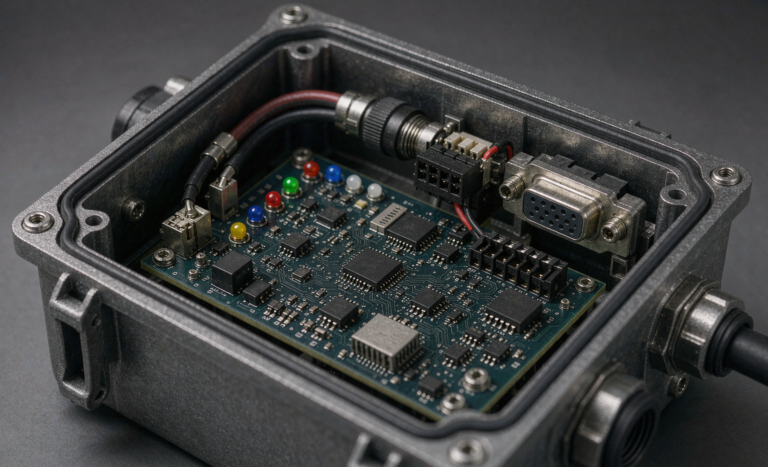
Thermally, LiFePO4 is the calmest lithium chemistry: its iron-phosphate cathode is intrinsically stable and resists thermal runaway even under abuse. That is why I steer critical-infrastructure clients toward LiFePO4 rather than nickel-cobalt chemistries. We still build in multilevel protection — cell-level fusing, module isolation, BMS over-temperature and over-voltage cutoff, and cabinet-level smoke detection — because “intrinsically safe chemistry” is never an excuse to skip engineering.
For spares and field-replaceable modules that travel by air, the UN38.3 test summary and FAA/EASA documentation are mandatory. We provide the test report and the air-transport declaration with every shipment so a facilities team can legally fly a replacement module to a remote site without customs or carrier delays.
Sizing a Lithium UPS Battery: A Real Engineering Workflow
When a client gives me a UPS load in kVA and a required runtime in minutes, I do not start from the battery. I start from the load in watts, the inverter efficiency, and the acceptable end-of-discharge voltage. Then I size the pack:
- Step 1 — Convert to DC bus demand. Load watts ÷ inverter efficiency ÷ target bus voltage gives the current the pack must supply.
- Step 2 — Apply the discharge rate. Divide that current by the pack’s nameplate capacity (Ah) to get the C-rate. If it exceeds 1C, increase the pack or choose higher-power cells.
- Step 3 — De-rate for temperature and age. I apply a 0.85 factor for end-of-life capacity and correct for the room’s worst-case operating temperature.
- Step 4 — Validate with a real discharge test. No model replaces a 100% discharge validation at site before handover.
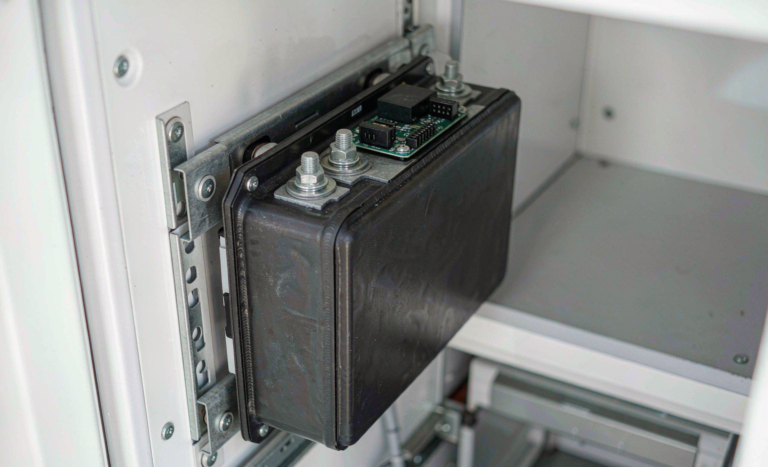
For a 10 kVA UPS at 0.9 power factor covering a 15-minute ride-through, a typical LiFePO4 pack lands around 30–40 Ah at 48 V, versus a far bulkier VRLA string. Because each application differs in load profile, ambient, and runtime target, we usually deliver this as a custom battery solution rather than an off-the-shelf block — the BMS thresholds, cell format, and thermal design are tuned to the specific UPS and room.
What I Tell Every UPS Buyer
Do not buy a lithium battery for a UPS on price per ampere-hour alone. Buy it on the integration: the BMS quality, the float-voltage setting matched to LiFePO4, the thermal design of the cabinet, and the standards documentation that lets you install and service it legally. A lithium-ion battery UPS is a system, not a component, and the performance you measure in year eight depends entirely on the engineering done in year zero.
Frequently Asked Questions
How long do lithium UPS batteries last compared to lead-acid?
In typical indoor UPS rooms, VRLA lasts 3–5 years before capacity falls below our 80% service threshold. A properly floated and BMS-supervised LiFePO4 pack typically delivers 10+ years and 3,000–6,000 cycles. The longer calendar life is the main reason total-cost-of-ownership favors lithium despite higher upfront cost.
Can I retrofit lithium into an existing UPS?
Often yes, but it requires more than swapping blocks. The charger float voltage and current limit must match LiFePO4 (around 3.40–3.45 V/cell), and the UPS must accept the different discharge curve and end-of-discharge voltage. We always audit the UPS charger and setpoints before recommending a retrofit, and we supply a compatible BMS-to-UPS communication interface where the inverter supports it.
What standards must a lithium UPS battery meet?
For stationary power we build to IEC 62619 for industrial battery safety, IEC 62133 for cell-level safety, and UN38.3 for transport. The UPS system is evaluated against IEC 62040, and we follow IEEE 1188 for stationary battery installation and maintenance practice. Air-shipped spares carry the UN38.3 test summary and FAA/EASA air-transport documentation.
How do I size a lithium battery for my UPS load?
Start from true load watts, not kVA. Divide by inverter efficiency and bus voltage to get pack current, convert to a C-rate against nameplate Ah, then de-rate for end-of-life and temperature. Validate with an on-site discharge test. Because load profiles and rooms differ, we usually deliver this as a custom battery solution with a BMS and thermal design matched to the specific UPS.