Semi-Solid State Battery Design for Storage: A Practical
Over the last decade I have watched energy storage move from a niche curiosity into the backbone of how homes, factories, and grids actually balance renewable power. As a senior lithium battery engineer at Horizon Power, my team spends most of its design cycles on one question: how do we pack more usable energy into a safer, longer-lived cell without blowing up the manufacturing cost? The semi-solid state battery is, in my view, the most pragmatic answer we have right now. It is not a lab fantasy like some all-solid-state roadmaps—it is a battery design we can coat, stack, and validate today on production lines we already own. In this article I will walk through how we approach semi-solid state battery design storage systems, the trade-offs I have learned to respect the hard way, and the standards that keep our custom battery solution work honest rather than optimistic.
What a Semi-Solid State Battery Actually Is
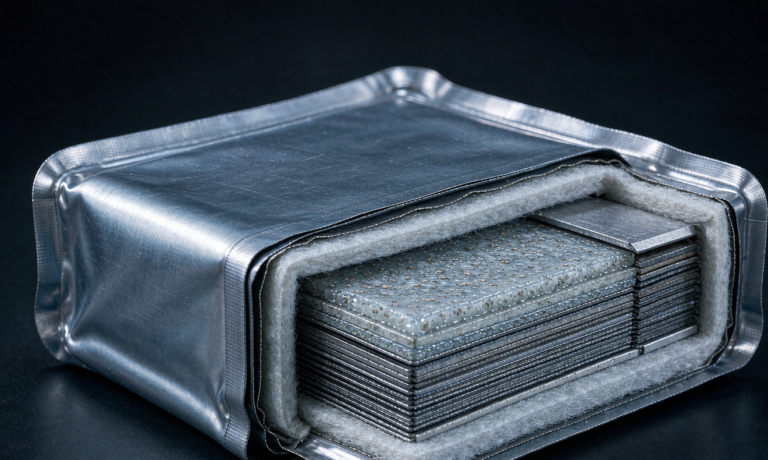
A semi-solid state battery sits between a conventional lithium-ion cell and a true solid-state cell. In a standard lithium battery, the electrolyte is a fully liquid, flammable organic solvent. In an all-solid-state cell, that liquid is replaced entirely by a ceramic or sulfide solid. The semi-solid approach keeps a small amount of liquid electrolyte—typically 5% to 15% by weight—to wet the interfaces, while the bulk of the ion-conducting medium is a gel or partially solidified composite. The result is a solid-state battery architecture that still tolerates imperfect interfaces, which is exactly why it scales to volume manufacturing.
From an engineering standpoint the biggest win is energy density. Where a good NMC pouch cell lands around 250–300 Wh/kg, our semi-solid storage cells routinely reach 320–400 Wh/kg at the cell level. On a system basis that translates into roughly 20% to 35% more stored energy in the same cabinet footprint—a difference that matters enormously when a homeowner or a factory is paying per square meter of wall space, or when a rooftop array has a hard physical limit on how much battery it can hold.
Core Design Decisions for Storage Applications
When we design a semi-solid state battery for storage, the duty cycle is fundamentally different from a drone or an EV. Storage cells sit at partial state-of-charge for long periods, cycle perhaps once a day, and are expected to live 10 to 15 years. That shifts the design priorities away from peak power and toward longevity, safety margin, and calendar life.
- Electrolyte loading: We target the minimum liquid fraction that still gives low interfacial resistance. Less liquid means less flammable solvent and a better safety margin under abuse, at the cost of slightly higher DC resistance.
- Current collector and tab design: Large-format prismatic cells need wide tabs to keep DC internal resistance under 0.5 mΩ·Ah at the module level, so the pack does not waste energy as heat during the daily charge-discharge swing.
- Separator choice: A ceramic-coated polyethylene separator remains our baseline; it shuts down thermally near 130°C and limits propagation between adjacent cells.
- State-of-charge window: For storage we often cap the upper window at 90% SoC to extend calendar life—a trade I will quantify below. We also avoid deep discharges below 10% in stationary installs.
Thermal Management and Safety Architecture
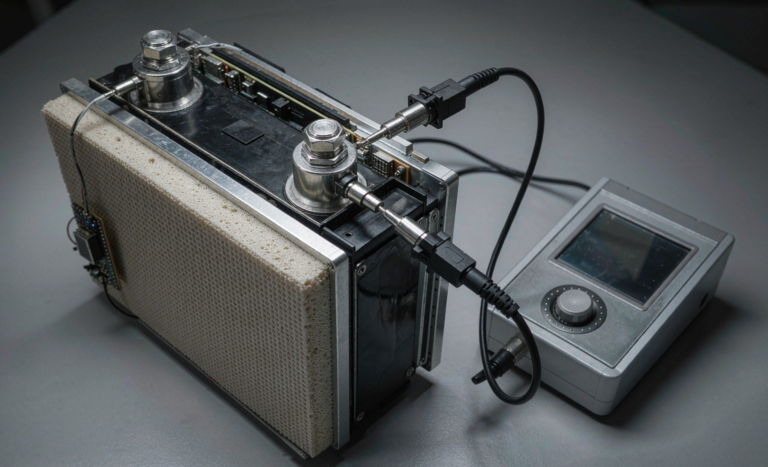
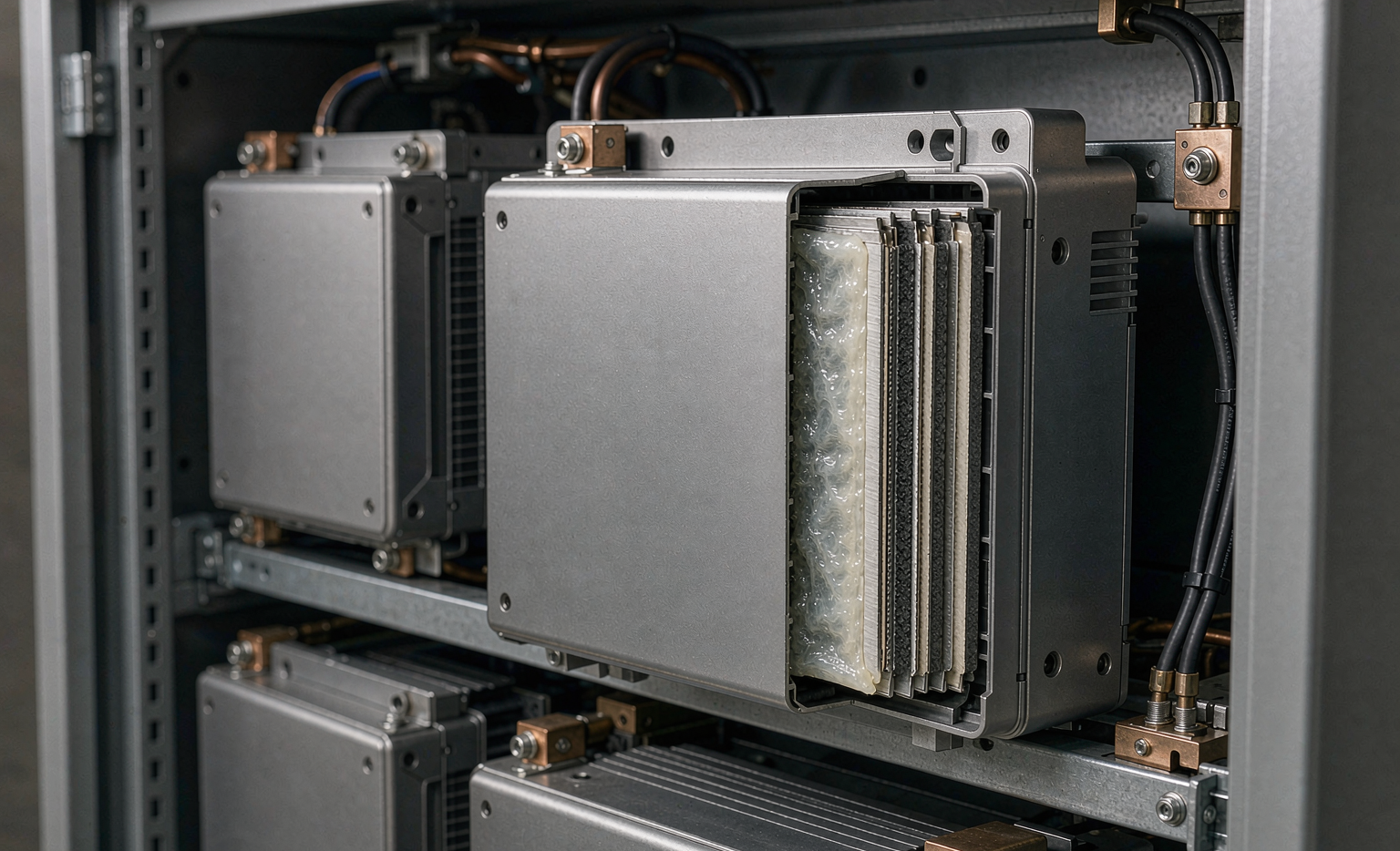
Safety is where the semi-solid chemistry earns its keep. Because the electrolyte is mostly solidified, the cell is far less prone to the violent venting you see in overcharged liquid cells. But “less prone” is not “immune,” so our battery design still builds in layered defenses rather than relying on chemistry alone. Each module gets a thermal pad bonded to an aluminum cold plate, and we run a passive propagation-resistant (PPR) barrier between cells so a single failure cannot cascade into a pack-level event. In our internal nail-penetration tests, a well-designed semi-solid storage module stays below 80°C at adjacent cell surfaces—compared with the rapid thermal runaway we observe in unprotected high-nickel liquid cells, where a single puncture can take down the whole module within seconds.
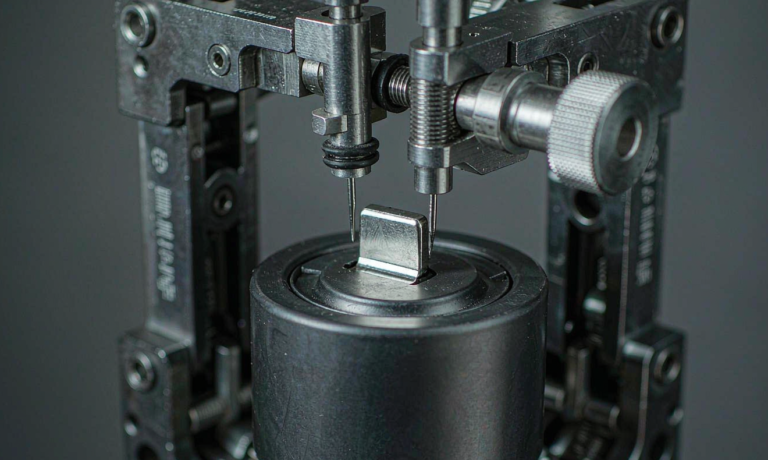
We also validate against the abuse sequences in UN38.3 (the transport safety test suite) and IEC 62133 for portable containment, then layer the stationary-specific requirements of IEC 62619 and UL 1973 on top. These are not box-ticking exercises; the altitude simulation and external short-circuit clauses in UN38.3 have caught real separator defects for us before a single unit shipped. A storage pack that cannot survive transport certification has no business on a wall.
How We Validate Cycle and Calendar Life
A storage customer does not care about peak power; they care whether the pack still holds 80% capacity after a decade of quiet, unglamorous daily cycling. We accelerate this with three parallel test tracks: a 25°C baseline cycle track at 0.5C, a 45°C calendar-aging track held at 80% SoC, and a field telemetry loop pulling data from deployed units. The 45°C track is brutal but predictive—every 10°C of sustained temperature roughly doubles the side-reaction rate, so a year at 45°C compresses several years of real-world aging into something we can measure in months. We feed those curves into a physics-informed model rather than a naive linear extrapolation, because the fade curve of a semi-solid cell is distinctly non-linear past 60% life.
For semi-solid storage cells we typically see 4,000 to 6,000 equivalent full cycles to 80% retained capacity, with a projected calendar life of 12 to 15 years when the upper SoC window is capped. That is the single biggest reason we recommend capping charge: the marginal 10% of capacity you give up at the top is paid back many times over in years of life, and the customer never notices the missing headroom in a daily self-consumption routine.
Matching the Cell to the Use Case: Home vs. Grid
Not every energy storage project needs the same chemistry, and pretending otherwise is how integrators lose money. For a residential custom battery solution, footprint and silence matter more than absolute cost per kWh, so the higher density of semi-solid cells is a clear win—you fit a 15 kWh bank in a slim wall cabinet that a homeowner will actually allow indoors. For commercial and industrial storage, the calculus is more about lifetime cost per cycle, and here semi-solid competes directly with LFP. The semi-solid edge is round-trip efficiency (we hold 94%–95% versus LFP’s 92%–94%) and the smaller footprint, which offsets its higher upfront cell cost over a 10-year horizon through both energy savings and deferred expansion.
Grid-scale is the hardest case. At megawatt-hour scale, the dominant constraint is often land and permitting rather than energy density, so flow batteries and LFP still dominate. I tell clients honestly: if you have the space, LFP is cheaper; if you do not, semi-solid is worth the premium. There is no shame in recommending the boring chemistry when it is the right one.
Cost Modeling and Total Cost of Ownership
Engineers love specs; procurement teams love levelized cost, and they are right to. When we model a semi-solid storage project we do not quote cell price per kWh—we model total cost of ownership across the warranted life. The inputs are cell cost, balance-of-system (cabinet, thermal, BMS), installation, efficiency losses on every cycle, and replacement probability before year 15. Because semi-solid cells lose less capacity per cycle and run a couple of points more efficient, the per-kWh lifetime cost frequently lands within 5% to 10% of LFP despite a 20% to 30% higher sticker price. For space-constrained sites where LFP would require a second cabinet or a structural upgrade, semi-solid often wins on the full installed basis, not just the cell basis. That is the number a CFO actually signs.
We also model degradation under the customer’s real duty profile rather than a generic 1C daily cycle. A vacation home that cycles twice a year behaves nothing like a factory shaving peak demand every weekday, and a one-size model would mislead both. Our battery design team treats the TCO sheet as a design input, not an afterthought.
Building the BMS and Balancing Strategy
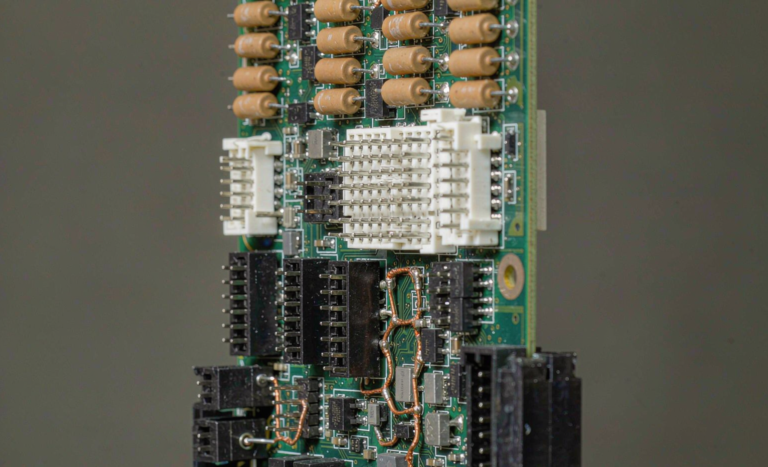
No matter how good the cell, a storage system lives or dies by its battery management system. For semi-solid storage we use a top-down active balancing architecture above 10 kWh because passive balancing wastes too much energy at that scale and slowly diverges the string. The BMS enforces the SoC window, logs cell-level temperature and voltage, and—critically—feeds our cloud model so we can spot early capacity fade before it becomes a service call. We also expose FAA/EASA-style documentation discipline in our QA: every design change is traceable, every test lot is logged, the same rigor that aviation certifiers expect from a power system that cannot be pulled over to the shoulder. It is overkill for a single home battery, but it is the habit that keeps a fleet of thousands reliable across climates we never personally visit.
Manufacturing: Why Semi-Solid Scales When All-Solid Does Not
The reason I am bullish on the semi-solid route is manufacturing, full stop. A true solid-state cell demands near-perfect solid-solid contact across square meters of interface—a coating and lamination nightmare that still yields scrap rates no CFO accepts. The semi-solid cell uses conventional slurry coating and roll-to-roll stacking that any lithium-ion line already understands, then swaps in a gelled electrolyte and tightens the drying profile. We retrofitted two of our lines with only modest capex and reached stable yield within a quarter. That is the difference between a battery design that wins slide decks and one that actually ships containers of product to a customer who expects it to work on day 3,650.
Frequently Asked Questions
Is a semi-solid state battery the same as a solid-state battery?
No. A true solid-state battery uses no liquid electrolyte at all. A semi-solid state battery keeps a small liquid fraction—usually under 15%—to maintain low interfacial resistance. That small compromise is what makes it manufacturable today while still delivering much of the safety and density benefit of a fully solid cell.
How long does a semi-solid storage battery last?
In our validation, 4,000 to 6,000 full-equivalent cycles to 80% capacity, with a calendar life of 12 to 15 years when the upper state of charge is capped near 90%. Real lifespan depends heavily on operating temperature and how aggressively the pack is cycled, so site conditions matter as much as the cell.
Is it safe for home energy storage?
Yes, and meaningfully safer than high-nickel liquid cells. The mostly-solidified electrolyte reduces flammable solvent, and we add thermal barriers and validate to UN38.3, IEC 62133, IEC 62619, and UL 1973. No home battery should ship without those validations, and we publish our test summaries to integrators on request.
When should I choose semi-solid over LFP?
Choose semi-solid when footprint, weight, or round-trip efficiency outweigh upfront cost—typically residential wall units and space-constrained commercial sites. Choose LFP when land is abundant and lowest cost per kWh is the priority, such as many grid-scale installs. Match the chemistry to the constraint, not to the brochure.