Semi-Solid State Battery for Defense and Tactical Power
Over the past four years, one request has reached my bench more than any other from defense and public-safety integrators: give us the energy density of high-nickel lithium cells, but make the pack survive abuse that would push a conventional pouch cell into thermal runaway. That tension — usable energy versus abuse tolerance — is why a semi-solid state battery is now a live procurement option for defense and tactical power programmes rather than a research roadmap item.
I am Karl Huang, Senior lithium battery Engineer at Horizon Power. What follows is written from the perspective of qualification and pack integration rather than chemistry marketing: the mission profiles that drive the cell specification, the standards stack a tactical pack must clear, what a semi-solid electrolyte genuinely fixes in propagation testing, and the cold-temperature penalty most programme managers underestimate.
Why Defense Programmes Are Re-Evaluating Semi-Solid Chemistry
A conventional lithium-ion cell carries roughly 15–25% of its cell mass as liquid carbonate electrolyte. That electrolyte is the fuel in a thermal runaway event. It is also what makes the cell work well at −20 °C. Every safety improvement that removes liquid electrolyte trades away low-temperature performance, and every low-temperature improvement tends to trade away abuse tolerance. This is the core engineering conflict in tactical power.
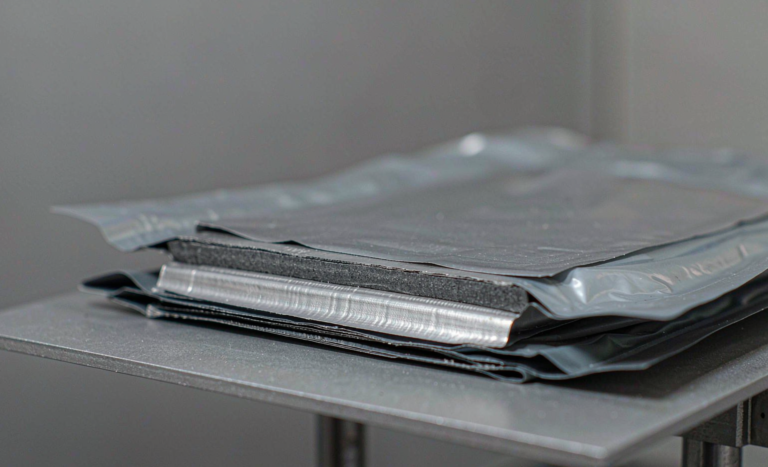
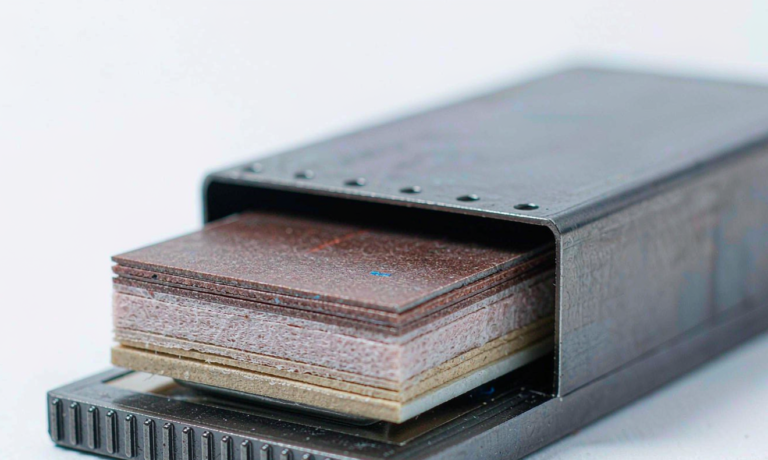
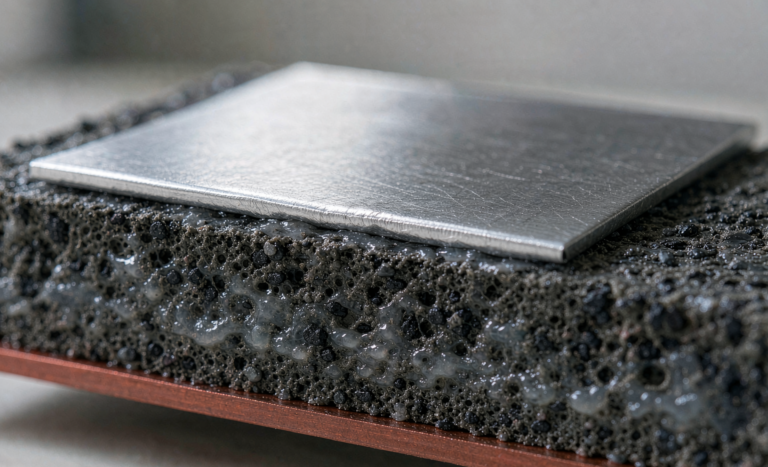
A semi-solid state battery sits deliberately in the middle of that trade. The electrodes are cast as a thick, gel-like slurry in which the electrolyte is immobilised within the electrode matrix rather than flooding freely through the separator. In practice this yields three effects I can reliably measure on the bench:
- Reduced free electrolyte volume. Less volatile solvent is available to vent and ignite. In nail-penetration and crush tests I see lower peak surface temperatures and far less flame propagation than an equivalent-energy liquid cell.
- Thicker electrodes, less inactive material. Because the gel electrode holds together mechanically, coatings can run substantially thicker, cutting current-collector foil and separator layers per kWh. That is the source of the energy-density gain — geometry, not a miracle cathode.
- Tolerance to internal defect growth. Immobilised electrolyte plus a ceramic-coated separator slows the soft-short escalation that turns a minor defect into a runaway weeks later.
What semi-solid does not do is eliminate thermal runaway. Any cell holding a high-nickel cathode and a graphite anode at 4.2 V stores enough chemical energy to self-heat if you drive it hard enough. Anyone claiming a solid-state battery is inherently non-flammable has not run the full abuse matrix. The honest engineering claim is that semi-solid raises the trigger threshold and slows the event, which is exactly what buys a crew time to separate from the equipment.
Mission Power Profiles That Drive the Cell Specification
Tactical power is not one requirement. I ask every programme to characterise the load before we discuss cells, because the four common profiles pull the design in different directions:
- Soldier-worn conformal packs. Low continuous draw, typically 10–40 W for radio, end-user device, and optics, but the pack must conform to body armour and survive being dropped, sat on, and soaked. Energy density and puncture tolerance dominate; peak current is almost irrelevant.
- Dismounted electronic warfare payloads. Duty-cycled bursts of several hundred watts against a modest average. Discharge rate capability and internal resistance matter as much as capacity, and thick semi-solid electrodes become a real constraint.
- Vehicle silent watch. Multi-hour low-rate discharge at 24 V or 28 V nominal, with the pack sitting at partial charge for months between missions. Calendar aging and self-discharge dominate, not cycle life.
- Unmanned ground and air vehicles. High continuous C-rate with aggressive mass targets — where I usually recommend a hybrid architecture rather than forcing one chemistry to do everything.
The design rule I apply: thick-electrode semi-solid cells excel where average C-rate is below roughly 1C and energy per kilogram is the binding constraint. Above about 2–3C continuous, ionic transport limits produce voltage droop and heating that erode the advantage. For a 300 W-burst, 40 W-average electronic-warfare load, the answer is usually a semi-solid energy cell paralleled with a small high-rate lithium battery buffer — a custom battery solution rather than a catalogue part.
The Qualification Stack a Tactical Pack Must Clear
Commercial qualification is not sufficient for a fielded defense pack. I plan around four overlapping tiers and budget 9–14 months for the full sequence including retests.
Transport and baseline safety
UN38.3 tests T.1 through T.8 are the entry gate: altitude simulation, thermal cycling, vibration, shock, external short circuit, impact or crush, overcharge, and forced discharge. Without a valid UN38.3 summary the pack cannot legally move by air or sea. IEC 62133-2 then covers construction and cell-level safety for sealed secondary cells.
Environmental and mechanical
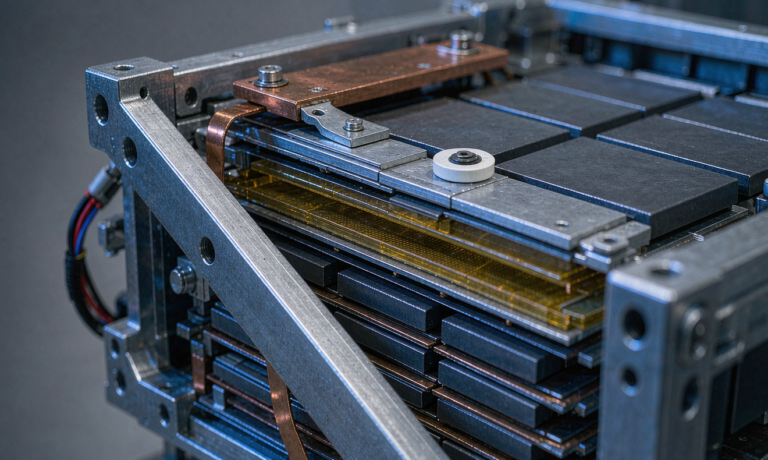
MIL-STD-810H is the workhorse. The methods that consistently expose weak designs are Method 501/502 (high and low temperature operation and storage), Method 507 (humidity), Method 514 (vibration, including wheeled- and tracked-vehicle profiles), Method 516 (shock and transit drop), and Method 500 (altitude). In my experience Method 514 is where poorly supported electrode stacks and busbar joints fail first — not the cells, but the interconnects and sense wiring.
Electromagnetic compatibility
MIL-STD-461G matters more than most battery vendors expect, because a modern pack contains a switching front end and a digital battery management system. CE102, RE102, CS114, and RS103 all apply. A battery management system that resets under RS103 field strength is a mission-abort condition. I insist on a shielded enclosure with a single-point ground and filtered communication lines from the first prototype, rather than retrofitting shielding after a failed scan.
Performance and system safety
MIL-PRF-32383 defines performance requirements for rechargeable lithium-ion military batteries and is the specification most US programmes cite; MIL-STD-882E drives system safety assessment and hazard tracking. For naval installations, the lithium safety review requirements under NAVSEA S9310-AQ-SAF-010 must be planned early, because the review board requests propagation evidence that commercial qualification does not generate.
Thermal Runaway Containment and Propagation Testing
The question a safety review board asks is not “can a cell fail?” but “what happens to the pack and the crew when one does?” That is a propagation question, and it is where semi-solid chemistry earns its place.
My standard test is single-cell trigger propagation, broadly following UL 2580 and comparable automotive practice: instrument a fully assembled module with thermocouples on every cell surface, trigger the centre cell by nail penetration or embedded film heater at full charge, and measure whether neighbours exceed onset temperature. The acceptance criteria I recommend writing into the specification:
- No propagation to adjacent cells — neighbouring cell surface temperature stays below the onset threshold for the chemistry, commonly around 130–150 °C for high-nickel systems.
- No flame external to the enclosure and no ejection of burning material through the vent path.
- Enclosure external surface stays below the touch-safety limit defined for the platform.
- Event severity classified at EUCAR hazard level 4 or below — leakage and venting permitted, no rupture, no fire, no explosion.
Reaching that outcome is a systems result, not a chemistry result. The contributors, in rough order of leverage: intercell thermal barriers and spacing, a directed vent path channelling hot gas away from the crew interface, ceramic-coated separators, the reduced free electrolyte inherent to a semi-solid state battery, and the battery management system’s ability to isolate an abnormal cell early. I have seen a well-designed liquid-electrolyte pack outperform a carelessly integrated semi-solid one. Chemistry raises the ceiling; integration decides the outcome.
Cold Temperature: The Constraint Most Programmes Underestimate
This is the honest weakness, and I raise it in the first technical meeting rather than letting it surface during Method 502 testing.
MIL-STD-810H basic cold and severe cold conditions push operation to −32 °C and below. A gel-phase electrolyte has lower effective ionic conductivity than free liquid, and the transport path through a thick coating is longer — compounding into a steeper resistance rise as temperature falls. On typical semi-solid cells I measure direct current internal resistance at −20 °C at roughly three to five times the 25 °C value, against two to three times for a thin-electrode liquid cell. Deliverable capacity at −20 °C commonly lands at 55–75% of rated, depending heavily on rate.
The mitigations, and their real costs:
- Integrated self-heating. A resistive heater film managed by the battery management system. Effective, and the cost is honest: raising a 500 Wh pack from −30 °C to 0 °C typically consumes 4–8% of stored energy. That must appear in the mission power budget, not be discovered in the field.
- Insulation and thermal mass. Cheap and passive. Helps enormously in silent watch, where the pack self-heats under load; helps very little on a cold start after a week in a vehicle bed.
- Electrode thickness reduction. Trading energy density back for low-temperature capability. For arctic-deploying programmes this is often the correct answer, and it must be decided before cell tooling is committed.
- Rate derating in software. A temperature-dependent current limit table, so the platform never demands power the pack cannot deliver without lithium plating. Plating is a permanent, safety-relevant degradation mode, not a temporary performance loss.
Pack Architecture for Soldier-Portable and Vehicle Applications
Some architectural decisions have repeatedly proven their worth across defense programmes:
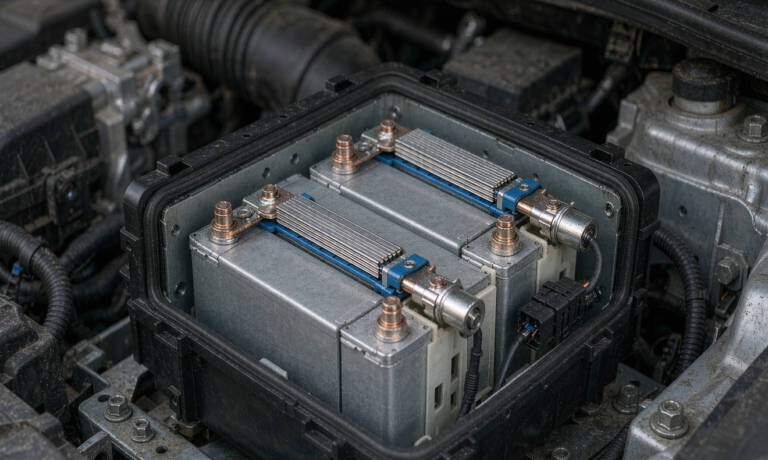
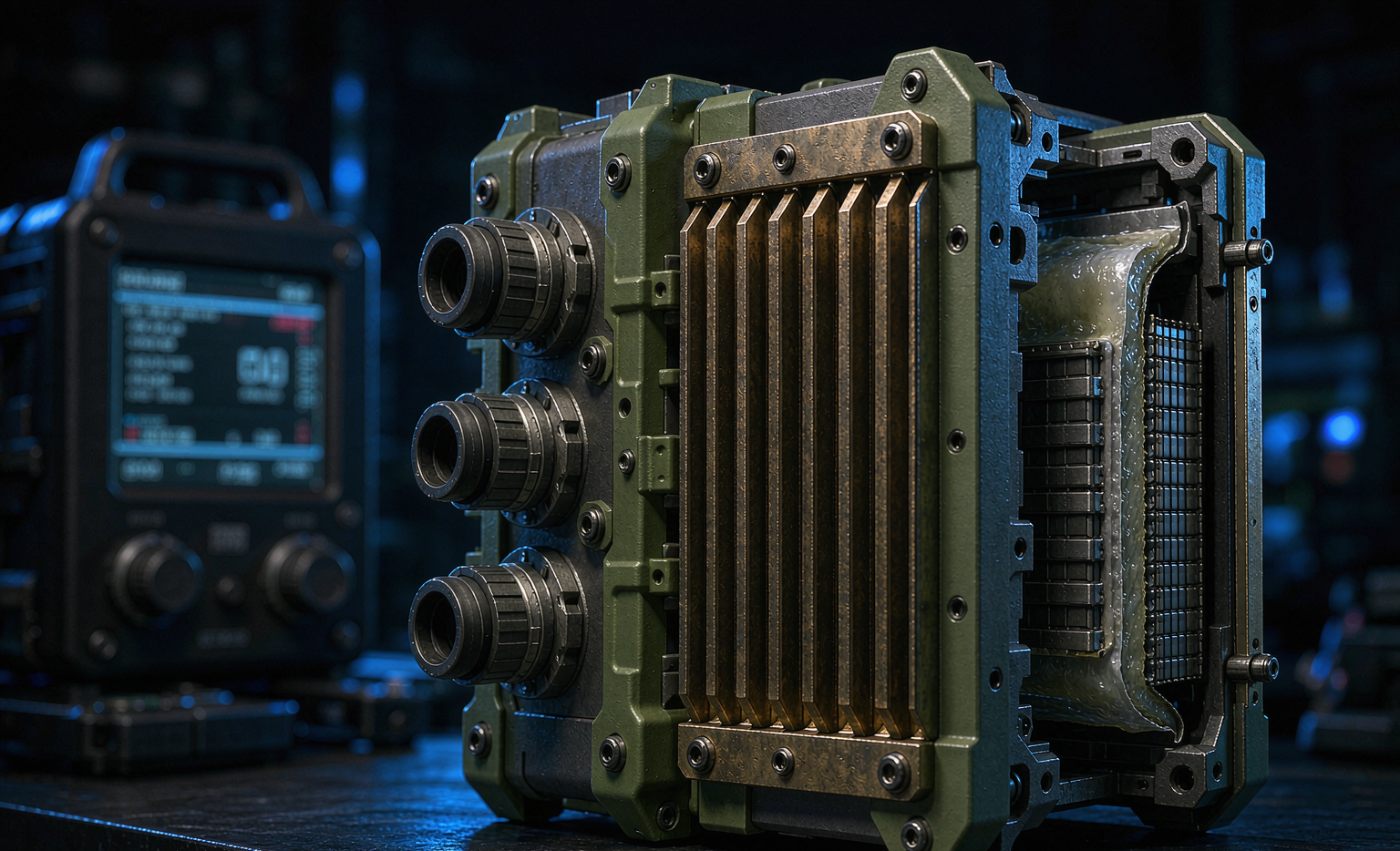
- Connectors. MIL-DTL-38999 series circular connectors for power and data — they cost more than commercial parts and they survive. IP67 minimum, IP68 for anything submerged or decontamination-washed.
- Communication. SMBus for soldier-portable equipment needing interoperability with fielded chargers; CAN bus for vehicle and unmanned platforms. Both need galvanic isolation and filtered lines for MIL-STD-461G compliance.
- Redundant protection layers. Independent hardware overvoltage, undervoltage, overcurrent, and overtemperature cut-offs that function even if the battery management system microcontroller has failed. A safety review board will ask whether protection depends on firmware, and firmware-only protection is hard to defend.
- Local state-of-charge indication. A physical push-to-test indicator with a light-discipline-compatible mode. Operators otherwise carry spare packs they do not need, which is a mass penalty.
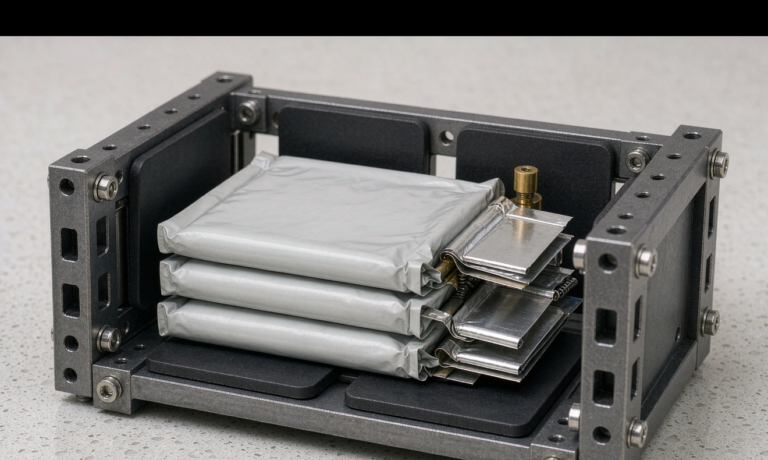
- Mechanical support of the cell stack. Thick semi-solid electrodes are robust in-plane, but the stack still needs uniform compression and constrained movement to survive Method 514. I specify compression pads and a rigid frame rather than adhesive bonding alone.
Logistics, Storage, and Disposal
Sustainment decides lifecycle cost and is routinely underspecified. Air transport follows the IATA Dangerous Goods Regulations, and cells shipped alone must travel at no more than 30% of rated capacity. Build that into the acceptance-test flow so packs are not charged, tested, then wastefully discharged again.
For long-term storage I specify 30–50% state of charge below 25 °C where facilities allow. Calendar aging accelerates with both temperature and state of charge: a pack stored full at 40 °C can lose several times the capacity of one held at half charge in a cool magazine. Semi-solid cells behave qualitatively like conventional lithium-ion here, so the same discipline applies, including a documented maintenance charge every 6–12 months to keep cells out of deep over-discharge.
End of life needs a plan written at design time: a retirement threshold on state of health, usually 70–80% of rated capacity for tactical use, plus a safe discharge and disposal route. Designing so cells can be accessed and discharged without destructive cutting materially reduces disposal cost and risk.
What to Require From a Supplier
Chemistry claims are easy; evidence is not. When evaluating a semi-solid state battery for a defense programme, I would insist on the following before committing to a design:
- A complete UN38.3 test summary and IEC 62133-2 report from an accredited laboratory, not a self-declaration.
- Raw propagation data with thermocouple traces and video, on a module in the delivered mechanical configuration — not a single cell in free air.
- Measured discharge curves at −20 °C, 0 °C, 25 °C, and 45 °C at the mission C-rate, plus cycle life to the retirement threshold at mission temperature.
- Cell lot traceability to the electrode coating batch, with retained samples, so a field failure can be bounded rather than grounding a fleet.
- Documented configuration control, so the cell delivered in year three is the cell qualified in year one. Undisclosed cell revisions are the most common cause of requalification I encounter.
Handled this way, a semi-solid state battery is a defensible choice for defense and tactical power: better abuse tolerance at pack level, a real energy-density gain from thick-electrode geometry, and a well-understood cold-temperature penalty that can be engineered around with an honest power budget. It is not a universal replacement for conventional lithium chemistry, and any supplier claiming otherwise is selling rather than engineering.
Frequently Asked Questions
Is a semi-solid state battery genuinely safer than a conventional lithium-ion pack?
At pack level, yes — measurably so, provided the integration is competent. The reduced free electrolyte volume and ceramic-coated separator raise the thermal runaway trigger threshold and slow propagation between cells. But it is not intrinsically safe. A high-nickel cathode at full charge still stores enough energy to self-heat, so intercell barriers, a directed vent path, and independent hardware protection remain mandatory. Require module-level propagation test data rather than accepting a chemistry claim.
How much energy density improvement should we actually expect?
Plan on a realistic 10–25% gain in watt-hours per kilogram at pack level compared with a conventional lithium-ion pack of the same cathode chemistry. The gain comes from thicker electrodes reducing the mass fraction of current collector foil and separator, not from a fundamentally new cathode. Treat any claim of a step change well beyond that range as requiring measured evidence on delivered hardware.
Can semi-solid cells handle high-rate tactical loads such as electronic warfare bursts?
With careful design, and within limits. Thick electrodes have longer ionic transport paths, so sustained high C-rate produces voltage droop and internal heating. Semi-solid works well where average discharge is below roughly 1C. For loads with heavy bursts, I usually recommend a hybrid architecture pairing a semi-solid energy cell with a high-rate buffer, which delivers better total mass than forcing a single chemistry to satisfy both requirements.
What is the realistic qualification timeline for a defense programme?
Budget 9–14 months from frozen design to a complete qualification package, assuming no major failures. MIL-STD-810H environmental sequences and cycle life testing to the retirement threshold are the long poles. Add three to four months of contingency for at least one retest cycle, because MIL-STD-461G electromagnetic scans and Method 514 vibration commonly require a design iteration on interconnects, shielding, or filtering.
How should tactical packs be stored between deployments?
Store at 30–50% state of charge, below 25 °C where facilities permit, with a documented maintenance charge every 6–12 months. Storing packs fully charged in a hot environment is the fastest way to lose capacity and the most common sustainment mistake I see. The maintenance charge interval matters because cells left to self-discharge into deep over-discharge can develop copper dissolution, which is a latent safety hazard rather than a simple capacity loss.
Does semi-solid chemistry change transport requirements?
No. Semi-solid cells are still classified as lithium-ion for transport, so UN38.3 and the IATA Dangerous Goods Regulations apply exactly as for conventional cells, including the 30% state-of-charge limit for cells shipped by air on their own. A solid state battery earns no transport exemption.