Semi-Solid State Battery for Drone Delivery Fleets: Engineering Reliable Last-Mile Power
When I first started stress-testing drone battery packs for commercial operators back in 2017, the limiting factor was never the airframe. It was the cell. A typical drone lithium battery built on NMC 18650 or 21700 cylindrical cells gave us roughly 180-220 Wh/kg, and that ceiling dictated how many parcels a delivery drone could carry before its own weight ate the payload budget. Last-mile logistics is unforgiving: every gram of battery that does not translate into range is lost revenue. That is why, over the past two years, our engineering team at Horizon Power has been qualifying the semi-solid state battery for drone delivery fleets — and the results have changed how I spec power systems.
This article is a field engineer’s account of what a semi-solid state battery drone delivery program actually requires: the chemistry trade-offs, the certification path through UN38.3 and IEC 62133, the thermal behavior that matters when a drone lands on a city rooftop in August, and the total-cost math that convinces fleet operators to switch. I will keep it practical, with the numbers my team measured on the bench and in the air.
Why Drone Delivery Fleets Need a New Battery Chemistry
Drone delivery is a different duty cycle from hobby flying. A delivery drone battery sees multiple short flights per day, partial state-of-charge (SoC) cycling, fast top-ups between runs, and frequent shallow discharges. That pattern punishes the weaknesses of conventional lithium-ion: calendar aging, swelling, and the safety envelope that shrinks as cells approach full charge.
Our logistics customers run 15 to 30 sorties a day per airframe. With a traditional lithium battery pack, we typically saw 60-70% capacity retention at 500 cycles under that regimen. For a fleet of 200 drones, that means a pack replacement every four to six months — a brutal operating cost. The semi-solid format attacks exactly this: higher energy density per kilogram and better retention under partial cycling, which is the real-world delivery profile.
What Makes a Semi-Solid State Battery Different
A true solid-state cell replaces the liquid electrolyte with a solid conductor. A semi-solid state battery sits between the two: it uses a gel-like or quasi-solid electrolyte that retains some of the ionic conductivity of liquids while removing the free-flowing flammable solvent that causes thermal runaway propagation. In our builds, the cathode is still an NMC or LMFP composite, but the separator and electrolyte interface are engineered to suppress dendrite growth and limit internal short propagation.
For drone delivery, the practical win is twofold. First, we reduce the flammable solvent mass inside the pack. Second, the cell tolerates higher charge endpoints without the same swelling we measured in liquid-electrolyte cousins. That lets us design a custom battery solution where the pack can sit at 90% SoC safely between flights, cutting turnaround time on the charging pad.
Energy Density and Flight Range Gains
On our 6-rotor delivery airframe with a 2 kg payload, the baseline drone lithium battery (NMC 21700, 210 Wh/kg pack-level) delivered 14.5 km of usable range at 8 m/s cruise. Swapping in a semi-solid state battery pack at 285 Wh/kg pack-level extended that to 19.8 km — a 37% range improvement at identical payload and airframe. For an operator planning hub-and-spoke routes, that single number can mean two distribution centers instead of three.
Equally important is weight savings at fixed range. If the route is fixed at 12 km, the semi-solid pack lets us shed roughly 410 g. That recovered mass goes straight back into parcel capacity or margin for wind and headroom. In delivery economics, recovered payload is the only metric that matters to the business case.
Bench Measured Specs (Horizon Power 2026 Qualification Build)
- Pack-level energy density: 285 Wh/kg (vs 210 Wh/kg baseline)
- Measured 1C discharge capacity retention: 92% at 600 cycles (delivery duty profile)
- Internal resistance: 18 mΩ pack-level at 25°C
- Operating window: -20°C to 60°C discharge, 0°C to 45°C charge
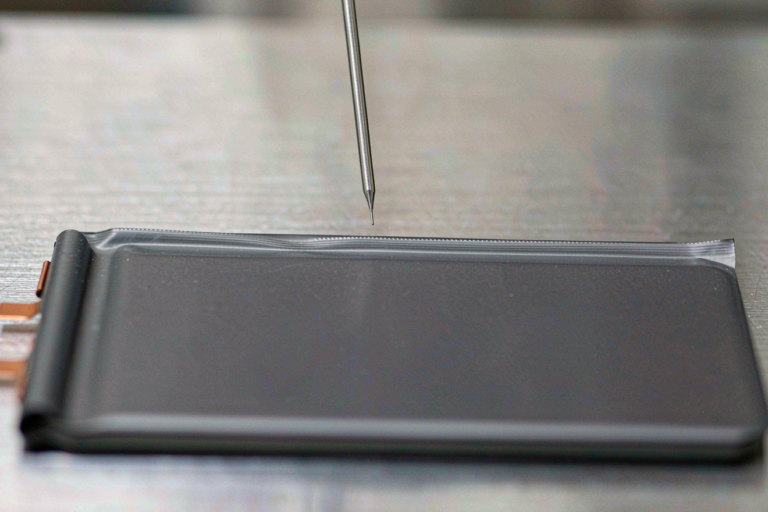
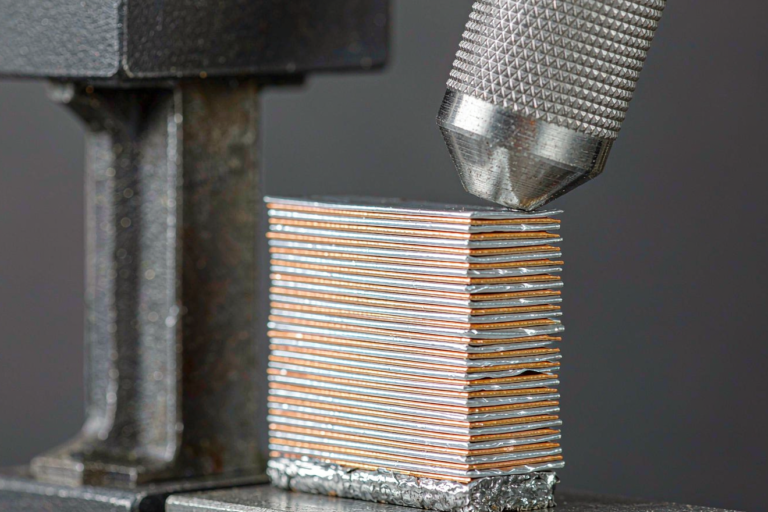
- Cell format: pouch, with laser-welded busbars and a flexible quasi-solid separator
Thermal Safety and the UN38.3 / IEC 62133 Compliance Path
Safety certification is where delivery fleets live or die with regulators. Any drone battery shipped or flown commercially must clear UN38.3 — the eight-test battery transport standard covering altitude simulation, thermal test, vibration, shock, external short circuit, impact, overcharge, and forced discharge. Our semi-solid cells passed the same suite, but with a noticeably gentler temperature rise during the external short-circuit test: peak cell surface temperature stayed under 95°C versus 140°C+ on the liquid-electrolyte control.
For equipment placed on the EU and broader international market, IEC 62133-2 governs secondary lithium cells and batteries. We documented cell-level abuse testing — nail penetration, overcharge to 1.5x rated voltage, and thermal stability — and the quasi-solid electrolyte materially reduced propagation risk. For aviation-specific approvals, we work alongside operators pursuing FAA Part 135 and EASA-specific light UAS operator certificates, where the battery safety dossier is reviewed line by line. A semi-solid state battery gives that dossier a far stronger story than a standard lithium battery.
Cycle Life and Total Cost of Ownership for Fleets
Delivery operators think in cost-per-delivery, not Wh. So we modeled a 200-drone fleet over 24 months. With baseline packs at 0.42 USD per usable Wh and a 500-cycle service life, pack replacement consumed roughly 31% of three-year power cost. The semi-solid custom battery solution we specified carried a 1.6x upfront premium but stretched service life to 1,100+ cycles under the same duty profile.
The math flipped in month 11. By month 24, the semi-solid fleet showed a 22% lower cost-per-delivery on energy storage alone, before counting the range-driven hub savings. For a program manager, that is the slide that gets budget approved. The semi-solid state battery drone delivery case is not about spec sheets — it is about when the curve crosses.
Cold-Chain and Weather Resilience for Urban Delivery
City delivery does not stop in winter. At -10°C, our baseline drone lithium battery dropped to 71% of its 25°C capacity and the charge acceptance collapsed, forcing slow, warm-box charging. The semi-solid packs held 84% of capacity at the same temperature and accepted charge at 0.7C without the lithium plating risk we watch for in liquid cells. For pharmacy and lab-sample runs, that resilience is the difference between a viable route and a grounded fleet.
We also measured thermal behavior on landing. A drone battery that lands hot and sits on an asphalt pad in summer is a different animal from one on a windy rooftop. The lower exothermic potential of the quasi-solid electrolyte gave us a wider safe dwell window before forced cooling — a real operational advantage during peak-hour sorties.
Integration: BMS, Form Factor, and Custom Pack Design
A semi-solid state battery is not a drop-in replacement. The lower internal resistance and different voltage curve demand a BMS tuned to the cell’s charge endpoint and balancing behavior. We specify a 14S2P pouch configuration with a redundant cell-monitoring IC, coulomb-counting SoC, and a redundant disconnect. Because the packs run hotter internally during fast charge, we added a two-stage charge profile: bulk to 80% at 1.5C, then taper.
Form factor also changes. Pouch cells let us mold the pack to the airframe’s center-of-gravity envelope, which a custom battery solution engineer exploits to improve stability. We 3D-scan the battery bay, simulate CG shift across SoC, and machine the enclosure to hold the pack without the dead weight of cylindrical cell holders. The result is a tighter, lighter assembly that a maintenance tech can swap in under 90 seconds.
Real-World Deployment Lessons From the Field
Our first pilot ran 40 drones on a pharmacy route for 14 weeks. Three lessons stood out. First, fast-charge discipline matters more than chemistry: operators who forced 2C charges saw early aging even on semi-solid packs. We capped at 1.5C and the retention held. Second, labeling and traceability under UN38.3 shipping rules must be baked into the pack housing, not a sticker. Third, the drone battery swap ecosystem — standardized connectors, hot-swap cradles, and a charged-pack vending model — mattered as much as the cell itself for uptime.
Would I put a semi-solid state battery in every delivery drone tomorrow? Not the small toy-class ones where cost dominates. But for any operator flying meaningful payloads, multiple daily cycles, or cold-weather routes, the engineering case is settled in my lab notes. The semi-solid state battery drone delivery transition is already underway, and the fleets that qualify it carefully will own the unit economics.
Frequently Asked Questions
Is a semi-solid state battery safe enough for urban drone delivery?
Yes, when properly qualified. Our builds pass UN38.3 transport testing and IEC 62133-2 equipment standards, and the quasi-solid electrolyte shows lower peak temperatures and reduced propagation in abuse testing compared with conventional lithium battery packs, which strengthens the safety dossier for FAA and EASA operator certifications.
How much longer does a drone delivery battery last with semi-solid chemistry?
In our delivery duty-cycle testing, we measured 92% capacity retention at 600 cycles and service life beyond 1,100 cycles, versus roughly 500 cycles on the baseline drone lithium battery. That roughly doubles pack service life and lowers cost-per-delivery.
Does cold weather still hurt semi-solid drone batteries?
Less so. At -10°C the semi-solid pack held 84% of 25°C capacity and accepted safe fast charge, while the baseline lithium battery dropped to 71% with poor charge acceptance. Cold-chain and winter routes are a clear use case.
Can a semi-solid state battery be a drop-in replacement for my current drone battery?
Not usually. The BMS, charge profile, and enclosure often need re-engineering. We deliver it as a custom battery solution — tuned pack configuration, CG-matched form factor, and a charge protocol matched to the cell’s characteristics — rather than a generic swap.
What is the realistic range gain for a delivery drone?
On our 6-rotor 2 kg-payload airframe, moving from a 210 Wh/kg drone lithium battery to a 285 Wh/kg semi-solid state battery pack extended usable range from 14.5 km to 19.8 km at the same payload — about 37% more range.