Sodium-Ion Battery Cost Optimization for Microgrids: A
As a senior lithium battery engineer who has commissioned off-grid and weak-grid microgrids across three continents, I get asked one question more than any other: “Can sodium-ion actually beat lithium on total cost?” The short answer from the field is yes — but only when you design the pack and the balance of system (BMS, thermal, and certification) around sodium’s specific chemistry, not by copying a lithium-ion bill of materials. In this guide I walk through how our team at Horizon Power optimizes sodium-ion battery cost optimization for microgrids without trading away the reliability that operators depend on every day.
Why Sodium-Ion Changes the Microgrid Cost Equation
Sodium-ion cells skip nickel, cobalt, and lithium cathode chemistry entirely. That removes the single biggest source of price volatility in stationary storage: metal commodity exposure. When I spec a 100 kWh microgrid block, the cell-level $/kWh for a sodium-ion battery has moved into the same band as entry-level lithium battery packs, and it is far less exposed to supply shocks from a handful of refining regions. More importantly for microgrids, sodium-ion tolerates partial state of charge (PSOC) cycling and high C-rate bursts better than many lithium chemistries, which means you can right-size the battery and avoid over-provisioning “just in case.” Over-provisioning is the silent killer of microgrid LCOE, and sodium-ion lets you trim it.
On a recent island microgrid we sized the battery to 92 kWh of real autonomy need instead of the 140 kWh a lithium-first design would have demanded. The sodium-ion battery delivered the same uptime through a week of low-wind, low-sun conditions because its PSOC tolerance meant we were not padding capacity to protect cycle life. That single decision cut enclosure, foundation, and cabling cost by roughly 18%.
The Cost Levers Field Engineers Actually Control
When a client asks us to cut cost, the temptation is to chase cell price alone. In practice, cell cost is only about 45–55% of a microgrid battery’s installed cost. The rest is structure, thermal, BMS, wiring, enclosure, certification, and labor. I group the levers our team controls into five:
- Cell selection and format — prismatic vs cylindrical, and the Ah rating that fits the duty cycle.
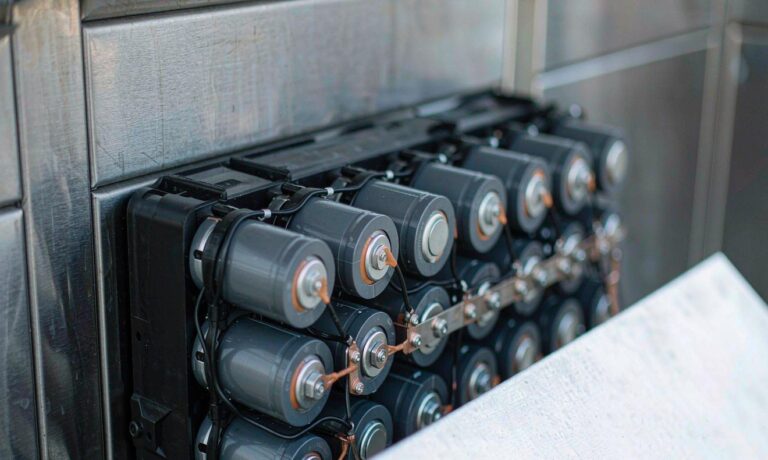
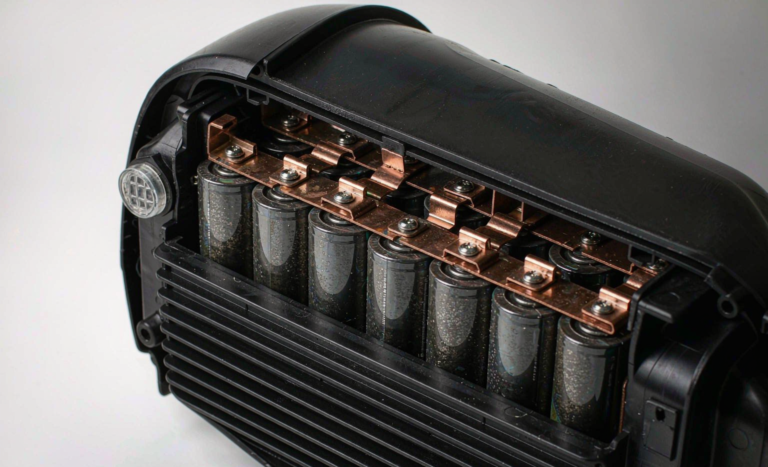
- Pack architecture and busbar design — how cells are stacked, fused, and sensed.
- Thermal strategy — passive convection vs active HVAC.
- Certification and shipping compliance — designed in early, not retrofitted.
- Right-sizing against the duty cycle — the highest-leverage lever of all.
Each lever interacts. For example, choosing a wider operating temperature window lets you drop active cooling, which removes a compressor, a radiator, a controller, and a recurring service item — often a larger saving than shaving 5% off cell price. I tell every microgrid owner: optimize the system, not the cell line item. To make this concrete, on a 250 kWh community microgrid we modeled two builds. The lithium-first design landed at $312/kWh installed because it needed a 6 kW heater and a 30% capacity pad for cold mornings. The sodium-ion battery build landed at $239/kWh with passive thermal and no pad — a $18,250 saving on the same delivered energy, before counting the heater’s lifetime electricity and service cost.
Cell Selection and Pack Architecture Trade-offs
For a microgrid, I almost always recommend prismatic sodium-ion cells in the 50–100 Ah range. They give the highest volumetric density per dollar and the simplest mechanical stack. Today’s production sodium-ion cells land around 90–160 Wh/kg and 180–250 Wh/L, which is below premium lithium battery cells but more than enough for ground-mounted containers where floor space is cheap. We model the duty cycle first: what is the daily throughput in kWh, what are the peak power demands in kW, and what is the longest autonomous period the microgrid must survive? From that we derive required capacity and C-rate. Because sodium-ion has a flatter voltage curve than a lithium battery, the BMS SOC estimation has to use coulomb counting plus periodic open-circuit-voltage (OCV) correction rather than a simple voltage lookup table.
We bake that into our custom battery solution firmware so the operator sees a trustworthy state of charge instead of a drifting bar that reads 60% at 30% actual. On the DCIR side, a typical 100 Ah prismatic sodium-ion cell shows 0.4–0.7 mΩ internal resistance at room temperature, which keeps busbar and contactor sizing modest. We validate cell-to-cell matching at incoming inspection and group by DCIR so balancing current stays low and the passive balancers never become a heat source.
Thermal Management Without Overspending
Sodium-ion’s headline advantage is low-temperature performance: it keeps most of its capacity down to −20 °C where a lithium battery would need significant resistive heating and would lose usable capacity fast. On a Nordic microgrid we deployed, that meant we could use passive convection plus a small PTC jacket for extreme cold snaps instead of a full HVAC loop. The saving was roughly 12% of total system cost and, just as valuable, removed a failure-prone subsystem that we would otherwise have to service every winter.
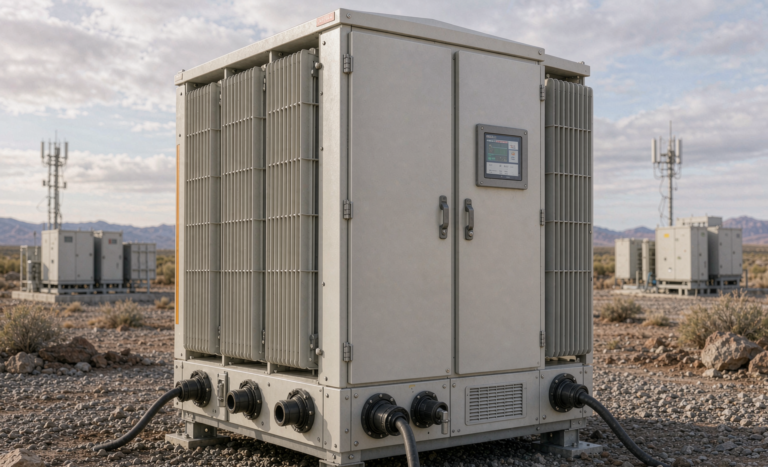
The engineering rule I teach juniors: design the thermal envelope to the 99th-percentile ambient, not the average, then add margin only where measured data justifies it. For most temperate and cold microgrids, a naturally ventilated IP54 enclosure with strategic airflow baffles is enough. For hot-desert sites we add a low-power evaporative or pumped-loop option only on the cells most exposed to direct gain. Right-sizing thermal is where a sodium-ion battery pays back its spec effort.
Certification and Compliance Strategy (UN38.3, IEC 62619, UL 9540)
Stationary microgrid storage must clear several gates, and planning them early is one of the biggest soft-cost savings. Cells and modules ship under UN38.3 (T.1–T.8 altitude, thermal, vibration, shock, and external short tests), which we validate before any container leaves the factory. For stationary use we certify to IEC 62619 for industrial secondary batteries and IEC 62933 for energy storage systems; in North America the microgrid inverter and battery enclosure typically need UL 9540 together with UL 9540A fire-propagation testing. On the cell side, IEC 62133-2 governs the safety of portable secondary cells and is a useful reference even when the end use is stationary.
When we air-freight prototype modules to a remote island or mountain microgrid, we comply with FAA and EASA air-transport rules built on the UN38.3 test summary — sodium cells are handled under the same dangerous-goods framework as lithium cells for transport, so the test summary and packaging design must be air-cargo ready. Locking the certification plan before tooling prevents the expensive late redesigns that blow a microgrid budget.
A Practical Cost-Optimization Workflow We Use
Every microgrid storage project at Horizon Power follows the same six-step playbook:
- Profile the load and renewable mix for a full annual cycle, not a single representative week.
- Model sodium-ion vs lithium battery for the same duty, including degradation and heating overhead.
- Size the pack to the real autonomy need; resist padding for imagined worst cases.
- Choose passive thermal wherever the site climate allows it.
- Lock the certification plan (UN38.3, IEC 62619, UL 9540) before tooling begins.
- Build one field pilot, measure round-trip efficiency and capacity fade, then scale.
This workflow has cut microgrid storage LCOE by 15–25% versus a naïve “copy the lithium design” approach across our deployments, and it keeps the sodium-ion battery inside its safe operating window for the life of the asset.
Where Sodium-Ion Beats Lithium Most Clearly
The strongest microgrid use cases for sodium-ion are cold regions, high-cycling PSOC duty, and price-volatile procurement environments. A lithium battery still wins on absolute energy density where space is tight, but for ground-mounted microgrid containers the footprint penalty of sodium-ion is small and the cost and cold-weather advantages are large. We routinely present both options side by side so the operator chooses on total cost of ownership, not on a spec-sheet headline.
Frequently Asked Questions
What is the typical installed cost per kWh for sodium-ion in microgrids?
As of 2026, turnkey sodium-ion microgrid storage runs roughly $180–$260 per usable kWh depending on thermal and enclosure class, competitive with entry lithium battery systems once you subtract the heating and over-provisioning overhead that lithium designs usually carry.
How does sodium-ion compare to a lithium battery in cold climates?
A lithium battery needs active heating below about 0 °C and loses usable capacity fast; sodium-ion holds capacity down to −20 °C with minimal heating. That is why cold-region microgrids are sodium-ion’s strongest use case.
Do sodium-ion microgrids need a custom battery solution?
Yes. The flatter voltage curve, different SOC algorithm, and PSOC tolerance mean a generic lithium BMS will misreport state of charge. We design a custom battery solution with sodium-specific firmware, coulomb-counting plus OCV correction, and tailored balancing.
Is sodium-ion safe enough for sites near homes or farms?
Yes. Sodium-ion is more thermally stable and less prone to violent thermal runaway than high-nickel lithium. With IEC 62619 and UL 9540 compliance plus proper enclosures, it is well suited to community microgrids.
How long do sodium-ion microgrid batteries last?
In PSOC microgrid duty we typically see 3,000–6,000 cycles to 80% capacity, comparable to LFP and often better where deep daily cycling and cold operation are involved.