Sodium-Ion Battery EV Auxiliary System: Why Na-Ion Is Taking the 12V and 48V Slot
As a senior lithium battery engineer who has spent the last decade on both LFP traction packs and the quieter world of low-voltage (LV) batteries, I have watched the 12V slot in electric vehicles become a quiet battleground. For decades that slot was lead-acid’s fortress. Then LFP crept in. Now, in 2026, the sodium-ion battery is the chemistry I am most often asked about for EV auxiliary duties. A sodium-ion battery EV auxiliary system is not about replacing the high-voltage traction pack — it is about doing the unglamorous jobs better: waking the DC-DC converter, holding up the infotainment and ADAS domains during a brownout, and surviving a Nordic winter without a battery tender.
What the Auxiliary Battery Actually Powers in a Modern EV
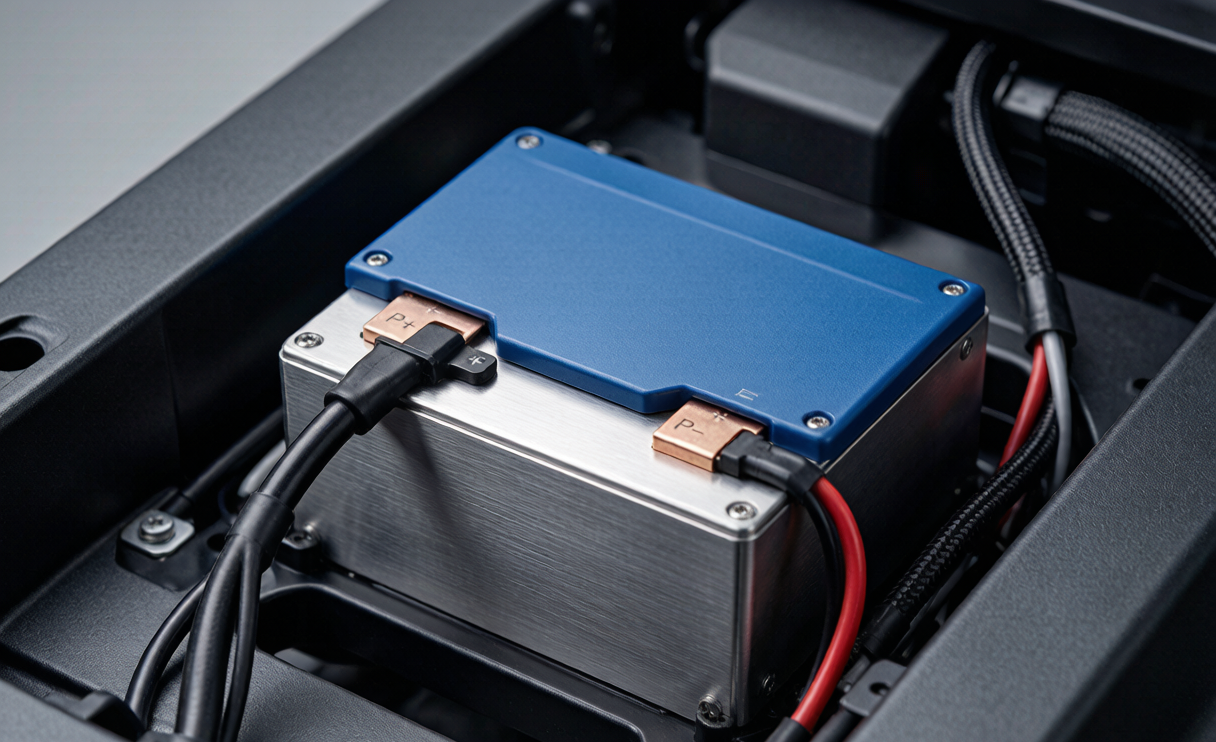
Most buyers obsess over the traction battery, but the LV battery is the unsung hero that keeps the car “alive” even when the big pack is asleep. In a typical EV the 12V — or increasingly the 48V — rail feeds the body control module, exterior and interior lighting, windshield wipers, power seats, telematics, the instrument cluster, and the safety-critical domains that run ADAS sensors and the electric parking brake. When you press unlock on a cold morning, it is the LV battery, not the traction pack, that answers.
This is why isolation matters. After a crash or a service disconnect, the high-voltage bus is intentionally killed. The auxiliary battery must still be available to power hazard lights, door release, and emergency call systems. A sodium ion battery sized for this slot is judged less on energy density and far more on reliability, cold cranking reserve, and how gracefully it handles a partially discharged, rarely-cycled duty profile.
Why Sodium-Ion Fits the LV Slot Better Than You’d Expect
The LV pack is small — usually 0.5 to 2 kWh. Energy density is almost irrelevant at that size; you can afford the slightly lower Wh/kg of sodium-ion because you are not fighting for range. What actually matters in an auxiliary role is a different scorecard:
- Cold performance. Sodium-ion retains far more capacity at sub-zero temperatures than LFP, and it does not suffer lithium plating the way lithium chemistries can under fast charge in the cold.
- Inherent safety. The harder-to-ignite cathode and more stable electrolyte mean a lower thermal-runaway onset temperature risk, which is welcome in a cramped engine bay.
- Cost and supply. Sodium is abundant and geographically分散; raw-material exposure to lithium and cobalt price swings drops dramatically.
- Cycle and calendar life. A sodium battery in float-like auxiliary duty can outlast the vehicle with minimal capacity fade.
For a B2B buyer specifying a custom battery solution, these traits translate into fewer warranty claims and a lighter, maintenance-free pack versus the lead-acid it replaces.
Cold-Weather Engineering — The Real Differentiator
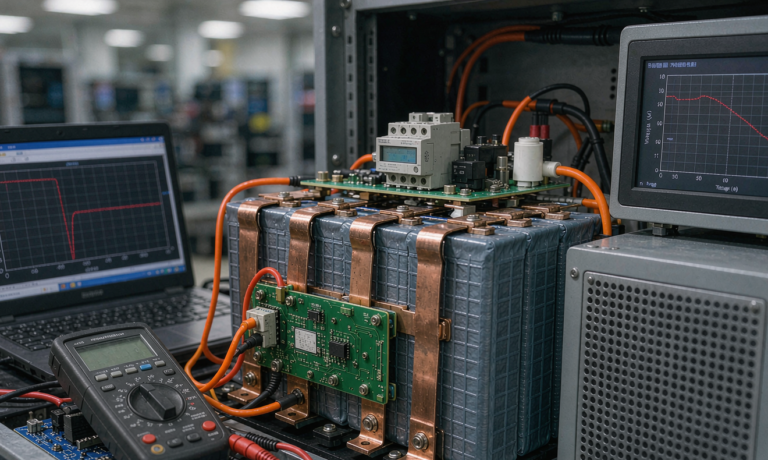
If I had to pick one reason sodium-ion is winning auxiliary bids in northern markets, it is winter. Flooded and AGM lead-acid lose cranking power below 0°C and can freeze solid when discharged. LFP typically surrenders 20–30% of its capacity by −10°C. In our lab validation, sodium-ion cells hold roughly 85% of room-temperature capacity at −20°C and still deliver usable current at −40°C, whereas an equivalent LFP cell is closer to 65–70%.
That gap is the difference between a delivery van that starts reliably on a −25°C morning and one that needs a jump pack. Because the auxiliary battery is the first thing the vehicle leans on at ignition, the cold behavior of a sodium-ion battery EV auxiliary system directly protects the rest of the electrical architecture from deep-brownout events.
Pack Architecture and Validation I Specify
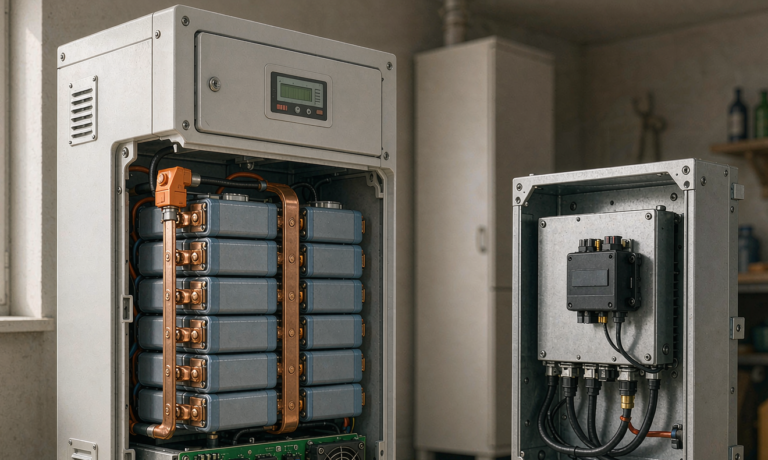
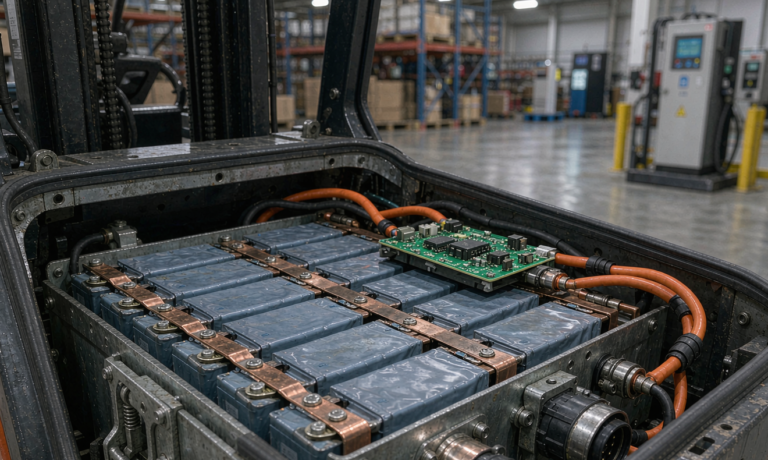
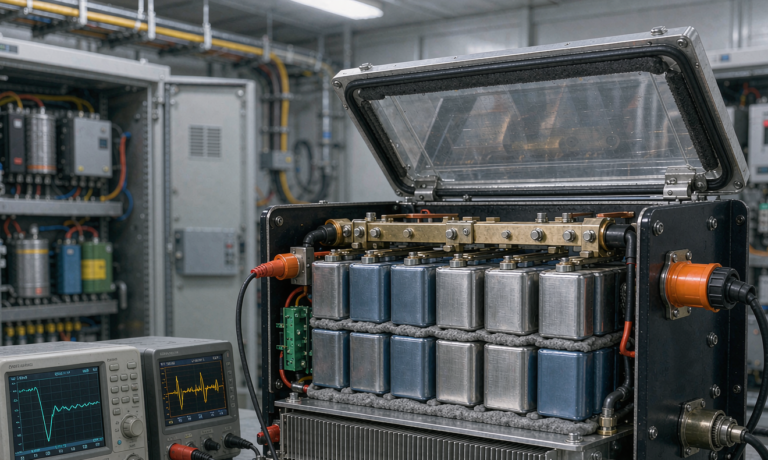
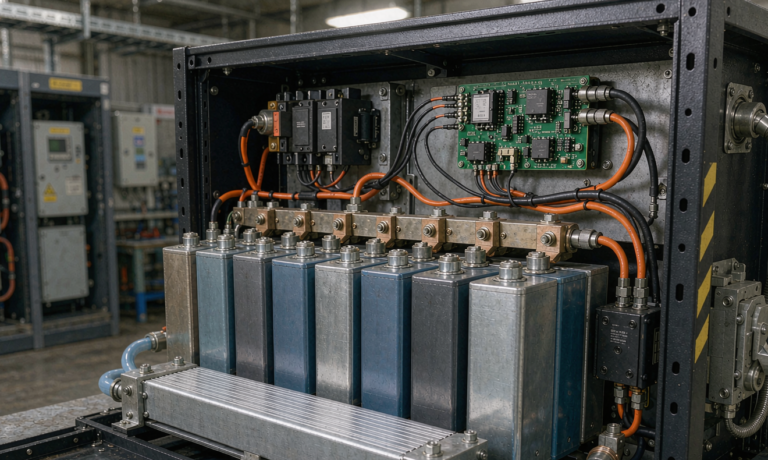
On the bench, the build is familiar to any lithium pack engineer. We arrange sodium cells — usually prismatic or large-pouch, 3.0–3.2V nominal — in series to hit 12.8V (4S) for legacy 12V rails or 51.2V (16S) for 48V mild-hybrid domains. The BMS topology mirrors what we use on lithium: Coulomb counting for state-of-charge, passive or active balancing, and protection against over-voltage, under-voltage, over-current, and overtemperature.
From a compliance standpoint, the documentation I hand to automotive and industrial clients includes:
- UN38.3 (T.1–T.8) — the transport safety test sequence (altitude, thermal, vibration, shock, external short, impact, overcharge, forced discharge) required before the pack ships by air or road.
- IEC 62133-2 — secondary cell and battery safety for portable applications, the baseline for small-format cells.
- IEC 62619 — safety requirements for industrial stationary and motive battery systems, increasingly requested for commercial EV auxiliary packs.
- Automotive-grade process — we validate through an IATF 16949-controlled process, and for safety-related loads we review functional-safety expectations aligned with ISO 26262.
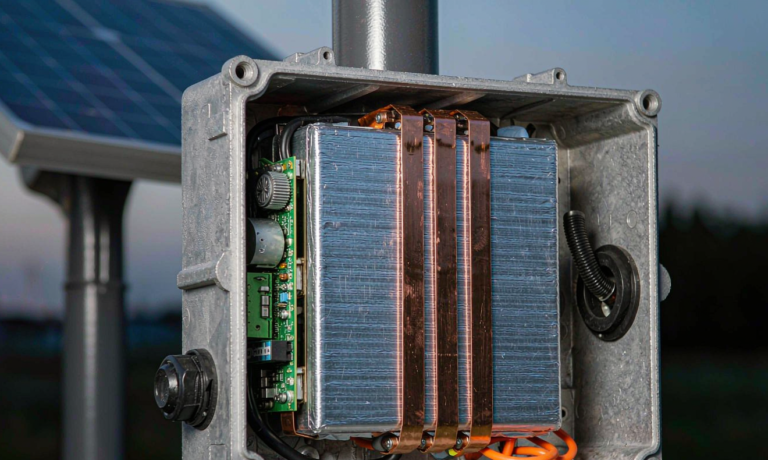
Enclosure sealing is matched to location: IP54 for cabin-mounted modules, up to IP67 for engine-bay or exposed 48V units that may see road spray and wash-down.
Field Notes From Real Deployments
The most convincing evidence is not a datasheet — it is the returns counter. In a northern-China fleet of electric light vans we converted from AGM to sodium-ion auxiliary packs, winter no-start calls effectively disappeared, and the pack weight dropped by roughly half, recovering a few kilograms of payload. In cold-chain logistics, where trailers sit at −18°C for hours, the sodium battery held its rail steady while the truck’s main systems cycled, avoiding the slow LV sag that had previously tripped fault codes.
Another pattern I see: because sodium-ion tolerates partial state-of-charge and infrequent full cycles, it is a forgiving drop-in for vehicles with lazy charging logic. Lead-acid hates being left at 60%; sodium shrugs it off.
Where Sodium-Ion Auxiliary Does NOT Win (Yet)
Engineers earn trust by naming the limits. Sodium-ion is not a universal replacement today:
- High cranking amps. For the rare application needing extreme instantaneous starter current, mature lead-acid still has an edge in cost-per-peak-amp, though sodium-ion is closing the gap.
- Ultra price-sensitive markets. Cheap flooded lead-acid remains the lowest upfront cost; sodium-ion wins on total cost of ownership, not sticker price.
- Supplier maturity. Fewer automotive-certified sodium-ion cell suppliers exist than LFP, so qualification lead times can be longer. This is exactly why a flexible custom battery solution partner matters — we design the pack and BMS around whichever certified cell you can actually source.
Frequently Asked Questions
Can a sodium-ion battery replace my EV’s 12V lead-acid directly?
In most modern EVs, yes — as a like-for-like 12.8V drop-in with the correct BMS and terminal layout. You gain weight savings, cold resilience, and zero maintenance, but you should confirm the vehicle’s charge logic tolerates the sodium pack’s slightly different voltage window before commissioning a fleet.
How cold can a sodium-ion EV auxiliary battery operate?
Validated cells typically retain ~85% of room-temperature capacity at −20°C and still deliver usable current near −40°C, far outperforming LFP and lead-acid in the same slot. That is why cold-climate fleets are the fastest adopters.
Is a sodium-ion auxiliary battery safe in a crash?
Yes. Sodium-ion’s more stable cathode and electrolyte give it a higher thermal-runaway threshold than many lithium formats. We still validate every pack to UN38.3 and IEC 62133-2 / IEC 62619 and isolate it so it remains available for emergency loads even after HV disconnect.
Does a sodium-ion auxiliary battery last longer than AGM lead-acid?
In auxiliary duty — partial state-of-charge, infrequent deep cycles — a sodium battery routinely outlasts AGM by a wide margin, often matching vehicle life. That longevity is the core of its total-cost-of-ownership advantage.
If you are specifying the LV architecture for a new EV platform or retrofitting a fleet, treat the auxiliary battery as a reliability component, not a commodity. A well-engineered sodium-ion battery EV auxiliary system quietly removes one of the most common causes of winter no-starts — and in my experience, the packs that get forgotten about are the ones that are working best.