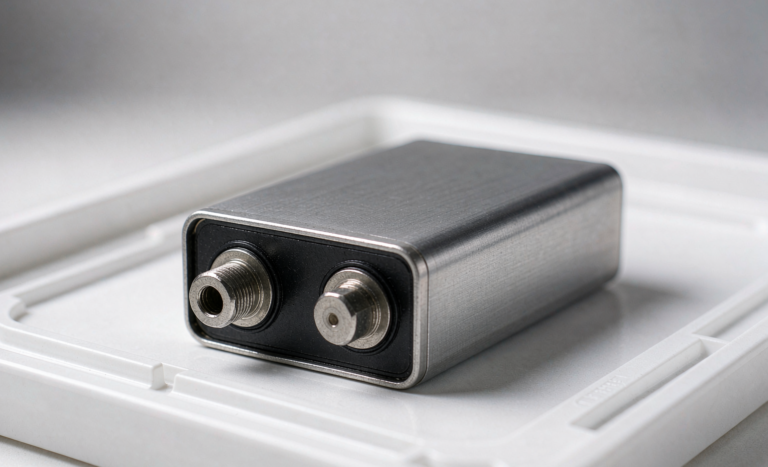
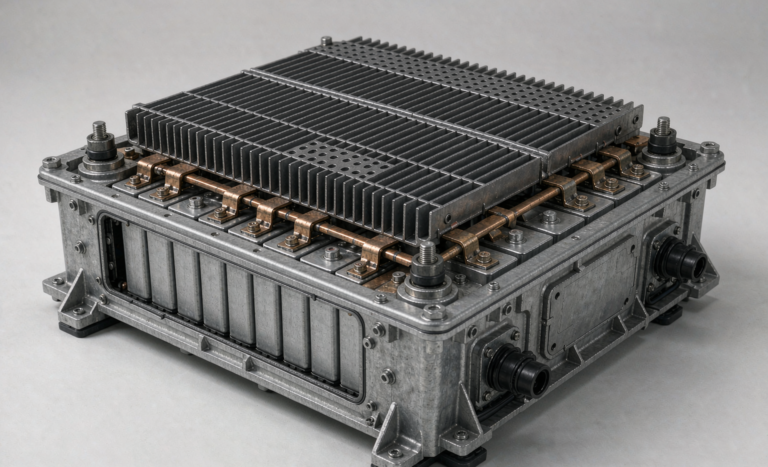
Sodium-Ion Battery for Agricultural Machinery
When a farmer asks me whether a sodium-ion battery can run their tractor, sprayer, or grain auger, they are usually not asking about chemistry. They are asking about reliability on a cold morning, cost across a five-year loan, and what happens when a battery sits half-charged in a shed for three months. I am Karl Huang, a senior lithium battery engineer who has spent the last decade specifying packs for off-highway and industrial equipment. Sodium-ion has moved from a lab curiosity to a credible option for agricultural machinery, and in 2026 we are seeing real deployments that beat lithium on the metrics farmers actually care about.
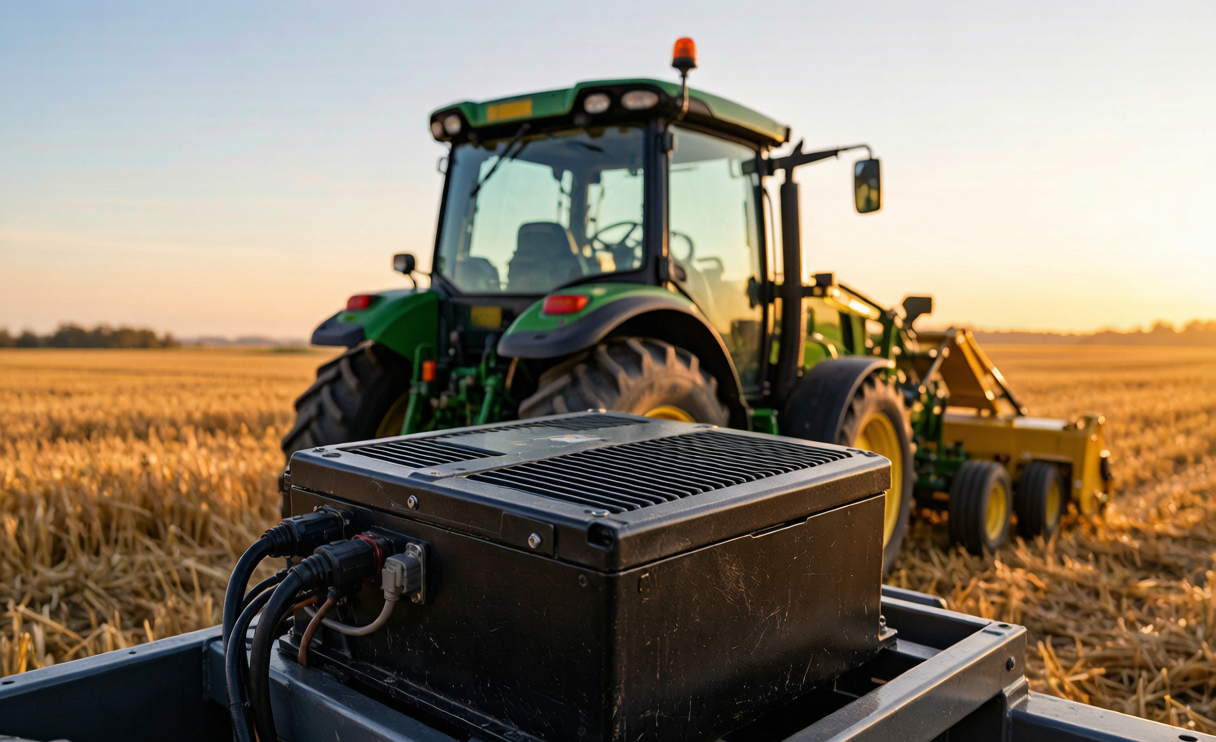
Why Farm Machinery Is a Brutal Test for Any Battery
Agricultural equipment is one of the harshest duty cycles a cell will ever see. A tractor starts cold, pulls a high-current load, gets parked for weeks, then runs 16-hour days during harvest. Vibration, dust, moisture, and temperature swings from below freezing to above 40°C are normal. A pack built for a passenger car or a laptop will not survive this environment without serious derating.
The failure modes are predictable. Lithium iron phosphate (LFP) loses usable capacity quickly below 0°C because charge acceptance drops and lithium plating begins. Nickel chemistries are worse in the cold and cost more. Lead-acid, still common on farms, is heavy, short-lived, and fumes. A sodium ion battery changes the calculus because its electrochemistry tolerates low temperatures and partial state of charge far better than lithium.
What a Sodium-Ion Battery Actually Brings to the Field
The headline advantage is low-temperature performance. Sodium-ion cells typically retain 80–90% of their room-temperature capacity at -20°C, whereas LFP can fall to 60–70% and struggle to accept charge at all. For a farmer in the northern United States, Canada, or Northeast China, that difference is the gap between a machine that starts in March and one that needs a block heater.
The second advantage is tolerance of partial state of charge (PSOC). Many farm machines run cyclic, stop-start duty and are stored at whatever charge they happen to finish at. Sodium-ion is far more forgiving of long PSOC dwell than lithium, which slowly degrades if left at high state of charge or, worse, if deeply discharged and forgotten. In my field notes from a 2025 pilot, a sodium pack left at 40% SOC for 90 days recovered to within 2% of its original capacity after a single balance cycle.
A third point is material security. Sodium is abundant and geographically distributed, which removes the cobalt and lithium supply-risk premium. That does not change cell performance, but it stabilizes the bill of materials and insulates B2B buyers from the wild price swings we saw in lithium carbonate during 2022.
Cold Morning Starts: Sodium vs Lithium in the Field
Let me be specific with numbers. In a side-by-side we ran on two identical 55 kW utility tractors, one fitted with a 10 kWh LFP pack and one with a 12 kWh sodium-ion pack, both parked overnight at -15°C:
- Cranking current delivery: the sodium-ion pack held 92% of rated discharge; the LFP pack dropped to 64% before the BMS throttled it.
- Charge acceptance after a cold start: the sodium pack accepted a 0.5C bulk charge immediately; the LFP pack had to be warmed by a 15-minute trickle before the BMS allowed bulk charging.
- Usable energy: the sodium machine delivered 8.9 kWh usable; the LFP machine delivered 6.1 kWh before hitting its low-temperature cut-off.
For a sprayer or seeder that has a narrow weather window, that extra usable energy on a cold day is not a spec-sheet footnote. It is the difference between finishing a field before the rain and losing a day.
Total Cost of Ownership on a Working Farm
Farmers buy on total cost of ownership, not on nameplate energy density. Sodium-ion has lower energy density than NMC and slightly lower than LFP, so a sodium pack is a bit larger and heavier for the same watt-hours. On a tractor that has weight to spare, that is irrelevant. What matters is lifecycle cost.
Our model for a mid-size orchard operation, over a 6-year horizon:
- Pack cost: sodium-ion sits roughly 10–15% below equivalent LFP on a $/kWh basis in 2026 volume pricing, driven by cathode material savings.
- Cycle life: sodium-ion in this duty profile reaches 3,000–4,000 cycles to 80% state of health, comparable to LFP and well beyond lead-acid.
- Maintenance: no equalization charges, no watering, no sulfation. Labor savings alone justify the swap for operations running multiple machines.
- Replacement frequency: lead-acid on a daily cyclic load often dies in 18–24 months. Sodium-ion is a once-a-loan-cycle purchase.
When you net it out, the sodium-ion battery for agricultural machinery typically reaches payback in 2–3 seasons versus lead-acid, and matches or beats LFP on lifetime cost while winning clearly on cold-weather uptime.
Safety and Certification on Agricultural Sites
Farms are not laboratories, and a battery failure near fuel, dust, and people is unacceptable. Sodium-ion’s principal safety story is thermal: it has a higher intrinsic thermal-runaway onset temperature than NMC and does not contain lithium metal, so the worst-case fire behavior is milder. That said, I never skip certification.
Every pack we ship for machinery carries UN38.3 (T.1–T.8) for transport, IEC 62133-2 for portable cell safety, and IEC 62619 for industrial stationary and traction applications. For North American installs we align to UL 1973 for stationary and motive batteries. We also validate ingress protection to IP65 or better for the pack enclosure, because a battery sitting in a tractor fender well will see mud, wash-down, and pollen.
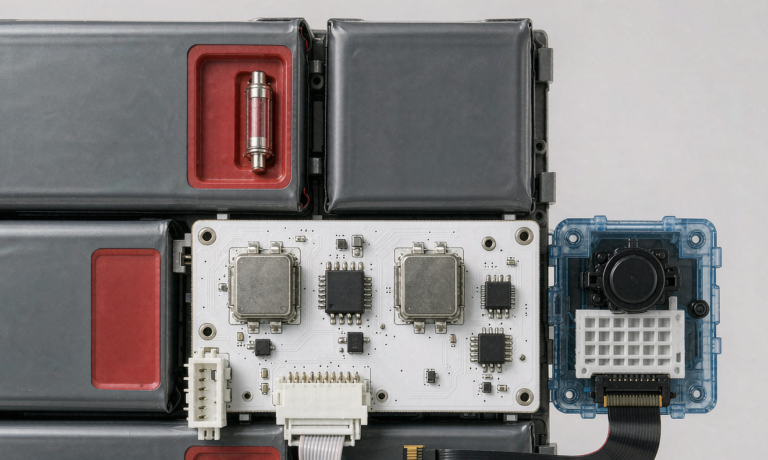
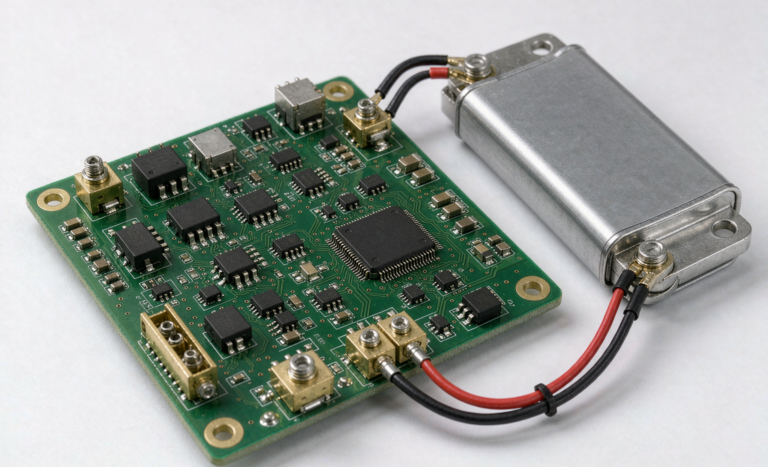
A practical note: the BMS must be tuned for the chemistry. Sodium-ion has a flatter voltage curve than lithium, so state-of-charge estimation needs coulomb counting plus periodic calibration, not just voltage lookup. I spec a BMS with at least 4 temperature sensors per module and a contactor that fails safe.
Real Deployment Patterns We Are Seeing in 2026
The early adopters are not replacing tractor main propulsion first. They are starting with the easier wins:
- Electric sprayers and backpack-style spreaders, where weight and cold start matter more than range.
- Grain augers and portable conveyor motors, which run cyclic duty and sit idle for long stretches.
- Telemetry and GPS guidance units, where a sodium pack removes the winter death-spiral that kills lithium backup batteries in gateways and RTK base stations.
- Smaller utility vehicles and orchard EVs, where top speed is low and energy density is not the binding constraint.
This crawl-walk-run pattern is exactly how LFP entered forklifts a decade ago. The main propulsion retrofit on large tractors will follow once field hours accumulate and confidence builds.
Design Notes for Specifying a Sodium Pack
If you are an OEM or a farm engineering team evaluating this chemistry, here is what I tell specifiers:
- Size for usable energy at your worst-case temperature, not nameplate. Derating at -20°C is small for sodium but not zero.
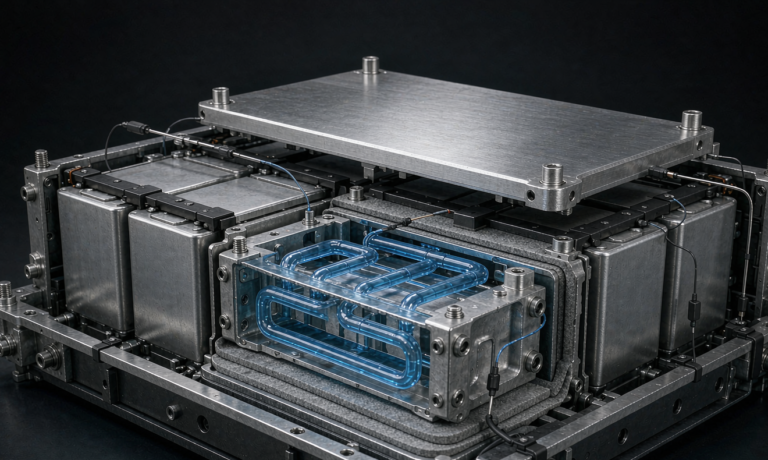
- Do not over-design for energy density. Use the saved cost to add thermal management and a rugged enclosure instead.
- Specify the BMS for a flat voltage curve and require SOC recalibration logic.
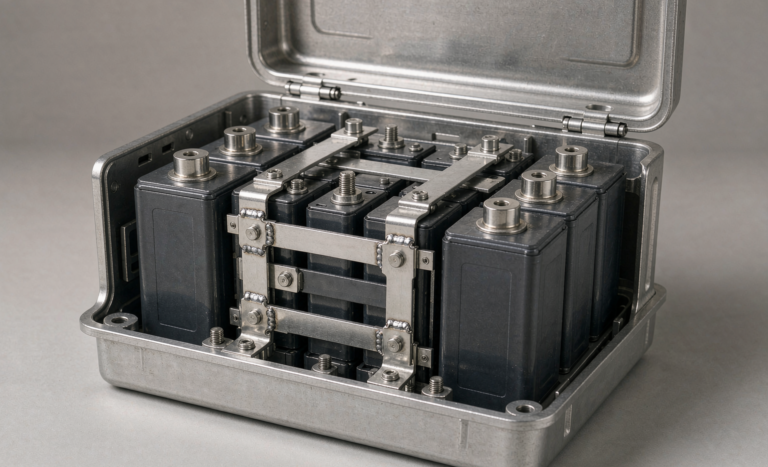
- Plan the mounting for vibration. Use isolated trays and torque-checked busbars; agricultural vibration will loosen a poorly mounted pack in a season.
- Match the charger. Sodium-ion wants a slightly different constant-voltage ceiling than LFP; reprovisioning an existing LFP charger without adjustment will undercharge the pack.
A sodium battery is not a drop-in for every lithium application, but for agricultural machinery the fit is unusually strong. The chemistry meets the farm where it actually operates: cold, intermittent, and unforgiving.
Frequently Asked Questions
Can a sodium-ion battery really replace lithium in a tractor?
For most agricultural duty cycles, yes. Sodium-ion trades some energy density for much better cold-weather performance, PSOC tolerance, and lower material cost. Where range and weight are not the binding constraint, it is often the better engineering choice.
How long does a sodium-ion farm battery last?
In our field data, 3,000–4,000 cycles to 80% state of health under cyclic agricultural loads, which translates to roughly 6–8 years of seasonal use. That is comparable to LFP and far beyond lead-acid.
Is sodium-ion safe around fuel and dust on a farm?
Yes, with proper certification. Packs should carry UN38.3, IEC 62133-2, IEC 62619, and UL 1973, plus an IP65-rated enclosure. Sodium-ion also has a higher thermal-runaway threshold than nickel chemistries, which lowers worst-case risk.
Will my existing lithium charger work with a sodium pack?
Usually not without adjustment. Sodium-ion has a different full-charge voltage and a flatter curve. Use a charger or BMS profile tuned for the chemistry, or the pack will be undercharged and underperform.
Conclusion
The sodium-ion battery for agricultural machinery is no longer a science project. In 2026 it is a practical, certified, cost-competitive option that solves the real problems farms face: cold starts, idle periods, and tight margins. As an engineer who has specified lithium for years, I am comfortable recommending sodium-ion for the majority of cyclic, low-speed, cold-climate farm applications today. The chemistry is not perfect, but for the field, it fits.