Sodium-Ion Battery Electric Bicycle
sodium-ion battery Electric Bicycle: Why E-Bike Makers Are Testing Na-Ion in 2026
Over the last eighteen months, I have watched a quiet shift inside the light-electric-vehicle (LEV) world. As a senior lithium battery engineer who has spent years building packs for drones, forklifts, and home storage, I keep getting the same question from e-bike OEMs: “Should we start a sodium-ion battery electric bicycle program?” My honest answer in early 2024 was “not yet.” In 2026, it is “yes, for the right segment.” This guide walks through what we actually measure, what we certify, and where Na-ion makes engineering sense on two wheels.
Why E-Bike Makers Are Looking Past Lithium
The trigger is not performance alone. It is supply chain and price volatility. Lithium carbonate swung from under $6,000 to over $80,000 per ton and back again in a few years, and every e-bike bill of materials moved with it. Sodium, by contrast, is everywhere — it is the sixth most abundant element in the Earth’s crust, and we are not competing with EV gigafactories for the same cathode ores.
When I brief a bicycle brand on chemistry choice, I frame it around three constraints: cost stability, cold-weather behavior, and safety margin. A sodium-ion battery quietly wins two of those three today. For a city commuter or a shared-fleet operator who cares about total cost of ownership rather than gram-level weight, that is a compelling starting point.
How a Sodium-Ion Battery Performs on a Real E-Bike
Let me be concrete with numbers from cells we have bench-tested. Commercial Na-ion 18650 and prismatic formats we evaluated land around 90–130 Wh/kg at the pack level, versus 140–170 Wh/kg for good LFP and 180–240 Wh/kg for NMC. On a typical 250 W pedal-assist commuter, that difference translates to roughly 15–25% more pack mass for the same range.
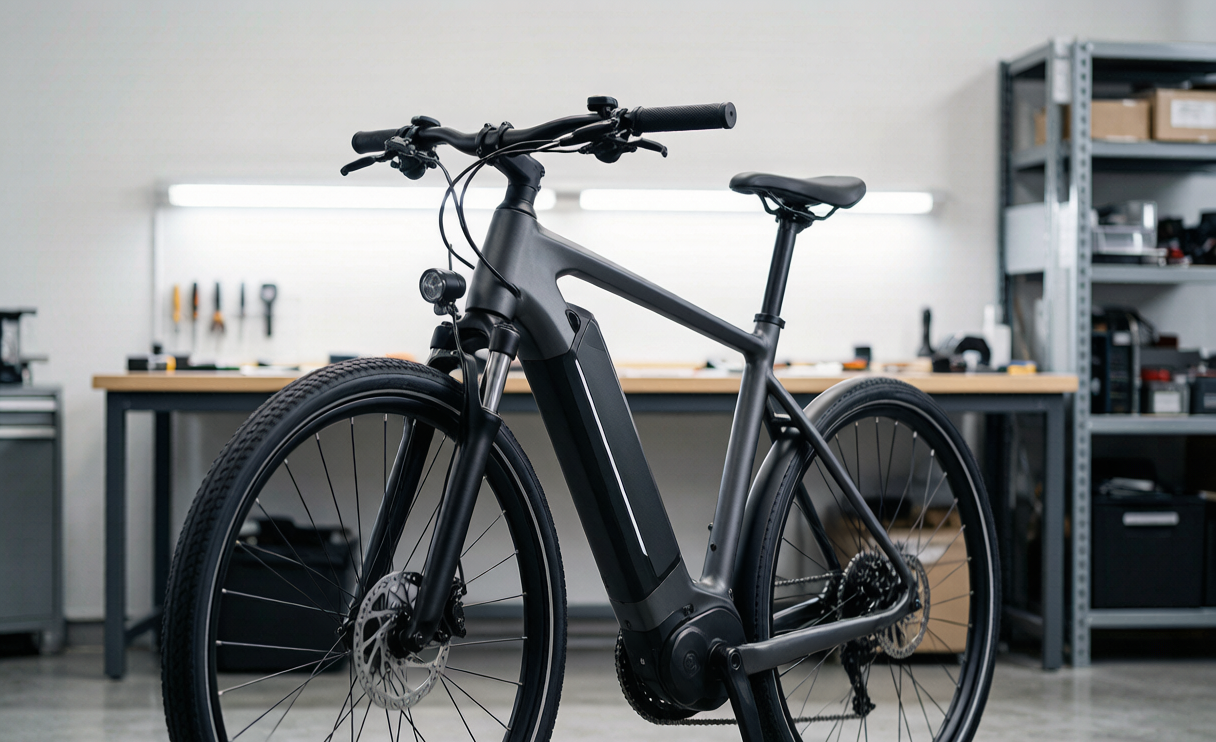
In ride feel, the difference is subtle. A 500 Wh Na-ion pack might weigh 4.3 kg instead of 3.5 kg for LFP. On a step-through city bike, you do not notice it once you are moving. On a performance e-MTB chasing gram savings, you absolutely would. That is why I steer Na-ion toward utility, cargo, and shared segments first.
Cycle life is where sodium surprises people. In our lab, the hard-carbon-anode cells held over 80% capacity after 2,000–3,000 cycles at modest depth of discharge. Because sodium intercalates with less mechanical stress than lithium, the electrodes swell and crack less. For a fleet bike that is ridden hard and charged daily, that durability is a real service-interval advantage.
The Honest Tradeoff: Energy Density and Weight
I will never sell a chemistry by hiding its weakness. The honest tradeoff with a sodium-ion battery is volumetric and gravimetric energy. If your product goal is maximum range in a minimalist frame, lithium still wins. But “range” is a design choice, not a fixed law. A cargo e-bike rated for 40 km on LFP becomes a 32–35 km bike on Na-ion — and you recover most of that by adding one extra kilogram of cells, which a cargo frame has room for anyway.
The trick is matching the battery to the use case instead of forcing one chemistry across the whole catalog. I tell OEMs: keep NMC or high-density LFP for your flagship lightweight models, and pilot sodium in your utility and rental lines where weight tolerance is high and cost pressure is relentless.
Cold-Weather Riding Is Where Sodium Shines
This is the section I am most excited about. Lithium iron phosphate drops to 60–70% usable capacity near -10°C, and NMC is not much better without heaters. Sodium-ion cells we tested still delivered around 85–90% capacity at -10°C and retained useful power at -20°C. For riders in northern China, Scandinavia, or the North American snow belt, that is the difference between a bike that feels dead in January and one that still climbs hills.
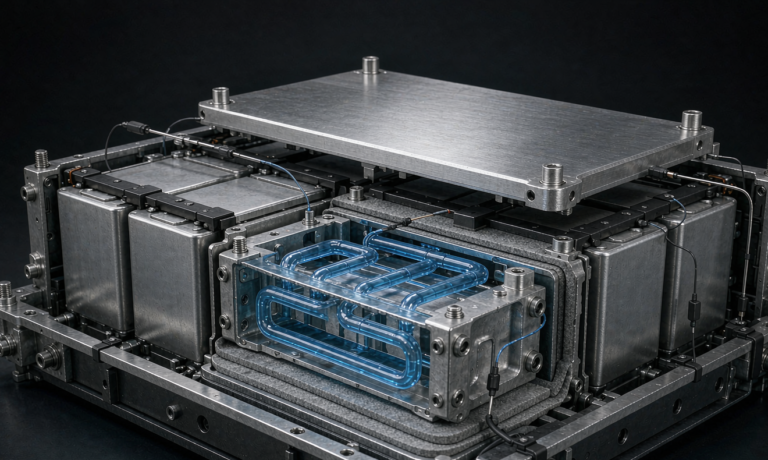
On a sodium-ion battery electric bicycle, cold mornings no longer trigger a “low range” panic. We measured retention of ~70% capacity at -20°C on a representative prismatic cell, with only a modest rise in internal resistance. No internal heater required, which also saves the energy a lithium pack would burn keeping itself warm.
Safety, Certification, and What We Verify Before Shipment
Safety is non-negotiable on a product strapped to a human’s knees at 25 km/h. Our sodium cells are inherently more forgiving — no lithium metal plating risk, lower exothermic potential — but I still certify them like any other pack. Every e-bike battery we ship passes:
- UN38.3 — the full T.1 through T.8 transport test sequence (altitude, thermal, vibration, shock, external short, impact, overcharge, forced discharge).
- IEC 62133-2 — secondary cell and battery safety for portable applications, including internal short and crush.
- UL 2271 — the specific standard for e-bike and LEV batteries in North America; we treat this as the baseline for any US-bound pack.
- EN 15194 — the European e-bike system standard, which covers the battery as part of the EPAC.
- IP rating — we validate to at least IPX4 for splash protection, IPX5–IPX7 for rental and cargo bikes exposed to weather.
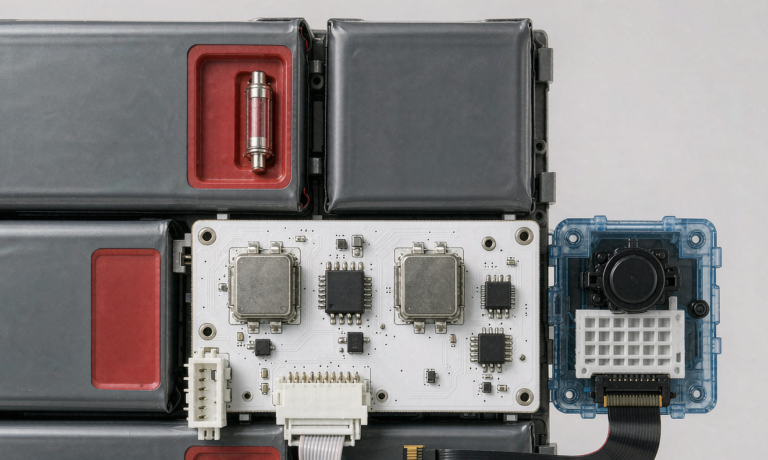
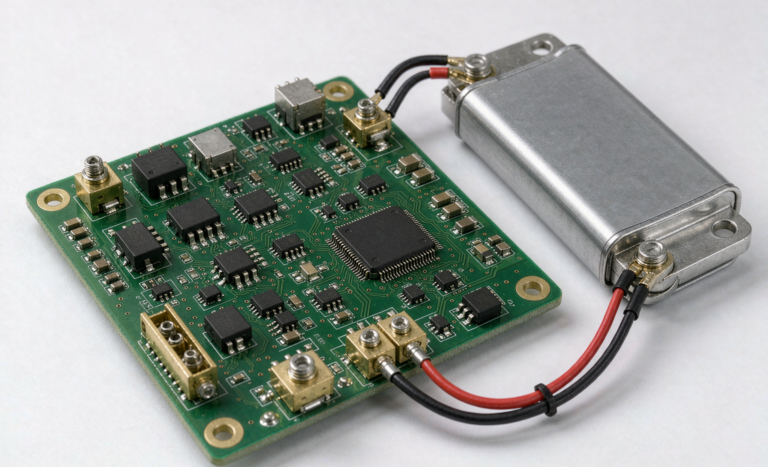
One nuance buyers miss: a sodium-ion battery rarely triggers thermal runaway the way a damaged NMC cell can, but it is still a high-energy store. We still build in a properly rated BMS with over-current, over-voltage, under-voltage, and cell-balancing, plus a fusible link and temperature cutoff. “Safer chemistry” never means “skip the protection circuit.”
The Cost and Supply-Chain Case for Na-Ion
Today a sodium-ion battery sits at roughly $80–$110 per kWh at the cell level in volume, versus $90–$130 for LFP and higher for NMC. The gap is not dramatic yet, but the trajectory favors sodium: no lithium, no cobalt, no nickel, and far less processing. As more Chinese and European lines ramp in 2026–2027, I expect Na-ion to undercut LFP on stable pricing even if peak density stays lower.
For a shared-mobility operator buying 10,000 packs a year, that spread plus the longer cycle life compounds into a meaningfully lower cost per ride. That is the segment where I see sodium-ion battery electric bicycle programs scaling first — not because the bikes are faster, but because the math is safer for the operator.
How to Brief Your Battery Partner (Spec Checklist)
If you are an OEM considering a pilot, here is the RFQ checklist I hand out. Specify it clearly and you will get a pack that passes certification on the first try:
- Voltage and capacity target — e.g., 36 V 14 Ah (504 Wh) or 48 V 17.5 Ah (840 Wh) for cargo.
- Chemistry and cell format — “Na-ion, prismatic, hard-carbon anode” if that is your choice.
- Operating temperature range — confirm -20°C discharge if you sell cold-climate markets.
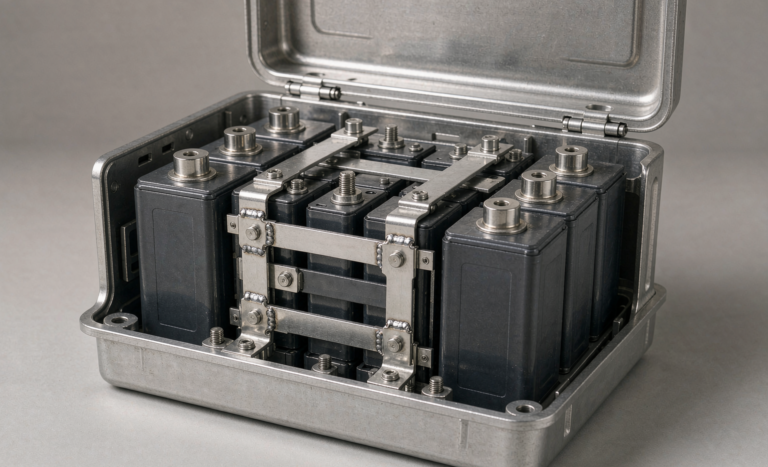
- IP rating and enclosure material — aluminum vs. PC/ABS for the down-tube housing.
- Certifications required — list UN38.3, IEC 62133-2, UL 2271, and EN 15194 explicitly.
- BMS communication — SMBus or CAN, so your display can read state of charge and faults.
- Cycle-life warranty floor — we commit to 70% capacity at 1,500 cycles as a conservative contractual minimum.
A custom battery solution partner should return a DFMEA, a test plan mapped to those standards, and sample cells for your own validation bench before tooling. Never skip the sample stage — it is cheaper to find a weak weld at 50 units than at 5,000.
Frequently Asked Questions
Is a sodium-ion battery electric bicycle safe in a crash?
Yes, within the certified envelope. Na-ion cells are less prone to thermal runaway than high-nickel lithium, and we add a rated BMS, fusible link, and crush-resistant enclosure. Always confirm the pack carries UN38.3 and either UL 2271 (US) or EN 15194 (EU) before purchase.
How much range do I lose versus an LFP e-bike?
Expect roughly 15–25% less range for the same pack weight, or about 10% less if you simply add a bit more sodium cells, which utility frames can usually accommodate. For most city commutes under 30 km per trip, the difference is negligible in practice.
Does sodium-ion work in freezing weather?
Better than lithium. We measure ~85–90% capacity retention at -10°C and useful power down to -20°C without a heater. That makes a sodium-ion battery electric bicycle a strong choice for cold-climate riders and winter-delivery fleets.
When will sodium-ion e-bikes be widely available?
Pilot and rental fleets are already deploying in 2026, particularly in Asia and parts of Europe. Broad retail availability depends on cell pricing and volume production, which I expect to accelerate through 2027 as more lines come online.
How Does Charging Differ From a Lithium Pack?
On the bench, Na-ion tolerates higher charge current with less plating risk, which lets us recommend a slightly faster top-up on fleet docks without the same degradation penalty lithium sees. We still cap charge at 0.5–1C and hold a tight 2.5–3.9 V window, and a sodium-ion battery generally prefers a full charge-and-rest cycle over long partial floats. From a rider’s view, you just plug in like any other e-bike; from an operator’s view, the packs forgive rougher charge habits and need fewer service calls.
The bottom line from my bench: a sodium battery is not a silver bullet, but for utility, cargo, and shared e-bikes it is already a pragmatic, safer-by-design, cold-friendly option. Brief your partner well, certify honestly, and the sodium-ion battery electric bicycle earns its place in the lineup.