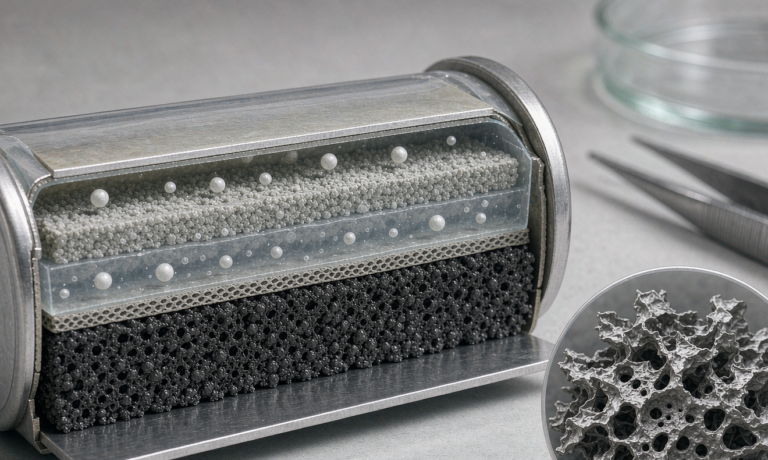
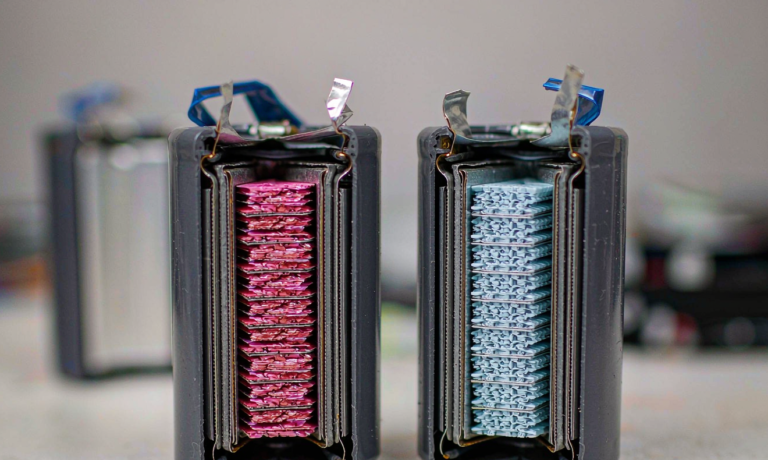
Sodium-Ion Battery for Data Center Backup Power
Over the last decade I have designed and commissioned backup battery strings for everything from a two-rack
network closet to a 12 MW colocation hall, and almost every one of those projects started with the wrong
question. Operators ask “how many kilowatt-hours do I need” when the honest answer is that a UPS battery is
insurance, not storage. It spends more than 99 % of its life doing absolutely nothing, and then one afternoon
it is asked to deliver one hundred percent of the load in about four milliseconds. A
sodium-ion battery changes the economics of that insurance policy, but only if you specify it
against the real duty profile instead of a datasheet energy density number. What follows is the engineering I
apply before I sign off on a sodium ion battery backup for a data hall.
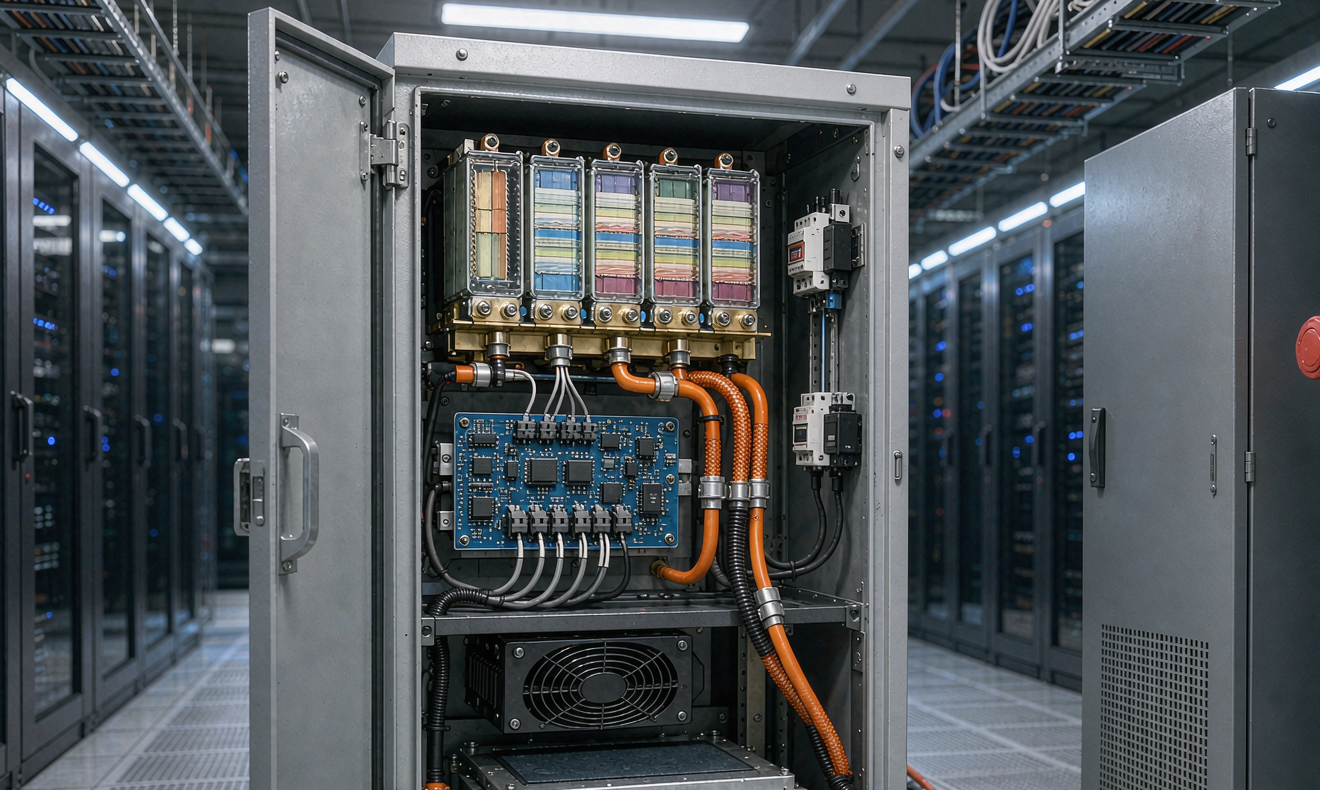
What a UPS Actually Demands from a Battery
The duty profile of a data center backup string has four characteristics that separate it from every other
stationary application. The discharge is measured in minutes: typical double-conversion sites specify five to
fifteen minutes at full load to start a generator, transfer the automatic transfer switch and let the genset accept
load in steps. The step is brutal, zero to one hundred percent in one switching event rather than the gentle ramp of
a solar self-consumption profile. The battery also absorbs voltage sags and micro-outages that never reach the
utility’s outage log; I routinely see two hundred to four hundred shallow events per year on a site that reports
four “real” outages. And it must recharge fast, because the next event may be minutes away.
That profile converts to a C-rate that surprises people. A fifteen-minute discharge at full load, once you
oversize for depth of discharge and end-of-life capacity, sits around 2.5 to 3.5 C. A five-minute string is
beyond 4 C. Modern server power supplies run at 0.99 power factor with a 2.5:1 to 3:1 crest factor, so the
inverter sees a clean, near-unity load, but the battery still has to deliver those amps. Any chemistry you put in
that room must be qualified at constant power at the real rate, not at the 0.5 C curve the cell maker puts on
page one of the datasheet.
Why Sodium-Ion Earned a Place on My Shortlist
Four arguments keep bringing me back to sodium. Sodium carbonate trades in the hundreds of dollars per tonne
while lithium carbonate has swung between roughly ten and seventy thousand dollars per tonne in five years, and a
custom battery solution decoupled from that volatility is worth something to anyone signing a fifteen-year capacity
plan. Second, because sodium does not alloy with aluminium at the anode potential, both electrodes can use cheap
aluminium foil instead of copper, and the cell can be shipped fully discharged at zero volts.
Third is temperature: on the cells I have tested, a sodium-ion battery retains roughly 85 to 90 percent of its
room-temperature capacity when discharged at −20 °C, against about 70 to 78 percent for the
equivalent lithium iron phosphate cell. If your battery room runs cold, or your enclosure is outdoors in a northern
winter, that difference is free usable energy. Fourth is safety: the layered oxide cathodes in most commercial
sodium cells show self-heating onset at 200 to 230 °C on accelerating rate calorimetry, well above the 110
to 140 °C I measure on high-nickel NMC.
Now the honest ledger. Cell-level energy density is 100 to 160 Wh/kg versus 150 to 180 Wh/kg for LFP,
and at pack level the gap widens to 25 to 40 percent because of the extra cells needed in series. Round-trip
efficiency is typically 88 to 92 percent against 93 to 96 percent for LFP. In a data center, floor space is the
most expensive real estate in the building, so that volume penalty is the first thing I price.
The Voltage Window Problem Nobody Puts in the Budget
This is the single biggest engineering difference between a sodium ion battery and a lithium string, and it is
the reason sodium is not a drop-in retrofit. A lithium iron phosphate cell operates from about 2.5 V to
3.65 V, a ratio of roughly 1.46 between maximum and minimum. A sodium cell runs from about 1.5 V to
4.0 V on a 3.0 V nominal, a ratio of roughly 2.67. Nearly double the relative swing.
Work the arithmetic on a 480 V nominal DC link with a 420 V minimum bus voltage at end of discharge.
With LFP you need 420 / 2.5 = 168 cells in series, and the string tops out near 613 V. With sodium you need
420 / 1.5 = 280 cells, and the string tops out near 1120 V. You have just added 67 percent more cells, 67
percent more voltage sense channels, a much higher insulation coordination requirement, and semiconductor ratings
that most legacy UPS platforms simply do not have.
There are three ways out. You can insert a DC-DC converter between the string and the DC link, which solves the
window at the cost of roughly 1 to 2 percent efficiency and meaningful dollars per kilowatt. You can specify a
modern UPS or a rack-level buffer designed for a wide DC window, which is where the market is heading with silicon
carbide front ends. Or you can truncate the usable window to about 2.5 to 3.9 V, which keeps roughly 85 to 88
percent of the capacity and keeps the string voltage inside a comfortable band. I have used all three; the third is
usually the cheapest for a retrofit and the second is the cheapest for new build.
Sizing a Sodium-Ion Backup String: A Worked Example
Take a 1 MW IT load with a fifteen minute runtime requirement at full load, on a double-conversion UPS.
Energy delivered to the load is 1000 kW × 0.25 h = 250 kWh. Now walk backwards through the
losses and margins rather than forwards from a marketing number:
- Discharge efficiency: 0.95 (roughly 0.97 inverter × 0.98 cell coulombic and ohmic) → 250 / 0.95 = 263 kWh drawn from the cells.
- Usable depth of discharge: 0.90 → 263 / 0.90 = 292 kWh.
- End-of-life capacity retention: 0.80 → 292 / 0.80 = 365 kWh nameplate.
The string therefore ships at roughly 365 kWh, and the power check is 1000 kW / 365 kWh =
2.7 C. That C-rate, not the energy, is what kills bids. I ask every cell vendor for a constant-power discharge
curve at 2 C and 3 C at 0, 25 and 40 °C, and for the ten-second peak current limit. Then I
compare the cell surface temperature rise: at 2.7 C a full discharge puts roughly 8 to 15 K into the pack,
and that heat has to go somewhere before the next event.
Recharge belongs in the same calculation: replacing 250 kWh in an hour would demand 0.7 C, so I specify
a two to four hour recharge at 0.15 to 0.25 C and size the rectifier for IT load plus recharge current
simultaneously.
Thermal Reality: Cold Aisle, Battery Room and ASHRAE Classes
ASHRAE Technical Committee 9.9 recommends 18 to 27 °C for the IT space, but batteries do not share that
envelope. I hold dedicated battery rooms at 20 to 25 °C and treat anything above 30 °C as a defect
to fix rather than a condition to tolerate; the old VRLA rule of life halving for every 8 to 10 °C above
25 °C is roughly right for lithium and sodium too.
Calendar aging for a sodium-ion battery I have measured in our own test racks looks like this: 1.5 to 2.5 percent
capacity loss per year at 25 °C and 50 percent state of charge; 3.0 to 4.0 percent at 35 °C; and 6
to 8 percent at 45 °C. Held at 100 percent state of charge and 35 °C, expect 4 to 6 percent per
year. Those numbers are why the standby state of charge question in the FAQ below matters more than any other
operational setting in the whole system.
Cycle Life, Calendar Life and the Standby SOC Trap
A UPS battery has two aging clocks and the slow one wins. Calendar aging runs whether the battery discharges or
not; cycling adds a second, smaller contribution because the cycles are shallow. Commercial sodium cells today are
quoted at 2000 to 4000 cycles to 80 percent capacity at 0.5 C and 25 °C, with laboratory cells
exceeding 5000. Compare that with 4000 to 6000 for LFP and four to six calendar years for VRLA, and the picture is
clear: the sodium-ion battery is not competing with LFP on cycles, it is competing with VRLA on replacement
cadence.
I define end of life as 80 percent of nameplate capacity or double the initial DC internal resistance, whichever
arrives first. Impedance is the early warning: a 25 to 30 percent rise in 1 kHz resistance typically precedes
the capacity knee by 300 to 500 cycles. The real trap, though, is standby state of charge. A UPS wants 100 percent
readiness; the chemistry wants 30 to 60 percent. My compromise for a manned data center is a 40 to 70 percent
standby window with an automatic topping charge plus a documented procedure to force full charge before planned
utility work; for lights-out edge sites I hold 90 to 95 percent and drop the room setpoint to 21 °C.
Safety, Codes and Fire Protection
Indoor energy storage in an occupied building is governed by NFPA 855 and the International Fire Code, with
NEC Article 706 covering the installation. On the equipment side I require UL 1973 for the battery,
UL 9540 for the system, a UL 9540A thermal runaway propagation report, and IEC 62619 and
UN 38.3 test summaries at cell level. Transport brings a genuine sodium advantage: new UN entries
UN 3551 and UN 3552 cover sodium cells and batteries, and many designs ship at zero volts, removing the
30 percent state-of-charge restriction familiar from lithium. Confirm the classification with your dangerous goods
officer before booking freight.
Inside the room I specify carbon monoxide and hydrogen detection acting at 25 percent of the lower flammable
limit and interlocked to exhaust, aspirating smoke detection per NFPA 72, suppression with a water supply as
the primary cooling mechanism, and deflagration review under NFPA 68 or 69. I also insist on a DC arc-flash
study: a 280-cell string near 1120 V with kiloamp fault current is not a 48 V telecom bank.
Integration, Communications and Monitoring
Retrofitting a legacy VRLA UPS is where most sodium projects fail. A lead-acid charger applies a temperature
compensated float at about 2.25 to 2.27 V per cell with a −3 mV/°C coefficient and a periodic
boost. Both must be disabled. A sodium string wants constant-voltage charge to the cell maker’s limit, a defined
taper current, and a hard interlock that blocks charging below 0 °C unless the pack has a validated
heating system. Get this wrong and you will plate sodium on the anode the way people plate lithium, and the
capacity loss is permanent.
On monitoring I ask for cell voltage at 1 Hz, pack voltage and current at 10 Hz, contactor opening in
under 5 ms on a hard fault, and Modbus TCP to the DCIM plus a read-only SNMP feed on a segmented management
VLAN. The four values I actually trend are end-of-discharge cell voltage spread, per-discharge temperature rise,
1 kHz impedance and cumulative ampere-hours delivered, because they predict failure long before an alarm
threshold trips.
Commissioning and Acceptance Tests I Refuse to Skip
Six tests, in this order, before I let a string carry revenue load:
- Insulation resistance at 1000 V from both polarities to ground: accept above 100 MΩ, and do not energize below 10 MΩ.
- Forty-eight hour soak, then two hour rest: cell voltage spread below 30 mV for prismatic cells from a matched lot.
- Constant-power discharge at the real UPS profile to inverter cutoff: runtime within 5 percent of design and at least 95 percent of nameplate energy.
- Step load from zero to one hundred percent and back with a scope on the DC link: sag below 10 percent, recovery under 50 ms, no BMS overcurrent trip.
- Full utility-loss rehearsal: battery carry, generator start, ATS transfer at 10 to 15 s, retransfer, and a check that recharge inrush does not collapse the rectifier.
- Thirty minutes at full load followed by infrared scan: any termination more than 15 K above its neighbour gets re-torqued.
Close the file with the torque records, the single-line diagram, the alarm matrix test and an O&M schedule.
The AHJ will ask for all four.
Where Sodium Wins Today, and Where I Still Specify LFP
I specify a sodium-ion battery for backup power when floor space is cheap and the site has an outdoor enclosure
or a warehouse bay, when the climate is cold, when the ride-through requirement is long enough that energy cost
dominates over power density, and when the customer explicitly wants a supply chain with no lithium and no copper
in it. Edge sites, Tier II enterprise rooms and colocation halls with available yard space are all good fits.
I still reach for LFP when the battery has to live inside a leased, space-constrained hall, when the UPS is an
existing platform with a narrow DC window, or when runtime is under five minutes and peak C-rate rules everything.
That is a verdict on today’s product maturity and today’s dollars per square metre, not on the chemistry.
Frequently Asked Questions
How long can a sodium-ion battery power a data center UPS?
Runtime is a design input, not a chemistry limit: most double-conversion sites specify five to fifteen minutes to
cover generator start and transfer. The constraint is peak C-rate, since a fifteen minute string works out near 2.5
to 3.5 C, so qualify the cell at constant power at that rate and at your lowest room temperature.
Is sodium-ion safer than lithium iron phosphate for indoor battery rooms?
Cathode thermal onset for layered oxide sodium cells is around 200 to 230 °C, against roughly
250 °C for LFP and 110 to 140 °C for high-nickel NMC, so sodium sits between the two rather than
clearly above LFP. The practical safety win is transport: many cells ship at zero volts under UN 3551 and
UN 3552. Indoor installation still needs UL 9540A data, NFPA 855 compliance and gas detection
regardless of chemistry.
Can a sodium-ion battery replace a VRLA string in an existing UPS?
Rarely as a like-for-like swap. The sodium cell’s 1.5 to 4.0 V window needs roughly 67 percent more cells in
series for the same minimum bus voltage, which usually pushes the string above the legacy UPS’s DC input rating.
You also have to disable temperature-compensated float and boost charging on the existing rectifier. Budget for a
DC-DC stage, a wide-window UPS, or a truncated operating window.
What runtime should I specify for generator ride-through?
Time the worst case, then add margin: generator start signal plus crank to speed, ATS transfer, and step loading
usually lands at 10 to 15 seconds, so five minutes is generous for a single genset. I specify fifteen minutes when
there is a parallel plant, a long fuel-polish or transfer sequence, or a requirement to shut down servers in an
orderly way, and I never specify less than three minutes.
How does temperature affect sodium-ion backup battery life?
Calendar loss runs about 1.5 to 2.5 percent per year at 25 °C and 50 percent state of charge, rising to
3 to 4 percent at 35 °C and 6 to 8 percent at 45 °C; holding 100 percent state of charge at
35 °C costs 4 to 6 percent per year. Sodium’s advantage is at the cold end, retaining 85 to 90 percent of
room-temperature capacity at −20 °C where LFP retains 70 to 78 percent.
What standards apply to sodium-ion batteries in data centers?
UL 1973 for the battery, UL 9540 for the system, UL 9540A for thermal runaway propagation,
IEC 62619 and UN 38.3 at cell level, NEC Article 706 and NFPA 855 and NFPA 1 for
installation, NFPA 72 for detection, and NFPA 70E for DC arc-flash labelling. Facility-side frameworks
such as EN 50600, TIA-942 and the Uptime Institute Tier Standard define the availability target that drives
your runtime number in the first place.
How often should a data center backup battery be tested?
I run an automatic discharge to about 80 percent depth of discharge on real load monthly, a visual and
ventilation check quarterly, an infrared scan of every termination twice a year, and a full constant-power capacity
test annually. Never test with a resistive dummy load only; the point of the test is to exercise the UPS inverter
and the transfer logic under real server load.
What state of charge should a standby sodium-ion battery be held at?
For a manned site I hold 40 to 70 percent with an automatic topping charge and a procedure to force full charge
before planned utility work. For unattended edge sites I hold 90 to 95 percent and reduce the room setpoint to
21 °C. Sitting permanently at 100 percent and 35 °C will cost you 4 to 6 percent of capacity per
year, which is the fastest way to turn a fifteen-year asset into a seven-year one.
Every one of these decisions is a trade between readiness and aging, and that is exactly the conversation I want
operators to have with their vendor before the string lands on the dock rather than after the first outage.
Further Reading
References