Sodium-Ion Battery for Food Trucks and Mobile Kitchens
In most of my years designing battery packs for vehicles, the hardest brief has never been the biggest one. It is the awkward one: a pack that has to run an induction hob, a compressor fridge and a water heater while the truck sits parked in a market car park, then recharge during a 40 minute gap between lunch and dinner service. Mobile kitchens are the least forgiving stationary duty I meet, because the load is high, the enclosure is hot, and the operator cannot afford a failure at 12:30. For years the default answer was flooded lead-acid, or a small lithium-ion battery pack sized by guesswork. This article is the method I now use to specify a sodium-ion battery for food trucks, the parts of that chemistry which genuinely help in a catering vehicle, and the places where the extra kilograms are real.
Reading the electrical duty profile of a mobile kitchen
Every sizeable mobile catering build starts with a load audit, never with a battery catalogue. I ask the operator to log one full service, noting when each device is switched on and for how long, and then I convert that into amp hours at system voltage. A typical 12 to 16 foot catering vehicle produces numbers close to these.
- Induction hob: 3.5 kW rated, roughly 30 percent duty through a service, peaking near 73 A at 48 V.
- Compressor refrigeration: 1.1 kW rated, running almost continuously, 0.4 kWh per hour with a 30 A start surge.
- Hood extraction fan: 600 W, only while the hob is on, about 0.3 kWh per hour.
- Pot washer or dishwasher: a 2 kW burst for 20 minutes twice per service.
- Water pump and 2 kW immersion heater: 0.2 kWh per hour averaged over the day.
- Lighting, counter fans and small service equipment: 150 W continuous.
That adds up to close to 2.5 kWh consumed per hour of busy service, with peaks above 120 A at 48 V when the hob, fridge compressor and washer come together. A five hour lunch service followed by a two hour catering event is therefore a 17 to 21 kWh day, drawn in 4 to 6 hot hours. Lead-acid answered this by simply being oversized and heavy, and the owner accepted a 40 percent usable depth of discharge because the last 30 percent of capacity was never meant to be touched.
Where sodium-ion chemistry genuinely earns its place
Sodium-ion has been discussed in catering forums for years as a cheap alternative, and the chemistry is now specific enough to specify with confidence. In the cell pairs we qualify for mobile use, the layered oxide cathode paired with hard carbon runs a nominal 3.0 V per cell and a fairly flat plateau. That flatness matters: state of charge estimation is far more accurate than with a sloping curve, so the driver of the truck can see remaining service time rather than a voltage that means nothing at high load.
The second advantage is tolerance. A sodium-ion cell can sit at zero volts after a long flat spell without the copper dissolution damage that plagues lithium-ion, which matters because catering vehicles do get left disconnected for a weekend. Our own abuse rig data puts the exothermic onset well above 250 degrees Celsius for the sodium pair, roughly 60 to 80 degrees Celsius above what we measured on the high-nickel pouch cells we used a decade ago, and the electrolyte is a sodium salt in a carbonate mix that behaves more gently under abuse. For a pack mounted below a kitchen floor, that margin is worth writing into the risk assessment.
Cold is the third point. Sodium-ion cells deliver most of their room temperature capacity at minus 20 degrees Celsius, and a winter market stall is exactly that environment. The trade-off is charging, which every sensible sodium BMS locks out below 0 degrees Celsius, so the pack must be preconditioned before a fast turnaround charge.
Sizing a pack from the load audit
With the daily energy in hand, sizing is arithmetic. Take the 21 kWh day from the audit, decide how many services the pack must cover without the generator, and divide by the usable depth of discharge. I plan for 85 percent usable and size the generator to cover the remainder, because two full services from a sodium-ion pack alone gets heavy very quickly.
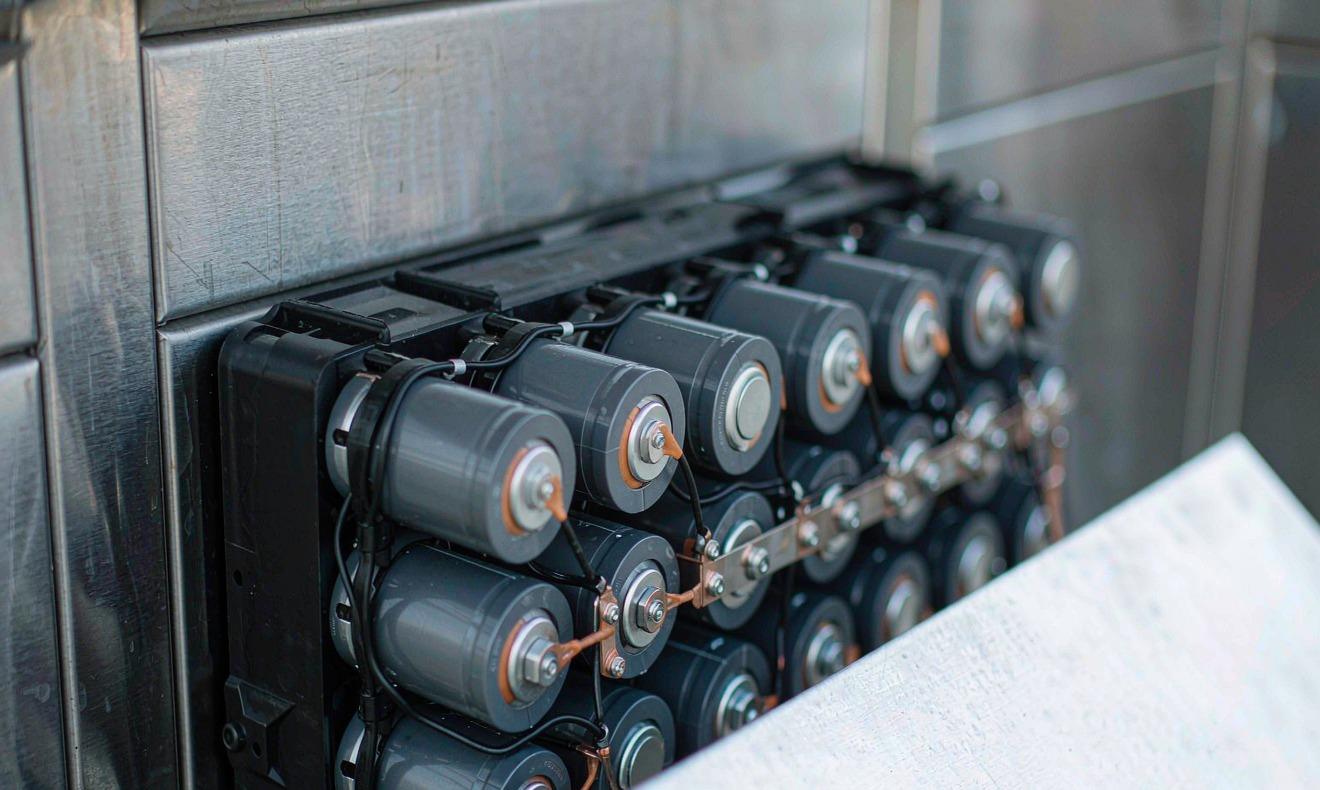
On a 48 V system, sixteen cells in series give an average 48 V nominal. A 60 Ah cell is 3.0 V nominal, or 180 Wh each, so 16S1P is 2.88 kWh. To reach roughly 14.4 kWh I use 16S5P: one hundred cells, 14.4 kWh, and a peak discharge capability around 900 A if every cell is pushed to 3C, far above the 150 A the kitchen actually asks for. At a realistic 145 Wh per kilogram pack level, the assembly sits near 100 kg, which is the honest cost of the chemistry.
That figure is the whole argument in one number. The same 14.4 kWh built from prismatic LFP comes in lighter, around 78 kg, because LFP cells hold 170 to 190 Wh per kilogram. Sodium-ion buys thermal tolerance, zero-volt storage and cold discharge with about 20 percent more mass and roughly 30 percent more volume. If the underfloor bay has room, sodium wins on safety and upfront cost. If the bay is tight, LFP is still the correct answer, and I would rather tell a customer that than sell them a pack that does not fit.
Installation details that decide whether the pack survives
A catering chassis is a rough place for a battery. Road vibration is continuous, the underfloor bay sees grease and steam, and the ambient temperature under a hob compartment can climb fast. My standard requirements for a food truck installation look like this.
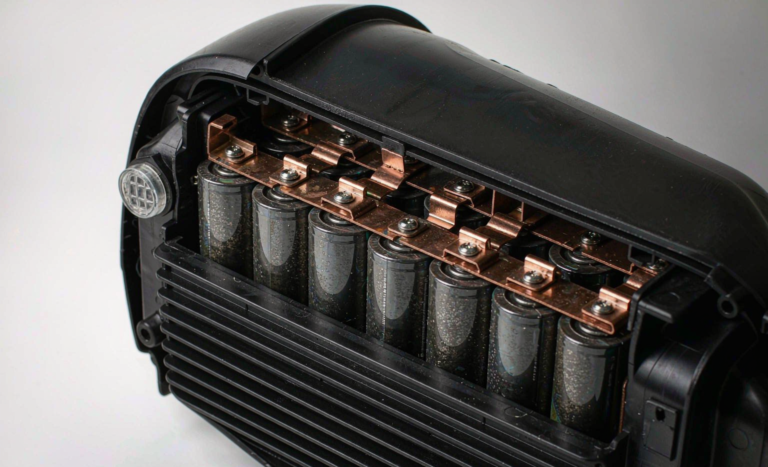
- Cells held in glass-filled nylon cell frames and the busbar set overmoulded or potted, tested to the vibration and shock levels in ISO 16750-3.
- An IP65 at minimum enclosure, higher if the bay is washed down with high pressure water.
- Pack bay kept below 45 degrees Celsius ambient, with a 300 mm minimum clearance from any flue or burner compartment, and a derate above 35 degrees Celsius.
- Fuse or circuit breaker within 150 mm of the positive terminal, stranded class 5 cable, crimp terminals only.
- A BMS with per-cell overvoltage near 3.65 V, a low temperature charge lockout, passive balancing and a clear fault output to the dashboard.
On documentation, the cells should carry UN38.3 test summaries for transport, IEC 62133-2 for the cell level, UL 1973 for the assembled storage system where insurance requires it, and GB/T 36276 where the vehicle is sold into China. None of those are optional when the pack is certified into a commercial vehicle with a commercial insurance policy.
Fast turnaround charging between services
The gap between lunch and dinner is usually 30 to 50 minutes, and the battery has to give back perhaps 3 to 5 kWh in that window. That is a charge rate of 0.5C to 0.8C, which sodium-ion handles comfortably provided the cell surface stays below 45 degrees Celsius. From shore power I size a 7 kW charger on a 32 A three phase supply, or a single 16 A socket with a 3.5 kW unit for markets where the supply is limited.
Charging runs constant current up to roughly 3.65 V per cell and then tapers. I always precondition the pack to at least 5 degrees Celsius before allowing more than 0.3C in winter, and I disable the night top-up float entirely, since the self-discharge of a sodium pack is low and there is no lead-acid sulfation risk to defend against. The practical result is a truck that starts the evening service with 90 percent state of charge and no battery complaints.
Can a sodium-ion battery replace lead-acid in a food truck?
For most catering vehicles the answer is yes, with a resizing step. Lead-acid was usually installed at two to three times the needed capacity to survive its own limited usable depth of discharge, so a correctly sized sodium-ion pack is often lighter overall than the lead-acid bank it replaces. The exceptions are compact vans where bay volume is scarce, or where the daily draw exceeds roughly 25 kWh and the mass penalty starts to eat the payload.
How much capacity do I need for one catering service?
One service typically consumes 15 to 21 kWh on a busy vehicle, so I specify roughly 20 kWh of nameplate capacity to cover a single service with margin. Two services without generator support means 40 kWh, which in sodium-ion brings the pack past 250 kg and changes the vehicle payload calculation entirely. Most operators take one service from the pack and one from the generator.
Is a sodium-ion pack safe under a cooking line?
The chemistry is inherently more tolerant than high-nickel lithium-ion, but installation still decides the outcome. The pack must sit in a ventilated bay below the kitchen floor, away from the burner compartment, with thermal derating and a working BMS. A well built sodium assembly will not propagate like an NMC pack, yet no battery should be mounted inside a cooking compartment.
How quickly can it recharge between lunch and dinner?
From a 30 to 50 minute gap you can expect 3 to 5 kWh returned at a 0.5C to 0.8C charge rate, provided the pack is above 5 degrees Celsius and the charger is sized at roughly 7 kW. This is where sodium-ion beats lead-acid outright, since a lead-acid bank of the same usable capacity would need hours to recover the same energy.
What cycle life should a daily catering operator expect?
Under daily full depth cycling in a mobile enclosure, expect 4000 to 6000 cycles to 80 percent of initial capacity, with calendar life ot 8 to 10 years if the bay temperature stays controlled. Running to 85 percent usable depth rather than 100 percent typically adds 15 to 20 percent to that figure, which is why the sizing step matters more than the chemistry.
Does sodium-ion still work at winter market stalls?
Discharge performance is good, with most of the room temperature capacity available at minus 20 degrees Celsius. Charging is the constraint, so the BMS holds current below 0 degrees Celsius until the pack warms. In practice that means a slow overnight charge before the Saturday market, then normal fast turnaround service through the day.
Further Reading
References