Mobile and Crawler Crane Battery Solution
Over the last four years I have watched the construction equipment segment move from pilot conversions to production orders, and cranes are one of the hardest duty cycles to electrify. Unlike a forklift that runs a steady lift loop, a mobile or crawler crane swings between deep idle, a violent hoist spike, and a long regenerative lower that dumps energy straight back into the pack. When a customer asks Horizon Power for a crawler crane battery, the real engineering question is not capacity, it is whether the pack can absorb a 400 kW regen pulse without tripping, survive ISO 16750 vibration for a decade, and keep its thermal runaway boundary intact on a dusty site. This article walks through how we design battery solutions for mobile and crawler cranes from the cell up.
Why Crane Duty Cycles Break Ordinary Packs
A crane battery lives a bipolar life. The hoist motor can pull 2 to 4 C for seconds during a loaded lift, then the same motor becomes a generator during lowering and pushes current back at broadly the same magnitude. Most off-the-shelf lithium modules are built for discharge, not for repeated high-rate charge acceptance, so their BMS simply opens the contactor on regen and the operator loses free energy and braking control. A proper mobile crane battery treats the upper state of charge as a moving buffer: we reserve 8 to 12 percent of usable capacity as a regen sink so the pack always has headroom to catch the next lower cycle.
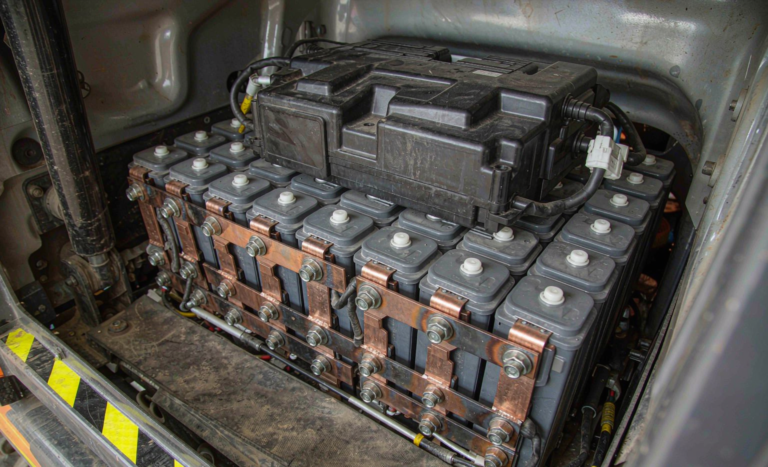
Shock loading is the second killer. A crawler crane traversing rough ground transmits 5 to 15 g of broadband vibration into the chassis, and a hard set-down can spike higher. Cells that are only held by foam will walk, terminals fret, and busbars loosen. We spec cell fixation to ISO 16750-3 random vibration profiles and verify it on a shaker table before the pack ever sees a site.
Voltage Platform: 48 V, 80 V, or High Voltage
The first architecture decision is the pack voltage. Smaller mobile cranes and many retrofit jobs run happily on a 48 V or 80 V lithium battery, which keeps the contactors, fuses, and charger commodity parts and simplifies compliance with IEC 62619 for industrial batteries. Larger crawler cranes with 200 kW-plus hoist drives usually justify a 300 V to 600 V high-voltage battery because the cable mass and IEC 61800-5-1 isolation requirements are easier to manage at higher voltage and lower current.
My rule of thumb: below 120 kW peak, stay low voltage and save cost; above that, move to high voltage so the connectors do not become the limiting component. Either way the battery solution must present a stable DC bus to the crane inverter under both hoist and regen, which means the BMS and contactor strategy are designed as one system, not bolted on after.
Cell Chemistry Choice for Crane Service
For crawler crane battery packs we standardise on lithium iron phosphate, LFP, rather than nickel chemistries. LFP gives us the cycle life the duty demands, typically 3,000 to 6,000 cycles at 80 percent depth of discharge, and its thermal stability is the single biggest reason a crane on a shared site is insurable. The trade is energy density: an LFP pack is heavier than an NMC pack of equal watt hours, but a crane is mass-tolerant. It cares far more about surviving a puncture, a heat wave, and ten years of partial cycles than about shedding twenty kilos.
Within LFP we select power-grade cells rated for continuous 3 C and pulse 5 C rather than the energy-grade cells used in stationary storage. The difference shows up as lower internal resistance, cooler operation during hoist spikes, and a pack that does not need liquid cooling for most crane sizes.
Thermal Management and Enclosure Rating
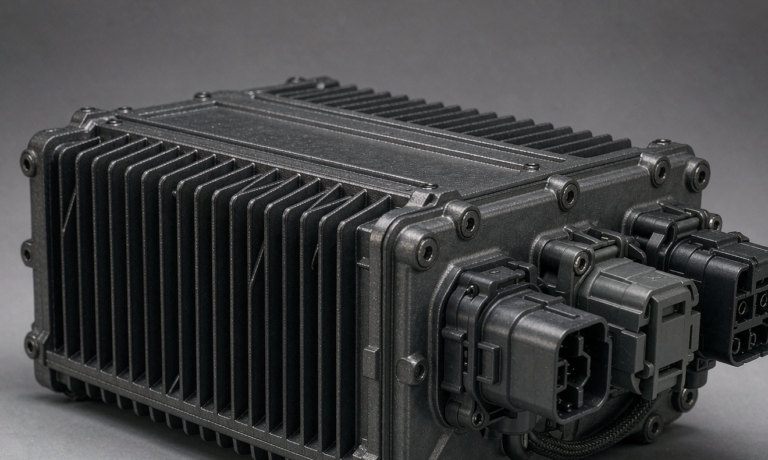
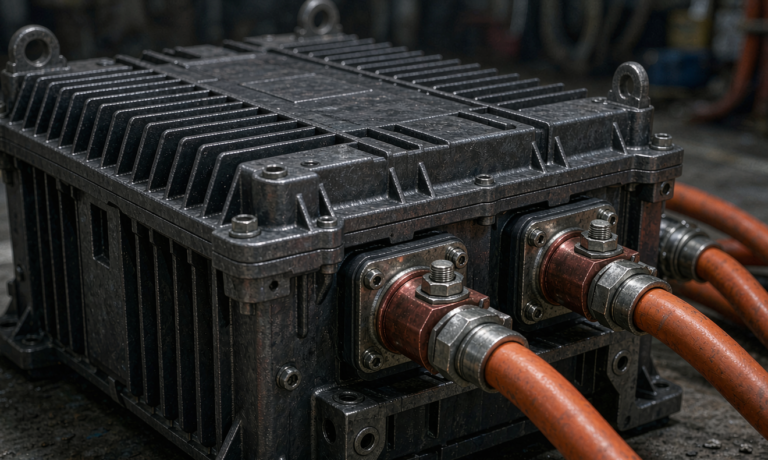
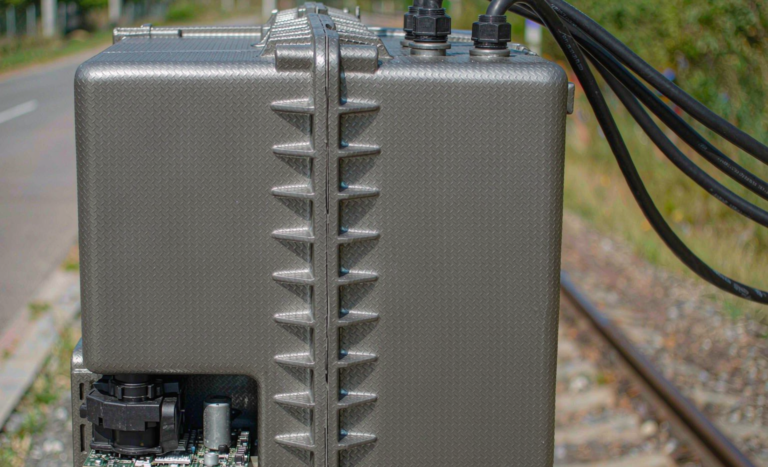
Regen heat is the thermal design driver, not ambient heat. A 300 kW lower for thirty seconds is 1.5 kWh dumped into the pack in half a minute, and if the BMS cannot route it, cell temperature climbs fast. For most mobile crane battery enclosures we use a finned aluminium housing with forced air only during charge, and hold the pack between 15 and 35 degrees Celsius in normal operation. Cold sites get a low-wattage pad heater controlled by the BMS so the crane starts at minus 20 degrees Celsius without a capacity penalty.
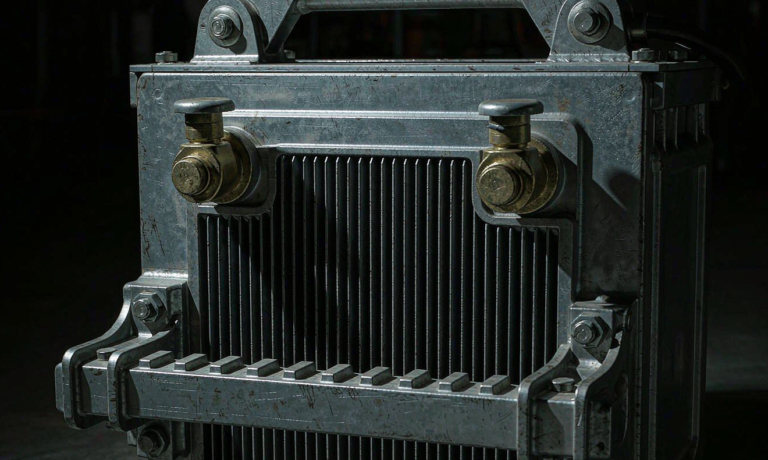
Dust and weather decide the enclosure rating. Crane packs see concrete dust, steel grit, and driving rain, so we build to IP65 as a minimum with IP67 considered for crawler units that wade. Every connector, every vent, and every cable gland is specified against that rating, and the enclosure is separately tested to IEC 60529 rather than assumed.
Safety Architecture and Compliance
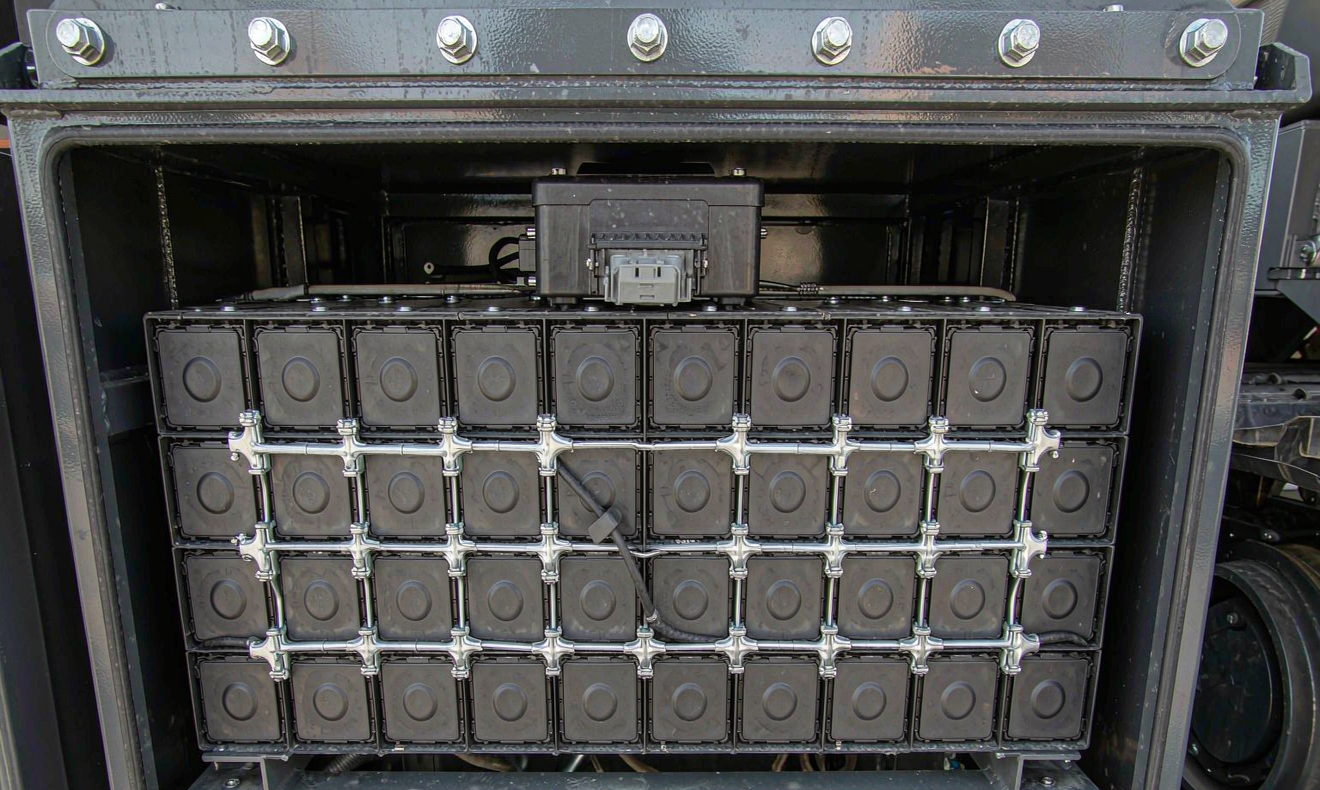
A crane battery sits next to people, and the safety case has to be defensible to an insurer and a site safety officer. We build every pack on cells that have passed UN38.3 transportation testing, certify the complete battery system to IEC 62619 for industrial stationary and motive use, and where the pack feeds a portable appliance we align the cell-level protection with IEC 62133. Thermal runaway containment is engineered cell to enclosure: ceramic separators, a vent path that directs gas away from the operator platform, and a steel enclosure that holds its boundary long enough for the crane to be abandoned safely.
The BMS adds the active layer: contactor pre-charge to avoid arc on connect, isolated current sensing for the hoist and regen paths, and a hardware watchdog that opens the pack if the controller dies. None of this is optional on a crawler crane battery, because the failure mode is not a dead machine, it is a fire next to a boom with people underneath.
BMS, Balancing, and Crane Controller Comms
Crane packs need a BMS that speaks the language of the machine. We run controller area network, CAN, so the crane display shows state of charge, pack temperature, and any fault code directly, and the crane controller can request a controlled power limit instead of a hard cut. Active balancing is used above 8 Ah strings because passive balancing leaves a 5 to 10 percent capacity gap across modules after a year of uneven regen, and that gap is exactly what causes a pack to underperform on the next big lift.
Peak current management is the daily work. The BMS caps discharge and regen independently, ramps limits with temperature, and logs the event so the fleet manager can see whether a site is abusing the hoist. That log is also the data we use to right-size the next pack, so a customer who buys a second crane does not overpay for capacity they never use.
Charging, Opportunity Charging, and Fleet Rollout
Most crane batteries are not charged overnight like a car. They opportunity-charge during breaks, so we size the charger to recover a typical shift deficit in 60 to 90 minutes on a 48 V or 80 V system, or use a high-voltage DC supply for the bigger packs. The site needs a charged cable and a breaker sized to the charger, not to the crane motor, which is a detail that gets missed on retrofit quotes.
For a fleet rollout we start with one machine, validate the duty profile with the BMS log for two weeks, then clone the pack to the rest of the cranes with the profile confirmed. This avoids the classic mistake of designing to the brochure spec and discovering the real site runs double the hoist cycles. A measured crawler crane battery always beats a guessed one.
Frequently Asked Questions
How do mobile crane batteries handle regenerative lowering?
The pack reserves 8 to 12 percent of usable capacity as a regen sink and the BMS caps the charge current independently of discharge, so energy from lowering is recovered into the buffer instead of being wasted as heat through a brake resistor. On most duty cycles this recovers 15 to 30 percent of the hoist energy back into the next lift.
What voltage platform is best for crawler cranes?
Below about 120 kW peak demand, a 48 V or 80 V lithium battery keeps parts commodity and compliance simple. Above that, a 300 V to 600 V high-voltage pack reduces cable mass and makes isolation easier to manage. The right choice follows the hoist drive power, not the marketing trend.
Are lithium crane batteries safe in dusty environments?
Yes when the enclosure is built and tested to IP65 or IP67 and the cells carry UN38.3 and IEC 62619 certification. Dust is handled by the sealed enclosure and gland design, while thermal runaway containment is engineered from the cell separator through to the steel housing so a fault stays bounded.
How long does a crane battery pack last?
With LFP power-grade cells a well-managed crawler crane battery delivers 3,000 to 6,000 cycles at 80 percent depth of discharge, which is typically five to ten years of site service. Active balancing and temperature-controlled operation are the two habits that get you to the top of that range.
Can existing diesel cranes be retrofit with battery packs?
In many cases yes. The practical limits are space for the enclosure, a DC bus the inverter can accept, and a charger supply sized to the shift, not the motor. We validate the real duty profile with a temporary logger before committing the pack so the retrofit is designed to the site, not the brochure.
References
Standards referenced in this article include UN38.3 for lithium battery transport, IEC 62619 for industrial battery safety, IEC 62133 for portable cell protection, ISO 16750 for road-vehicle electrical environmental conditions, and IEC 60529 for enclosure ingress protection. Horizon Power engineers these requirements into every crawler crane battery solution we deliver.
Further Reading
References