Drone Battery Cycle Life
I still remember the first fleet of mapping drones we qualified back in 2019. The data sheet promised “500 cycles” on every drone battery, yet the operators were coming back after barely 180 flights complaining about sudden voltage sag. As Karl Huang, Senior lithium battery Engineer at Horizon Power, I have since spent years tearing down failed packs, running cyclers to 80% state-of-health, and learning that the number printed on a spec sheet is only the beginning of the story. This guide explains what drone battery cycle life really measures, why real-world results diverge from the datasheet, and the concrete engineering practices we use to push a pack well beyond its rated life.
What “Cycle Life” Actually Measures in a Drone Battery
Strictly speaking, one charge-discharge cycle is one full equivalent of capacity throughput, not necessarily one flight. Draining a drone lithium battery from 100% to 50% and back to full counts as half a cycle. The industry standard endpoint for “end of life” (EOL) is when the pack retains 80% of its original rated capacity. That 80% threshold matters because most drone operators notice a meaningful drop in flight time right around that point, even though the battery still works.
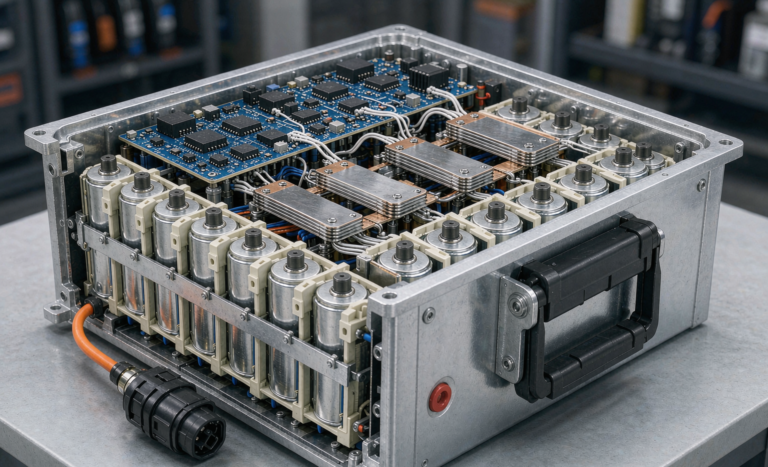
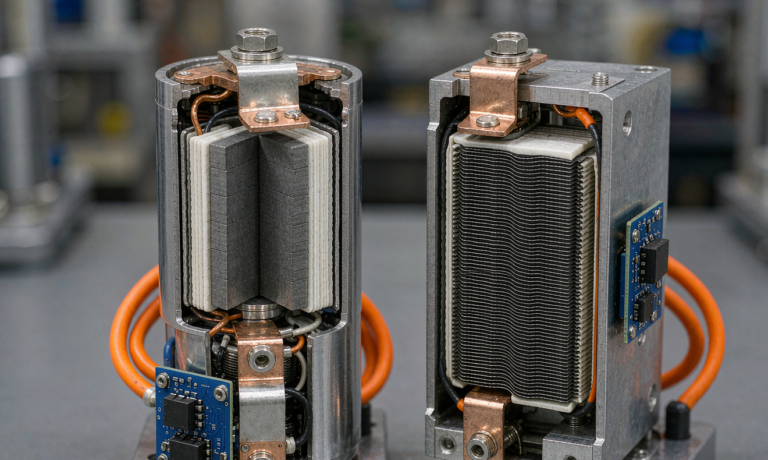
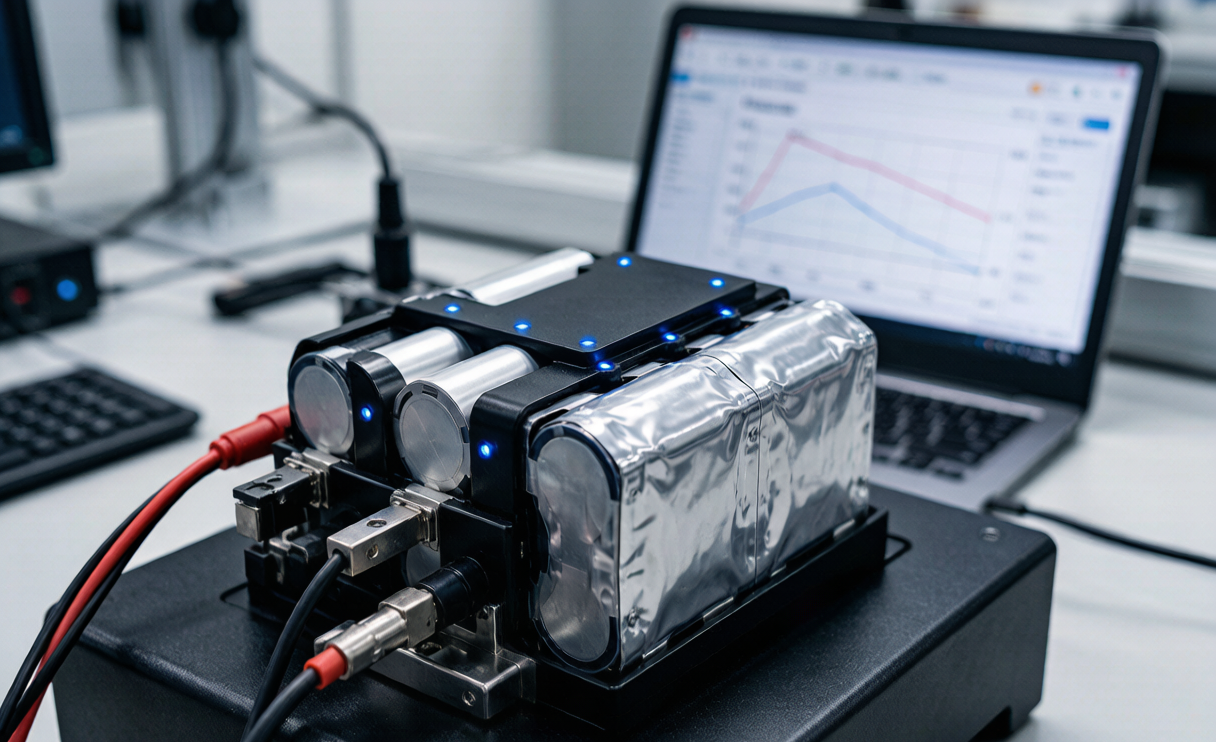
In our laboratory we characterize every new chemistry on a constant-current cycler at the cell level, then validate at the pack level. The numbers we see track with published cell grades: a standard LiPo drone battery typically delivers 300–500 full cycles to 80% SoH, a well-built NMC lithium-ion pack reaches 600–1,000 cycles, and LFP (LiFePO4) chemistries can exceed 2,000 cycles at shallow depth of discharge. The spread is enormous, and the rating on the box rarely tells you which bucket you are buying.
Why Drone Batteries Age Faster Than Spec Sheets Suggest
The gap between a lab rating and field reality comes down to three stresses that consumer electronics rarely face. First, discharge rates. A mapping drone can pull 10C–25C continuously during climb and aggressive maneuvers, and high C-rate draws heat the cells internally far faster than the 0.5C–1C test used for laptop ratings. Second, depth of discharge. Most operators fly until the low-voltage alarm, effectively using 80–100% of available capacity every flight, which is the harshest possible usage. Third, thermal cycling. A pack that lands at 45°C and is immediately recharged in a hot vehicle ages dramatically faster than one cooled to ambient first.
I have pulled packs from agricultural-spraying drones that showed 22% capacity loss in a single season, purely because the operators chained flights with no cool-down. The chemistry was fine; the duty cycle was the problem. Understanding this is the first step toward extending drone battery cycle life without changing a single component.
The Engineering Standards Behind a Trustworthy Cycle-Life Claim
When a buyer asks me to verify a cycle-life claim, I look for the test method, not the headline number. Cell-level cycle testing should reference IEC 61960 or IEC 62660 for lithium-ion traction cells, and safety qualification should show IEC 62133 compliance for portable sealed cells. These standards define how capacity is measured and what conditions constitute a valid cycle, which is why two “500 cycle” claims from different vendors can mean very different things.
Transport and handling add another layer. Every lithium battery we ship, including drone packs, is qualified to UN38.3, which covers altitude simulation, thermal, vibration, shock, external short circuit, impact, and overcharge. For air transport, operators rely on FAA and EASA provisions for lithium batteries (typically PI 965–PI 967 depending on whether the pack is contained in or packed with equipment). A battery that has lost cycle life is also more likely to fail these abuse tests, so cycle life and safety are not separate topics — they are linked through the same aging mechanism.
6 Practical Ways to Extend Your Drone Battery Cycle Life
Based on cycler data and field teardowns, here are the practices that move the needle most:
- Limit depth of discharge. Landing at 20–30% remaining (roughly 70–80% DoD) can roughly double cycle life versus flying to cutoff. Plan missions around 70% usable capacity.
- Store at partial state of charge. For idle periods longer than a few days, store packs at 30–60% SOC in a cool, dry place near 15°C. A full pack stored hot is the fastest path to permanent capacity loss.
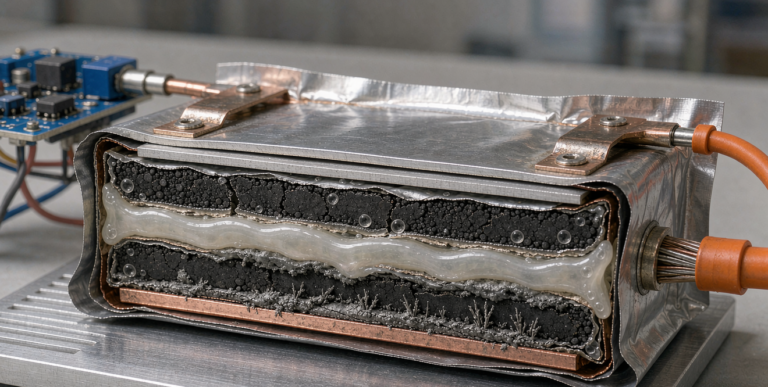
- Never charge a hot pack. Let the battery cool below 40°C before charging. Charging a hot cell accelerates SEI growth on the anode, the dominant aging mechanism in a lithium battery.
- Use balance charging and a real BMS. Cell imbalance is the silent killer of multi-cell packs. A proper BMS with balancing keeps every cell in its safe window and prevents one weak cell from dragging down the whole drone battery.
- Match the C-rating to the load. Specifying a pack with comfortable discharge headroom (e.g., a 30C pack for a 15C worst-case load) reduces internal heating and extends life.
- Track cycles per serial number. Log flights and capacity per pack. Retirement at 80% SoH, not at the first sign of sag, keeps your fleet predictable and safe.
When a custom battery solution Beats an Off-the-Shelf Pack
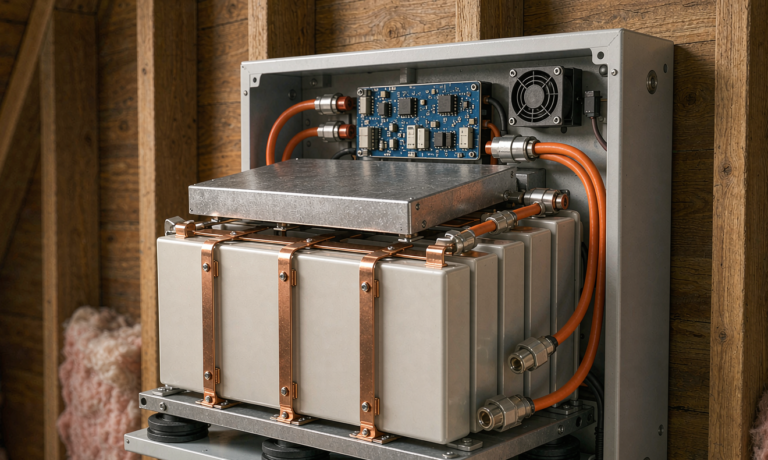
For standard consumer drones, a quality off-the-shelf drone lithium battery is the right economics. But for industrial platforms — long-endurance surveying, heavy-lift cargo, or cold-weather inspection — the duty cycle is unique enough that a custom battery solution pays for itself quickly. By selecting chemistry, cell grade, and pack architecture around your actual discharge profile, we routinely design packs that deliver 30–50% more useful cycles than a generic equivalent, simply because every stress factor above is engineered for your mission rather than averaged across everyone’s.
If your fleet is burning through packs faster than the warranty suggests it should, the answer is almost never “buy cheaper cells.” It is to measure the real duty cycle and engineer the pack — and the charging and storage discipline around it — to that profile.
FAQ
How many cycles should a good drone battery last?
A good consumer-grade drone battery should deliver 300–500 full cycles to 80% capacity; a premium NMC pack 600–1,000; LFP chemistries 2,000+ at shallow discharge. Treat the rating as a lab best case and track your own fleet to set retirement thresholds.
Does fast charging reduce drone battery cycle life?
Yes, but modestly if done correctly. Charging at 1C–2C with a cool pack has a small penalty versus 0.5C. The real damage comes from fast-charging a hot pack, which compounds heat and anode stress. Always cool before charging.
Is LiPo or Li-ion better for cycle life?
For raw cycle life, cylindrical Li-ion (NMC) and LFP generally outlast LiPo. LiPo wins on energy density and burst discharge for agile flight. Choose LiPo when power-to-weight dominates, Li-ion when cycle life and total cost of ownership matter more.
Can I recover a swollen drone battery?
No. Swelling indicates internal gas generation from electrolyte decomposition — a safety hazard, not a maintenance item. Retire and dispose of it through a certified lithium battery recycling channel. Never puncture or continue to charge a swollen pack.