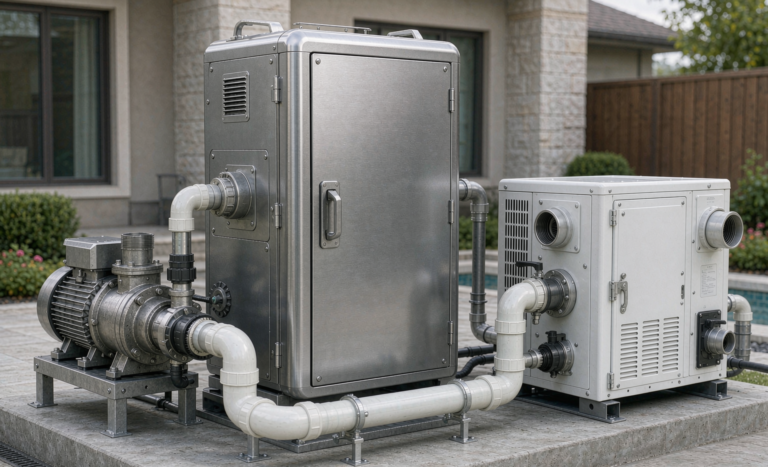
Home Energy Storage Battery Chemistry: Why LFP Dominates
When a homeowner asks me which battery chemistry they should install in their garage, I give the same answer I gave our OEM customers last quarter: for home energy storage, lithium iron phosphate (LFP) is the default choice in 2026, and the gap to any alternative keeps widening. I am Karl Huang, Senior lithium battery Engineer at Horizon Power, and over the past nine years I have torn down, cycle-tested, and field-deployed thousands of cells across drone, industrial, and residential applications. The chemistry question is no longer “which one is best on paper” — it is “which one survives a decade of daily charge-discharge in a living space without becoming a liability.”
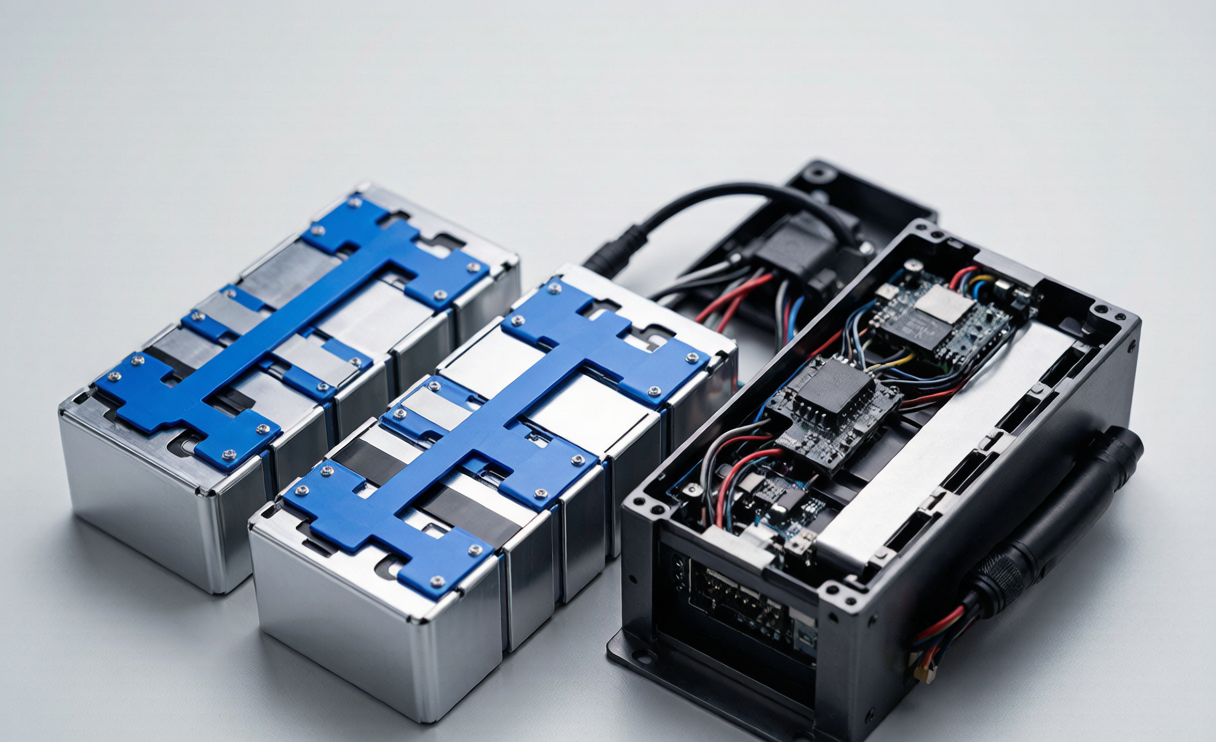
This article explains home energy storage battery chemistry in plain engineering terms, why LFP dominates residential battery storage, and where the other lithium battery families still earn a place. I will keep the comparison honest, including the trade-offs, because a B2B buyer or an installer specifying a system deserves the real picture — not marketing gloss.
What “Home Energy Storage Battery Chemistry” Actually Means
At its core, a battery chemistry is the pair of active materials that store and release energy through reversible chemical reactions. For a home energy storage battery, the chemistry decides four things that matter more than anything else in a residential setting: safety under abuse, how many cycles it delivers before capacity fades, how much energy fits in a given footprint, and ultimately what the system costs over its lifetime.
Most modern residential battery storage uses lithium-ion derivatives, but “lithium-ion” is an umbrella, not a single chemistry. The two families you actually encounter in homes are:
- LFP (Lithium Iron Phosphate, LiFePO4) — iron and phosphate cathode. Stable, long-lived, thermally forgiving.
- NMC / NCA (Nickel-Manganese-Cobalt / Nickel-Cobalt-Aluminum) — nickel-rich cathodes. Higher energy density, higher voltage, but more reactive.
Lead-acid still exists in budget off-grid builds, and sodium-ion is emerging, but for a modern lithium battery home system the real contest is LFP versus NMC. Let us settle it on the metrics homeowners actually feel.
Why LFP Became the Standard for Residential Battery Storage
I have watched the residential market flip almost entirely to LFP in the last five years. When I started specifying packs, NMC was common in early Tesla-style modules because its higher energy density let designers shrink the enclosure. Today, virtually every new home energy storage cabinet I am asked to validate uses LFP, and the reason is simple: the home environment punishes the weaknesses NMC hides in a lab.
A garage, a utility room, or a wall-mounted outdoor enclosure sees wide temperature swings, occasional overcharge events, and zero full-time supervision. LFP tolerates all three far better. Its cathode is structurally stable up to roughly 270°C before it begins to decompose, versus around 150°C for NMC. That margin is the difference between a thermal event that never starts and one that cascades.
From a manufacturing standpoint, LFP also dropped in price faster than expected because it uses no cobalt and far less nickel. As a lithium battery engineer, I see the bill-of-materials advantage translate directly into a more affordable home energy storage battery for the end user — without sacrificing the safety profile.
LFP vs NMC: The Comparison That Matters for Homes
Let me put the numbers side by side, based on the Grade-A cells our factory and our qualified suppliers routinely test:
- Cycle life: A quality LFP LFP battery delivers 4,000–6,000 full cycles to 80% capacity, often more. NMC typically manages 1,000–2,000 cycles to the same threshold. For a daily-cycling residential battery storage unit, that is roughly triple the service life.
- Thermal runaway onset: LFP cathode decomposition begins near 270°C; NMC near 150–200°C. In a home, that headroom is not academic.
- Operating voltage: LFP sits at a flat 3.2 V nominal; NMC at 3.6–3.7 V. The lower voltage means more cells in series for a given pack, but it also means gentler balancing and cooler operation.
- Energy density: NMC wins here, roughly 150–220 Wh/kg versus 90–160 Wh/kg for LFP. In a home where floor space is cheap and safety is precious, that disadvantage barely registers.
- Cost: LFP is now the cheaper chemistry per usable kWh over lifetime, thanks to cobalt-free chemistry and long life.
The honest takeaway: NMC’s only decisive edge is weight and volume per kWh. In a stationary home energy storage battery, you bolt the unit to a wall — you do not carry it. So LFP’s advantages land squarely on the criteria homeowners care about: safety, longevity, and total cost.
Safety: The Single Biggest Reason LFP Wins Indoors
I will be blunt, because safety is where my engineering conscience lives. A lithium battery inside a occupied home must be boring. It must refuse to misbehave even when the BMS, the inverter, or the user makes a mistake. LFP’s chemistry is intrinsically safer:
- It does not release oxygen when heated, which removes the fuel that feeds a fire.
- It is far more tolerant of overcharge and over-discharge before damage cascades.
- It has a very low self-heating rate, reducing the chance of spontaneous thermal runaway.
In my teardown work, an NMC cell that has been overcharged to 4.4 V starts looking dangerous; an LFP cell at the same abuse level is unhappy but contained. For residential battery storage installed where children sleep and where a fire department response is measured in minutes, that intrinsic margin is why I will not specify NMC for a bedroom-adjacent system. Pair LFP with a competent BMS and proper enclosure, and you get a home energy storage unit that is genuinely safe to live with.
Cycle Life and the True Cost of Ownership
Buyers almost always fixate on the sticker price per kWh. As an engineer, I push them toward cost per cycle, because that is what they actually pay. Consider a 10 kWh home energy storage battery:
- LFP at 5,000 cycles to 80%: roughly 40,000 usable kWh delivered over its life.
- NMC at 1,500 cycles to 80%: roughly 12,000 usable kWh delivered.
Even if the NMC pack costs 20% less upfront, the LFP pack delivers more than three times the energy before replacement. The LFP battery therefore wins the lifetime economics decisively for daily-cycled residential battery storage. The longer warranty LFP systems carry — commonly 10 years or unlimited cycles to 60–80% — is the manufacturer putting its own money behind that math.
There is a second hidden cost: degradation shape. LFP fades slowly and predictably, holding usable capacity deep into its life. NMC fades faster once it passes its knee point. For a homeowner budgeting a 10-year horizon, predictability is itself a form of value.
Where Other Chemistries Still Fit
LFP dominance does not mean it is the answer to everything, and a credible engineer says so. Three neighbors deserve mention:
- NMC / NCA: Still the right call where mass and volume are tight — electric vehicles, aerospace, and portable high-power drones. Its energy density edge is real when you must move the battery.
- Sodium-ion: Emerging for stationary storage, with excellent low-temperature behavior and no lithium supply risk. I track it closely; for home energy storage in cold climates it may complement or challenge LFP within a few years, though today its energy density and cycle life lag behind quality LFP.
- Lead-acid: Only where upfront capital is the sole constraint and short life plus heavy maintenance are acceptable. I do not recommend it for modern residential battery storage except as a temporary bridge.
At Horizon Power we manufacture LFP as our residential backbone, while keeping semi-solid-state and sodium-ion programs in the lab for the next generation of lithium battery and beyond-lithium applications. Knowing the limits of each chemistry is exactly what lets us recommend LFP with confidence today.
Frequently Asked Questions
Is LFP really safer than other lithium battery chemistries for homes?
Yes. LFP’s iron-phosphate cathode is thermally stable, does not release oxygen when heated, and resists thermal runaway far better than nickel-rich NMC. For a home energy storage battery installed indoors or on a wall, that intrinsic safety margin is the single most important reason it dominates residential battery storage.
How many years will an LFP home energy storage battery last?
A quality LFP battery typically delivers 4,000–6,000 full charge-discharge cycles, which translates to 10–15 years of daily use for most residential battery storage owners before capacity drops to around 80%. Many manufacturers back this with a 10-year warranty.
Why not just use NMC since it stores more energy per kilogram?
Because a home system is stationary. NMC’s weight and volume advantage matters for vehicles and drones, not for a wall-mounted home energy storage cabinet. In exchange, NMC gives up safety headroom and cycle life — the two things a homeowner actually pays for over a decade.
Can sodium-ion replace LFP in home energy storage soon?
Not yet at scale. Sodium-ion shows promise for cold-climate residential battery storage and removes lithium supply risk, but today its energy density and cycle life still trail quality LFP. I expect it to complement, rather than immediately replace, the lithium battery LFP standard in homes over the next few years.
Does LFP need special maintenance in a home setup?
Minimal. Keep it within its rated temperature range, ensure the BMS and inverter are correctly configured, and avoid sustained 100% float charging. A well-installed home energy storage battery based on LFP is largely maintenance-free for its service life.
If you are specifying or procuring a home energy storage battery chemistry decision for a project, the engineering verdict in 2026 is clear: LFP is the safe, long-lived, cost-effective backbone of modern residential battery storage, with NMC, sodium-ion, and others filling specialized roles around it. At Horizon Power we are happy to walk B2B buyers through cell-grade selection and system design so your deployment matches the chemistry to the application.