Battery Solution for Electric Lawn and Garden Equipment
Over the past three years, one category has grown faster than almost any other in the B2B space I serve: cordless lawn and garden equipment. Global shipments of battery-powered mowers, trimmers and blowers have roughly tripled since 2021, and most legacy engine makers now ship at least one lithium platform. When a landscape contractor, an OEM, or a private-label brand asks me for a battery solution for electric lawn and garden equipment, the conversation is never just about cells. It is about discharge pulses, vibration, temperature swings, and a pack that survives being dropped in wet grass and left in a shed all winter. In this guide I will walk through the engineering decisions that separate a pack that lasts two seasons from one that lasts ten, based on packs my team has shipped and field-tested across three climate zones.
Why Cordless Garden Equipment Needs a Purpose-Built Battery Solution
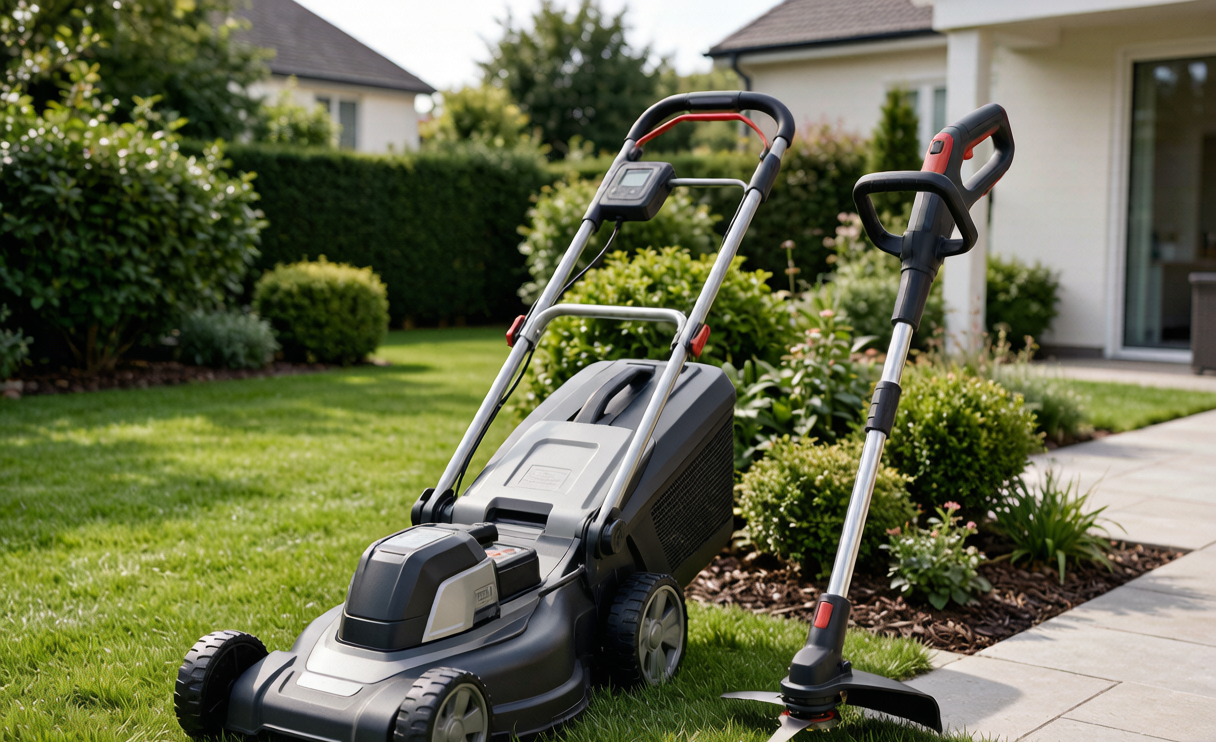
When homeowners first adopted cordless trimmers, most packs were borrowed from laptop cells and wrapped in plastic. They worked for a summer and died. The reason is simple: a lawn mower draws 20-40 A in bursts, a blower pulls sustained 15-25 A, and both run in 30-40°C ambient heat with grass clippings everywhere. A generic power pack is not a real battery solution for electric lawn and garden equipment – it is a liability.
In my lab we test candidate packs on a profile that mimics a 21-inch mower: 30-second mow at 35 A, 5-second rest, repeated until cutoff. A pack that delivers 500 cycles on a gentle 0.5C profile may collapse to under 120 cycles on this duty. Specifying the right pack is where a good battery application solution begins – with the load profile, not the cell datasheet. We also shake every garden prototype on a vibration table to IEC 60068-2-6, 10-500 Hz, because a mower deck is a brutal environment. Cells that pass a quiet bench test crack their welds after a season of real mowing. A real battery application solution accounts for vibration from the first drawing, not after the warranty returns come in.
Cell Chemistry: LFP vs NMC for Outdoor Power Tools
For garden equipment two chemistries dominate: lithium iron phosphate (LFP, LiFePO4) and nickel manganese cobalt (NMC). In my experience LFP is the safer default for lawn and garden. It tolerates overcharge better, runs cooler, and a nail-penetration test on LFP rarely flares. NMC wins on energy density – roughly 200-240 Wh/kg versus 150-170 Wh/kg for LFP – so if weight is the deciding factor, such as a handheld trimmer, NMC still earns its place.
For a walk-behind mower where mass matters less than safety and cycle life, I almost always recommend LFP. A commercial landscaping fleet that charges packs twice a day will thank you when the LFP pack still holds 80% capacity after 1,500 cycles while the NMC equivalent is already at 60%. The thermal margin also matters: a lithium battery that stays below 45°C under load simply ages slower.
Sizing the Pack: Voltage, Capacity and Runtime Math
Most garden tools use 40V, 56V, or 80V platforms. Higher voltage means lower current for the same power, which reduces I²R heating in the cells and connectors. For a 1,000 W mower motor at 56V you draw about 18 A; at 40V that climbs to 25 A. The difference shows up as heat and as shorter cell life.
To size capacity, start from the motor’s continuous draw and your target runtime. A mower pulling 700 W from a 56V pack at 80% efficiency needs roughly 15.6 A. For 45 minutes of runtime that is 11.7 Ah, so a 56V 12 Ah pack is the right call, with headroom. I always add 15% capacity margin so the battery solution for electric lawn and garden equipment does not hit hard cutoff on a thick lawn section.
- 40V platforms: best for light trimmers and small blowers under 500 W.
- 56V platforms: the sweet spot for residential mowers and hedge cutters.
- 80V+ platforms: commercial zero-turn mowers and ride-ons needing 1,500 W+.
BMS Solution: Protection Against the Real Failure Modes
Garden packs fail in ways laptop packs never do. The three killers are over-current from a jammed blade, over-temperature from a clogged vent, and cell imbalance from partial charging between jobs. A proper BMS solution for this category must include:
- High-side MOSFET switching rated to at least 2× peak current, not just continuous.
- Per-cell voltage monitoring with passive balancing above 30 mV drift.
- Temperature cutoffs at both 60°C charge and 70°C discharge, with hysteresis.
- Communication over SMBus or UART so the tool can show state of charge on its handle display.
I have seen packs destroyed because the BMS only watched pack voltage, not cell voltage. One weak cell in a 14S string hits 4.3 V while the pack reads 56 V – safe on paper, deadly in practice. A competent BMS solution watches every cell, every cycle, and logs faults so field failures become engineering data instead of mystery.
Thermal and Environmental Sealing for Wet, Dirty Conditions
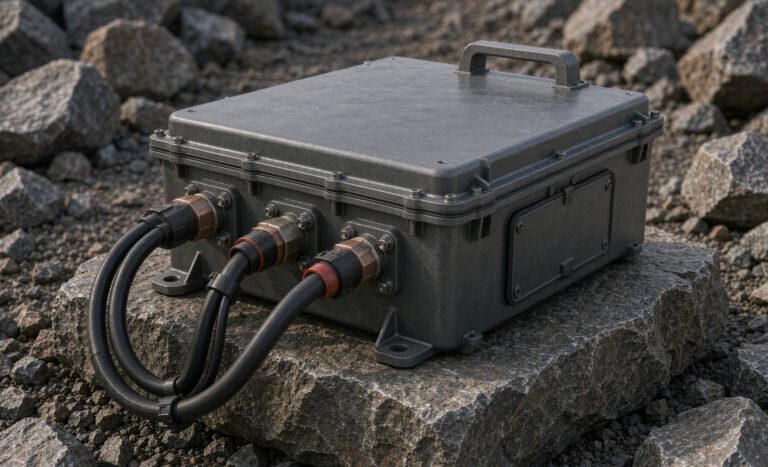
A lawn pack lives outside. Rain, dew, sprinkler overspray and grass juice are constant. I specify a minimum IP54 enclosure for garden batteries, and IP67 for anything that mounts low on a mower deck. The seal is not just about water – it keeps conductive grass dust out of the BMS, which is the leading cause of intermittent faults we see in warranty returns.
Thermal management is bidirectional. In summer the pack sheds heat through extruded aluminum end plates; in winter below 0°C the electrolyte resistance rises and a cold pack delivers less power. For northern markets I add a self-warming function that trickles 2-3 W through a heater film when the pack sits below 5°C, so the first cut of the morning is not a weak one.
Charging Strategy: Fast Charge Without Killing the Pack
Garden users hate downtime, so they want fast chargers – 1 hour or less. The temptation is to push 1C or 2C charge, but on an LFP pack that shortens life and heats the cells. I spec a two-stage charge: bulk at 0.5C to 80% in about 50 minutes, then taper to 0.2C for the final 20%. This delivers a “good enough” charge quickly while protecting the pack. A smart BMS solution coordinates with the charger over the communication bus so it never exceeds the cell’s temperature window during a hot afternoon charge.
For commercial fleets I recommend a battery solution for electric lawn and garden equipment built around swap-and-go: three packs per mower, one on the tool, one cooling, one charging. Throughput beats raw charge speed when you are billing by the hour, and it keeps each pack within its comfort zone.
custom battery solution: When Off-the-Shelf Won’t Fit
Most OEMs start with a standard 56V module and discover it does not fit the deck, the handle, or the balance point of their mower. That is when we move to a custom battery solution. In one recent project the client’s mower tipped backward under load because the pack sat too high; we re-engineered it as two 28V modules low in the wheels, which lowered the center of gravity and actually improved runtime because the cells ran cooler.
A custom battery solution also lets you integrate the BMS, the handle display, and the charger handshake into one certified system rather than bolting three suppliers together. For a B2B buyer that means one point of accountability when something fails in the field, instead of three vendors pointing at each other.
From Prototype to Certified Product: What I Put in an RFQ
When a client briefs me for a garden battery pack, I ask for six things before I draw a single cell: the exact motor power curve, target runtime, ambient temperature range, required IP rating, target cycle life, and the sales-region certifications. With those I can return a validated prototype in 4-6 weeks. This is how a battery application solution becomes a shippable product rather than a science project.
Certifications matter more than most first-time buyers expect. A pack sold in the EU needs CE and often EN 62133; in North America UL 2580 or the relevant UL subject standard applies; and every air-freighted sample needs UN38.3. I build the test plan around these from day one so we are not re-spinning the enclosure in month five, and the lithium battery cells are documented back to grade-A source for traceability.
FAQ
How long should a lawn mower battery last per charge?
For a typical residential 21-inch mower on a 56V 12 Ah pack, expect 35-50 minutes of mixed mowing. Thick or wet grass can cut that to 25 minutes. Commercial zero-turns with dual 80V packs run 60-90 minutes. Always size from your worst-case lawn, not your best.
Can I use the same battery across mower, trimmer and blower?
Yes, if they share the same voltage platform and communication protocol. A unified 56V battery solution for electric lawn and garden equipment across a whole tool family is the single biggest cost saving for a landscaping business, because you buy fewer spares and one charger.
Are LFP packs worth the extra cost for garden tools?
For anything that charges daily or runs commercially, yes. The longer cycle life and better safety margin of LFP usually pay back within 18 months versus NMC, even at a higher upfront price. For a light handheld used a few times a year, NMC is acceptable.
What certifications does a garden battery pack need?
At minimum UN38.3 for transport, plus regional marks: CE/EN 62133 for Europe, UL for North America, and KC for Korea. If you sell into the EU, the battery regulation compliance and a declared carbon footprint are increasingly required by distributors.
How should I store garden batteries over winter?
Store at 40-60% state of charge, in a dry place between 10-25°C. Never store fully charged or fully empty – both accelerate calendar aging. A pack stored this way loses under 2% capacity per winter, while one left at 100% in a cold shed can lose 8% or more.