Semi-Solid State Battery Coating Process: From Slurry to a Safer Cell
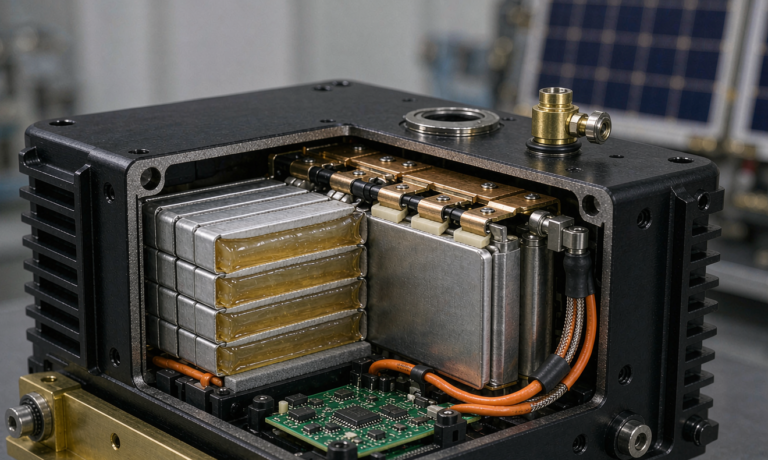
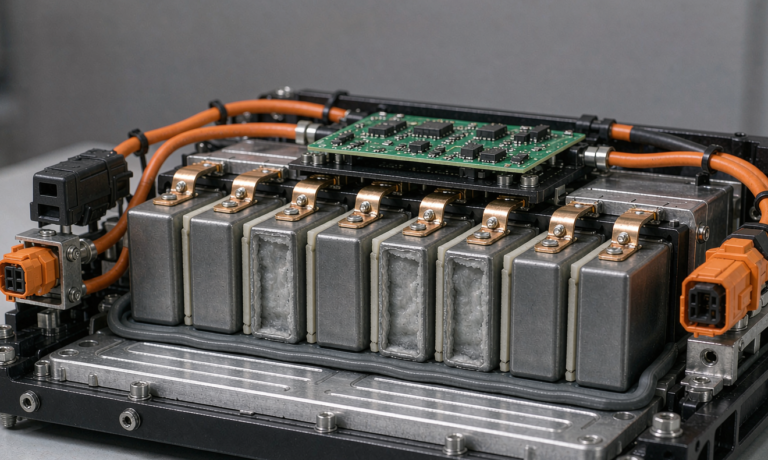
As a senior lithium battery engineer at Horizon Power, I have watched the semi-solid state battery coating process move from a laboratory curiosity into a real manufacturing discipline over the last three years. If you have ever wondered what actually happens between a powder mix and a finished cell, this is the part of the value chain that decides whether your battery is safe, dense, and cheap to build at scale. A semi-solid state battery sits between a conventional lithium battery with a flammable liquid electrolyte and a fully solid-state cell, and the way we coat and pour the semi-solid layers is the single biggest lever on yield and performance. In this guide I walk through how my team runs coating and pouring on a real pilot line, the equipment we trust, and the failure modes we watch for every shift.
What Makes Semi-Solid Coating Different
The headline difference is viscosity. A classic liquid-electrolyte cell is built from a dried porous electrode that is later flooded with a thin, mobile electrolyte. A solid-state battery replaces that electrolyte entirely with a ceramic or polymer film. The semi-solid approach lands in the middle: our cathode and anode coatings are still applied as slurries, but the electrolyte we pour is a thixotropic gel that is thick enough to stay put yet soft enough to wet every pore. That middle ground is why a semi-solid state battery coating process can reuse roughly 70 to 80 percent of the coating assets already sitting in a lithium-ion plant, which is the whole reason the chemistry is scaling faster than pure solid-state.
From an engineering standpoint the coating step has three jobs: lay down a uniform active-material layer, control the solvent load, and preserve the pore structure that the semi-solid electrolyte must later fill. Miss any one of those and you either get striping, weak adhesion, or a cell that cannot be impregnated. I spend more time tuning the coating window than almost any other part of the build.
Slurry and Gel Preparation: Getting the Rheology Right
Everything starts in the mixing room. Our cathode slurry is built from NMC or LFP active material, a conductive additive, a binder, and a solvent such as NMP. We target a Brookfield viscosity in the 3,000 to 8,000 mPa·s range at the coating shear rate, because below that the coating sags and above that it ribbons and leaves comet tails. The semi-solid gel electrolyte is prepared separately and is the more delicate of the two: it is a polymer network swollen with a small amount of ionic liquid, and its storage modulus must stay high enough that it does not flow out of the separator under gravity but low enough that vacuum can pull it into the pores.
We run a two-stage planetary mixer followed by a triple-roll mill to break agglomerates below 10 microns. Particle size distribution matters more than the average, because a single coarse cluster becomes a coating defect that propagates all the way to the cell. For any custom battery solution we build for an OEM, the slurry recipe is locked in a controlled document and every batch is logged with its solids content, pH, and viscosity before it touches the coater.
Electrode Coating: Doctor-Blade vs Slot-Die
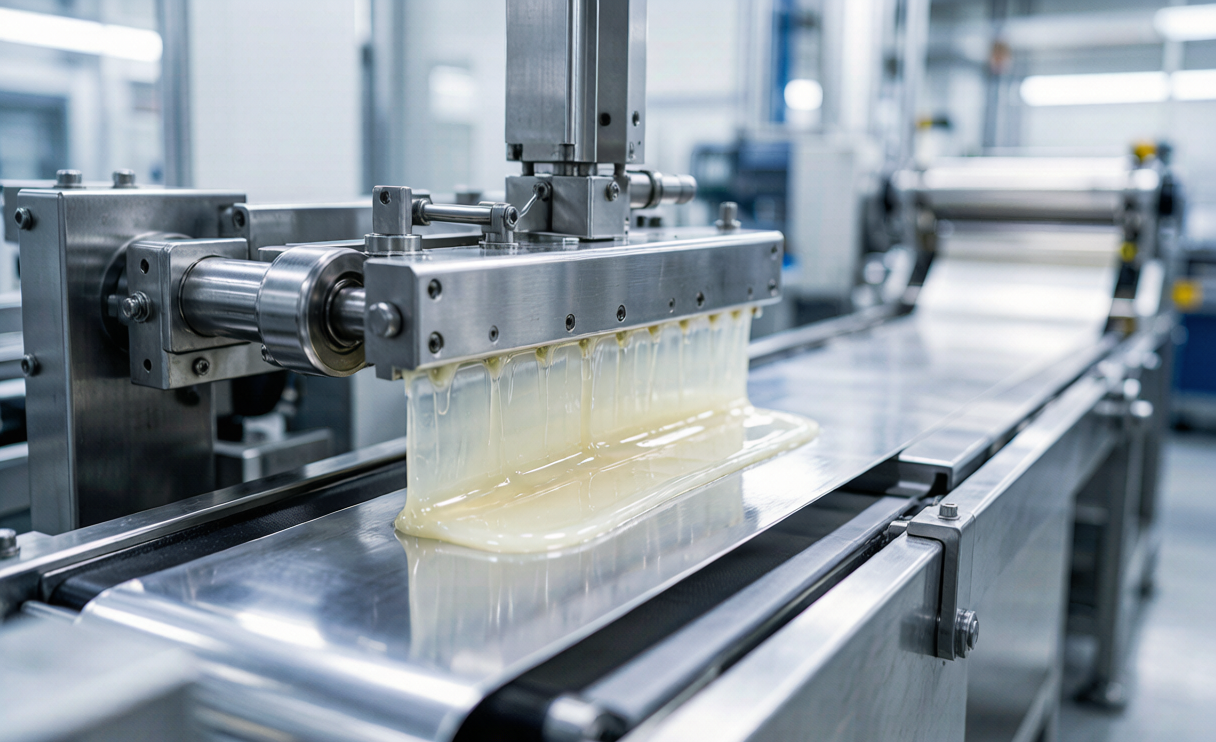
On our pilot line we coat both electrodes with a slot-die head, but I still keep a doctor-blade coater for formulation screening because it is faster to change over. For production the slot-die wins on consistency. We coat at 15 to 35 meters per minute depending on the layer, hold a wet-coat weight of 180 to 320 grams per square meter, and control the die-to-substrate gap to within 20 microns. The substrate is a 6 to 12 micron aluminum or copper foil, and we pre-heat it to 40 to 60 degrees Celsius so the solvent flash is controlled rather than explosive.
The defect we fight most is edge bead. If the meniscus at the die lip is not tuned, the coating thickens at the edges and you lose 5 to 10 millimeters of usable width on each side. We use a lip profile with a slight reverse angle and a vacuum box beneath the web to pin the coat flat. In my experience a well-tuned slot-die holds coat-weight variation under plus or minus 2 percent across the web, which is the number a BMS engineer will thank you for later because it keeps cell-to-cell capacity spread tight.
The Pouring Step: Impregnating the Separator with Semi-Solid Electrolyte
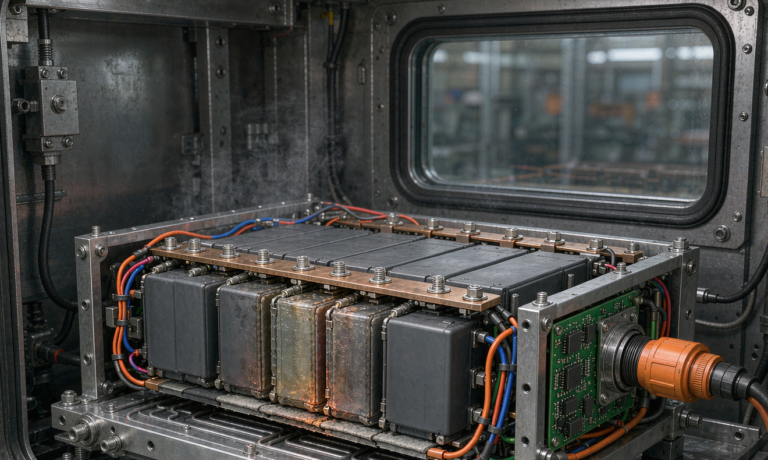
This is the step that gives the topic its name and the one newcomers underestimate. After the electrodes are dried and lightly calendered, we stack or wind them with a porous separator and then pour the semi-solid gel into the assembly. Unlike flooding a liquid cell, pouring here is a controlled vacuum impregnation. We pull the stack to a chamber vacuum of roughly 50 to 200 millibar, introduce the gel at the edge, and let capillary action plus the vacuum draw it through every pore. The process typically runs 20 to 60 minutes per stack depending on thickness.
The reason we bother with vacuum is simple: trapped air bubbles are the enemy. A bubble becomes a localized dry spot with high resistance and, under abuse, a hot spot. We verify impregnation with an inline laser thickness check and, on a sample basis, a cross-section micrograph. A properly poured semi-solid state battery shows no visible voids and a near-uniform interface between the gel and the electrode, which is exactly what suppresses lithium plating at high rate.
Drying, Calendering and the Dry-Room Reality
Between coating and pouring sits a drying oven tunnel, and after pouring sits a low-temperature cure. The coating oven removes solvent in staged zones from 80 up to 130 degrees Celsius with carefully ramped airflow so the coating does not skin over and trap solvent underneath. We hold the oven dew point below minus 40 degrees Celsius because water is ruthless with both the cathode and the gel. A dry room is not optional here; it is the cost of entry, and I budget for it before I budget for the coater.
Calendering is gentler than on a hard graphite anode. We roll the electrodes to 30 to 40 percent porosity so the semi-solid gel still has room to infiltrate. Over-calender and you close the pores; under-calender and you waste stack volume and raise internal resistance. The target electrode density on our NMC semi-solid cathodes lands around 3.2 to 3.6 grams per cubic centimeter, a number we cross-check against the energy-density goal of the final pack.
Quality Control and the Standards We Certify Against
A cell is only as good as the checks behind it. On every coating and pouring lot we run coat-weight mapping, adhesion tape tests, and a porosity measurement by mercury intrusion or gas pycnometry. The finished cells then go through the certification ladder our B2B customers demand before they will sign a purchase order:
- UN38.3 (T.1 through T.8) transport testing, which we complete even for domestic shipments because our customers re-export and aviation rules apply.
- IEC 62133-2 for the safety of secondary cells and batteries containing alkaline or non-acid electrolytes.
- IEC 62619 for industrial battery safety, plus UL 1642 and UL 1973 for cell and stationary-battery evaluation.
- FAA and EASA guidance for air transport of cells with non-fully-solid electrolytes, which still treats the semi-solid gel under the lithium-battery dangerous-goods framework until fully exempted.
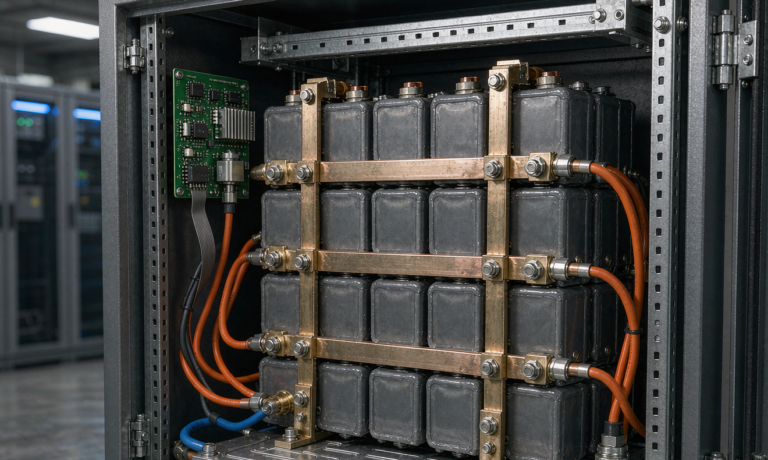
From a process-engineering view, the coating and pouring records are the backbone of traceability. If a field cell fails, I can trace its coat weight, gel batch, and impregnation vacuum back to the shift that built it. That closed loop is what lets a custom battery solution move from a prototype to a certified product without surprises at the customer site.
Why This Process Is the Scalability Story
The reason semi-solid is commercializing ahead of fully solid-state is precisely this coating-and-pouring route. We are not inventing a brand-new high-vacuum thin-film deposition line; we are adapting proven lithium-ion coating assets and adding a controlled pour. That cuts capex, shortens the learning curve, and lets us ride the existing supply chain. For buyers, the practical takeaway is that a semi-solid state battery you specify in 2026 is built on a process that a competent lithium-ion factory can already run, which is why lead times and prices are falling faster than the marketing decks suggest.
Frequently Asked Questions
How thick can you coat a semi-solid electrode?
On our line we coat single-sided wet weights up to about 320 grams per square meter, which corresponds to a dry electrode near 140 to 160 microns before calendering. Going thicker risks solvent entrapment and poor impregnation, so for high-energy cells we prefer a double-coat-and-dry sequence rather than one heavy pass. The practical ceiling tracks your oven length and your ability to hold coat-weight variation under plus or minus 2 percent.
Is the pouring step the same as filling a liquid-electrolyte cell?
No, and this is the most common misconception. A liquid cell is flooded and then rested; the electrolyte is mobile and self-levels. Our semi-solid pour is a vacuum impregnation of a high-viscosity gel into a porous structure, with a defined cycle time and a void check at the end. Treat it like a controlled process, not a top-up, or you will ship cells with hidden dry spots.
What equipment do I need to start semi-solid coating?
You can repurpose a slot-die coater, a staged drying oven, a dry room at minus 40 degrees Celsius dew point, a calendar, and a vacuum impregnation chamber. The genuinely new capital is the impregnation chamber and the gel-mixing line. If you already run a quality lithium-ion line, the marginal spend is modest compared with standing up a solid-state thin-film line from scratch.
Does a semi-solid state battery qualify for aviation shipping under FAA and EASA?
Until the gel is formally exempted as non-hazardous, we still ship under the lithium-battery dangerous-goods framework with UN38.3 T.1 through T.8 complete, plus the FAA and EASA packaging and state-of-charge limits. The lower free-liquid content does help with abuse testing, but do not assume it removes the dangerous-goods requirement. Confirm the latest guidance with your freight forwarder before quoting logistics.