Home Energy Storage Bidirectional EV Charging: What V2H and V2G Mean for Your Battery Setup
Why Your EV Is Becoming Part of Your home energy storage system
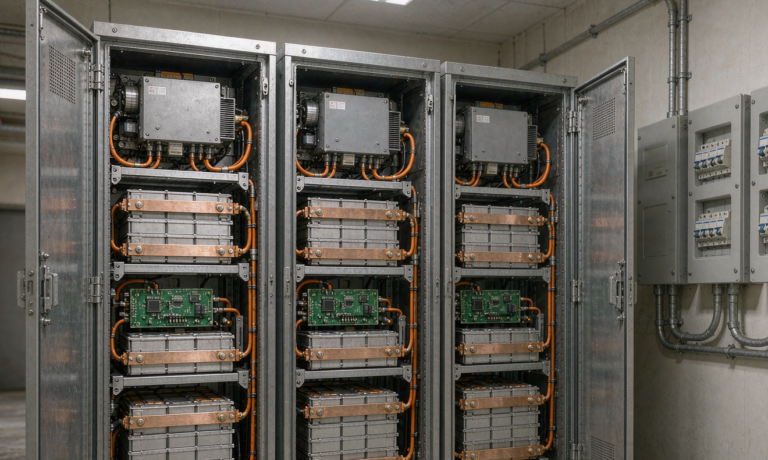
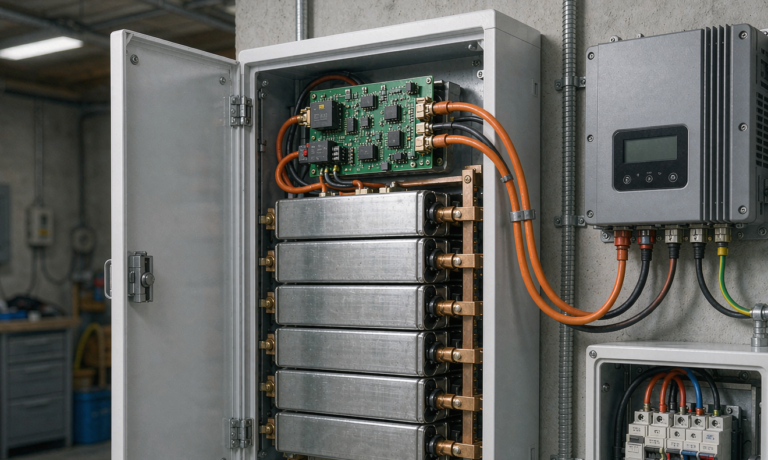
When I first started specifying lithium battery packs for residential clients a decade ago, a home energy storage system meant one thing: a wall-mounted cabinet with a rated capacity in kilowatt-hours, a hybrid inverter, and a connection to the grid. The car in the driveway was a separate problem. Today, the line between those two systems is dissolving, and bidirectional EV charging is the reason. As a senior lithium battery engineer at Horizon Power, I have spent the last two years helping integrators wire electric vehicles into the same energy loop as the home battery backup they already sell. The result is a setup where a 60 to 100 kWh vehicle pack can act as a giant, mobile extension of a 10 to 20 kWh home energy storage system.
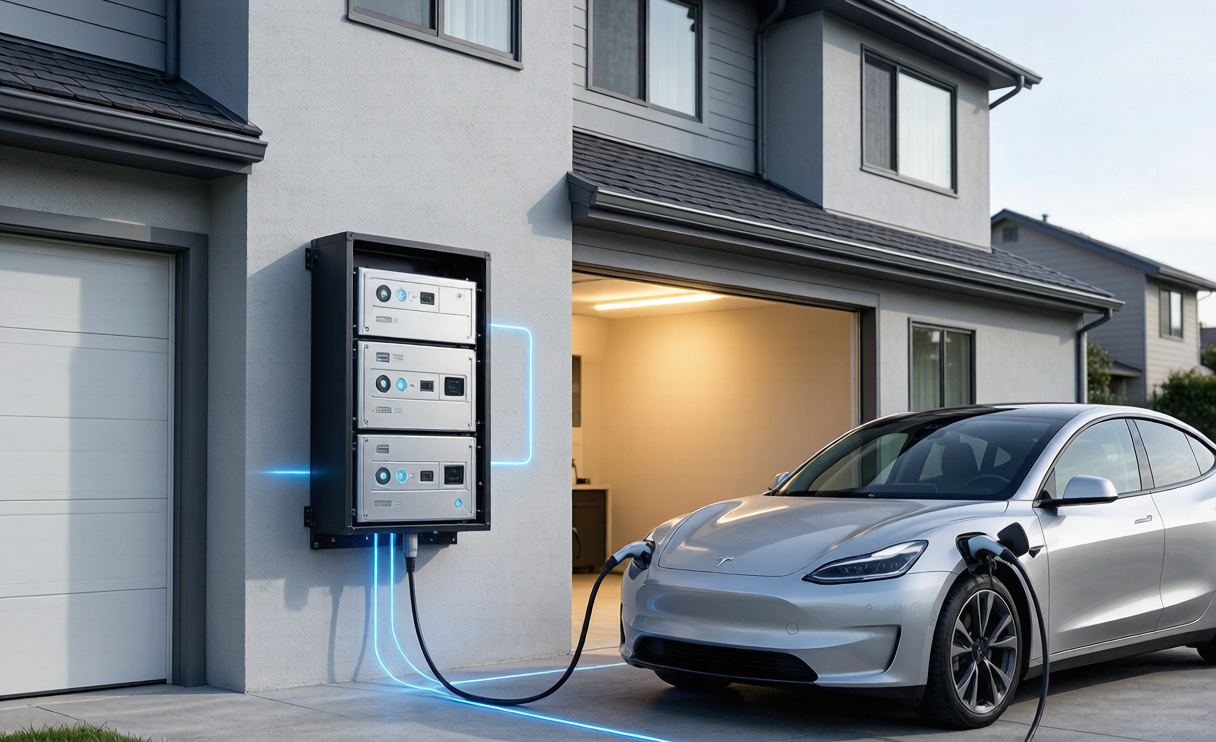
This article is a field engineer’s practical guide to home energy storage bidirectional EV charging. I will cover what the standards actually require, how much power you can realistically pull from a vehicle, where the efficiency losses hide, and how to size and certify a system that your local inspector will sign off on. If you specify, sell, or install residential battery storage, this is a capability your customers are starting to ask about by name.
What Bidirectional EV Charging Actually Means
Bidirectional charging is exactly what it sounds like: the flow of energy between the vehicle and everything around it can run in both directions. The industry has split this into a few distinct modes, and the abbreviations matter because each one has different hardware and standards behind it.
- V2H (Vehicle-to-Home): The car discharges into the house during an outage or to offset peak tariff. This is the most common residential use case today.
- V2G (Vehicle-to-Grid): The car exports to the utility grid, usually for frequency regulation or demand response. This requires IEEE 1547-2018 interconnection compliance and utility approval.
- V2L (Vehicle-to-Load): The car powers a device directly through an outlet, no home wiring required. Think campsite or jobsite.
- V2B (Vehicle-to-Building): Same as V2H but applied to a commercial or multi-unit building.
In my experience, most homeowners who ask for home energy storage bidirectional EV charging actually want V2H first and V2G later. The good news is that the inverter and communication hardware for both are largely the same; the difference is whether you stop at your panel or push past your meter.
The Standards and Protocols Behind a Compliant System
Before you spec a single component, understand that bidirectional charging lives or dies on communication standards. A lithium battery is dumb metal without a controller telling it when and how much to move. The same is true for an EV pack.
The core handshake protocol is ISO 15118, which defines how the vehicle and charger negotiate power, billing, and plug-and-charge identity. For bidirectional operation, you need the V2G subset of ISO 15118 (Part 20 and the emerging Part 21). On the North American connector side, CCS1 (Combined Charging System) is the physical link; in Europe it is CCS2. The older CHAdeMO connector also supports V2H/V2G, but I see fewer new residential designs choosing it.
On the safety and listing side, the key references I cite on every bill of materials are:
- UL 9741 — the safety standard specifically for bidirectional EV charging systems. This is the one inspectors ask for.
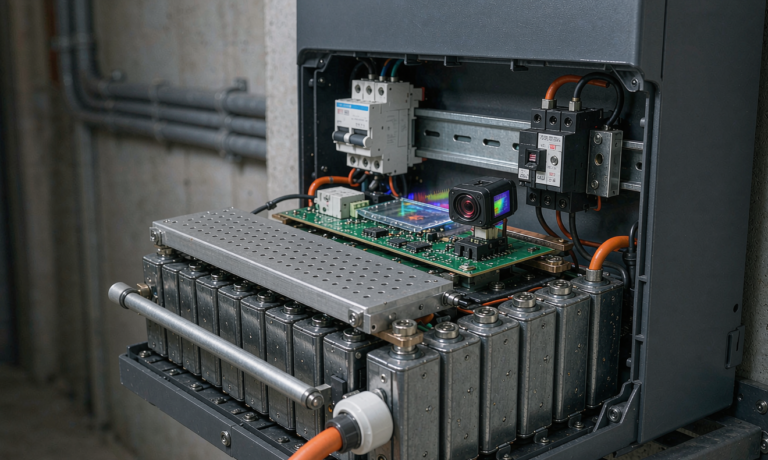
- UL 9540 and UL 9540A — for the stationary home energy storage system enclosure and fire propagation testing.
- IEEE 1547-2018 — interconnection and interoperability with the grid for V2G export.
- IEC 62619 and IEC 62109 — industrial battery safety and inverter safety, respectively, which we follow for pack and inverter design.
- UN38.3 — transport testing, relevant because many installers ship modular packs; the T.1 through T.8 tests cover altitude simulation, thermal, vibration, shock, external short, impact, overcharge, and forced discharge.
Note that FAA and EASA certification is not part of a stationary residential install. Those apply to batteries flown as cargo, not to a home battery backup sitting in your garage. I mention this only because I have seen proposals wrongly inflate cost by quoting aviation standards where they do not apply.
How Much Power Can You Actually Pull From the Car
This is where expectation management matters. A typical passenger EV can discharge somewhere between 3.3 kW and 11 kW back to the home, depending on the onboard inverter and the vehicle’s own DC bus design. Some newer platforms target 19.2 kW AC, but that is still rare in 2026 residential deployments.
Compare that to a dedicated home energy storage system, where a 10 kWh unit commonly delivers 5 kW continuous and a 20 kWh unit delivers 8 to 10 kW. The car wins on energy (kWh) but the stationary battery often wins on sustained power (kW) because it was engineered for it. In a properly designed V2H setup, the vehicle and the home battery backup work together: the car supplies bulk energy during a long outage, and the stationary pack handles the high instantaneous load when the heat pump compressor kicks on.
I always tell clients to size the whole-house transfer around the largest single motor load, not the average. A 4 kW air conditioner inrush can briefly touch 9 kW, and that transient has to be covered or the inverter trips.
Efficiency, Cycling, and the Real Cost to the Vehicle Battery
Round-trip efficiency from vehicle pack to home loads, through the bidirectional charger and the home panel, lands around 83 to 90 percent in the systems I have measured. You lose a point or two to the car’s internal DC-DC stage, a few more to the charger, and a little to the wiring. That is acceptable, but it is not free, so V2H only makes economic sense when it offsets a genuine outage or a genuine peak tariff.
The bigger question clients raise is battery wear. Every discharge cycle you pull from the car is a cycle the pack was not designed to sell. The honest engineering answer: a modern EV battery rated for 1,000 to 1,500 full-equivalent cycles will barely notice an occasional V2H event, but daily deep discharges will accelerate capacity fade. I recommend capping vehicle-to-home discharge at 80 percent depth of charge in the controller logic and treating the car as emergency reserve, not daily load. The stationary home energy storage system should carry the daily cycling; the car is the insurance policy.
Sizing and Wiring a Bidirectional-Ready Install
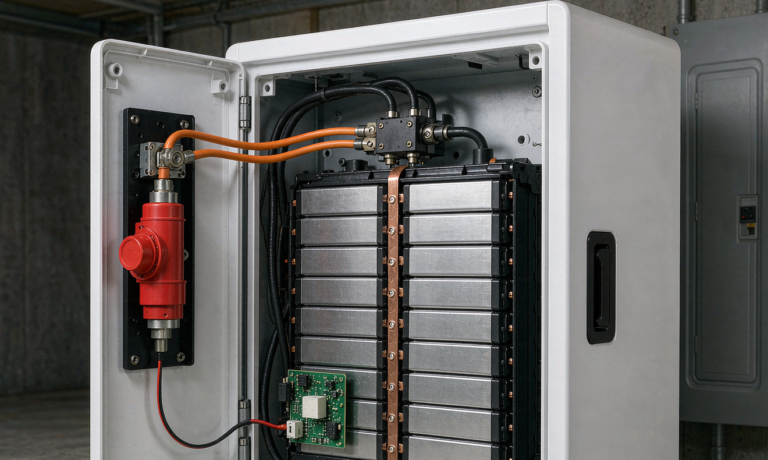
If you are adding this to an existing residential battery storage setup, the cleanest path is a dedicated bidirectional charger on its own branch, fed from the backup load panel that the home energy storage system already serves. Do not try to backfeed the main panel without a properly interlocked transfer switch; that is both a code violation and a lineman-safety hazard.
Practically, the steps I walk installers through are:
- Confirm the EV supports ISO 15118 bidirectional (not all do, even with a CCS port).
- Select a UL 9741 listed bidirectional charger matched to the vehicle’s AC output.
- Tie the charger into the backup load panel served by the home energy storage system, not the main service.
- Configure the energy management system so the stationary pack and the vehicle do not fight over who is the source.
- Commission per IEEE 1547 if any V2G export is enabled, and document it for the utility.
For homes without a battery yet, a bidirectional-ready car can serve as the primary backup on its own, but I still prefer pairing it with at least a small home battery backup to handle inrush and to provide a stable bus while the vehicle negotiates its connection. A car that takes thirty seconds to handshake is a car that leaves your fridge dark for thirty seconds.
Frequently Asked Questions
Is home energy storage bidirectional EV charging safe for the car battery?
Yes, when bounded by proper controls. Keep discharge depth moderate, use a UL 9741 listed charger, and let the stationary home energy storage system handle daily cycling. Occasional V2H use has a negligible effect on a pack rated for over a thousand cycles.
Do I need a separate battery if my car can power the house?
Not strictly, but I recommend one. A small home battery backup stabilizes the bus, covers motor inrush, and removes the handshake delay. For reliable whole-house support, pair the vehicle with a home energy storage system rather than relying on the car alone.
Can I sell power back to the grid from my EV?
Only if your utility permits V2G and your equipment meets IEEE 1547-2018 interconnection rules. V2H stays behind your meter and is far simpler to deploy today than true grid export.
What standards should the installer show me?
Ask for UL 9741 on the bidirectional charger, UL 9540 on the stationary battery enclosure, and ISO 15118 communication support on the vehicle. Those three cover the safety and interoperability bases for a compliant residential install.
How long will an EV run my house during an outage?
A 75 kWh vehicle pack at an 83 percent round-trip efficiency delivers roughly 60 usable kWh to the home. For a typical home drawing 1 to 1.5 kW average overnight, that is two to three days of essential loads, longer if a home energy storage system and solar handle daytime generation.