Home Energy Storage Battery Chemistry Options: How to Compare LFP, NMC and Sodium for Your System
When a homeowner or installer asks me to spec a home energy storage system, the single decision that drives every downstream parameter is battery chemistry. After seventeen years designing lithium packs on the factory floor, I can tell you the cell chemistry quietly determines your cycle life, your thermal envelope, your safety margins, and what certifications your home battery backup will need to clear before it is legal to energize. This guide walks through the real chemistry options on the table in 2026, with the engineering numbers I actually use when I size a system.
Why Chemistry Choice Decides Everything for a home energy storage system
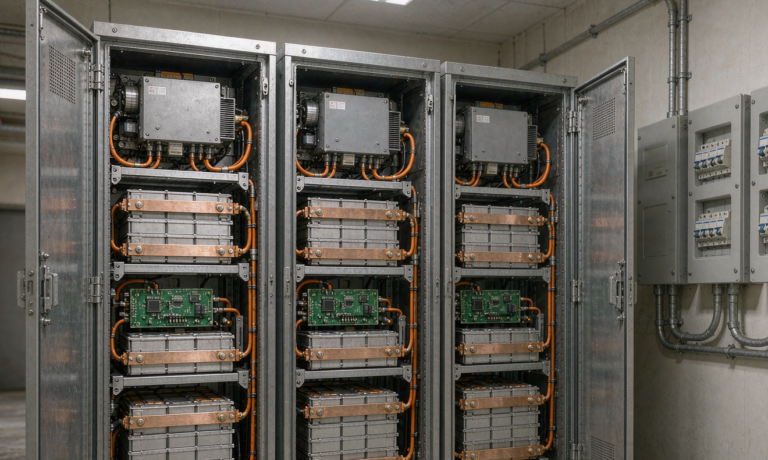
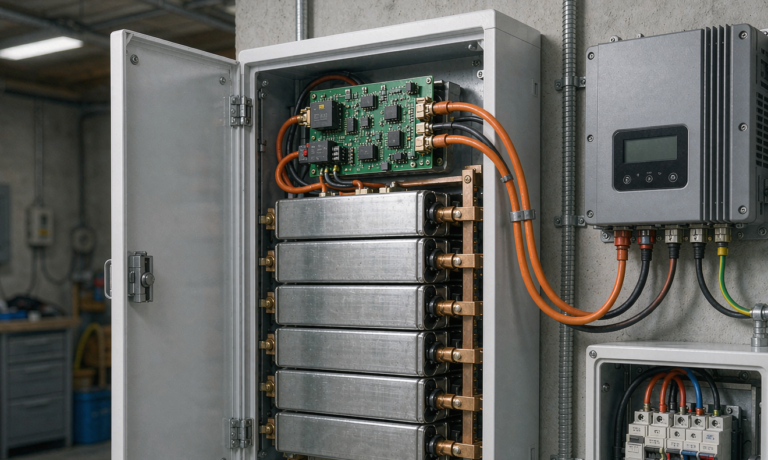
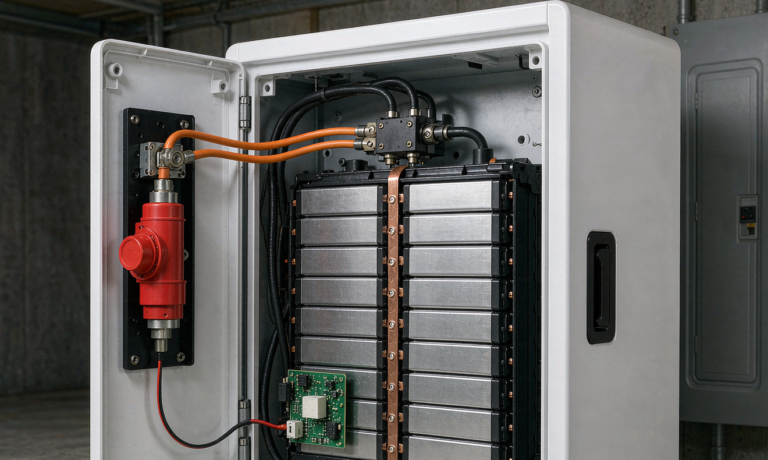
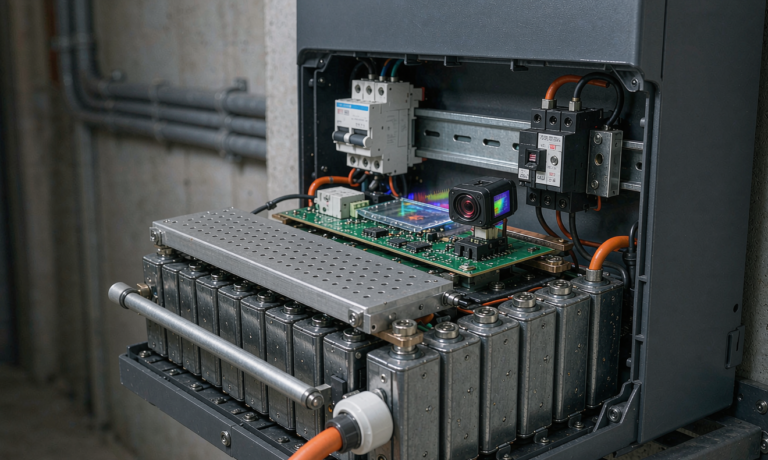
Before comparing cells, understand what chemistry governs. A home energy storage system is really three things wrapped together: the cells, the battery management system (BMS), and the enclosure plus thermal controls. The cells set the ceiling. Change the chemistry and you change the nominal voltage per cell, the usable depth of discharge, the self-heating behavior, and the failure mode if something goes wrong.
In my lab we rate every candidate pack against UN38.3 (T.1 through T.8: altitude simulation, thermal, vibration, shock, external short, impact, overcharge, forced discharge). That baseline does not care which chemistry you picked, but the pass margins do. LFP walks through UN38.3 with comfortable headroom. Higher-energy chemistries need more conservative BMS tuning to stay safe. That is the first place chemistry shows up in the real world, not in a marketing brochure.
LFP (LiFePO4): The Default for Home Battery Backup
For the vast majority of residential battery storage projects, lithium iron phosphate (LFP) is the chemistry I recommend first. Its nominal cell voltage is 3.2 V, its thermal runaway onset sits around 270 to 300 degrees Celsius, and it tolerates a genuine 90 to 95 percent depth of discharge without wrecking cycle life. In our accelerated aging cells we routinely see 6,000 cycles at 80 percent state of health, which maps to well over a decade of daily home use.
The standards story is mature. LFP home packs are certified under IEC 62619 for industrial stationary use, UL 1973 for stationary storage, and the full system under UL 9540 / UL 9540A for fire safety. Inverter coupling follows IEEE 1547-2018 and IEC 62109, while the U.S. electrical code pulls in NEC Articles 706 and 710. That well-trodden certification path is exactly why a home battery backup built on LFP clears permits faster than anything else. The tradeoff is energy density: LFP lands near 120 to 160 Wh/kg, lower than nickel chemistries, so the cabinet is bigger for a given kWh.
NMC (Nickel Manganese Cobalt): Energy Density Versus Tradeoffs
NMC pushes energy density to roughly 180 to 250 Wh/kg, which means a smaller footprint for the same stored energy. For homeowners with tight wall space or weight limits, that matters. But as a senior engineer I am blunt about the cost: NMC has a lower thermal runaway threshold, typically 150 to 210 degrees Celsius, and a tighter usable window (commonly 80 to 90 percent depth of discharge) to protect the cathode.
We still build NMC for space-constrained home energy storage jobs, but the BMS has to be more aggressive, the enclosure needs better passive isolation, and the installer must respect NFPA 855 spacing. NMC packs also tend to need more active thermal management in hot garages. If you are choosing between LFP and NMC purely on chemistry for a normal home, LFP wins on total cost of ownership nine times out of ten. NMC wins only when volume or weight is the binding constraint.
Sodium-Ion: The Emerging Option for Residential Storage
Sodium-ion is the chemistry I am most excited about for 2026. It uses abundant sodium instead of lithium and cobalt, which removes two supply-chain headaches at once. In our field units sodium-ion delivers about 100 to 140 Wh/kg today, with cycle life in the 3,000 to 4,000 range and a thermal runaway onset comparable to or better than LFP in some formulations.
The standout property is cold performance. Where LFP loses meaningful capacity below freezing, sodium-ion holds up far better, which is a real advantage for a home energy storage system in cold-climate regions. The catch is maturity: the certification ecosystem (IEC 62619, UL 1973 equivalents) is still catching up, and per-kWh cost has not yet consistently beaten LFP at volume. I currently specify sodium-ion where cold resilience and supply security outweigh the small cost premium, especially for backup-first homes rather than daily-deep-cycle users.
Lead-Acid and Other Legacy Chemistries
I mention flooded and sealed lead-acid only to say why I rarely use them. A typical lead-acid bank gives you 500 to 1,000 cycles, a usable depth of discharge of just 50 percent, and ongoing maintenance. For a modern home battery backup the math does not close. You need twice the rated capacity to get the same usable energy, and the footprint is enormous. The only niche left is ultra-budget off-grid where certification and longevity are not priorities, and even there lithium is now cheaper over a five-year horizon.
How to Compare Chemistries on Real Specs
When a client brings me three quotes with three different chemistries, I strip it down to a comparison framework rather than trusting vendor headlines. Here is the short version I hand to installers:
- Usable energy = rated kWh x allowed depth of discharge. A 10 kWh NMC pack at 85 percent DOD gives 8.5 kWh usable; a 10 kWh LFP at 95 percent gives 9.5 kWh. Same nameplate, different reality.
- Cycle life to 80 percent SOH under your actual temperature and DOD, not the lab best case.
- Thermal envelope and whether the enclosure needs active cooling.
- Certification stack: IEC 62619, UL 1973, UL 9540, UN38.3, IEEE 1547, NEC 706/710. Missing any one of these slows permitting.
- Cost per usable kWh over warranted life, which is the only number that survives contact with a real electric bill.
For a custom battery solution where the homeowner has unusual loads or a hybrid inverter, we sometimes mix a primary LFP bank with a small buffer chemistry, but that requires careful BMS arbitration and is not a starter design. Most homes are better served by one well-specified LFP bank.
FAQ
Which chemistry is safest for home use?
For a typical home energy storage installation, LFP is the safest mainstream choice because of its high thermal runaway threshold and stable cathode. Sodium-ion is close behind and better in the cold. NMC is safe when properly certified and enclosed, but demands stricter thermal and spacing controls.
Can I mix chemistries in one home energy storage system?
Technically yes, but I advise against it for most homes. Different nominal voltages, charge windows, and BMS logic make mixed banks complex and error-prone. If you need a specialized custom battery solution, isolate the chemistries behind separate controllers rather than paralleling them directly.
Does cold weather change the chemistry choice?
Significantly. LFP capacity and charge acceptance drop below freezing, which can strand energy in a cold home battery backup. Sodium-ion handles cold far better, making it a strong candidate for northern climates where the battery sits in an unheated garage or cabin.
How does chemistry affect warranty and cycle life?
Chemistry sets the cycle-life ceiling. LFP warranties commonly promise 10 years or 6,000 cycles at 80 percent state of health; NMC is usually shorter; sodium-ion is still defining its standard terms. Always read the warranty as cycles-to-80-percent-SOH at your real depth of discharge, not just years.