Battery Solution for Mobile Medical Clinics: An Engineer’s Field Guide to Reliable Off-Grid Care
Why Mobile Medical Clinics Need a Purpose-Built battery solution
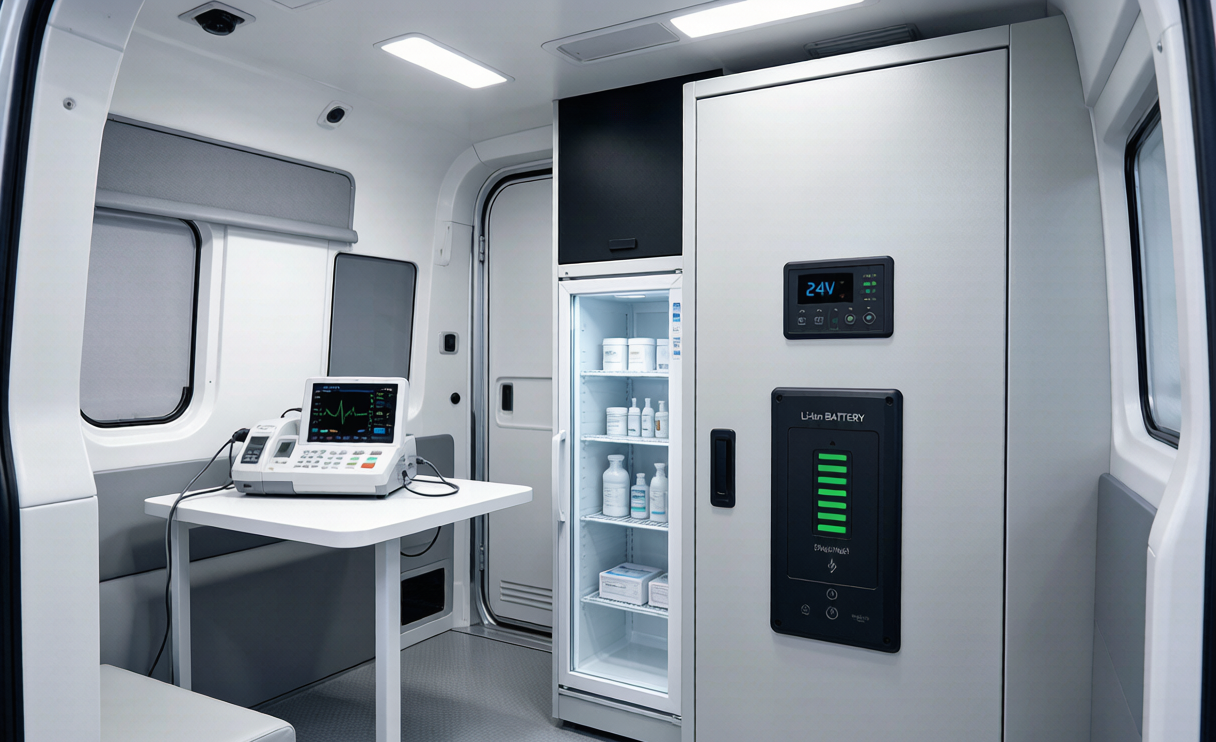
Over the last eight years as a Senior lithium battery Engineer, I have watched mobile medical clinics move from a nice-to-have outreach idea to a core part of public health delivery in regions where the grid is unreliable or simply absent. The moment a clinic rolls into a village, it is expected to run a vaccine refrigerator, a vital-signs monitor, LED surgical lighting, a dental compressor, and sometimes a portable ultrasound. None of that forgives a power drop. A generic camping battery will not survive a 12-hour shift, and a diesel generator defeats the purpose of a quiet, clean, fume-free clinic. What these vehicles need is a genuine battery solution engineered around the medical load profile, not a repackaged consumer power station.
In this field guide I will walk through how we design a custom battery solution for mobile clinics, from load audit to certification, using the same standards I apply on every commercial program: UN38.3 for transport, IEC 62133-2 for cell safety, and the medical-specific overlays that keep patients and practitioners safe.
Sizing the Battery Pack: From Load Audit to Usable kWh
The single biggest mistake I see in clinic builds is sizing from nameplate wattage alone. A vaccine fridge may draw 60 W on average but spike to 400 W every time the compressor starts. A dental handpiece peaks above 1,000 W for seconds. You must build a load table with both continuous watts and peak watts, assign a duty cycle to each device, and total the watt-hours across a worst-case 14-hour operating day.
For a typical single-van clinic we land around 8 to 12 kWh of usable energy. I never spec the pack at full nameplate capacity. With LFP chemistry I design to 90 percent depth of discharge, but I still reserve 15 percent as a buffer so the battery never hits the floor during an extended mission. That means a 10 kWh usable target translates to roughly an 11.8 kWh nominal pack. This is where a custom battery solution earns its keep: off-the-shelf units are almost always undersized for medical peak loads.
- Step 1: List every device, its continuous W, peak W, and daily run hours.
- Step 2: Sum watt-hours, then add 20 percent for inverter losses and cable drop.
- Step 3: Apply the DoD buffer to convert usable kWh into nominal pack kWh.
- Step 4: Size the inverter to the highest simultaneous peak, not the sum of all peaks.
Chemistry Choice: Why LFP Leads in Medical Environments
For mobile clinics I specify lithium iron phosphate, LFP, almost without exception. The reasons are practical, not marketing. LFP runs at a lower cell voltage band that is intrinsically more stable, it tolerates partial-state charging (which is exactly what a clinic solar input delivers), and it holds up across thousands of cycles even in hot vehicle interiors. A lithium battery built on NMC can deliver higher energy density, but the thermal headroom and long cycle life of LFP matter far more when the load is a fridge holding vaccines at 2 to 8 degrees Celsius.
In our bench data a well-built 10 kWh LFP pack sustains 3,500 to 4,500 cycles to 80 percent state of health, which for a clinic running six days a week means roughly eight to ten years of service. That lifecycle cost, not the sticker price, is what procurement teams should evaluate.
Safety, Certification and Compliance
Medical power is not consumer power, and the paper trail matters. Every pack we ship for a clinic program carries UN38.3 transport certification, because the battery will almost certainly travel by road or air to reach the deployment region. Cells and modules meet IEC 62133-2, and the assembled system is validated against IEC 62619 for industrial safety and IEC 62477 for power electronic converter protection. On the medical side we design to the spirit of IEC 60601-1 for leakage and isolation and build under an ISO 13485 quality management framework so the clinic operator has traceability from cell lot to finished cabinet.
If the clinic crosses borders, I also flag the regional marks early: CE for Europe, FCC for the US emissions profile, and UL 1741 / IEEE 1547 where grid-interactive inverters are involved. Planning these at the design stage avoids a costly re-certification loop later.
BMS and Telemetry: Keeping the Cold Chain Alive
The battery management system is the difference between a clinic that runs and a clinic that fails silently. For medical builds I spec a tiered BMS: cell-level voltage and temperature monitoring, active balancing above 2 A, and a contactor-based disconnect that triggers on any out-of-band reading. More importantly, the BMS talks. We push state of charge, cell delta, and fault codes to a dashboard the clinic manager can read on a tablet, and we log it so a remote technician can see a fading fridge battery before the temperature drifts.
In one rural program we caught a failing cooling fan in a vaccine fridge through a correlated draw anomaly in the battery log, two days before it would have breached the cold chain. That is the kind of early warning a good battery solution is built to provide.
A Real-World Build: 10 kWh Van System
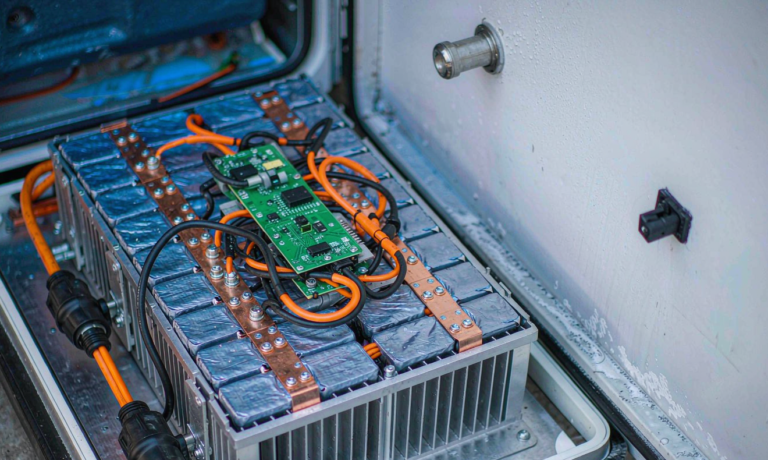
To make this concrete, here is a build we delivered for a three-van outreach fleet. Each van carries a 10.4 kWh LFP cabinet (48 V, 216 Ah) fed by 800 W of roof solar and a 3 kW grid or generator AC input. The inverter is a 5 kW pure-sine unit sized to the dental and imaging peaks. The BMS reports over CAN bus to a small display, and the whole cabinet is IP54-sealed against dust on unpaved roads. Real measured runtime: 13.5 hours supporting a fridge, monitor, LED theater light, and intermittent dental load on a single charge, with solar extending that through the day.
The same chassis accepts a second 10 kWh module if the clinic adds an imaging workstation, which is the value of designing the custom battery solution with a stackable backbone from day one.
Custom Battery Solution vs Off-the-Shelf
I am often asked whether a clinic can simply bolt in a retail power station. For a single demonstration day, maybe. For a program that must run every week for years, the math breaks down. Off-the-shelf units rarely expose BMS telemetry, seldom carry IEC 62619, and almost never survive the vibration and temperature swing of a vehicle cabin. A purpose-built lithium battery cabinet gives you the certifications, the service life, and the integration points that a health system’s risk team will demand. The upfront premium pays back inside the first two years through avoided failures and longer pack life.
FAQ
How long can a mobile clinic run on battery alone?
A properly sized 10 kWh LFP system supports a standard clinic load for 12 to 14 hours on a single charge, and solar input during daylight extends that further. Runtime scales directly with pack size, so fleets adding imaging simply spec a larger or second module.
Which certifications matter most for medical battery systems?
At minimum: UN38.3 for transport, IEC 62133-2 for cell safety, IEC 62619 for the assembled system, and an ISO 13485 quality framework. Regional marks (CE, FCC, UL 1741) depend on the deployment market.
Can the same battery power a vaccine fridge and imaging gear?
Yes, provided the inverter is sized to the highest simultaneous peak, not the sum of all device peaks. We routinely run a 2 to 8 C vaccine fridge alongside LED lights, monitors, and a dental or ultrasound load on one 48 V LFP cabinet.
How do you keep the system safe in hot climates?
LFP chemistry, a sealed IP54 cabinet, temperature-rated cells, and a BMS that throttles charge above 45 C protect the pack. We also place the cabinet away from direct solar gain and add passive ventilation paths in the van build.
What is the typical lifespan of a clinic battery solution?
A quality LFP pack delivers 3,500 to 4,500 cycles to 80 percent state of health, which translates to roughly eight to ten years for a six-day-a-week clinic. The battery solution should be designed so modules are field-replaceable at end of life.