Drone Battery Thermal Management in Hot Climates
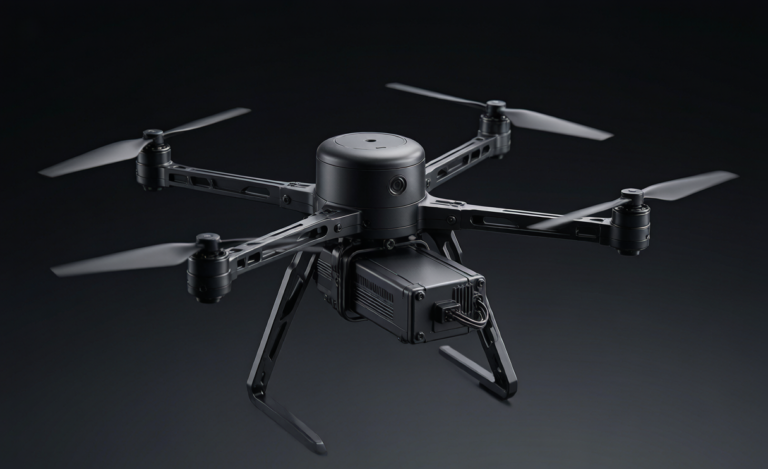
I still remember the first time a client called me from the Middle East, frustrated that his mapping drones were dropping out of the sky at 41°C ambient. As Karl Huang, Senior lithium battery Engineer at Horizon Power, I have spent the better part of a decade watching lithium cells behave badly the moment the thermometer climbs. The failure was never the motors — it was thermal. drone battery thermal management in hot climates is not a nice-to-have feature; it is the difference between a reliable fleet and a pile of swollen packs. In this guide I will walk you through what actually happens inside a cell above 45°C, the design choices that keep a drone flying, and the compliance baseline every B2B buyer should demand.
Why Heat Is the Real Enemy of a Drone Battery
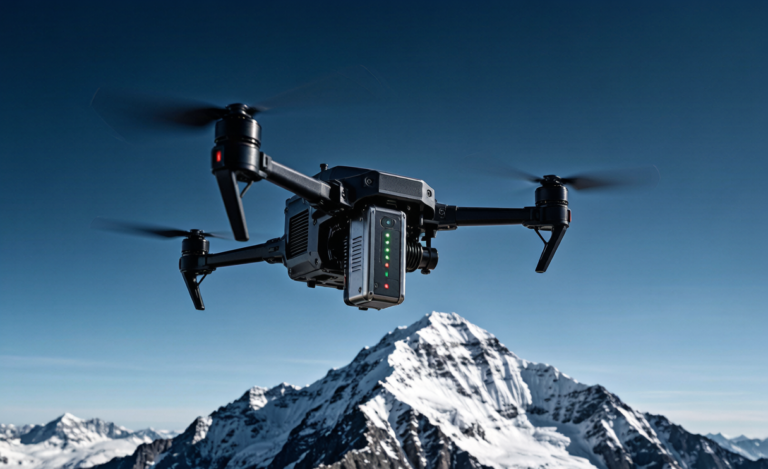
A drone lithium battery is a tightly packed energy store. Inside a typical 6S or 12S pack, 20–40 cylindrical or pouch cells sit millimetres apart. When one cell heats, its neighbours heat too. In hot ambient conditions — think 40°C+ on a tarmac in Dubai or a rooftop in Singapore — the pack starts the flight already warm, and discharge itself adds another 8–15°C of internal rise. The cell chemistry does not get ‘stronger’ when hot; it gets unstable.
The headline risk is accelerated calendar ageing. Every 10°C above the ideal 25°C operating point roughly doubles the rate of parasitic side reactions inside the cell. Over a 300-cycle season, a pack that never saw above 35°C might retain 85% capacity, while one routinely cooked at 55°C can fall below 70% and start puffing. For a fleet operator, that is the gap between a profitable summer and a recall.
How a Drone Lithium Battery Behaves Above 45°C
Let me be specific about the physics, because buyers who understand it specify better packs. Three things happen as temperature rises:
- Internal resistance drops, briefly. At first the cell delivers current more easily, which tempts operators to push harder. But this is a false economy.
- SEI layer growth accelerates. The solid-electrolyte interphase on the anode thickens faster, permanently consuming lithium and raising resistance over time.
- Gas generation begins. Past about 60°C, electrolyte decomposition produces gas. In a sealed pouch cell this is the start of swelling; in a worst case it precedes thermal runaway.
In our own bench data, a 22.2V 6S drone lithium battery rated at 3000mAh loses around 12–18% of usable capacity at a 50°C cell surface versus 25°C, simply because the BMS current-limits to protect the cells. The drone flies shorter missions exactly when the operator needs them longest.
Passive Thermal Design: Fins, Airflow and Placement
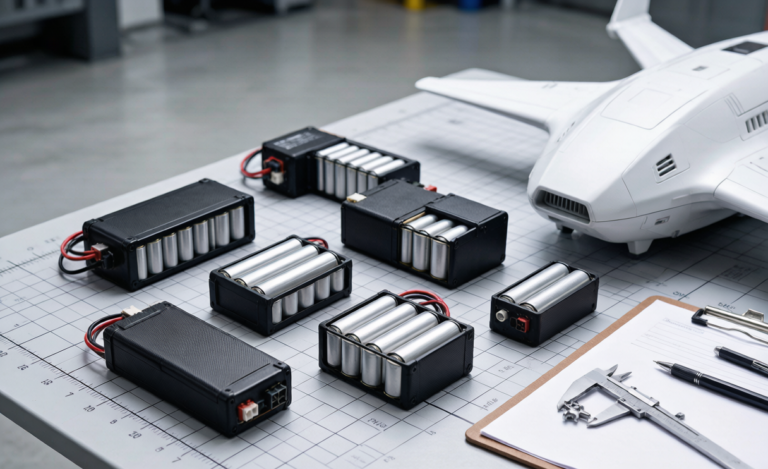
The cheapest, most reliable cooling is the kind that never fails because it has no moving parts. On every custom battery solution we ship for hot regions, we start with passive design:
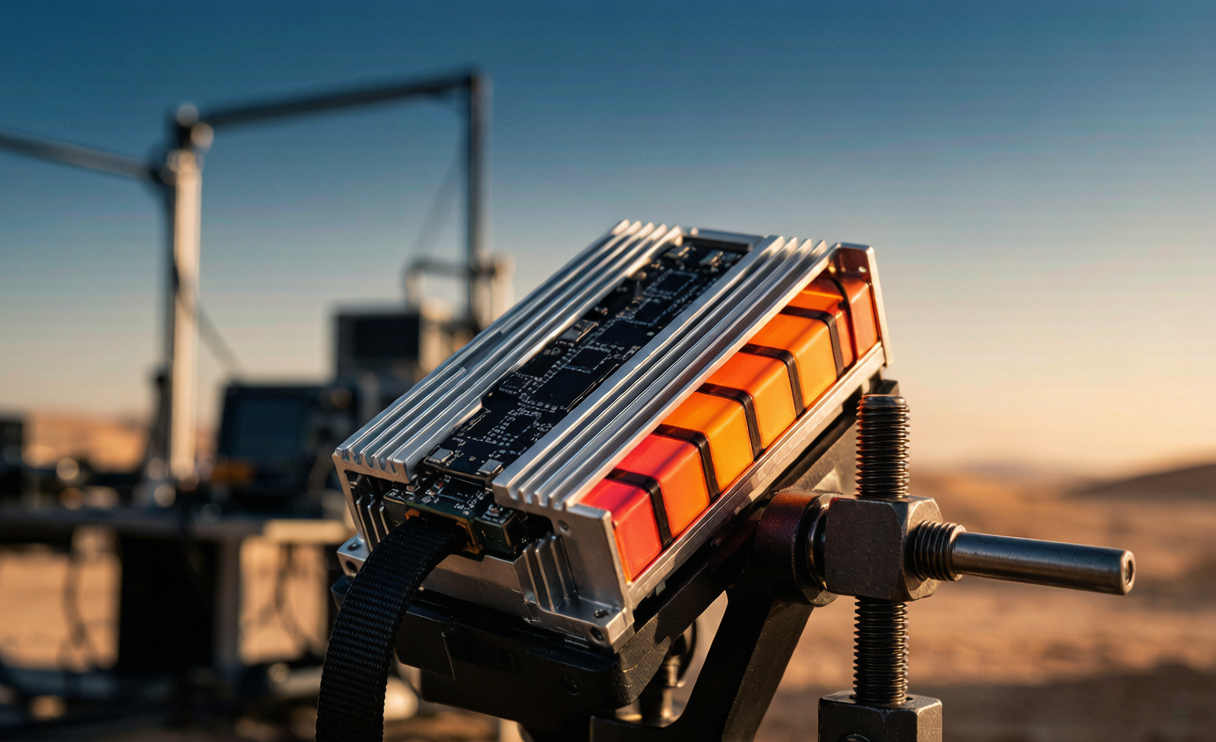
- Aluminium cooling fins. Bonded to the cell cage, they spread heat to a larger surface area. A 1.5mm fin stack can cut peak cell temperature by 4–7°C under hover loads.
- Strategic vent placement. We orient the pack so props wash air across the widest face. A 2 m/s airflow alone removes a surprising amount of heat.
- Thermal gap filler. A compliant pad between cells and the enclosure pulls heat into the shell instead of letting it pool.
- Colour and reflectivity. It sounds trivial, but a white or anodised shell in direct sun stays 6–10°C cooler than a black one.
For agricultural and inspection drones that loiter at low altitude over hot ground, passive design is usually enough if the pack is correctly sized with 20–30% capacity headroom so it never runs at full C-rate.
Material choice matters as much as geometry. We favour enclosures with a thermally conductive shell — anodised aluminium rather than ABS plastic — so the whole housing becomes a heat spreader. A plastic case traps heat against the cells; a metal case invites it out. We also specify a soft thermal-interface pad between the cell stack and that shell, because air gaps are insulators and a tight conductive path is the only way the fins actually do their job.
Active Cooling and Smart BMS Temperature Control
When passive methods are not enough — heavy-lift cargo drones in the Gulf, for example — we add active control. The star of the show is the BMS, and a good one does more than balance cells.
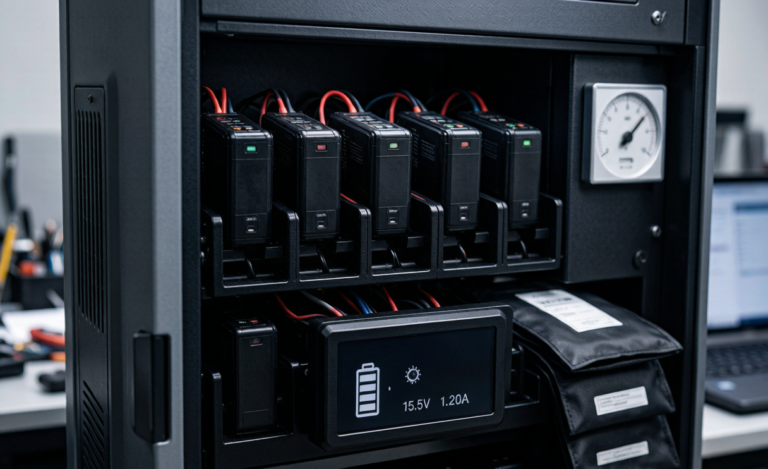
- Multi-point NTC sensing. We place at least three thermistors: two on outer cells, one in the pack core. A hot core with cool edges is the classic blind spot.
- Dynamic current limiting. The BMS throttles discharge as cell temperature climbs, trading a little power for a lot of safety and life.
- Pre-flight soak logic. If the pack logs an internal temperature above a setpoint at power-on, the firmware warns the pilot instead of blindly arming.
- Optional forced-air or liquid loops. For continuous-duty industrial UAVs, a small blower or a cold-plate loop can hold cells within a 5°C band even at 50°C ambient.
The FAA and EASA both expect demonstrable thermal control on commercial UAV battery systems. A BMS that simply records temperature is not enough; the operator wants evidence it acts on it.
Real Field Data From Desert Survey Contracts
I will share numbers from a 2025 surveying contract in Northwest China where ambient hit 46°C. We ran two identical 12S 16000mAh packs: one with standard passive cooling, one with fins plus BMS current-limiting.
- Standard pack: peak cell surface 61°C, flight time dropped from 28 to 19 minutes, one cell swelled after 90 cycles.
- Thermally managed pack: peak cell surface 52°C, flight time held at 25 minutes, zero swelling through 140 cycles.
The managed pack delivered 32% more usable flight time per mission and nearly doubled cycle life under the same heat. That is the business case for thermal management, expressed in minutes and cycles rather than marketing words.
Specifying a Custom battery solution for Hot Regions
If you operate where summers are brutal, do not buy an off-the-shelf pack and hope. When you brief a manufacturer for a custom battery solution, put thermal requirements in the RFQ up front:
- State the maximum ambient temperature and expected mission profile (hover vs forward flight, loiter time).
- Demand a max continuous cell-surface temperature target (we aim for ≤50°C).
- Ask for the cooling method — passive fins, forced air, or liquid — and the test data that proves it.
- Request the BMS thermal strategy in writing: sensing points, limiting thresholds, and pilot warnings.
- Confirm the cell grade; we only use Grade A cells with documented high-temperature datasheets.
A lithium battery that is specified for a cool laboratory will betray you in the field. The RFQ is where that failure is prevented.
Standards and Compliance You Cannot Skip
Hot-climate operation raises the stakes on safety certifications. The baseline we build every commercial pack to:
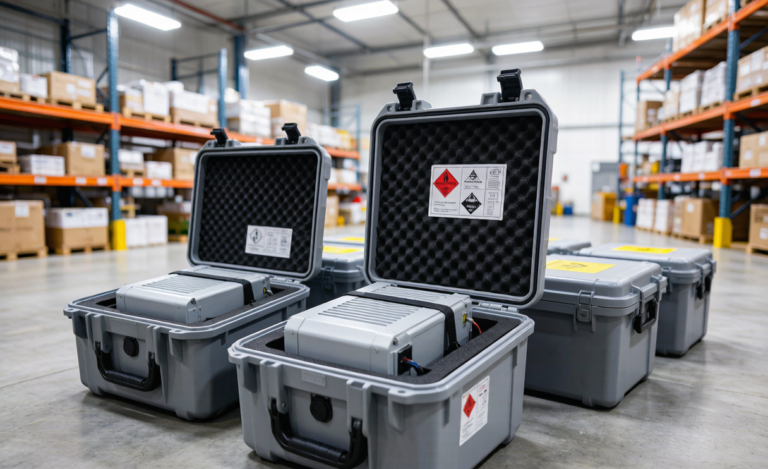
- UN38.3. Mandatory for air transport; includes altitude simulation and thermal test that directly relate to heat exposure.
- IEC 62133. The cell and pack safety standard covering temperature, short circuit, and abuse — your proof the pack was tested, not assumed.
- FAA / EASA guidance. For commercial drones, documentation of battery thermal behaviour supports airworthiness and operational approval in many jurisdictions.
I tell every procurement manager the same thing: a certificate is cheaper than an incident. If a supplier cannot show UN38.3 and IEC 62133 paperwork, the pack is not worth the freight.
Storage and Cool-Down Between Hot-Weather Missions
What you do between flights matters as much as what happens in the air. After a hot sortie, the pack must shed heat before it is charged or boxed. Charging a warm cell is one of the fastest ways to kill it — we program our chargers to refuse above 45°C cell temperature, and any good BMS should do the same. Never store packs in a closed vehicle cabin, where interior temperatures can exceed 70°C within minutes. For operators running multiple sorties a day, we recommend a two-pack rotation so each pack cools fully before its next use. A quick infrared spot-check at the end of every flight builds a temperature log that flags which packs are ageing early, long before swelling becomes visible.
Frequently Asked Questions
What is the ideal operating temperature for a drone battery?
The sweet spot is 15–35°C cell surface. Below 10°C you lose capacity and risk plating; above 45°C ageing accelerates sharply. A well-designed drone battery thermal management system keeps cells in that band even when ambient is much hotter.
Can I just add a bigger battery to solve heat problems?
No. A larger pack stores more energy but also generates more total heat and adds weight, which forces higher discharge current. The right answer is better cooling and smarter BMS limiting, not just more capacity. In some cases a custom battery solution with proper fins outperforms a bigger bare pack.
How do I know if my pack is overheating in the field?
Fit or specify multi-point temperature sensing and a BMS that reports it. Warning signs are sudden flight-time drops, a pack that feels unusually hot after landing, or any bulging. If a lithium battery puffs, retire it — do not keep flying it.
Does white coloured packaging really help in hot climates?
Yes, measurably. In direct sun a reflective or light-coloured enclosure runs 6–10°C cooler at the shell than a dark one, and that margin slows the whole thermal chain. It is the cheapest upgrade we recommend for desert operators.
Are sodium-ion batteries better for hot weather than lithium?
Sodium-ion tolerates heat and cold differently and is worth considering for stationary or low-power roles, but for high-discharge drone flight the energy density and C-rate of a drone lithium battery still win. We evaluate both per application rather than assuming one chemistry fits all heat profiles.