Semi-Solid State Battery Manufacturing Equipment: What a Production Line Actually Needs in 2026
As a senior lithium battery engineer at Horizon Power, I have walked through more than a dozen cell production lines over the past decade — from conventional NMC and LFP liquid-electrolyte lines to the newer semi-solid state pilot lines our customers are now scaling into volume. The question I hear most from B2B buyers and OEMs is deceptively simple: “Can I build semi-solid state batteries on my existing Li-ion equipment?” The honest answer is “mostly yes, but not for free.” In this article I will break down the actual equipment changes a semi-solid state battery manufacturing line demands in 2026, with real numbers from lines I have commissioned and accepted.
How Semi-Solid State Cells Change the Line
A semi-solid state battery sits between a liquid lithium battery and a full solid-state cell. It uses a high-load, paste-like electrode with reduced free liquid electrolyte and often a polymer- or ceramic-reinforced separator. The electrode slurry is far thicker — we typically coat at 150–300 µm total caliper versus 80–150 µm for liquid cells, and solids loading climbs to 70–82% by weight. That single change ripples through coating, drying, calendering, and filling.
From an equipment standpoint the cell is still built in a laminated or wound format, so much of the legacy tooling survives. But three process windows shift hard enough that you must re-specify machines: coating viscosity, drying energy, and electrolyte injection volume. My rule of thumb for any client is to budget a line re-qualification, not a simple material swap.
Coating and Calendering Upgrades
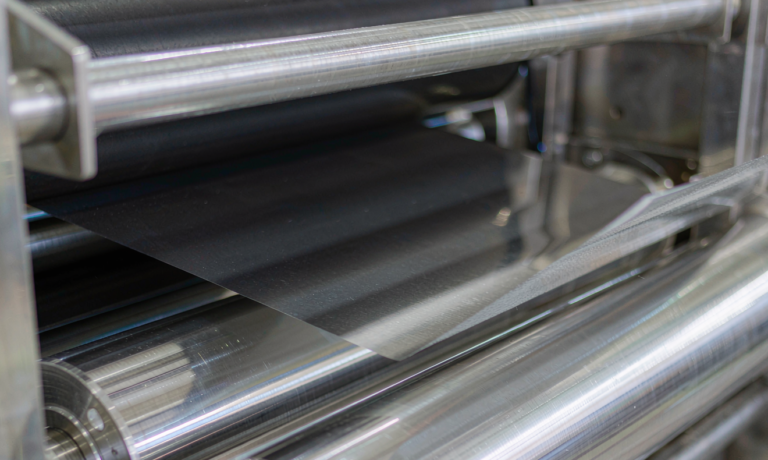
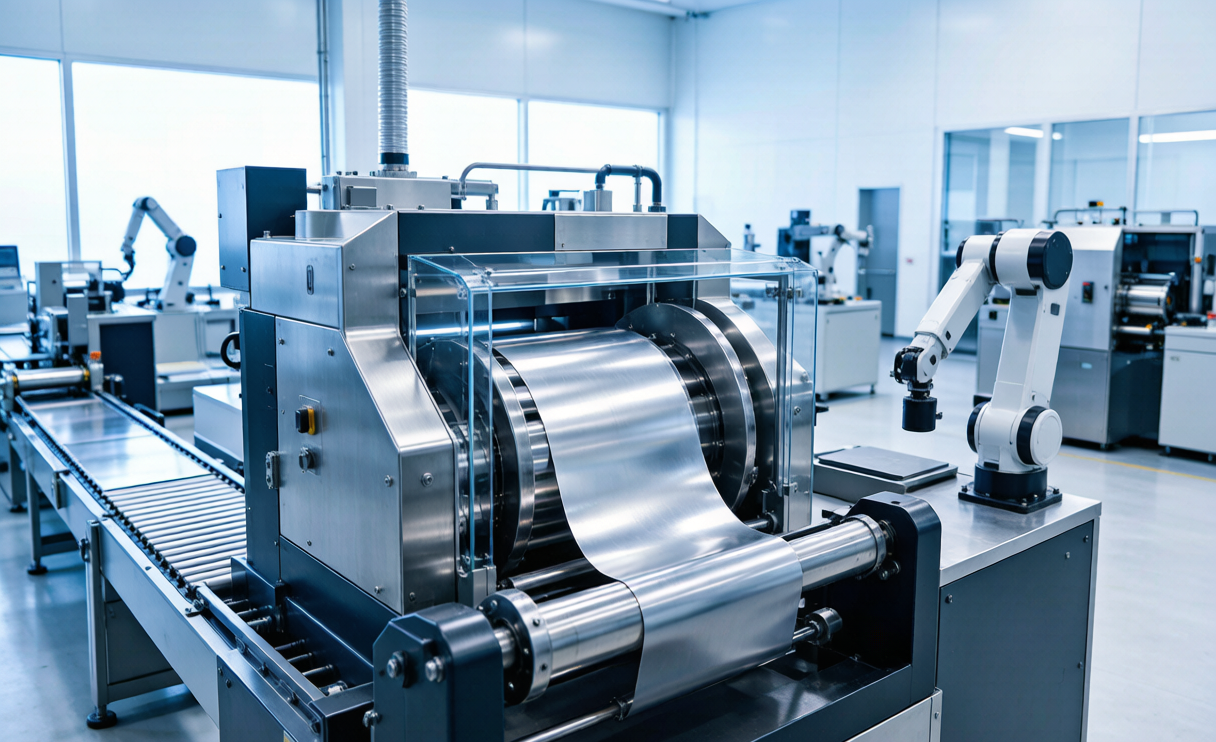
The biggest capital item is the coater. A semi-solid state battery manufacturing line needs a slot-die coater capable of handling 30,000–80,000 cP pastes without streaking. Most legacy Li-ion slot dies are tuned for 3,000–10,000 cP. You either retrofit a wider die lip and a higher-torque feed pump or buy a new coater. In our 2025 retrofit in southern China, moving from a 4 m/min liquid line to semi-solid at 6 m/min cost roughly USD 1.8M in coater and pump upgrades for a 0.5 GWh/yr line.
Calendering also changes. Because the electrode is denser and contains less free solvent, roll pressure rises to 800–1,500 kgf/cm and you need heated rollers (60–90 °C) to keep the binder flowable. Cold calendering cracks the semi-solid layer. Budget for a four-high heated calender, not a two-high legacy unit. As a custom battery solution provider, we always verify coat-weight uniformity at ±1.5% before sign-off.
Drying Ovens and Solvent Recovery
Higher solids loading means less solvent per square meter, but the paste is thicker, so dwell time in the oven goes up 20–40%. You need longer zones or higher air velocity. For NMP-based cathodes, a semi-solid state battery manufacturing line still requires an NMP recovery system (activated-carbon or condensation type) to meet emissions limits and recover solvent at 95%+ efficiency. Skipping this fails both environmental permits and your cost model, and it is one of the first things auditors check.
Electrolyte Filling and Gelation
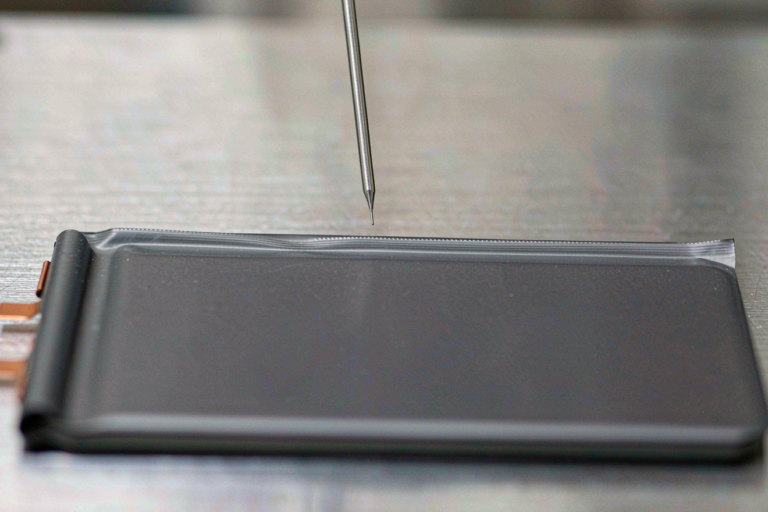
This is where the semi-solid state battery diverges most from liquid cells. Instead of flooding the cell with 3–5 g/Ah of free electrolyte, you inject a reduced volume — often 1.2–2.5 g/Ah — of a gel-forming or partially immobilized electrolyte. The filling needle, vacuum stand, and sealing window must be tightened because there is less margin for trapped gas. We run vacuum injection at ≤ 50 mbar for 30–90 seconds, then a short gelation hold at 40–60 °C. The equipment is similar to liquid lines but the recipe control and pressure profiling matter far more than on a conventional lithium battery line.
Dry Room and Humidity Control
A semi-solid state battery still hates water. Even with less free liquid, residual lithium-sensitive cathode material demands a dry room at ≤ 1% RH (better than 200 ppm dew point) for cathode handling, stacking, and final assembly. That is the same spec as premium Li-ion lines, so if you already run a class-1% dry room you are fine. If your legacy line runs at 5–10% RH, add dehumidification capacity — typically a 30–50% capital add-on for the assembly block. I have seen otherwise-good lines rejected at acceptance purely on humidity excursions.
Formation, Degassing and Sealing
After filling, cells go through formation at 0.1–0.5C, then a degassing and final seal step. Semi-solid cells vent less gas than liquid cells because there is less free electrolyte to decompose, which is a genuine advantage: our degassing loss rate dropped from ~3% of cells on liquid lines to under 1% on semi-solid. Still, you need a reliable heat-seal or laser-weld final closure. For pouch format, a pulsed laser weld or ultrasonic seal works; for prismatic, a high-precision laser weld is standard. Whichever you choose, the seal must pass the same leak test you would apply to a solid-state battery pilot.
What Buyers Should Ask Equipment Suppliers
If you are specifying a semi-solid state battery manufacturing line, ask four things: (1) Can the coater handle your target solids loading and viscosity with documented uniformity (±1.5% coat weight)? (2) Is the calender heated and rated for your line pressure? (3) Does the filling station support vacuum injection and gelation profiling? (4) What is the supplier’s reference line throughput and yield? We tell every customer that a realistic first-year yield on a new semi-solid line is 80–88%, climbing to 92%+ by year two with process tuning.
Standards matter here. Any cell you build must clear UN38.3 (T.1–T.8 transportation tests) and IEC 62133-2 for portable cells, or IEC 62619 for industrial stationary packs. If you ship modules by air, the pack-level FAA and EASA rules apply. Your equipment qualification records should map directly to these test plans — a point I always raise during line acceptance, because a cell that cannot clear certification is just an expensive paperweight.
FAQ
What is the main equipment difference between semi-solid state and liquid Li-ion lines?
The coater and calender. Semi-solid pastes are 5–10x more viscous and need heated, higher-pressure rollers, plus tighter vacuum filling and gelation control. Most winding, stacking, and dry-room infrastructure carries over from a conventional lithium battery line.
How much does it cost to convert an existing Li-ion line to semi-solid state?
For a 0.5 GWh/yr line, a realistic conversion runs USD 1.5–3M depending on how much coater, calender, and dry-room capacity you already own. Greenfield semi-solid state battery manufacturing lines land closer to USD 60–90M per GWh of nameplate, before land and building.
Do semi-solid state batteries need a dry room?
Yes. The cathode remains moisture-sensitive, so you need a ≤ 1% RH assembly dry room — the same class used for premium Li-ion. If your current line runs at 5–10% RH, plan a 30–50% capital add-on for dehumidification in the assembly block.
Which standards apply to cells from a semi-solid state battery manufacturing line?
UN38.3 for transport, IEC 62133-2 for portable cells or IEC 62619 for stationary packs, plus FAA and EASA packing rules for air shipment. Your equipment qualification records should trace directly to these test plans so the cell clears certification on the first attempt.