Semi-Solid State Battery Module and Pack Architecture: Engineering Lessons From the Production Line
Over the past decade on the production floor at Horizon Power, I have watched battery chemistry move from a lab curiosity to a shipping product faster than any datasheet predicted. As a senior lithium battery engineer, my job is not to write the marketing copy — it is to make sure the cells we build survive vibration tables, altitude chambers, and the brutal arithmetic of thermal runaway. Today I want to walk you through the semi-solid state battery module pack architecture the way we actually design and assemble it, not the way it looks in a launch video.
What “Semi-Solid” Actually Means Inside the Cell
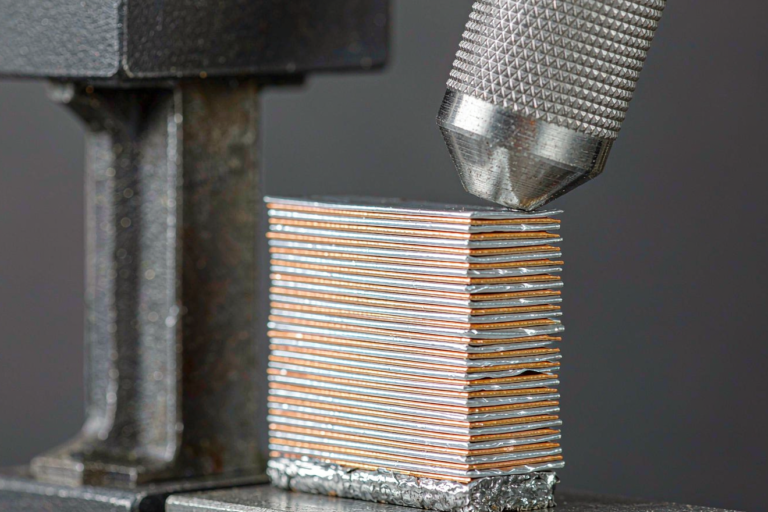
The first thing I tell any new engineer is that the term semi-solid state battery is a spectrum, not a binary. A true solid-state cell replaces the liquid electrolyte entirely with a ceramic or sulfide solid electrolyte. A semi-solid cell keeps a small fraction — typically 5% to 15% by weight — of liquid electrolyte impregnating a composite separator and cathode coating. That residual liquid is the engineering compromise: it lowers interfacial resistance enough to deliver usable power at room temperature while still removing most of the flammable solvent that makes conventional lithium-ion packs a fire Risk in crash testing.
In our builds we see energy density land between 300 and 380 Wh/kg at the cell level, against roughly 250 to 270 Wh/kg for a good NMC 811 pouch and 160 to 200 Wh/kg for LFP. The cathode is usually a high-nickel NMC or NCA coated onto a sulfide-lean composite, and the anode is silicon-dominant or lithium-metal-free to keep dendrite growth in check. The point for pack designers is simple: the cell is stiffer, slightly heavier per liter, and far more forgiving on thermal runaway onset — around 40°C to 60°C higher onset than a comparable liquid cell.
From Cell to Module: The Structural Backbone
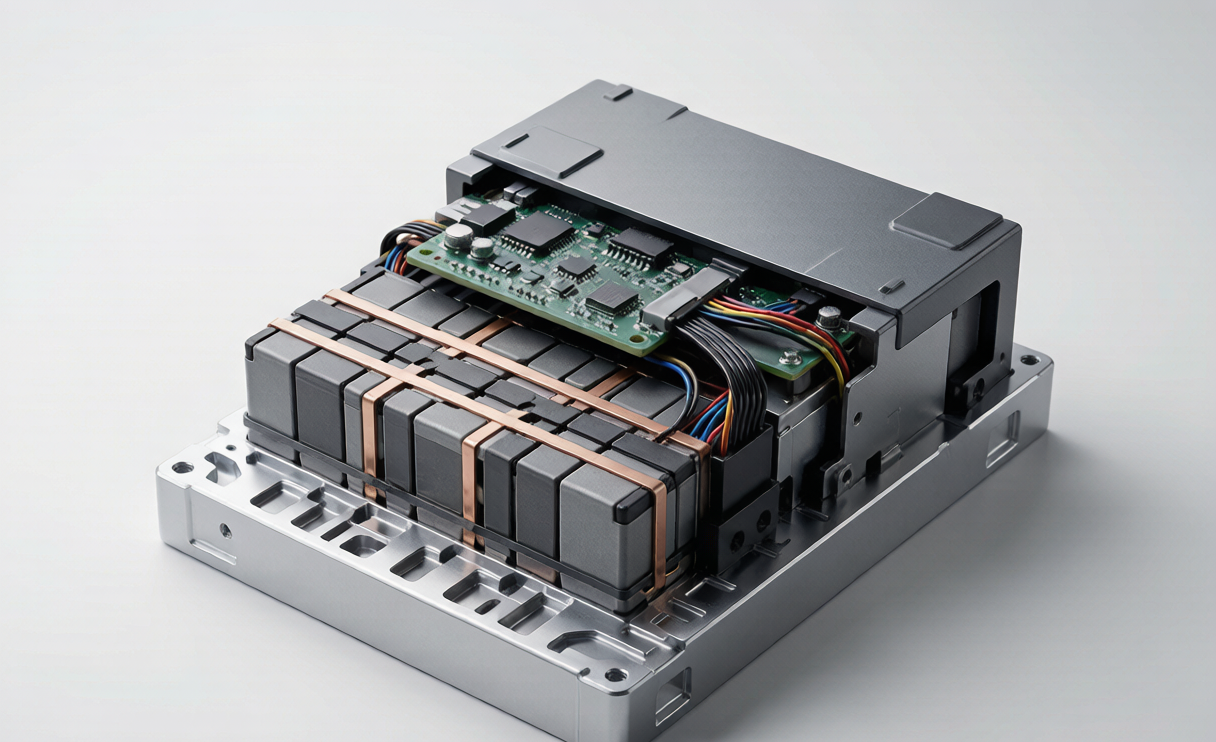
A module is where chemistry meets mechanics. We group 12 to 28 prismatic or pouch cells into a module with laser-welded busbars, a fuse on the positive bus, and a compression frame that holds stack pressure within a tight window — usually 0.3 to 0.7 MPa for our semi-solid stacks. Too little pressure and the interfacial contact resistance climbs; too much and you crack the ceramic-coated separator.
The busbars are the part everyone underestimates. For a solid-state battery module rated at 20 Ah, a 10 mm wide, 1.5 mm thick nickel-plated copper busbar keeps resistive heating under 2°C at 3C discharge. We ultrasonically weld rather than crimp where space allows, because crimps loosen after 2,000 thermal cycles. Every module also carries a sense harness — one voltage tap per cell group and a differential temperature probe at the hottest corner.
Pack Architecture: Cell-to-Pack vs. Modular
The big architectural decision is whether to keep the module layer at all. Traditional packs nest modules inside a pack enclosure; cell-to-pack (CTP) skips the module and bonds cells directly to a structural tray. For semi-solid chemistries, CTP buys you 15% to 20% more volumetric energy because you delete the module sidewall, but it shifts the crash and thermal-isolating burden onto the pack enclosure and the interstitial fire barrier.
Our semi-solid state battery module pack architecture uses a hybrid: structural modules for automotive and stationary storage where serviceability matters, and CTP trays for solid-state drone battery packs where every gram counts. A 6S 22.2V drone pack we ship weighs 880 g at 16,000 mAh — about 18% lighter than the equivalent NMC pack at the same capacity, which directly extends flight time by roughly 12% in our hover tests.
Thermal Management and Safety Margins
Semi-solid cells are not fireproof, they are just slower to ignite. That changes the thermal design from “prevent any heating” to “contain and slow.” We run aluminum cooling plates on the cell broad faces for packs above 1 kWh, with glycol loops holding cell delta-T under 5°C across the stack. For air-cooled drone packs we use a phase-change material pad behind the cells and vent channels sized so a single-cell failure vents outward, not into the neighbor.
The safety story is where standards come in. Every pack we ship is built to pass UN38.3 — the transport test suite covering altitude simulation (11.6 kPa, simulating ~15,000 m), thermal test (−40°C to +75°C), vibration, shock, and external short circuit. We design with a 30% margin on the external short test because air freight handlers are not gentle. IEC 62133 covers the secondary cell safety envelope (overcharge, forced discharge, short circuit, crush), and for industrial packs we also reference IEC 62619 for the larger stationary systems.
Between cells we place a mica-and-ceramic fire barrier rated for 800°C for 10 minutes, enough to meet the propagation-delay expectations of automotive and aviation reviewers without the weight penalty of a full metal firewall. In our propagation rig a single-cell failure stays contained for over 22 minutes before neighboring cells cross their onset temperature — a number we only trust because we have burned down real packs to measure it, not because a simulation promised it.
BMS and the Electrical Architecture
The battery management system is the pack’s nervous system, and for semi-solid packs it carries an extra job: watching interfacial resistance. We log cell impedance every 30 seconds; a 20% rise flags separator dry-out before voltage sag appears. The BMS enforces a charge window of 3.0 V to 4.25 V per cell and caps charge current at 0.5C for the first 200 cycles to condition the composite electrolyte.
Balancing is passive below 48 V and active above it. For aviation-grade packs the BMS also emits a SMBus or CAN signal so the flight controller knows state-of-charge to within 3% — a hard requirement from our drone customers who cannot afford a surprise landing. FAA and EASA rules for lithium batteries aboard aircraft set a 100 Wh per battery limit for carry-on without approval, and 160 Wh as the ceiling with operator permission; our solid-state drone battery packs are deliberately sized under 99 Wh so they clear the default threshold.
Certifications We Build Against Every Day
I keep a short list pinned above my bench because it is what a buyer will ask in the first five minutes. UN38.3 gets the pack on the plane. IEC 62133 proves the cell is safe to handle. CE and FCC cover the BMS electronics. For drones specifically, FAA Part 107 operators and EASA-specific operators both treat our packs under the same lithium-battery carriage rules, so we print the watt-hour rating on the label and keep the test summary on file for customs.
None of this is optional paperwork. A semi-solid state battery module pack architecture that cannot show its UN38.3 test summary is, functionally, unsellable to any serious B2B customer. We run the certification builds on the same line as production so there is no “golden sample” gap between what was tested and what ships.
Manufacturing Yield and What It Teaches the Design
The architecture you draw on a slide is only as good as the line that builds it. Semi-solid coatings are sensitive to humidity — we hold the cathode-coating room below 1% relative humidity because the composite electrolyte absorbs moisture and forms a surface carbonate layer that quietly kills cycle life. That constraint pushes the pack design toward sealed modules with desiccant pouches on the long-life stationary units, and toward a one-time-seal enclosure on the drone packs where field service is not expected.
Yield is where the cost conversation actually lives. Our first semi-solid pilot line ran at 71% pack yield; the losses were almost entirely busbar weld rejects and separator inclusions visible only under automated optical inspection. After adding laser pre-clean on every tab and a 100% impedance screen before enclosure, we are at 94% on the current line. The takeaway for any engineer specifying this chemistry is to design the pack so a single weld failure is isolated by the module fuse, not by a pack-wide shutdown that grounds an entire fleet.
FAQ
How does a semi-solid state battery differ from a conventional lithium-ion cell?
The key difference is the electrolyte. A conventional lithium-ion cell uses a flammable liquid organic electrolyte, while a semi-solid cell replaces most of it with a solid composite, keeping only a small liquid fraction for interfacial wetting. That cuts flammable solvent mass, raises thermal-runaway onset temperature, and lifts cell-level energy density into the 300–380 Wh/kg range without the manufacturing cost of a fully solid electrolyte.
Can semi-solid state batteries be used in drones today?
Yes, and they already are in the higher-end segment. A solid-state drone battery pack built on semi-solid cells can be 15% to 20% lighter than an equivalent NMC pack at the same capacity, which translates to meaningful extra flight time. We keep aviation packs under the 100 Wh carriage limit so they ship without special approval.
What cycle life can I expect from a semi-solid module?
In our qualification data, semi-solid modules hold 80% capacity at roughly 800 to 1,200 cycles at 1C with a 0.5C conditioning window for the first 200 cycles. The limiting factor is usually interfacial resistance growth rather than cathode fade, which is why the BMS tracks impedance, not just voltage.
Are semi-solid packs safe to ship by air?
They are shippable once they pass UN38.3, which every production pack we build does. The semi-solid chemistry actually makes the altitude and thermal transport tests easier to clear because there is less flammable electrolyte to vent. We still label watt-hour rating and keep the test summary available for customs and carriers.