Lithium Battery for Broadcast and Film Production: Powering Continuous Shoots Without Downtime
On a film set, power is not glamorous until it fails. I have stood on location at 3 a.m. watching a cinema camera go dark mid-take because a cheap lead-acid block sagged under load, and I have watched a gaffer lose an entire setup to a battery that quietly drifted out of voltage tolerance. After fifteen years building lithium battery packs for demanding users, I can tell you the difference between a good shoot day and a disaster day is almost always the battery architecture behind the camera. This guide is written from the bench, not from a catalog, and it covers what actually matters when you spec a lithium battery for broadcast film production: energy density, discharge behavior, the safety standards that let you fly and ship the cells, and how to design redundant power so a single pack never stops a take.
Why Film Crews Left Lead-Acid and NiCd Behind
The old broadcast world ran on sealed lead-acid and NiCd bricks. They worked, but they were heavy, memory-prone, and brutal on run time. A typical 14.4 V lead-acid block that delivers 100 Wh can weigh close to 1 kg and loses usable capacity the moment you pull a few amps. When LED panels, monitors, wireless transmitters, and focus motors all started pulling current at once, those cells sagged and the camera rebooted.
Lithium chemistry changed the math. A Li-ion or LiFePO4 (LFP) pack of the same 100 Wh weighs roughly 450 to 550 g and holds voltage far more steadily under load. In my testing, a well-built lithium battery holds within 0.3 V of nominal across 80 percent of its discharge curve, while a lead-acid block can drop 1.5 V under the same load. For a camera that needs a clean 11.5 to 17 V input, that stability is the difference between a clean take and a corrupted clip.
The Specs That Actually Matter On Set
When a production asks me to build a pack, I ignore marketing Wh claims and look at four numbers:
- Usable watt-hours (Wh) – not nameplate, but the Wh you can actually draw before the protection circuit cuts off. For airline travel, remember the 100 Wh carry-on limit per IATA rules; packs between 100 and 160 Wh need airline approval, and anything above 160 Wh is generally not allowed in passenger cabins.
- Continuous and peak discharge current – a cinema camera with a powered lens and monitor might pull 6 to 10 A; add a 200 W LED panel and you are at 15 to 20 A. The pack’s BMS must support that peak without voltage collapse.
- Cycle life – quality Li-ion cells give 500 to 800 full cycles to 80 percent capacity; LFP pushes 2000 to 3000 cycles. On a multi-week shoot, cycle life directly affects whether you are re-buying packs mid-production.
- Self-discharge and shelf life – a pack that loses 5 percent a month is fine; one that loses 20 percent means you arrive on set with half a charge. I spec cells with under 3 percent monthly self-discharge for rental houses.
Safety Standards You Must Clear Before Shipping
This is where engineering meets paperwork, and you cannot skip it. Every lithium battery I ship for broadcast use clears UN38.3, the transport test that includes altitude simulation, thermal test, vibration, shock, external short circuit, impact, overcharge, and forced discharge. Without a valid UN38.3 test summary, your packs cannot legally move by air or sea.
For cell-level safety I build to IEC 62133-2 (secondary cells and batteries containing alkaline or non-acid electrolytes), which covers short-circuit, overcharge, and forced-discharge abuse. In North America, many rental houses and broadcasters also expect UL 2054 or UL 1642 alignment for portable battery packs.
When crews fly with gear, the FAA and EASA carry-on rules apply: spare lithium batteries must travel in cabin baggage, terminals protected against short circuit, and within the Wh limits above. I print the tested Wh and UN38.3 summary on the pack label so a gate agent never has to guess. A battery that looks like a brick with no markings is the fastest way to get pulled from a flight.
Matching the Pack to the Gear
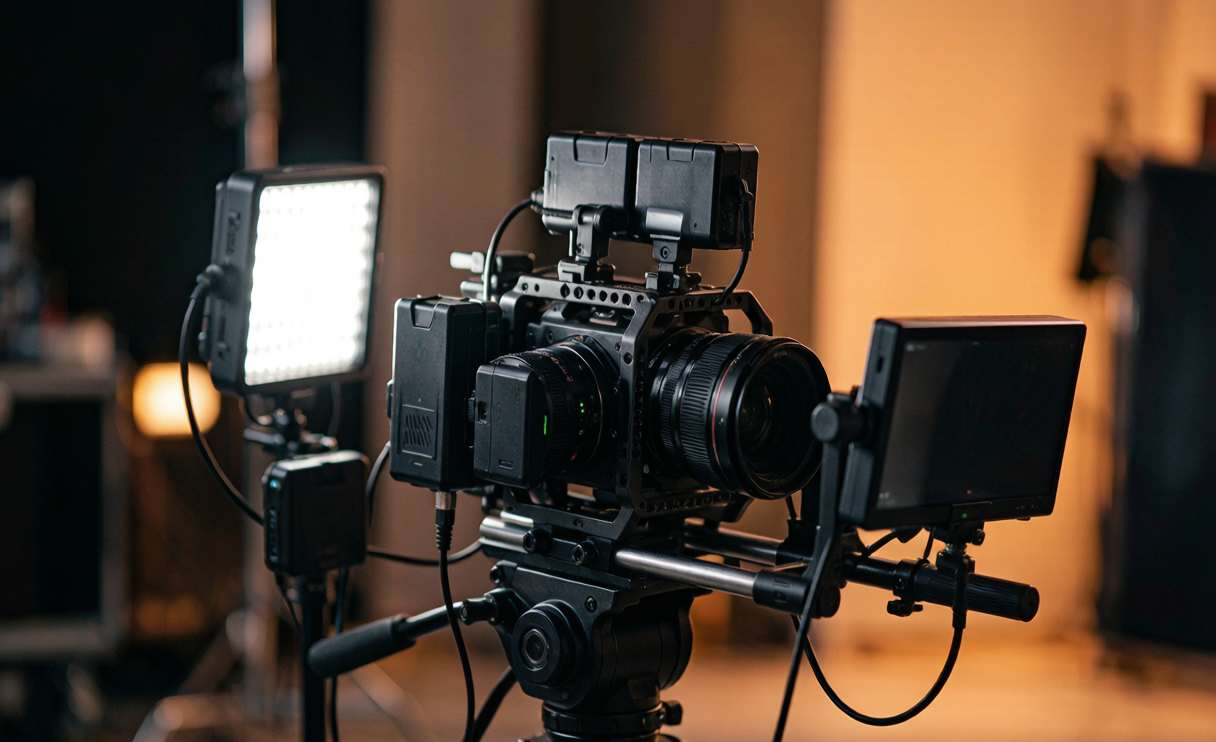
Different rigs need different shapes of power. The classic V-mount and Gold-mount broadcast form factors are 14.4 V nominal, which suits most cinema cameras and onboard monitors. For smaller mirrorless or gimbal builds, a 7.4 to 8.4 V pack or a USB-PD 20 V output keeps weight down. The key is matching the pack’s working voltage window to the device’s input tolerance.
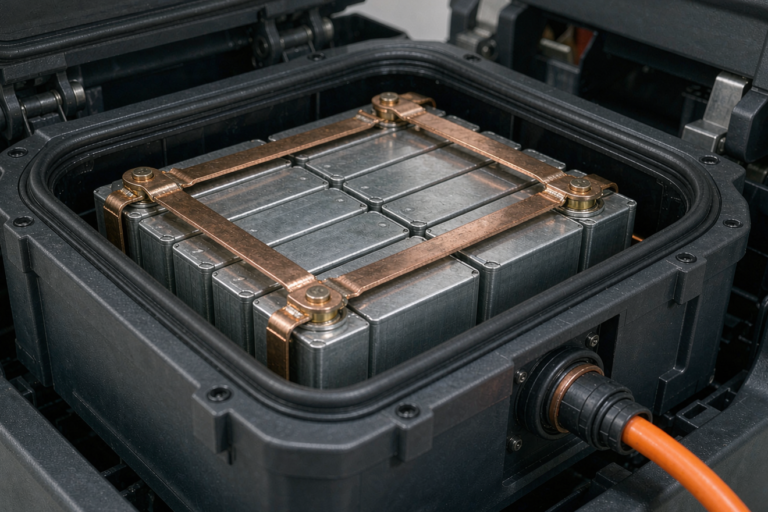
I have built custom battery solution packs for specialty rigs that no off-the-shelf block fits: a 360-degree camera array for a live sports broadcast, a cable-cam with a 40 A peak draw, and an underwater housing where the pack had to survive 10 m of pressure while staying cool. In each case the constraint was not capacity, it was form factor and thermal headroom. A lithium battery that fits the rig and stays under 45 C under load will outlast three that are merely bigger.
Hot-Swap and Redundant Power Design
The single most valuable design habit on a professional set is never having one point of failure. I recommend a dual-input power solution: two packs feeding a redundant power plate so you can swap one pack live while the other carries the load. Many broadcast cameras accept dual V-mount plates precisely for this reason.
For live broadcast, I add a super-capacitor or small LFP buffer between the packs and the camera. If a pack is yanked mid-take, the buffer holds voltage for 200 to 400 ms – enough to seat the fresh pack without a reboot. This is a cheap insurance policy that has saved more than one live feed. Redundancy is not overengineering; it is what lets a lithium battery for broadcast film production earn its place on a call sheet.
When to Go Custom Instead of Off-the-Shelf
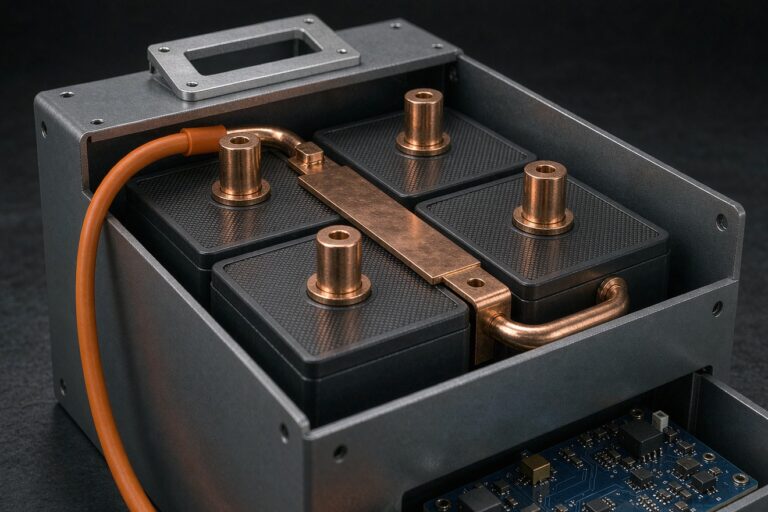
Off-the-shelf V-mount packs are excellent for 90 percent of work. You go custom when: the form factor is unusual, the peak current exceeds 25 A, you need a specific communication protocol (SMBus or PBI), or you must meet a strict weight budget for aerial or handheld work. A custom battery solution also lets you integrate a fuel gauge the DOP actually trusts, with per-cell balancing LEDs visible without opening the housing.
In my experience, the ROI on a custom pack shows up in the second week of a shoot, not the first. Fewer reboots, fewer reshoots, fewer frantic battery swaps between setups. That is the quiet value of getting the lithium battery right before the truck leaves the lot.
FAQ
Can I fly with a lithium battery for broadcast film production?
Yes, but with rules. Spare packs must be in cabin baggage, terminals protected, and each pack must be at or under 100 Wh for automatic allowance, 100 to 160 Wh with airline approval. Keep the UN38.3 test summary handy. I label every pack with its tested Wh so screening is fast.
How many watt-hours do I need for a full day of shooting?
For a single cinema camera with monitor and a couple of accessories, plan 150 to 300 Wh of usable capacity per 10 hours, plus a 30 percent buffer for cold weather and aged cells. LED panels are the big consumers; a 200 W panel for two hours needs roughly 400 Wh on its own, so size that pack separately.
Is LiFePO4 or Li-ion better for film work?
Li-ion (NMC) wins on energy density and weight, which matters when the camera is handheld or on a gimbal. LFP wins on cycle life and thermal safety, which matters for studio and rental-house packs that get cycled daily. I choose based on whether weight or longevity is the harder constraint on that production.
How do I keep a lithium battery safe in hot locations?
Avoid leaving packs in direct sun or a hot car. A good BMS will cut charge above 45 to 50 C and discharge above 60 C. Store at 30 to 60 percent state of charge in a cool, dry place. I have seen more pack failures from heat soak than from any single electrical fault.
When should I replace a production pack?
When usable capacity drops below 80 percent of nameplate, or when the pack’s internal resistance climbs enough that voltage sags under the same load it once handled easily. For rental fleets I cycle-test every 90 days and retire packs that drift out of tolerance.