Semi-Solid State Battery for Electric Buses: An Engineer’s Fleet Guide
A transit authority once handed me a specification that read, in effect: 320 km of real-world range, 14 hours on road, two mid-day charges of eight minutes each, minus 15 to plus 42 degrees Celsius, twelve-year life, no increase in axle load. I told them the last clause was the hard one. Everything else you can buy. Mass you have to earn.
I am Karl Huang, a senior lithium battery engineer, and much of my work sits with heavy commercial vehicles: 12-metre city buses, articulated 18-metre units, and depot charging infrastructure. Transit is the most unforgiving battery application I know. A drone flies for 40 minutes and lands. A bus runs 14 hours a day, six days a week, for a decade, carrying 90 people who assume nothing underneath them will ever misbehave.
This guide covers what a semi-solid state battery actually changes for an electric bus fleet, using measurements from our own test benches and data from vehicles in revenue service. It also covers where the technology is the wrong answer, because that section is usually more useful than the sales pitch.
Why Transit Duty Cycles Punish Battery Packs
People assume a bus is easy on its battery because average speed is low. The average is irrelevant. What matters is the shape of the load.
A 12-metre city bus at 18 tonnes gross weight, on a typical downtown route, stops every 280 to 400 metres. Each departure pulls 180 to 320 kW for six to twelve seconds. Each arrival regenerates 90 to 160 kW back into the pack. Over a 14-hour shift that is 900 to 1,400 acceleration and braking events, each one a current pulse of 1.5C to 2.5C in one direction or the other. The pack never settles into a steady state.
Layer on the auxiliaries. HVAC on a hot day draws 12 to 22 kW continuously, air compressor 3 to 6 kW, power steering 2 to 4 kW. On a 38-degree afternoon, climate control alone consumes 28 to 35% of the energy budget. I have watched a route that models at 1.05 kWh/km in spring measure 1.48 kWh/km in August. Size the pack against the spring number and the fleet manager finds out the hard way in July.
The third factor is depth of discharge. Unlike a passenger car that rarely dips below 30%, a transit bus routinely runs to 15% before its depot charge. Deep discharge combined with high-rate pulses and elevated ambient temperature is a punishing combination. This is where a conventional lithium battery pack’s cycle life diverges hard from its datasheet, and where cell-level differences become fleet-level economics.
What Semi-Solid Chemistry Changes at Cell Level
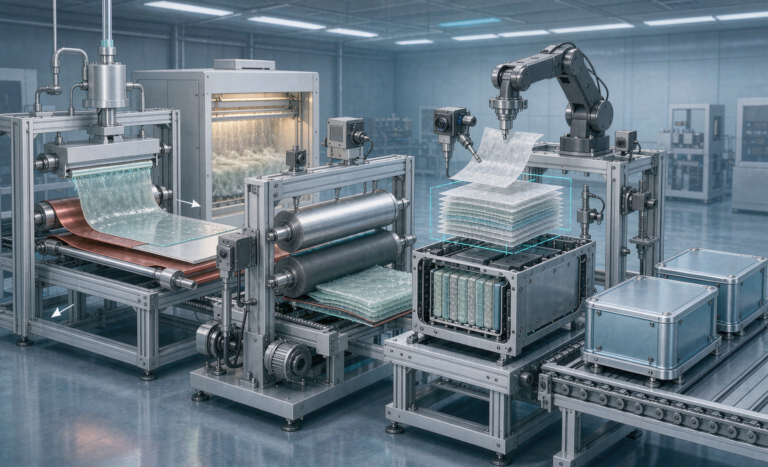
Let me define the term precisely. A fully solid-state cell contains no liquid electrolyte, relying on ceramic, sulfide, or polymer ion conductors. A semi-solid cell keeps a small quantity of liquid or gel electrolyte, 5 to 15% by mass versus 18 to 25% in a conventional cell, immobilised within a thickened electrode matrix that conducts ions through its bulk.
The structural consequence is thick electrodes. Conventional coated electrodes run 60 to 90 micrometres. Semi-solid electrodes run 250 to 400 micrometres. Fewer layers per cell means fewer current collector foils, fewer separators, and a much better ratio of active material to inactive mass. Production cells we have qualified deliver 300 to 360 Wh/kg and 700 to 800 Wh/L at cell level, against 250 to 280 Wh/kg for a well-made NMC cell of the same generation, and 160 to 180 Wh/kg for the LFP cells that dominate transit today.
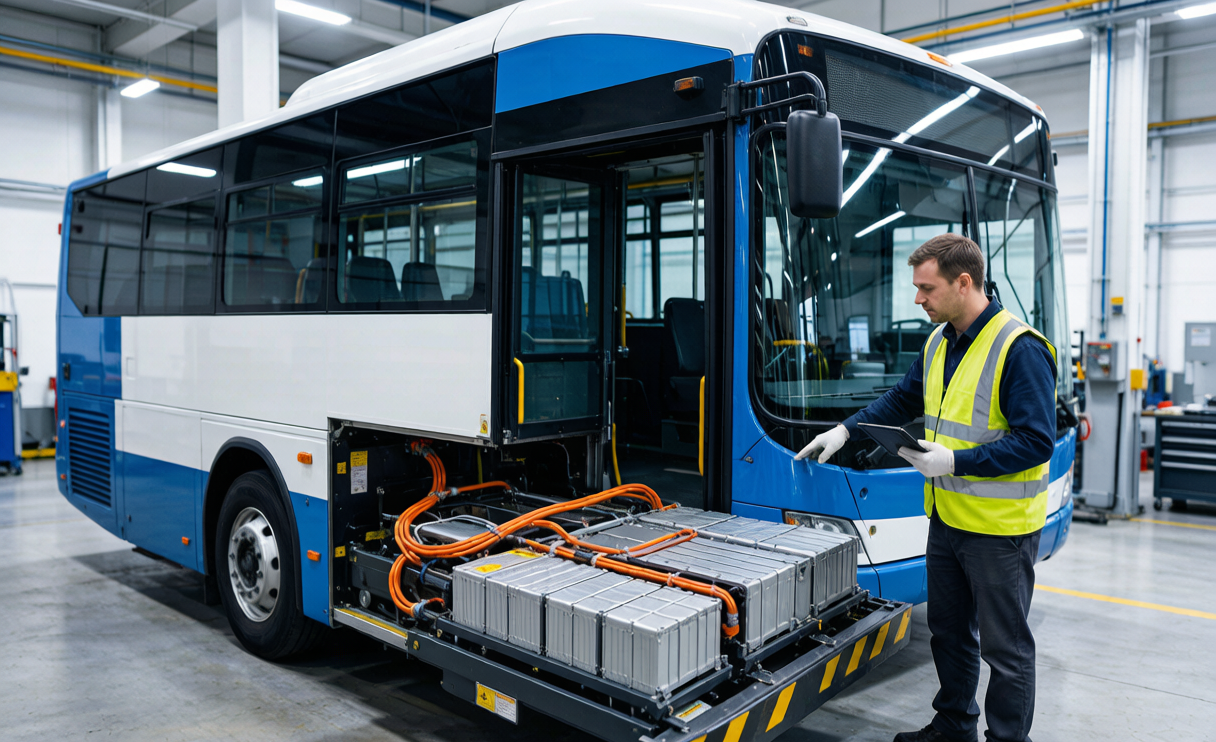
For a bus, that arithmetic matters. A 420 kWh LFP pack weighs 3,100 to 3,400 kg installed. The same energy in semi-solid NMC lands between 1,750 and 1,950 kg. On an 18-tonne vehicle with a regulated rear axle limit, recovering 1,300 kg is the difference between carrying 76 passengers and 90.
The second change is abuse behaviour, and in a passenger vehicle this matters more than the energy density. With most electrolyte immobilised, a mechanical breach does not liberate a pool of flammable solvent. Our nail penetration trials on 60 Ah semi-solid pouches produced peak surface temperatures of 180 to 240 degrees Celsius with venting but no propagation to adjacent cells across all twelve samples. Comparable high-nickel conventional pouches showed flame events in roughly one trial in three. When you are certifying a vehicle that carries standing passengers over the pack, that difference changes the entire thermal propagation argument you present to the approval authority.
Range, Mass, and the Axle Load Problem
On a standard urban duty cycle, rolling resistance and acceleration inertia together account for roughly 62 to 71% of traction energy. Both scale directly with mass. Our fleet data across three cities shows a consistent 0.9 to 1.2% reduction in energy consumption per 1% reduction in gross vehicle weight on stop-start routes. Strip 1,300 kg from an 18-tonne bus and you take out about 7.2% of gross weight, which returns 6.5 to 8.6% lower kWh/km.
That saving feeds back on itself. A lighter bus needs less installed energy for the same route, which removes more mass again. On one 12-metre programme we ran the loop three times and converged on a 372 kWh semi-solid pack replacing a 440 kWh LFP pack, identical route coverage, 41 kg of margin left on the rear axle. The operator also reported reduced brake pad and tyre wear, which nobody had put in the business case.
Charging Strategy: Depot Overnight Versus Opportunity
Two charging philosophies dominate, and the right cell for each is not the same.
Depot charging means slow overnight replenishment, 0.15C to 0.3C over six to eight hours. Almost any decent chemistry survives it; the constraint is the depot’s grid connection, not the pack.
Opportunity charging means 4 to 10 minute bursts at route termini via pantograph, usually 2C to 4C. This is where packs die young: a 350 kWh pack accepting 3C is taking a megawatt. Charge acceptance at partial state of charge decides whether the fleet keeps its timetable.
We test against a transit-representative profile rather than a datasheet cycle: 15 to 90% SOC window, a discharge trace recorded from a live route, 3C opportunity charges twice per simulated day, 35 degrees Celsius ambient, full characterisation every 200 equivalent full cycles. Recent results from two cells of similar nominal energy:
- Semi-solid NMC: 92% capacity retained at 1,500 EFC, 87% at 2,500 EFC, 81% at 3,500 EFC, internal resistance up 16%.
- Conventional high-nickel NMC: 85% at 1,500 EFC, 76% at 2,500 EFC, 67% at 3,500 EFC, internal resistance up 34%.
- Peak core temperature during 3C charge, identical cooling: semi-solid 39.5 degrees Celsius, conventional 46 degrees Celsius.
The resistance figure drives fleet economics more than capacity does. A pack whose resistance climbs 34% accepts charge more slowly, so an eight-minute pantograph window delivering 42 kWh in year one delivers 34 kWh in year four. Miss by enough and a bus cannot complete its block, forcing the operator to buy spares. We modelled a 40-bus fleet: charge-acceptance decay alone cost 2.6 spare buses by year five on conventional cells, against 0.9 on semi-solid.
Pack Engineering: What I Specify for Transit
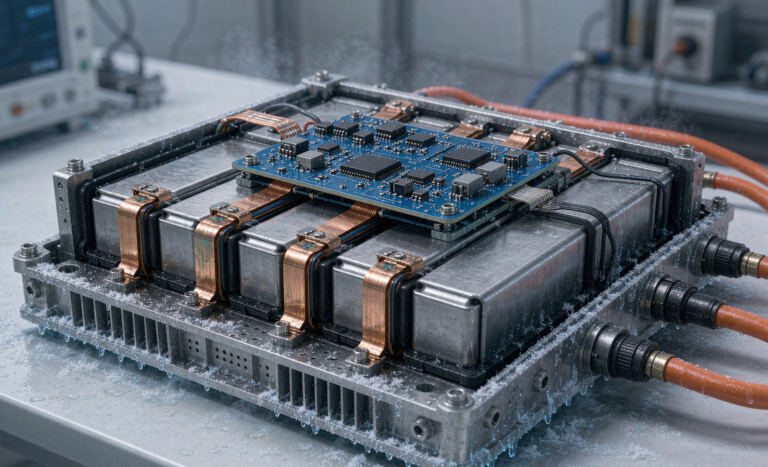
Cell chemistry is perhaps 40% of the outcome. The rest is pack engineering, and buses have their own rulebook. Here is what goes into every custom battery solution we build for this sector.
Thermal Management
Liquid cooling is mandatory. I specify cold plates on the large faces of prismatic modules, target cell band 20 to 38 degrees Celsius, maximum 4 degrees spread. Spread matters more than absolute temperature: a 9-degree gradient across a string creates permanent state-of-charge divergence the balancing circuit chases forever. Size chiller capacity against the worst opportunity charge on the hottest measured day, not the average. On the programme above we specified a 12 kW chiller where the LFP baseline needed 19 kW, saving 58 kg and 1.8 kW of parasitic draw.
Mechanical and Ingress
Roof-mounted and underfloor packs both see road spray, salt, and pressure washing. IEC 60529 IP67 is the floor underfloor, IP65 acceptable on the roof. Vibration qualification follows IEC 60068-2-6 and 2-27, typically 1.5 to 3 g RMS for eight hours per axis, with 15 to 25 g pothole transients that must not loosen busbar hardware. Semi-solid cells want 0.3 to 0.5 MPa stack pressure through life; we use wedge-lock retention with compliant foam sized to hold pressure in band across the full swelling range.
Electrical and BMS
Continuous insulation monitoring at 500 ohms per volt, pre-charge limiting inrush below 60 A, contactor welding detection every key cycle. Balancing thresholds at 30 mV passive and 80 mV fault. Fast-charge lockout below 8 degrees Celsius cell temperature to prevent lithium plating, with automatic preheat. Retirement criteria in firmware: 80% state of health or plus 25% resistance, whichever comes first.
Safety, Standards, and Certification
Transit certification is thorough, and it should be. The cells must hold UN 38.3 across all eight tests, T.1 through T.8, before anything ships. Cell and system safety follows IEC 62133-2:2017 and IEC 62619 for industrial secondary cells, with UL 1973 where the market requires it. Vehicle-level work brings in UNECE R100 Part II for electric powertrain safety and R136 where applicable, plus GB 38031 in the Chinese market, which imposes the well-known thermal propagation requirement of five minutes of warning before passenger compartment hazard.
That propagation clause is where semi-solid earns its place. Demonstrating five minutes with conventional high-nickel cells usually requires substantial mitigation hardware: mica barriers, intumescent layers, directed venting, sometimes an aerosol suppression system. Our semi-solid module-level propagation tests reached the threshold with barrier hardware alone and no active suppression, removing 34 kg and roughly 4% of pack cost.
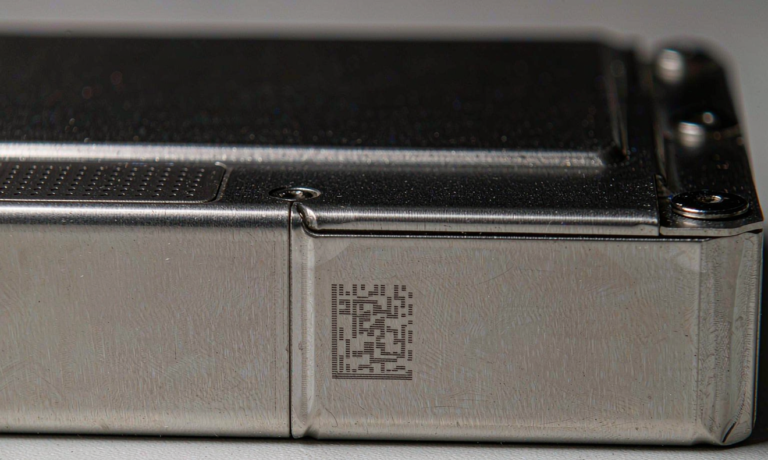
Transport falls under UN 3480 for standalone batteries and UN 3481 when installed, shipped at 30% state of charge per IATA PI 965 for air freight and under ADR Class 9 for road. Spare modules sent to depots need identical treatment; I have seen more compliance findings from careless spare parts logistics than from vehicle programmes.
Where Semi-Solid Is the Wrong Choice
I turn down semi-solid proposals regularly. Three situations where it does not pay:
- Depot-charged suburban routes with generous mass budget. If the bus charges once overnight at 0.2C and the axle load has 2 tonnes of headroom, LFP is cheaper per kWh, tolerates abuse well, and lasts a very long time under gentle cycling. Pay for energy density only when you actually need it.
- Extreme cold climates without preheat infrastructure. Semi-solid cells lose more power capability below minus 10 degrees Celsius than a well-engineered liquid-electrolyte cell. If your depot cannot precondition, or buses park outdoors overnight at minus 25, the morning performance gap is real. Preheat solves it, but preheat must be in the design.
- Very high sustained discharge demands. Thick electrodes carry a power-density penalty. For continuous discharge above 4C, such as some articulated vehicles on severe gradients, thin-electrode cells still win. Check the sustained rate, not just the peak.
One more consideration: second life. Packs retired at 80% state of health suit stationary storage well, and semi-solid modules are attractive there because their resistance growth stays modest. We have repurposed retired transit modules into commercial and home energy storage installations, where gentler cycling adds another six to eight useful years. Designing that path in from the start, with accessible fasteners and readable lifetime data, costs about 2% and materially improves residual value.
Two Lessons From the Field
First, depot supply quality. A fleet reported buses arriving at 78% SOC after full overnight charges. The cells were fine. The depot supply sagged 7% when twelve chargers ran simultaneously, and the chargers terminated on voltage rather than current taper. Fix: staggered scheduling plus a firmware change to termination logic. Always measure supply under full fleet load, never with one vehicle connected.
Second, HVAC pre-conditioning. One operator ran cabin pre-cooling from the pack while buses sat in the yard. It cost 9 to 14 kWh per vehicle per day at high ambient temperature with no airflow over the pack. We moved pre-conditioning to grid power while plugged in; pack temperature at departure fell 6 degrees Celsius and first-hour charge acceptance improved noticeably.
Frequently Asked Questions
How much range does a semi-solid state battery add to an electric bus?
In a fixed pack envelope, expect 25 to 40% more usable energy versus NMC and considerably more versus LFP. In a fixed energy specification, expect roughly 1,200 to 1,400 kg of mass saving on a 400 kWh class pack, which itself returns another 6 to 9% in consumption. Most operators take some of the benefit as range and some as passenger capacity.
Are semi-solid cells safe enough for passenger vehicles?
Our module-level testing consistently shows venting without propagation where high-nickel conventional cells sometimes ignite. But safety is a system property. You still need barriers, directed venting, insulation monitoring, and a BMS with proven fault response. The chemistry improves your starting position; it does not replace the engineering.
Can existing buses be retrofitted with semi-solid packs?
Sometimes. The blockers are usually the vehicle CAN interface, the charger’s communication protocol, and mounting points designed around the original pack’s mass distribution. Retrofits work where the original pack was modular and well documented. Where it was a bonded single unit, engineering cost exceeded the value of the vehicle.
What cycle life should a transit fleet plan around?
Under a realistic opportunity-charging profile, plan for 2,500 to 3,500 equivalent full cycles to 80% state of health. On a route consuming 1.3 kWh/km with a 370 kWh pack, that is roughly 900,000 to 1.2 million km, well beyond a twelve-year service life. Insist on duty-cycle-representative data, not a 0.5C laboratory cycle.
How does cost compare with LFP?
Semi-solid cells currently cost 30 to 55% more per kWh than mature LFP. The case rests on system effects: smaller pack, smaller chiller, fewer spare vehicles, higher passenger capacity, better residual value. On opportunity-charged high-utilisation routes, total cost of ownership typically favours semi-solid by year four or five. On gentle depot-charged routes it usually does not.
What lead time should we expect for a custom transit pack?
For a new architecture including cell qualification, design validation, UN 38.3 and IEC certification, and vehicle integration testing, plan 11 to 16 months. Adapting an existing qualified module family to your envelope, 6 to 8 months. Certification, not manufacturing, sets the schedule.
Closing Thoughts
The transit authority I mentioned at the start got their bus: 341 km measured on their own worst summer route, axle load 240 kg under the limit, two eight-minute pantograph charges still delivering full energy in year four. The technology did part of that. Honest duty-cycle testing and a willingness to argue about the specification did the rest.
If you are evaluating a semi-solid state battery for an electric bus programme, start with your real route data, real summer ambient temperatures, and real charge windows, then ask every supplier to test against those numbers. The chemistry is genuinely good. The projects that disappoint are the ones where nobody checked the assumptions underneath the specification.