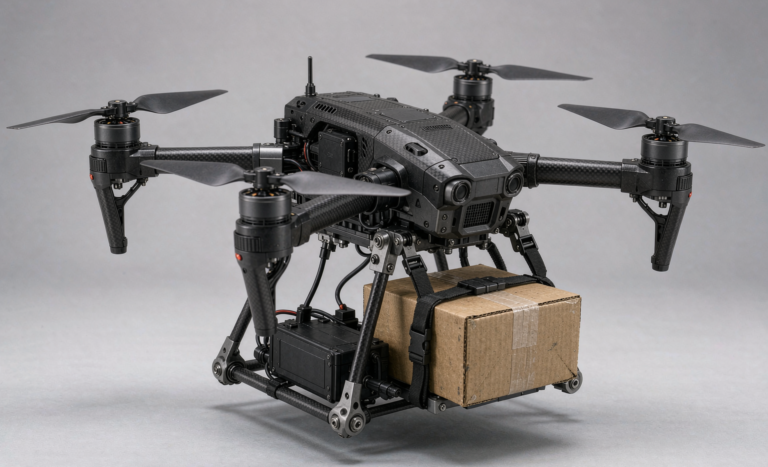
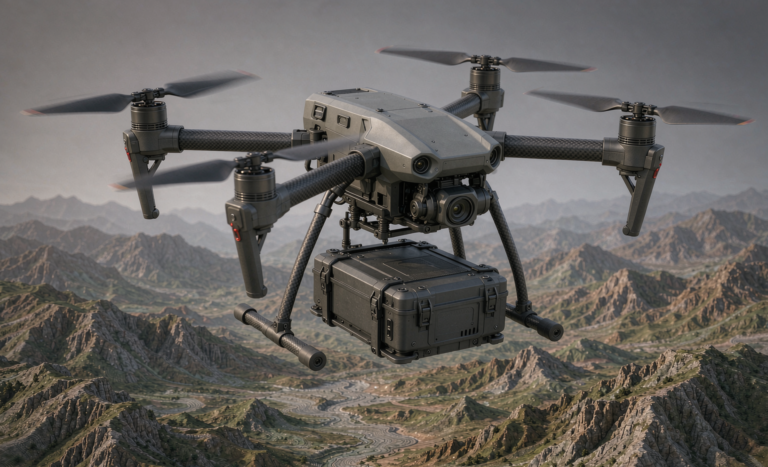
Drone Battery Manufacturing for Delivery Drones
Why Delivery Drone Batteries Are a Different Manufacturing Problem
When I walk a new operator through our production floor, the first thing I tell them is that a drone battery for parcel delivery is not the same animal as a pack for a hobby quadcopter. Delivery drones fly fixed routes multiple times per day, often in wind, rain, and temperature swings, and they do it under the scrutiny of aviation regulators. That combination changes every stage of manufacturing, from how we form the cells to how we weld the busbars.
The dominant constraint is energy density versus cycle life. A delivery fleet wants a drone lithium battery that can carry a 2–5 kg payload for 20–40 minutes and still survive 800–1,200 charge cycles across a commercial service life. Push too hard on gravimetric energy density and you shorten the pack’s calendar life; back off and the aircraft cannot lift the payload. The manufacturing line is where we resolve that tension, and it starts long before assembly.

Cell Selection and Formation for Aerial Logistics
The process begins with cell incoming inspection. For a commercial lithium battery program we grade every batch by capacity, internal resistance, and thickness. Cells destined for the same pack must be matched within 2% capacity and 3 mΩ internal resistance, otherwise the weakest cell dictates the usable capacity of the entire assembly. I have rejected whole shipments over a 5 mΩ spread.
Formation and aging is the step most buyers never see. Freshly wound cells are slow-charged and discharged through two to three formation cycles to stabilize the solid-electrolyte interphase, then baked at 45°C for 7–14 days to surface latent defects. A cell that drifts more than 3% during aging never reaches a delivery pack. This is also where we screen for the rare internal-short risk that can lead to thermal runaway later in the field.
For delivery drones we typically standardize on high-rate 18650 or 21700 cylindrical cells in the 3,000–5,000 mAh range, or large pouch cells where envelope space is tight. The choice drives the welding method, the enclosure, and the thermal design downstream.
Pack Assembly: From Welding to Potting
Assembly is where a box of cells becomes a flying power source. We spot-weld nickel or nickel-plated steel strips to the cell terminations using either ultrasonic or precision resistance welding. Ultrasonic welding gives cleaner joints with less heat input, which matters because excess heat can quietly damage the separator. Every weld is pull-tested in-line; a joint below 18 N is reworked, not shipped.
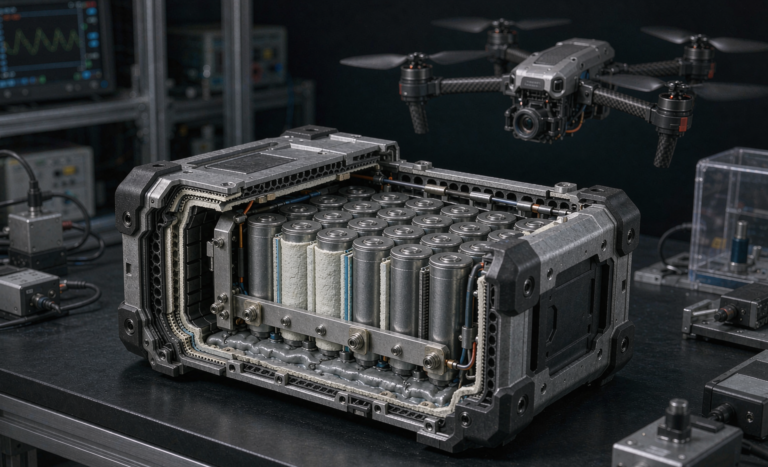
After series-parallel configuration, the pack is potted or encapsulated with a flame-retardant epoxy or silicone. Potting does three jobs at once: it dampens vibration on hard landings, it slows thermal runaway propagation between cells, and it protects against moisture during outdoor delivery operations. We then install the enclosure — usually a glass-fiber or carbon-reinforced shell — that doubles as the structural spine of the aircraft.
Balancing is the final assembly gate. Each parallel group is top-balanced to within 5 mV before the pack is sealed. A drone lithium battery that leaves the line unbalanced will develop a weak group within 50 cycles, and on a delivery route that weak group is what strands the aircraft.
The BMS and the custom battery solution Layer
No delivery pack ships without a battery management system, and for a fleet this is rarely an off-the-shelf module. A custom battery solution at this scale means a BMS tuned to the mission profile: continuous discharge rating, peak C-rate for takeoff, and the taper curve for cruise. We set the protection thresholds — over-voltage at 4.25 V per cell, under-voltage at 3.00 V, and over-temperature at 60°C — against the actual envelope the aircraft flies in, not a generic datasheet.
The BMS also carries the data the fleet operator needs. State-of-charge is estimated with a coulomb-counting plus Kalman-filter hybrid; state-of-health is logged from cycle count and capacity fade. For delivery fleets we expose that telemetry over the drone’s data link so the operations center knows which packs are approaching retirement before they fail on a route.
I always remind clients that the BMS is a safety device first and a telemetry device second. The protection must be hardware-backed, not dependent on firmware that could hang. A lithium battery pack with a software-only cutoff is a liability in commercial aviation.
Quality, Safety Certification, and Flight Worthiness
Commercial delivery drones cross borders and fly over people, so the pack must clear the same compliance ladder we use for aerospace cells. Every pack undergoes UN38.3 testing — the T.1 through T.8 sequence covering altitude simulation, thermal, vibration, shock, external short circuit, impact, overcharge, and forced discharge. Without a passing UN38.3 dossier the battery cannot legally ship by air.
We also build to IEC 62133-2:2017 for secondary lithium cells and batteries, which tightens the internal-short and abuse tolerance requirements. For the aircraft itself, operators map our pack data into their FAA Part 107 or EASA SC-VTOL submissions, and we supply the test reports that demonstrate the energy buffer and thermal margins regulators expect.
On the line, flight worthiness is enforced through traceability. Each pack carries a serial number tied to its cell batch, weld records, and test results. If a field incident occurs, we can reconstruct the entire manufacturing history of that drone battery in minutes. That traceability is what lets a logistics operator keep flying while a competitor grounds a fleet during an investigation.
Scaling the Line Without Losing Consistency
The hardest part of drone battery manufacturing for delivery drones is not building one good pack — it is building ten thousand identical ones. As volume climbs we move from manual welding to automated lines with machine-vision weld inspection and automated optical inspection of every busbar. Statistical process control tracks internal resistance and capacity distribution shift-by-shift, and a pack outside the control band is quarantined automatically.
A custom battery solution also has to be a supply-chain solution. We dual-source cells from qualified vendors and qualify each new lot against the same formation and aging spec, so a supplier change never changes the flight envelope. For a delivery operator, predictable pack behavior across batches is worth more than a 5% bump in single-pack energy density.
FAQ
How long does a delivery drone battery last in real operations?
In a typical daily-delivery duty cycle of three to six flights, a well-built drone lithium battery delivers 800–1,200 full cycles before it drops below 80% of rated capacity. Calendar life is usually 18–30 months, capped by electrolyte dry-out rather than cycle count if the packs are stored correctly at 3.7–3.85 V per cell.
What certifications must a delivery drone battery have?
At minimum, UN38.3 (T.1–T.8) for air transport and IEC 62133-2:2017 for cell safety. The aircraft operator then folds our test data into their FAA Part 107 or EASA SC-VTOL application. Some regions add UN3480/UN3481 shipping classifications and IATA 30% state-of-charge rules for transport.
Why does a custom battery solution matter for delivery fleets?
A custom battery solution aligns the BMS thresholds, discharge curve, and telemetry to the actual route profile, which improves range consistency and lets the operator retire packs by state-of-health instead of guesswork. That translates directly into fewer mid-route failures and lower cost per delivery.
Can the same manufacturing line build different pack formats?
Yes, with changeover controls. We run cylindrical and pouch programs on shared lines by swapping weld tooling, potting fixtures, and BMS firmware, but each format keeps its own traceability and formation spec so quality never depends on the operator remembering to reconfigure.