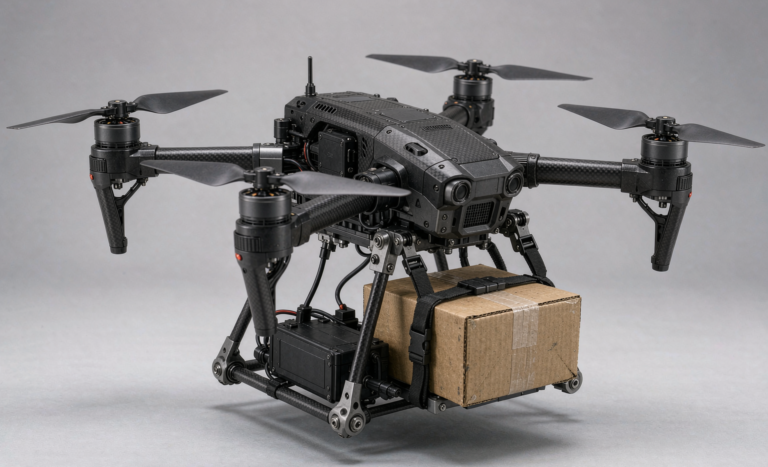
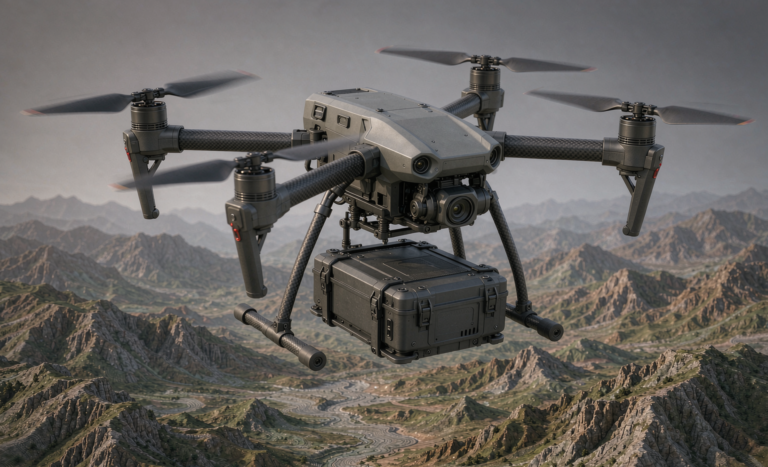
Drone Battery Manufacturing for Inspection UAVs
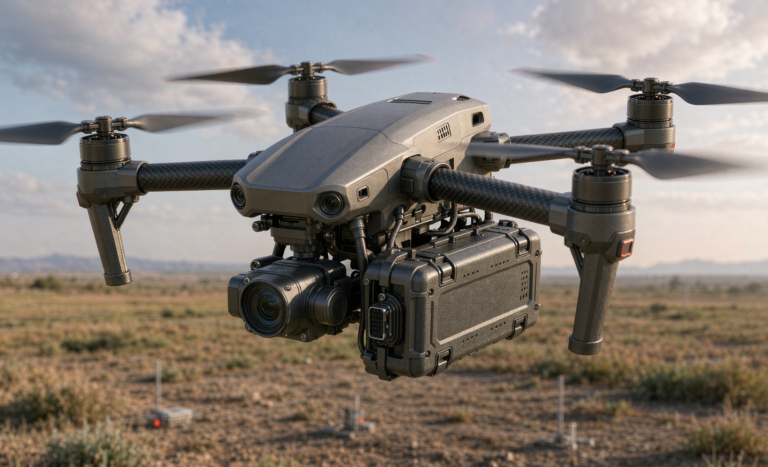
I am Karl Huang, a senior lithium battery engineer, and inspection-UAV production almost never looks like the textbook description of battery manufacturing. There is no mile-long line, no million-cell month, no takt time measured in seconds. A typical program lands on my desk as forty packs for a utility flying substation and transmission-line surveys, then twenty-six more eight months later for the same customer’s new airframe, then a warranty return with 380 cycles on it that has to be repaired rather than replaced.
That is the real shape of drone battery manufacturing for inspection UAVs: high mix, low volume, long life. It is a fundamentally different problem from the mapping and delivery programs I have written about before, where one design repeats thousands of times and the challenge is consistency at speed. Here the challenge is consistency across variants, over years, with order quantities too small to justify dedicated tooling.
Why Drone Battery Manufacturing for Inspection UAVs Is a High-Mix, Low-Volume Problem
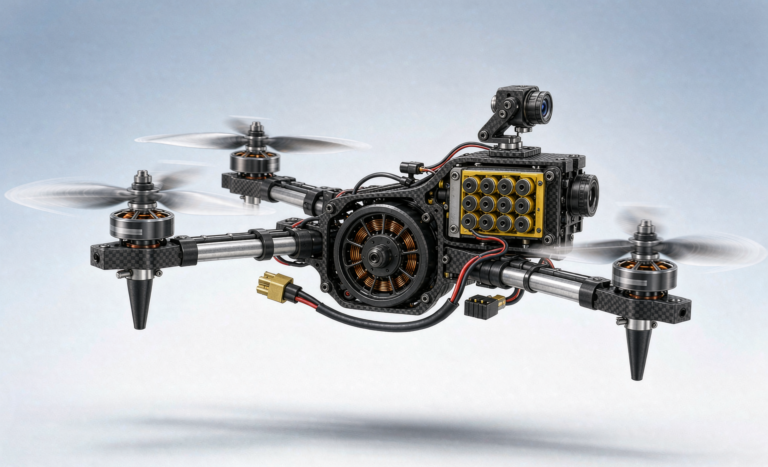
Inspection is not one market. A wind-turbine blade crew, a refinery flare-stack team, a rail catenary operator and a distribution-network utility all buy “inspection drones,” and their airframes share almost nothing. In the last two years my shop has built inspection packs in 6S, 8S and 12S configurations, from 12 Ah to 24 Ah, in five different mechanical envelopes, with three different connector families. Order sizes ran from 12 to 220 units.
The economics that follow are unforgiving. Non-recurring engineering — the design work, the fixtures, the qualification test program, the transport certification — is roughly the same whether you build 40 packs or 4,000. Amortised over 4,000 units, an NRE package disappears into the noise. Over 40 units it can be a meaningful fraction of unit price. Every decision in a low-volume drone lithium battery build is therefore a decision about what not to make unique.
The second constraint is time. Inspection assets have service lives measured in decades, and the drones that inspect them stay in fleets for five to eight years. The pack I ship this quarter must be reproducible, repairable and re-certifiable long after the original cell lot has left the market. Volume lines solve consistency with automation. We solve it with architecture, documentation and traceability.
Platform Architecture: Serving Many Airframes Without Building Many Lines
The single highest-leverage move in drone battery manufacturing for inspection UAVs is refusing to treat each order as a new product. We maintain a small number of platform families instead. Within a family, the cell format, the BMS hardware, the balance-lead pitch, the busbar stock, the potting compound and the acceptance test script are fixed. What varies is series count, parallel count, tray geometry and output harness.
In practice that gives us roughly 80% common bill of materials across a family, which pays back in four places at once:
- Purchasing: we buy one cell in volume across many programs rather than five cells in penny packets, which is the only way a small batch gets a graded, matched lot at all.
- Fixturing: adjustable, reconfigurable fixtures with hard stops cover a whole envelope family. Dedicated welding tooling for a 40-unit run never pays for itself.
- Test: one bench script with a per-variant parameter table, not six bespoke test programs each with its own defect budget.
- Field support: a spare BMS or harness serves several customers, so a single inventory line covers a much larger installed base.
Chemistry selection is also platform-level, not order-level. Inspection duty is loiter-dominated and energy-limited — continuous draw usually sits between 0.5C and 1.5C with brief gust-correction spikes — so NMC/NCA cells at 200–250 Wh/kg with a 500–1000 cycle life remain the default. LFP at 120–160 Wh/kg goes into ground charging carts and hangar buffers where its 2000–4000 cycles matter and its mass does not. High-power LiPo is reserved for gusty coastal work that genuinely needs the pulse capability and can pay a 20–30% energy penalty for it. Semi-solid cells at 250–300 Wh/kg are moving through qualification with us now and will change the endurance conversation for sensor-heavy airframes once cycle data matures.
The Sub-Assembly Nobody Else Builds: The Isolated Sensor Rail
Here is where an inspection pack stops resembling any other lithium battery in the building. On a mapping or delivery airframe the pack essentially feeds propulsion. On an inspection airframe it also feeds the instruments that are the entire reason for the flight: a gimbal drawing 20–80 W, a thermal camera at 20–45 W, a LiDAR head at 15–40 W, a companion computer at 10–25 W, RTK at 5–12 W. Those loads must not see what the propellers do to the bus.
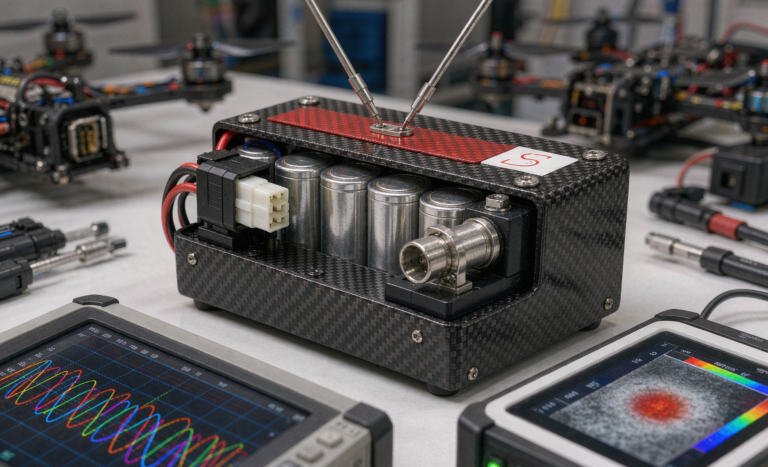
So our inspection platforms carry an isolated, regulated sensor rail as a manufactured sub-assembly, and it gets its own station and its own acceptance gates:
- Holdup verification. Every unit is pulsed on the propulsion side while the sensor rail is monitored. We require 20–40 ms of holdup with the payload rail staying inside its regulation window — enough to ride through a takeoff or gust-correction sag without a sensor reset mid-scan.
- Conducted-emissions pre-scan. The DC-DC stage sits metres from an RF front end and a magnetometer. A quick in-line scan on a current probe catches a wrong-part-number inductor or a missing filter capacitor before the pack is potted and unrecoverable.
- Sag budget confirmation. The propulsion side still has to meet the same numbers as any pack we ship: pack DCIR under 10 mΩ measured at 1 kHz, less than 8% sag on a 3C/10 s pulse, and interconnect resistance held to 1.5–1.8 mΩ so it stays under 15% of pack resistance.
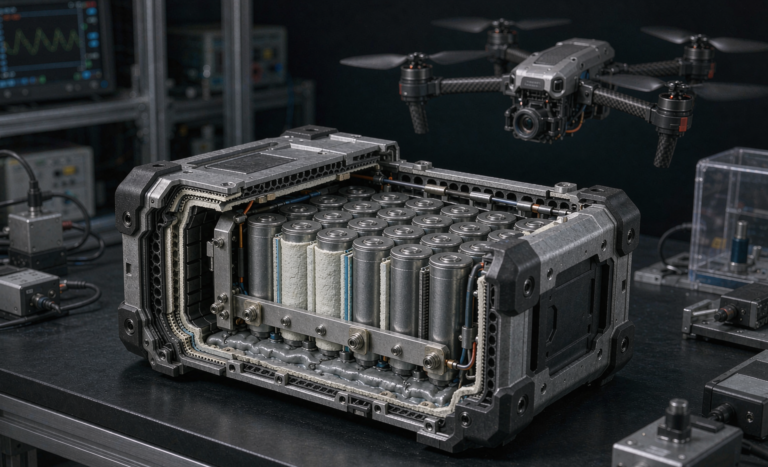
Potting and conformal coating are applied only after that rail has passed, because a sealed IP5X–IP6X pack with 316L hardware and a desiccant pack is, by design, not something you open again on the bench.
First Article Inspection and Configuration Control
At low volume you cannot lean on statistical process control the way a volume line does. A run of 40 packs will not give you a meaningful Cpk on a weld pull test. What replaces it is disciplined first-article work and a hard configuration lock.
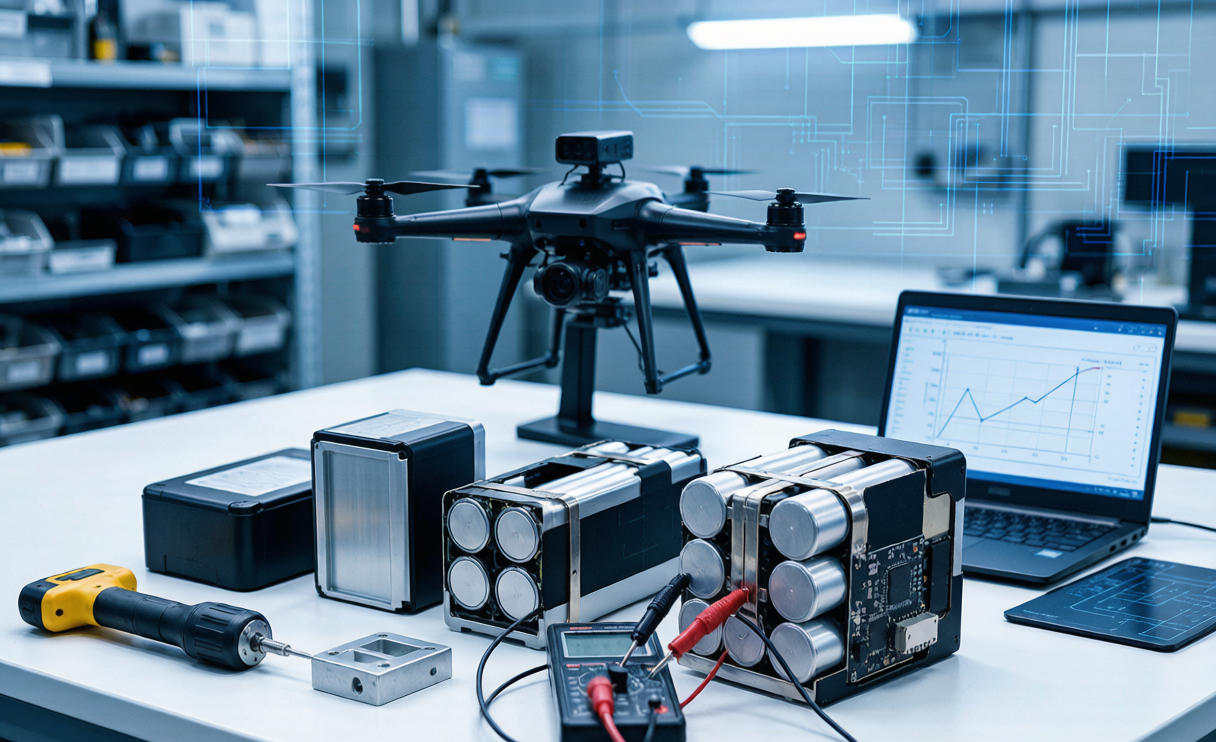
Every new variant starts with a documented first article inspection. One pack is built strictly to the released work instructions, then measured against every dimension and electrical characteristic on the drawing: envelope and mounting-hole positions, mass and centre-of-gravity offset, cell-group voltages, balance-lead mapping, pack DCIR, capacity at 0.5C, and thermal gradient under load. We look for a 3–5°C spread across the pack; an 8–15°C hot spot fails the article and sends the thermal path back to engineering. Nothing else in that order gets built until the article is signed off.
Then the configuration freezes. The released build package carries a revision number, and that revision names the cell manufacturer part number, the cell lot, the BMS firmware version, the busbar alloy and thickness, the adhesive and potting batches, and the torque values. Changing any one of them requires a change order with an engineering impact assessment. This is the part customers underestimate: two packs that look identical and were built two years apart are only interchangeable if somebody was keeping score.
The other low-volume substitute for automation is the operator. Cell welding and busbar work are certified operations here — a technician qualifies on destructive pull-test coupons, requalifies periodically, and works to illustrated instructions rather than tribal knowledge. Fixtures carry poka-yoke features that make a reversed cell or a half-seated connector physically impossible, because at 40 units there is no second shift to catch a systematic error before the whole lot ships. Our first-pass yield target stays above 98%, with escapes held under 50 PPM, and every pack leaves with a serialised as-built record we retain for years.
When the Cell Lot Disappears: Requalification in a Multi-Year Program
Consumer cell roadmaps move faster than industrial fleet roadmaps. Sooner or later, on every long-running inspection program, the qualified cell goes end-of-life mid-program. Handling that gracefully is a manufacturing capability, not an inconvenience.
Our practice is to open a delta qualification rather than a blank-sheet one. A candidate replacement cell has to match the incumbent on the parameters the pack design actually depends on — capacity within 2%, DCIR within 5%, thickness measured at 3.80–3.85 V/cell within tolerance, ACIR delta across the incoming lot under 30 mV, and the same mechanical envelope. It then flies through an abbreviated program: pulse-power cycling at the design C-rate, a thermal run to confirm the 3–5°C gradient still holds, environmental exposure from −20°C to 55°C, and vibration to the relevant DO-160 or MIL-STD-810 profile across 5–2000 Hz.
Two things make this survivable. First, serialised records: I can tell a customer exactly which of their packs carry the old lot and which carry the new, so a fleet can be managed as two cohorts rather than one uncertain population. Second, honest scope discipline — a cell substitution that changes watt-hour rating or cell chemistry class is not a delta, it is a new pack, and it goes through full transport qualification again. Pretending otherwise is how a fleet ends up grounded by a paperwork problem.
Building Packs That Can Come Back: Refurbishment and Re-Cell
Volume programs largely treat packs as consumable. Inspection programs do not, and that changes how we build. Serviceability decisions are made on the production floor, months before the first return arrives: which fasteners are accessible, where the potting boundary sits, whether the BMS can be replaced without disturbing the cell stack, whether the harness is a separate replaceable item.
Returned packs enter a defined triage. We retire cells at 80% of rated capacity, at twice the initial internal resistance, at more than 50 mV of persistent cell-group imbalance, or at more than 5% thickness growth on a pouch design — and we retire them without argument. Packs failing on BMS, harness, connector or enclosure while the cells remain healthy go to re-work; packs failing on cells go to re-cell or scrap. Crucially, a refurbished pack does not get an easier exam: it passes exactly the same acceptance gates as new production — capacity at 0.5C, DCIR, 3C/10 s sag, balance within 2–5 mV, thermal gradient — and it is re-serialised so the as-built history stays continuous. Connector contacts are treated as wear items, since a gold-over-nickel interface rated for 500–1000 mating cycles is a consumable on a pack that gets swapped daily.
The forensic value is the quiet benefit. A pack returned with a documented duty history tells me whether a cold-weather customer needs the 5–15 W pad heater that holds cells at 10–25°C — worth having when capacity falls from 100% at 25°C to roughly 85% at 0°C, 70% at −10°C and 55–60% at −20°C — or whether a connector is fatiguing because the harness strain relief sat more than 30 mm from the joint.
Compliance Overhead in Small-Batch Production
Certification cost per unit is brutal at low volume, which makes it worth engineering deliberately. Every design that ships needs UN38.3 testing across T.1 through T.8 for transport, and we build to IEC 62133-2:2017 for the cell system. Air freight moves at approximately 30% state of charge under IATA rules. Operators flying under FAA Part 107 or an EASA SORA authorisation almost always want individual packs kept in the 100–160 Wh band, with a 25–30% reserve designed into the usable-energy budget rather than left to pilot discretion.
Platform architecture is what keeps this affordable. Variants inside a qualified family — same cell, chemistry, watt-hour class and construction — inherit the certification basis and need only delta work, while a one-off design carries the entire burden on a handful of units. When we push a customer toward an existing envelope, this is usually the honest reason.
What We Need to Quote a custom battery solution
For a custom drone battery on an inspection platform, four numbers get us to a real quotation quickly: the total payload power draw with every sensor running, the required on-station time, the mechanical envelope with its mounting interface and centre-of-gravity window, and the annual quantity plus the expected program duration. That last one is not commercial curiosity — it decides whether we tool for a family or build to a fixture, and whether a custom battery solution should be a genuinely new design or a variant of something already qualified. In my experience the variant is the better engineering answer far more often than customers expect.
FAQ
What is the minimum order quantity for a custom inspection drone battery?
If the pack is a variant within an existing platform family, we can build economically in the low tens of units because the qualification basis and fixturing already exist. A genuinely new design carries its own NRE and test program, so quantities in the low hundreds are where the unit economics start to make sense. Telling us your realistic multi-year volume up front usually changes our design recommendation.
How long does it take to get from specification to first delivery?
For a variant of a qualified platform, expect a first article in weeks and delivery shortly after sign-off. For a new design, the schedule is dominated by qualification and transport testing rather than assembly — the UN38.3 sequence and environmental program take real calendar time and cannot be usefully compressed.
Can you re-cell our existing inspection packs instead of replacing them?
Often yes, if the pack was designed for service and the failure is in the cells rather than the enclosure. We triage against retirement criteria — 80% capacity, twice initial resistance, 50 mV imbalance, 5% swelling — then re-cell, re-test to full new-production acceptance gates, and re-serialise. If the original build has no traceable records, we will usually recommend replacement instead, because we cannot certify what we cannot document.
What happens if our qualified cell goes end-of-life?
We run a delta qualification on a candidate that matches capacity within 2%, DCIR within 5%, and the original mechanical envelope, then verify pulse performance, thermal gradient, environmental range and vibration. Because every pack we ship is serialised to its cell lot, your fleet can be managed as clearly identified cohorts rather than an unknown mixture.
Why is high-mix drone battery manufacturing more expensive per unit than volume production?
Fixed costs dominate. Engineering, fixturing, first article inspection, qualification and certification are broadly volume-independent, so they land far more heavily on a 40-unit run than a 4,000-unit one, and manual assembly instead of automated welding compounds the gap. The fix is architectural: reuse a qualified platform wherever the airframe allows, and spend the custom budget only where the mission demands it.