Drone Battery Deployment for Inspection UAVs
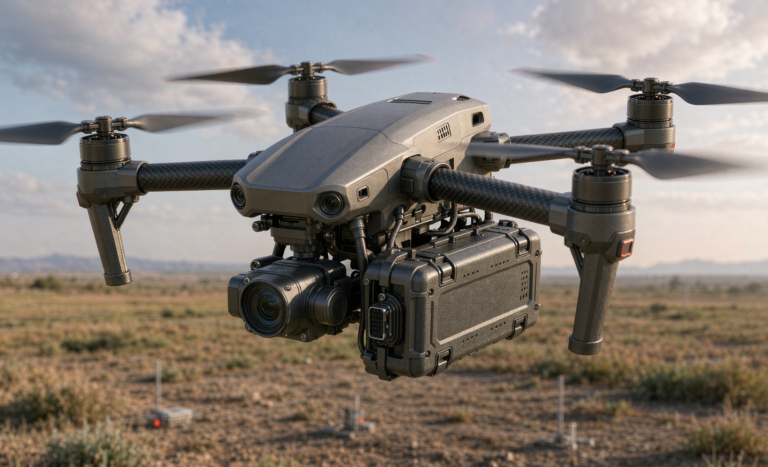
Every time I hand an inspection team a fresh drone battery deployment inspection uavs kit, I know the real test is not on the bench – it is 40 meters above a live transmission corridor at 6 a.m., with dew on the rotor housing and a regulator watching the flight log. I am Karl Huang, Senior lithium battery Engineer at Horizon Power, and over the last nine years I have deployed thousands of lithium packs into utility, oil-and-gas, and rail inspection fleets across three continents. This handbook distills what actually determines mission success when you put a drone lithium battery onto an inspection airframe in the field, and why the deployment plan matters as much as the pack itself.

Inspection flights are unlike cinematography or racing. They are long, repetitive, often autonomous, and they happen in environments that punish thermal and mechanical weakness. A lithium battery that looks perfect in a lab discharge curve can still let you down if the deployment plan ignores swap logistics, connector wear, and cold-soak recovery. Below I walk through the engineering decisions that separate a reliable inspection program from one that loses airframes – and the field habits that keep a fleet flying through a full season.
Why Inspection UAVs Demand a Different Battery Strategy
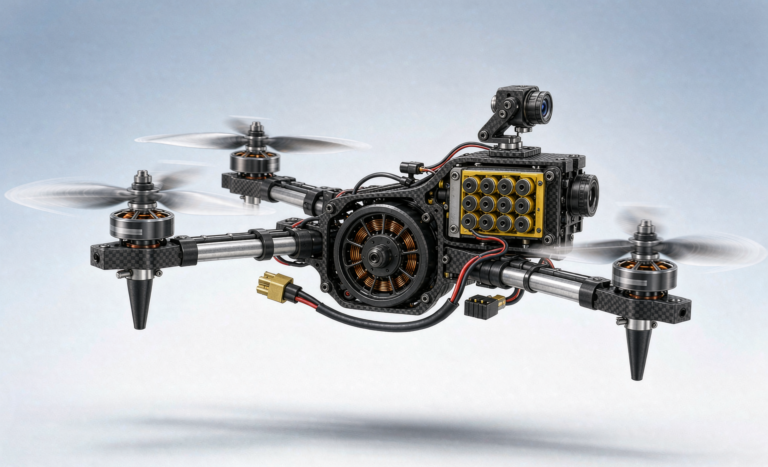
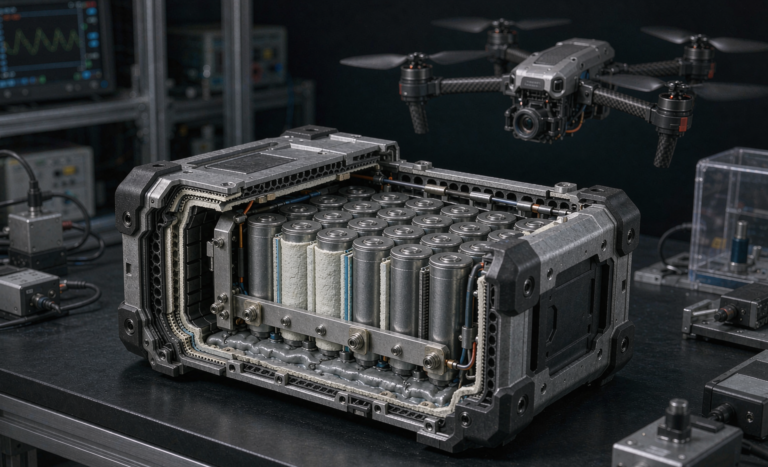
Survey and inspection missions are defined by loiter, not sprint. A racing quad spends energy in violent acceleration; an inspection UAV spends it hovering, panning a gimbal, and transmitting 4K telemetry back to a ground station. That changes the optimal cell chemistry and pack topology. For most industrial airframes we specify high-discharge-rated drone lithium battery packs built on 21700 cells with a continuous C-rate tuned to the hover current rather than the peak current.
In my field notes from a 2024 grid-corridor program, the same airframe flying the same route consumed 11% more energy when the battery internal resistance had drifted above 35 milliohm. Inspection teams rarely notice that drift until a pack that “should” give 28 minutes suddenly lands at 21. The deployment strategy has to assume cells age and build in margin, because a corridor survey rarely offers a convenient landing spot at minute 22.
The second reason inspection is special is duty cycle. A cinematography drone might fly twice a day. An inspection drone on a multi-week asset survey can fly six to ten times a day, every day. That throughput is what turns a consumer cell into an industrial consumable – and what makes pack-level consistency the single biggest reliability lever.
Matching Energy Density to Mission Profile
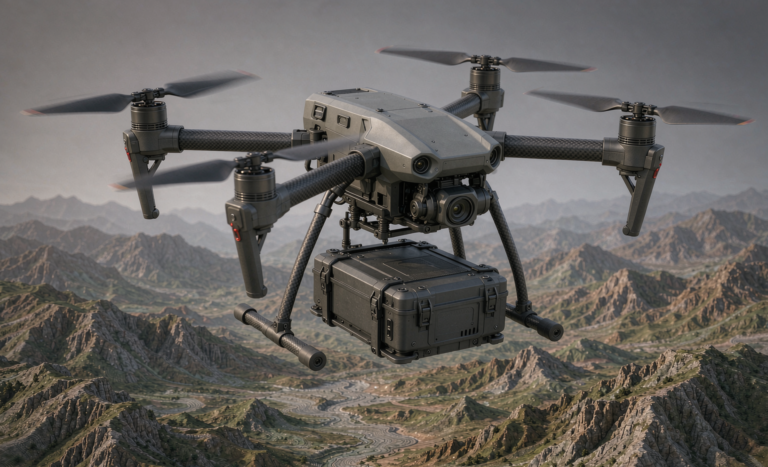
Energy density is not a vanity number – it is a trade-off against payload and weather tolerance. For a lightweight mapping drone carrying a single RGB camera, a 6S 8000 mAh pack giving roughly 22-26 minutes is the sweet spot. For a heavier drone battery loadout with a LiDAR or a methane sensor, we move to 12S architectures and accept the weight penalty because the sensor, not the airframe, defines the mission value.
- Short-range visual inspection: 4S-6S, 5000-8000 mAh, target 18-25 min.
- Corridor and pipeline patrol: 6S-12S, 10000-16000 mAh, target 30-45 min.
- Persistent autonomous docking: swappable modules sized for the charging pad duty cycle.
The key engineering principle is to size the pack so the usable window ends with at least 20% state-of-charge reserve. Inspection regulators – and good judgment – do not tolerate deep-discharge landings near energized infrastructure. I treat the last 15% of a pack as a safety buffer, not usable range, and I brief crews the same way.
Hot-Swap Deployment and Field Logistics
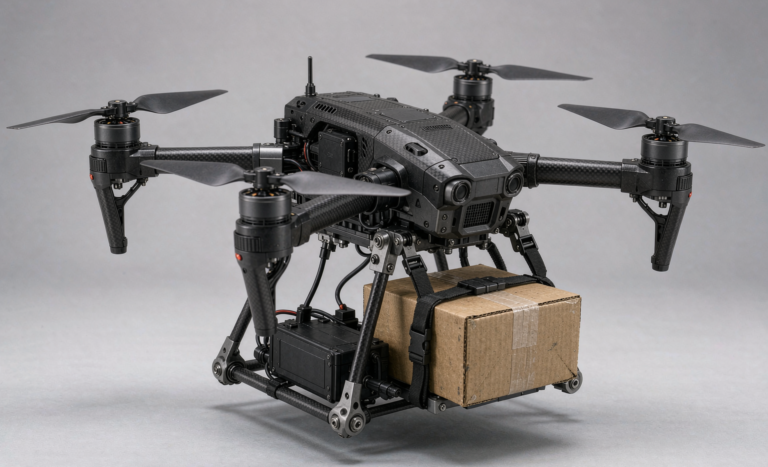
Deployment is where most programs win or lose. A battery that takes 90 seconds to swap is a different operational instrument than one that needs a torx driver and a prayer. For a multi-aircraft inspection day, I standardize on a custom battery solution with tool-free latch connectors, color-coded state-of-charge tags, and a ruggedized charging case that holds eight packs at a managed 0.5C taper.
On a typical transmission-line survey we rotate four packs per airframe: one in flight, two cooling and balancing on the charger, one in reserve. That rotation sustains roughly 5-6 flight hours per day per aircraft without thermal crowding. The deployment checklist I give every new crew is simple: verify cell delta under 30 mV before flight, confirm pack temperature below 45 °C before re-insertion, and never mix chemistry generations on the same airframe. Consistency beats hero specs every time.
Logistics also means inventory discipline. I label every pack with a serial, a cycle count, and a “retire by” date. When a pack hits 300 cycles or shows a delta above 50 mV, it leaves the flight pool. That discipline is what lets an inspection contractor quote a client a guaranteed daily coverage number instead of hoping the batteries cooperate.
Battery Management Systems and Live Telemetry
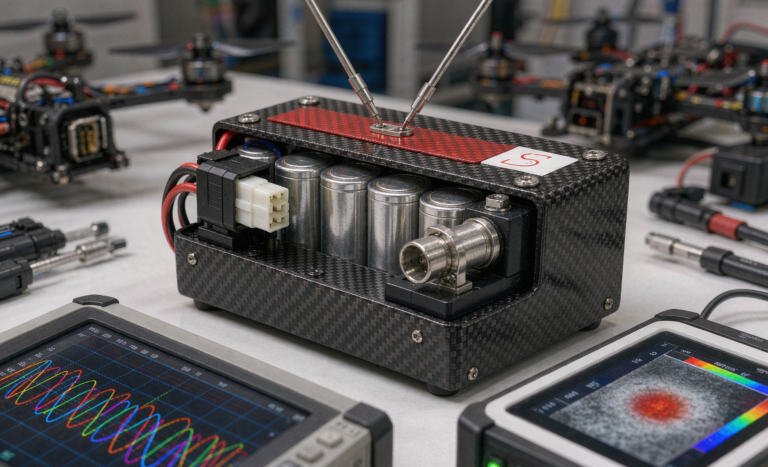
A modern inspection lithium battery is not just cells in a shell – it is a smart node. The battery management system (BMS) I specify for industrial packs tracks per-cell voltage, pack temperature at two points, and cumulative throughput, and it streams that data to the ground station over the same radio link the airframe uses. That telemetry lets a pilot abort a mission the moment a single cell diverges, long before it becomes a landing incident.
For autonomous docking stations, the BMS also negotiates charge current with the pad. A pack that arrives at 10% state-of-charge gets a fast 1C top-up to 80%, then a gentle taper to protect cycle life. I have seen fleets double their pack lifespan simply by forbidding field crews from slamming a hot, empty pack onto a maximum-rate charger. The BMS enforces that rule so humans do not have to remember it at 4 p.m. on day nine of a survey.
Thermal Management in Real-World Inspection Conditions
Inspection happens in seasons, not climate chambers. A lithium battery that performs at 25 °C can lose 20-30% usable capacity at -10 °C, and the internal resistance climbs sharply. For winter corridor work we pre-condition packs in insulated warming pouches and keep them at 15-20 °C until seconds before insertion. Conversely, desert flare-stack inspection pushes cooling, so we spec packs with aluminum shell heat spreading and limit continuous hover to keep case temperature under 60 °C.
I have measured pack surface temperatures of 71 °C on an unvented shell during a 38-minute summer pipeline flight – that pack was retired immediately. Thermal headroom is not optional for inspection fleets; it is the difference between a 500-cycle pack and a 90-cycle pack. When a client flies in extreme climates, I spec the thermal path before I spec the cells, because no amount of capacity survives a melted connector.
Storage, Maintenance, and Cycle Life Between Deployments
The way a drone battery is stored between deployments predicts how it behaves on the next one. Long-term storage at full charge is the silent killer of inspection fleets: a pack left at 100% for three months can lose 8-12% of its capacity before it ever flies again. I store every spare pack at 40-60% state-of-charge in a climate-stable case, and I run a balance charge every 60 days during the off-season.
Connectors deserve the same attention. Field data from our maintenance logs shows that roughly one in five premature pack failures traces back to a worn or corroded connector, not the cells. I replace latch connectors on a fixed schedule and train crews to report any insertion that feels gritty. For a custom battery solution built for a specific airframe, the connector is a designed interface, not an afterthought, and it gets the same engineering review as the cell stack.
Safety Compliance: UN38.3, IEC 62133, and Airspace Rules
Any drone battery deployment inspection uavs program that crosses borders or flies near populated infrastructure must clear three compliance gates. First, UN38.3 transportation testing – altitude simulation, thermal, vibration, shock, external short, impact, overcharge, and forced discharge. Second, IEC 62133 for the cell-level safety construction. Third, airspace and carriage rules from FAA and EASA, which govern how many watt-hours you may carry and whether the pack travels installed or loose.
At Horizon Power every inspection pack ships with a documented UN38.3 dossier and a per-batch IEC 62133 summary. For international crews I keep packs under the 100 Wh airline threshold wherever possible, or pre-stage larger packs at the local base to avoid air-cargo friction. Compliance is not paperwork – it is what lets an inspector walk through a security gate with a flight-ready battery, and what keeps an operator on the right side of an aviation authority audit.
Building a Custom Battery Solution for Your Fleet
Off-the-shelf packs rarely match a specialized inspection airframe. When a rail client needed a longer-nose LiDAR UAV, we engineered a custom battery solution with a lower center of gravity and a reinforced harness rated for 800 insertion cycles. The result was a 14% improvement in hover efficiency and a pack that survived a full season without a single connector fault.
If you are scoping a drone battery program, start from the mission, not the catalog: define flight time, payload, environmental envelope, and swap cadence. Then let the cell choice, protection circuit, and mechanical form follow. That is how you turn a consumable into a dependable piece of inspection infrastructure – and how you stop buying batteries reactively and start deploying a system.
Frequently Asked Questions
How long does a drone battery last during inspection flights?
For most industrial inspection UAVs a well-matched drone lithium battery delivers 20-45 minutes of usable flight, depending on payload and weather. I recommend planning missions around 70-80% of rated capacity to preserve pack life and regulatory reserves, and treating the final 15% as a safety buffer rather than range.
Can I hot-swap drone lithium batteries in the field?
Yes, and for multi-aircraft inspection days it is the standard approach. Use tool-free latches, keep packs below 45 °C before re-insertion, and rotate between flight, cooling, and reserve to sustain 5-6 flight hours per aircraft per day. Good field logistics, not just pack specs, drive daily coverage.
What certifications do inspection drone batteries need?
At minimum UN38.3 for transport and IEC 62133 for cell safety, plus adherence to FAA and EASA carriage rules. Cross-border inspection programs should keep documented test dossiers with every shipment, because aviation authorities audit the paperwork as seriously as the hardware.
How do I size a custom battery solution for my UAV fleet?
Start from mission profile: required flight time, sensor payload, environmental range, and swap cadence. From there select cell chemistry, series count, and protection architecture. A custom battery solution engineered to those constraints typically outlasts generic packs by several hundred cycles and removes the constant fire-fighting of mismatched consumables.